










Casio has long maintained a dominant presence in the global watchmaking ecosystem, celebrated primarily for pioneering digital timekeeping, durable resin construction with the G-SHOCK series, and offering exceptional mechanical and quartz value propositions. However, the Japanese manufacturing giant is once again shifting industry paradigms with the introduction of the Casio Automatic line. This new collection represents a strategic evolution for the brand, bridging the gap between accessible everyday timepieces and refined mechanical watchmaking. Crafted entirely from lightweight titanium and powered by a dependable, Made-in-Japan automatic mechanical movement, this release demonstrates Casio’s renewed focus on capturing enthusiasts who appreciate traditional horology but demand modern material engineering and everyday practicality.
Priced competitively between $330 and $440, the new series arrives at a pivotal moment in the consumer watch market. As mechanical watches experience a sustained resurgence globally—particularly among younger demographics and entry-level collectors—manufacturers are under increasing pressure to deliver premium features without escalating costs. Casio’s latest offering directly addresses this demand by combining advanced surface-hardening treatments, robust magnetic resistance, and versatile strap configurations into a cohesive, highly accessible package.
Design Architecture and Material Innovation
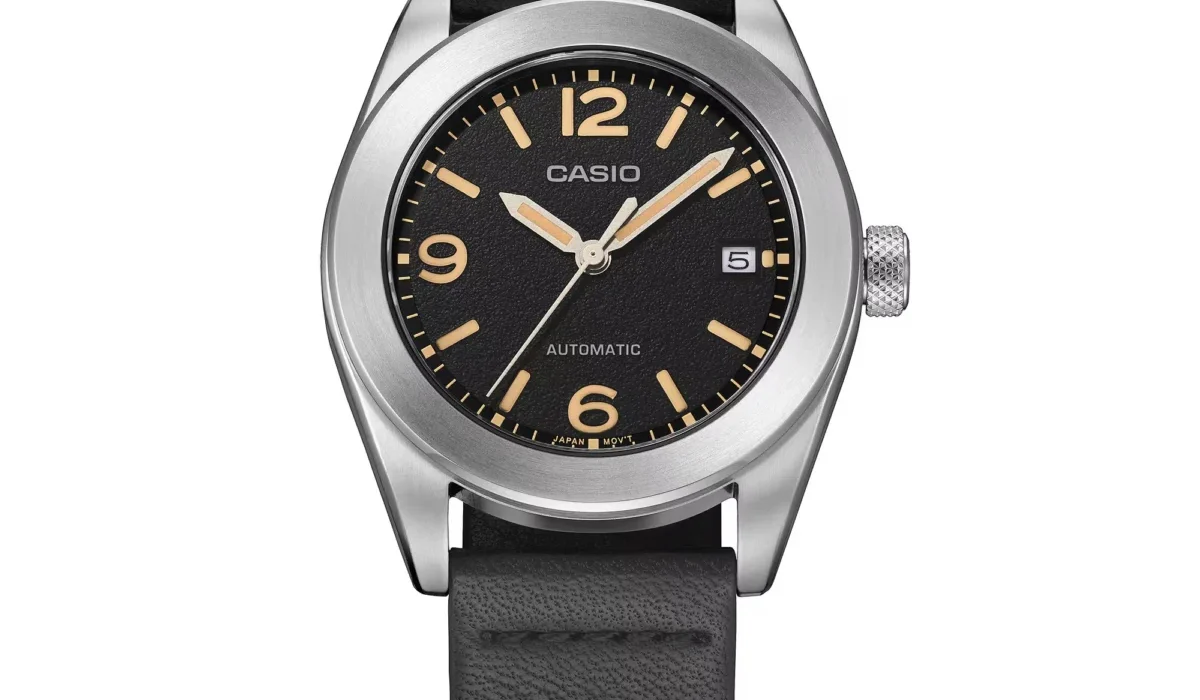
At the core of the Casio Automatic collection is a carefully proportioned 38mm titanium case. Measuring 11.4mm in thickness, the case strikes a balance between vintage-inspired dimensions and modern wrist presence. Titanium has increasingly become the material of choice for high-end tool watches due to its exceptional strength-to-weight ratio and hypoallergenic properties. However, raw titanium is notoriously prone to scratching. To mitigate this vulnerability, Casio has applied a dual-layer treatment consisting of ion-plating (IP) alongside a proprietary titanium carbide coating. This sophisticated surface treatment significantly enhances the metal’s Vickers hardness, ensuring that the watch retains its brushed finish even under rigorous daily wear.
The case architecture incorporates functional integrity typically reserved for more expensive sports watches. Both the signed crown and the exhibition case back feature screw-lock construction, ensuring a tighter seal against moisture, dust, and environmental debris. Despite its robust build, the watch remains remarkably light on the wrist, a distinct advantage of titanium construction over traditional stainless steel alternatives.
The dial layout favors classic legibility and understated sophistication. Eschewing the complex digital displays or busy multi-subdial layouts historically associated with many Casio lines, the Automatic features a clean three-hand configuration. The dial surface benefits from a subtle textured finish that catches the light differently depending on viewing angles, adding depth to the otherwise minimalist aesthetic. For low-light visibility, Casio has applied multiple layers of high-grade phosphorescent luminous paint to the Arabic numerals and handset, ensuring prolonged luminescence in dark environments.
Mechanical Performance and Specifications
While Casio is predominantly known for its Quartz and Tough Solar technologies, the inclusion of a Made-in-Japan automatic mechanical movement underscores the brand’s commitment to traditional watchmaking craftsmanship. Operating at a standard frequency of 21,600 vibrations per hour (3 Hz), the movement is designed for longevity, ease of servicing, and reliable daily timekeeping.

Recognizing the challenges modern digital and urban environments pose to mechanical springs, Casio has engineered the movement to include enhanced magnetic resistance. Everyday items such as smartphones, laptop speakers, and magnetic handbag clasps routinely generate magnetic fields capable of disrupting or permanently magnetizing traditional hairsprings. The magnetic resistance built into the Casio Automatic helps safeguard the movement against such interference, preserving accuracy during daily commutes and modern office work.
When fully wound, the movement delivers a dependable power reserve of 42 hours. This ensures that if the watch is removed on a Friday evening, it will continue running through the weekend and remain operational by Monday morning. The inclusion of a transparent case back allows wearers to observe the mechanical oscillating weight and internal components at work, catering to the growing demographic of horological enthusiasts who value the visible mechanics of timekeeping.
Strap Options and Customization
Versatility is a cornerstone of the Casio Automatic launch. Understanding that straps dramatically alter the character and utility of a timepiece, Casio is offering the collection with three distinct strap and bracelet configurations.
Buyers can opt for a matching titanium bracelet, which features lightweight links finished with the same scratch-resistant titanium carbide coating as the case, creating a seamless, integrated aesthetic suited for formal or business-casual settings. Alternatively, customers seeking a more rugged, utilitarian look can choose between a durable cloth band designed for outdoor endurance or a supple leather band that offers a classic dress-watch appeal. This modular approach allows wearers to easily transition the watch from outdoor adventures to professional environments.
Chronology of Casio’s Mechanical Evolution
To understand the significance of the Casio Automatic, it is essential to examine the historical trajectory of the brand’s mechanical and analog timepieces. Founded in 1946 by Tadao Kashio and his brothers, the company initially specialized in manufacturing electronic calculators. Casio entered the watch market in 1974 with the Casiotron, the world’s first digital wristwatch with an automatic calendar function.
Throughout the late 20th century, quartz technology dominated Casio’s product catalog, democratizing accurate timekeeping through iconic models like the F-91W and the indestructible G-SHOCK, introduced in 1983. While Casio occasionally produced analog and mechanical watches in its early decades, the overwhelming majority of its modern catalog relied on quartz movements, digital modules, or solar-powered Eco-Drive equivalents.
In recent years, however, consumer demand for mechanical watches has surged globally, driven by a cultural pivot toward tactile, enduring goods. Recognizing this shift, Casio began reintroducing higher-end analog lines, culminating in the development of dedicated mechanical movements manufactured domestically in Japan. The Casio Automatic represents the culmination of this internal strategic pivot, bringing together Casio’s legendary manufacturing efficiency with traditional automatic watch architecture.

Market Implications and Industry Analysis
The launch of the Casio Automatic at a price point ranging from $330 to $440 introduces a disruptive competitive dynamic to the entry-level mechanical watch market. For decades, this price bracket has been dominated by legacy Swiss brands and Japanese competitors such as Seiko and Citizen.
Industry analysts note that Casio’s entry leverages several distinct competitive advantages:
- Material Superiority: Providing a titanium case with advanced carbide surface hardening is exceedingly rare at the sub-$500 price point, where stainless steel remains the universal standard.
- Manufacturing Scale: Casio’s massive global supply chain and production efficiency allow the brand to price Made-in-Japan mechanical watches aggressively without compromising quality control.
- Brand Equity and Trust: Decades of consumer goodwill regarding durability and reliability provide an immediate trust baseline for buyers transitioning from digital G-SHOCK models to mechanical timepieces.
By targeting the sweet spot of 38mm sizing—a dimension widely praised by horological journalists and collectors for its universal wearability across diverse wrist sizes—Casio has minimized design risks while maximizing broad consumer appeal.
Availability and Pricing Details
The Casio Automatic line is scheduled to roll out globally in the coming weeks. Initial distribution will take place through Casio’s official online flagship store, followed closely by authorized brick-and-mortar retailers and select high-end watch boutiques.
Retail pricing is firmly positioned in the accessible luxury tier, with models starting at $330 and scaling up to $440 depending on the chosen strap configuration and finishing options. Given the intense demand for lightweight, high-value everyday mechanical watches, industry insiders anticipate strong initial uptake among both seasoned collectors seeking a reliable everyday beater and newcomers eager to experience traditional Japanese watchmaking without a prohibitive financial barrier. As Casio continues to expand this line, it signals a bold new chapter for a brand that has spent half a century defining how the world tells time.