



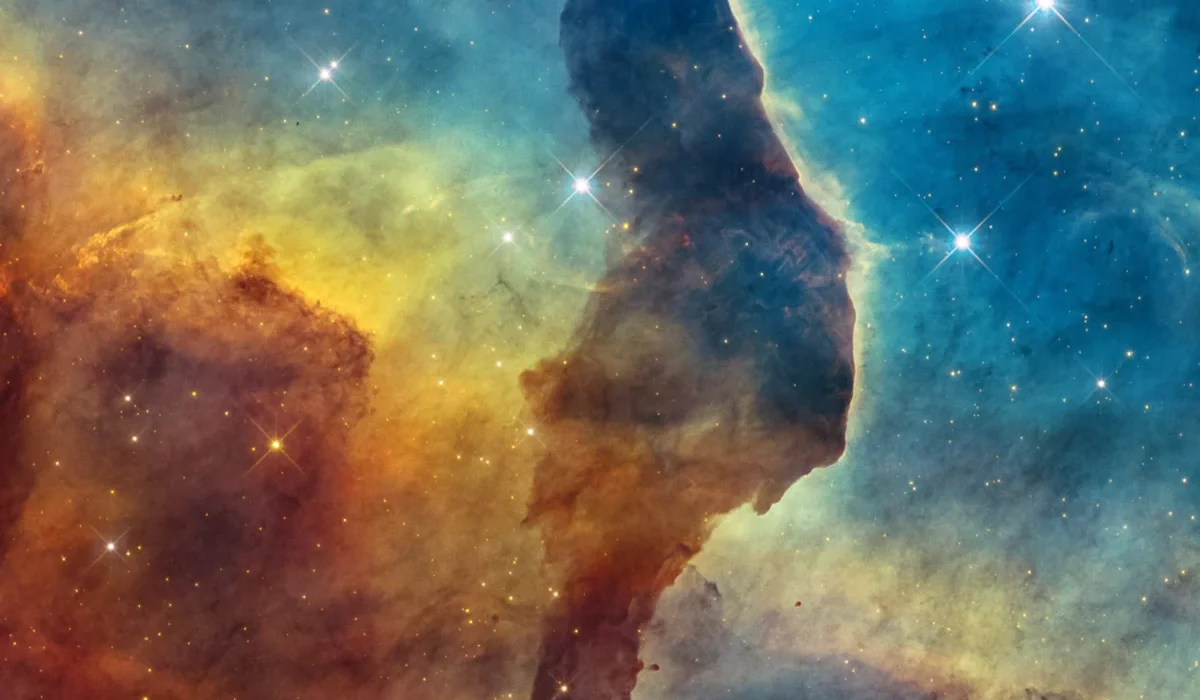
Deep within the luminous tapestry of the Carina Nebula, located approximately 7,500 light-years from Earth, humanity’s most advanced space observatories have captured a striking, celestial formation affectionately dubbed the "Cat’s Head Nebula." Recently released imagery from a collaborative effort utilizing both the Hubble Space Telescope and the James Webb Space Telescope (JWST) offers astronomers unprecedented clarity into one of the universe’s most active stellar nurseries. Far more than a mere cosmic optical illusion, these multi-wavelength observations are granting astrophysicists critical data regarding the complex chemical and physical mechanics that govern star formation.
Main Facts and Observational Highlights
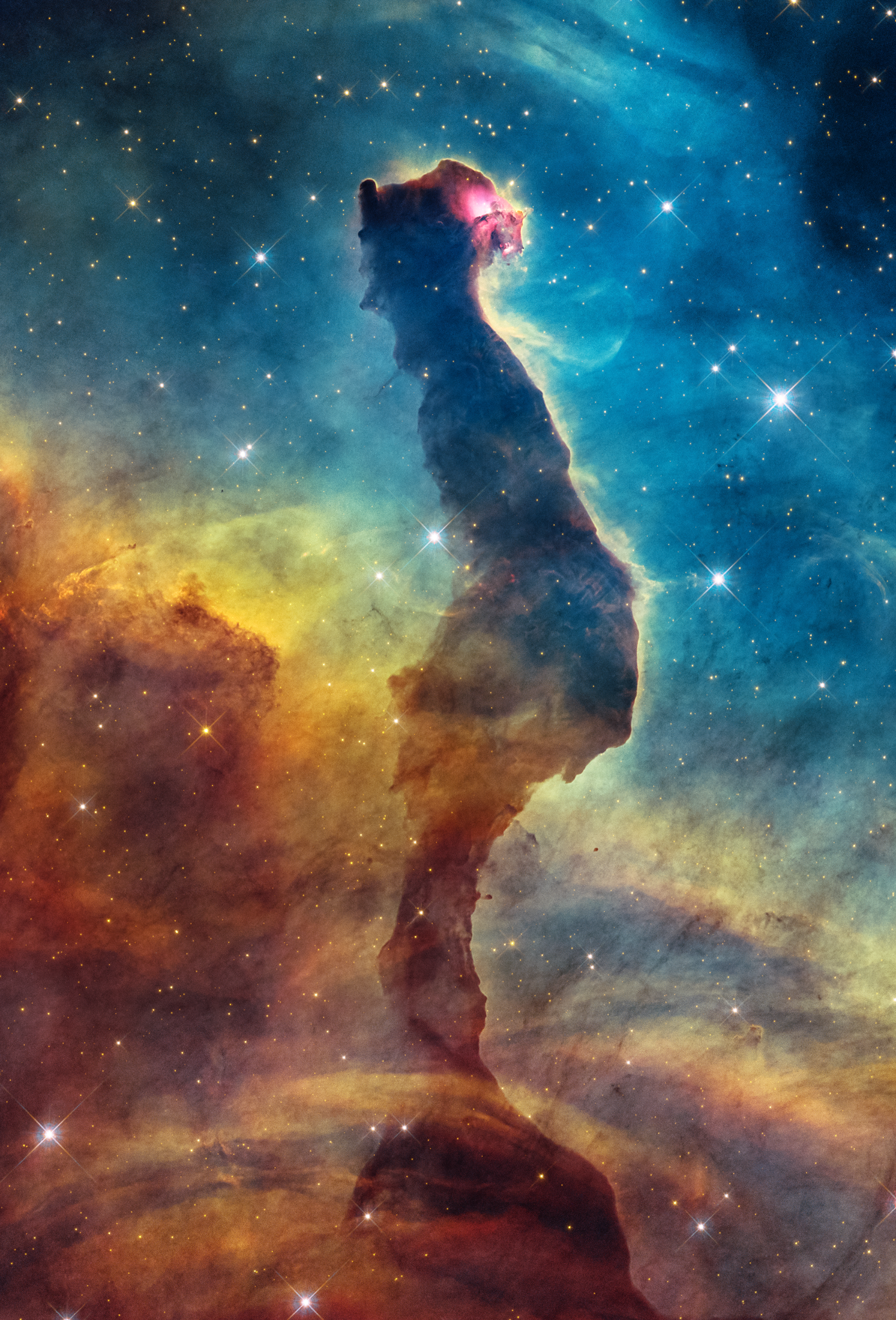
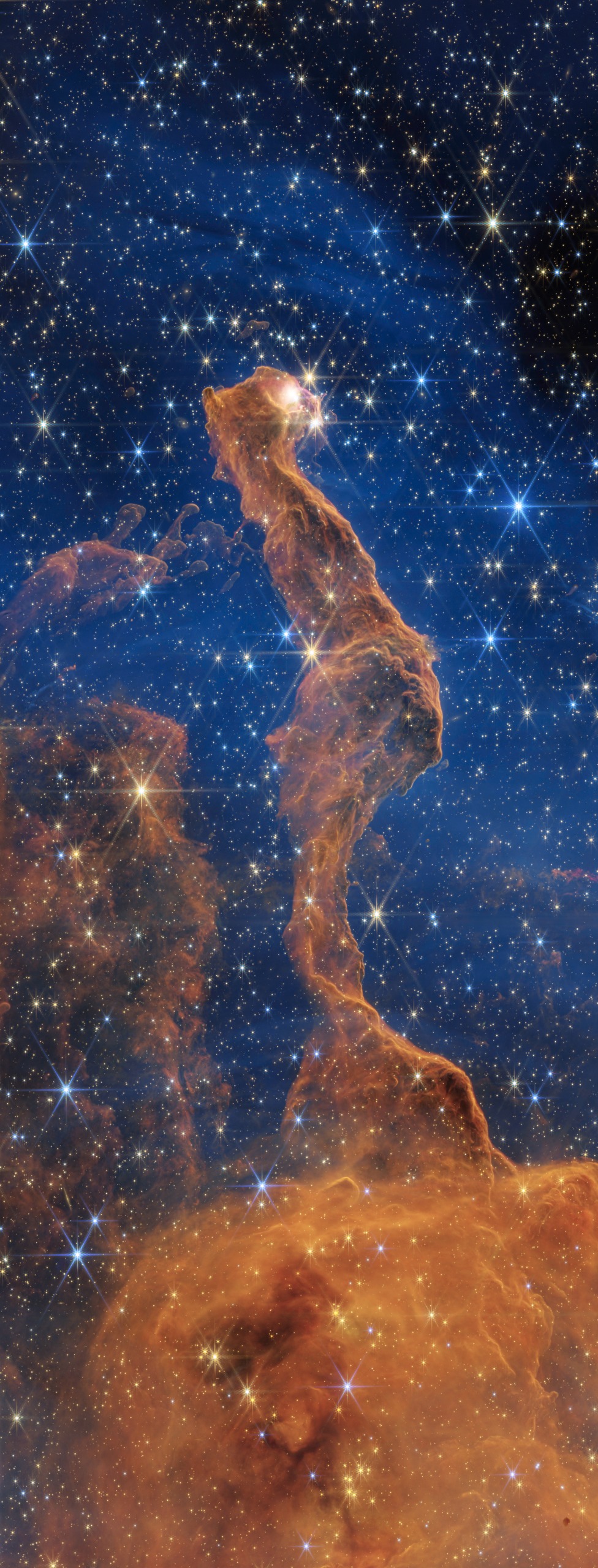
The newly unveiled imagery focuses on a dense, opaque pillar of cosmic dust edged by a brilliant luminous rim of ionized gas. When viewed in its entirety, the regional cloud formation uncannily resembles the seated silhouette of a feline, complete with a glowing red "eye." According to planetary scientists, this striking ocular feature is likely a protostar—an infant star still heavily shrouded in the dense cocoon of dust and gas from which it was born.
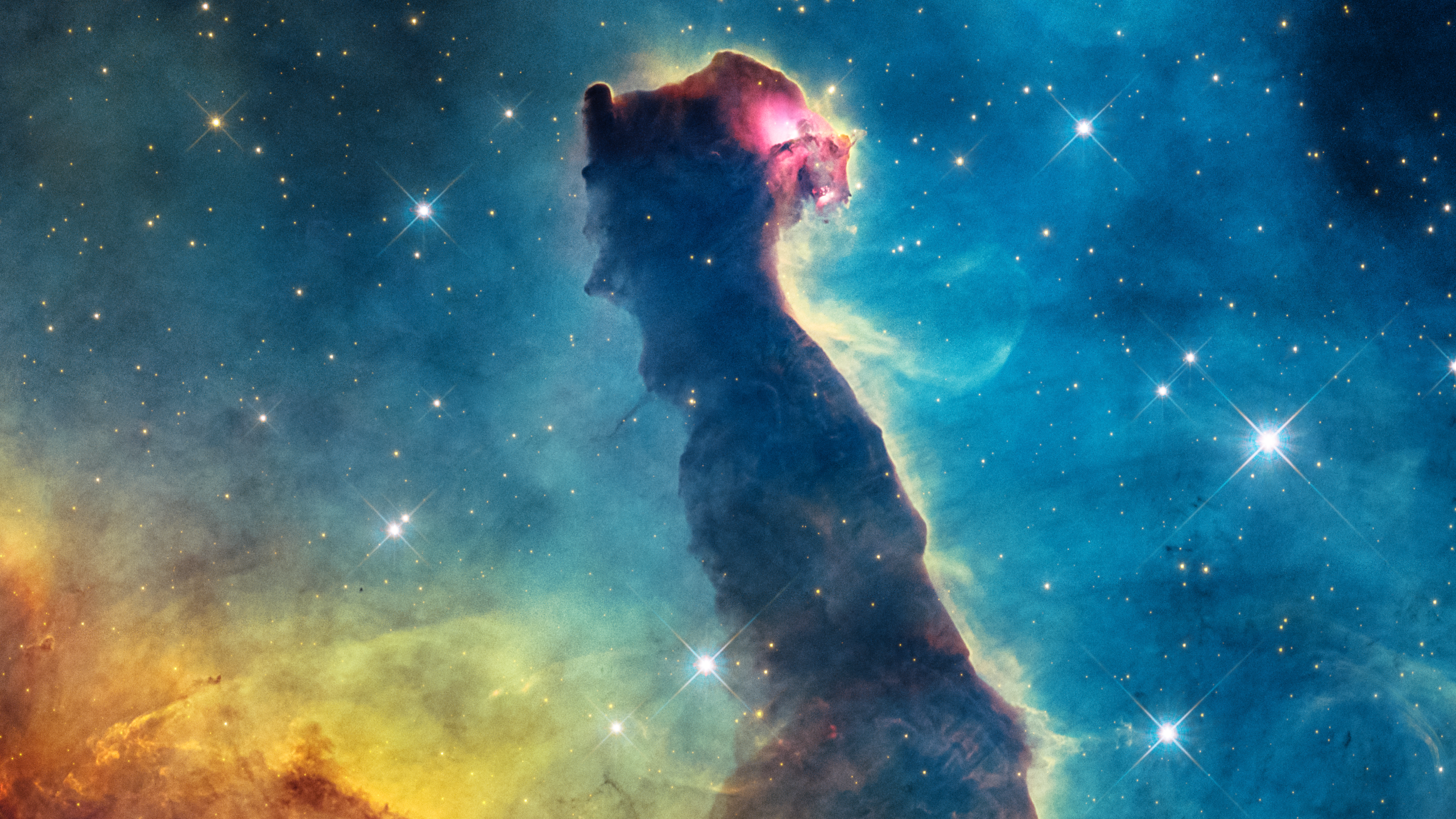
The collaboration between Hubble and the James Webb Space Telescope leverages distinct segments of the electromagnetic spectrum. While Hubble specializes in visible and ultraviolet light, capturing the brilliant scattered starlight and emissions from ionized elements such as hydrogen, oxygen, and sulfur, JWST looks deeper. Utilizing its Near-Infrared Camera (NIRCam) and Mid-Infrared Instrument (MIRI), Webb can pierce through the obscuring dust veils that have historically blinded ground-based and older space telescopes, mapping the internal architecture of the nebula with absolute precision.
Chronology and Context of the Carina Complex
The Carina Nebula has been a primary target for astronomical exploration for centuries. Initially discovered by French astronomer Nicolas Louis de Lacaille in the mid-18th century from the Cape of Good Hope, the massive emission nebula spans hundreds of light-years across the southern constellation Carina. It is one of the most expansive and luminous diffuse nebulae in our night sky, outshining the famous Orion Nebula by a factor of four, though it is significantly further away.
Over the decades, technological leaps have dramatically refined our understanding of Carina. In 2010, to celebrate the 20th anniversary of its launch, the Hubble Space Telescope trained its Wide Field Camera 3 on the region, producing iconic imagery of towering pillars of dust and gas undergoing photoevaporation. The addition of the James Webb Space Telescope to humanity’s orbital fleet in July 2022 opened a new epoch. JWST’s initial observations of Carina revealed previously hidden pockets of star formation and nascent stellar jets, changing theoretical models of how massive stars regulate the destruction and creation of surrounding molecular clouds.
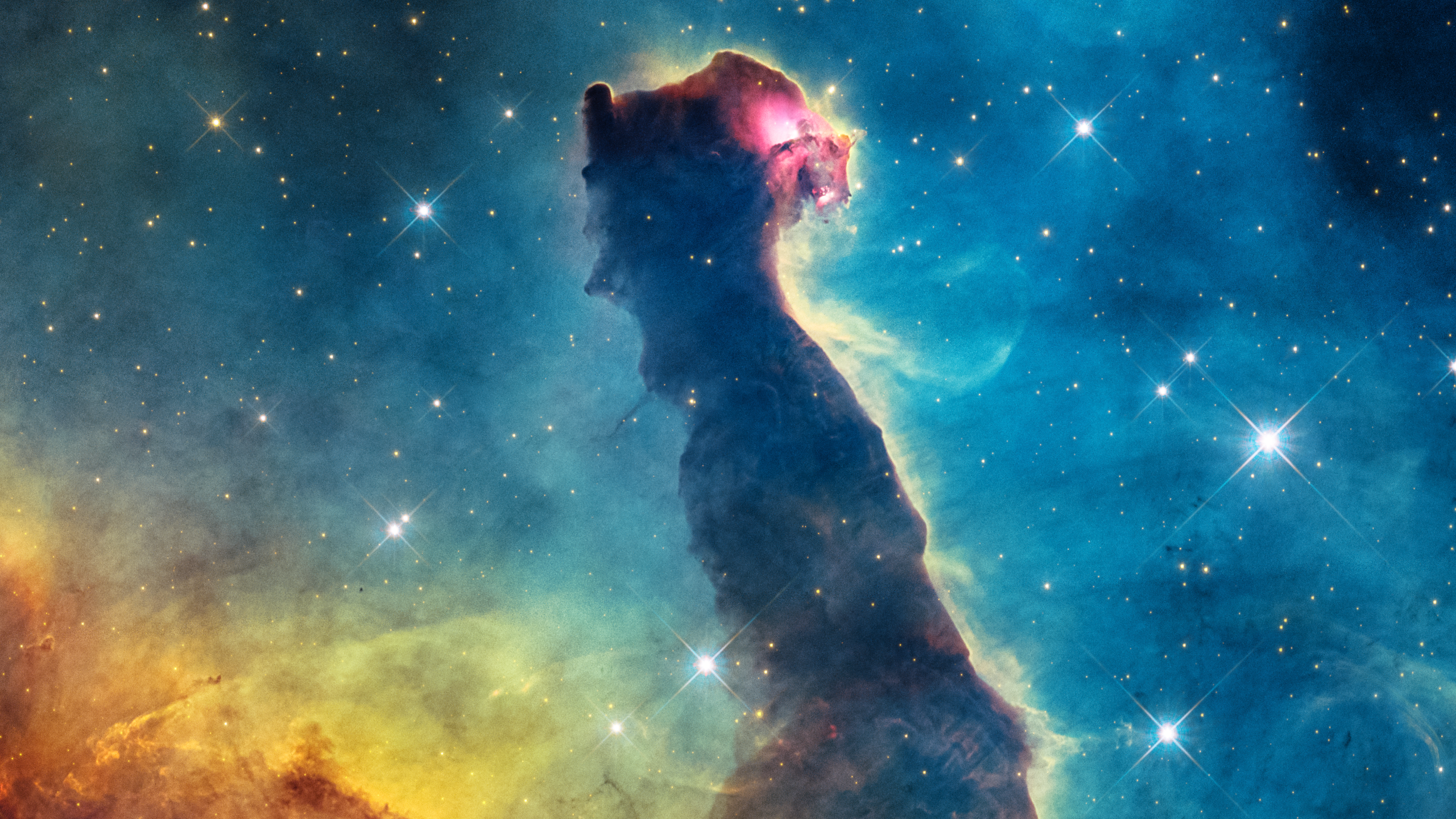
The latest "Cat’s Head" data release builds directly upon this heritage. By capturing the region across optical, near-infrared, and mid-infrared bands, researchers can construct a chronological snapshot of stellar evolution within the pillar.
Supporting Data and Scientific Analysis
To the human eye, nebulae appear as static, eternal sculptures of light and color. In reality, they are dynamic, chaotic crucibles governed by intense radiation, stellar winds, and gravity.
NASA has emphasized that the feline visage of the Cat’s Head Nebula is an ephemeral cosmic alignment. Because the light captured by our telescopes left the Carina complex seven and a half millennia ago, the current physical state of the nebula may already look profoundly different. The massive ultraviolet-emitting stars residing nearby continuously bombard the dust pillars with stellar winds, a process known as feedback. Over the coming millions of years, this radiation will erode the dust pillars entirely, dispersing the infant stars into the broader galactic disc and erasing the cat-like silhouette from the sky.
The analytical value of the multi-telescope approach lies in the complementary nature of the data:
- Hubble’s Visible Light Data: Records the outer ionization fronts where ultraviolet radiation from hot, massive O-type stars slams into cooler gas, creating vibrant color gradients driven by chemical excitation and dust absorption.
- JWST Near-Infrared Data: Penetrates the shallow layers of the dust clouds, revealing dense clusters of low-mass protostars that would otherwise remain invisible in optical wavelengths, alongside faint background galaxies shining from the deep universe.
- JWST Mid-Infrared Data: Traces the thermal emission from warm dust grains and complex carbon-based molecules—such as Polycyclic Aromatic Hydrocarbons (PAHs)—excited by intense starlight, mapping the precise temperature and density contours of the cat’s head structure.
Broader Impact and Implications for Astrophysics
The release of these detailed images extends far beyond public outreach and aesthetic appreciation. Understanding star-forming regions like the Carina Nebula is vital for answering fundamental questions about galactic evolution and planetary system origins.
Most stars in the universe—including our own Sun—form within dense molecular clouds similar to the Carina complex. By dissecting the micro-physics of how dust pillars collapse under gravity while simultaneously being torn apart by stellar feedback, astronomers can model the efficiency of star formation across cosmic time. This helps researchers determine why some gas clouds produce massive clusters of brilliant stars while others form sparse, isolated stellar systems.
Furthermore, analyzing the infant protostars embedded within structures like the Cat’s Head provides a direct analog to the conditions that existed over 4.5 billion years ago, when our solar system coalesced from a primordial solar nebula. As the James Webb Space Telescope and Hubble continue to pool their observational capabilities, humanity gains an ever-sharper window into the cosmic mechanisms that forge stars, planets, and ultimately, the chemical ingredients necessary for life.