









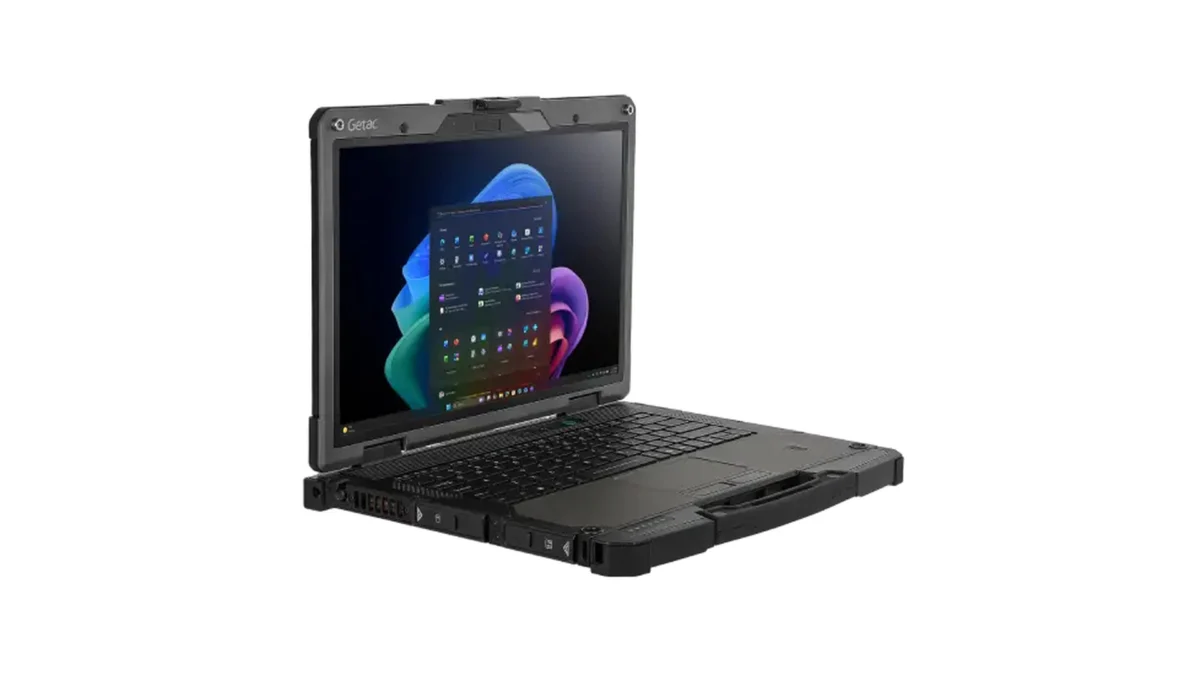
Taiwanese rugged computing specialist Getac has officially taken the wraps off its newest generation of mission-critical hardware: the B360X and B360X Pro. Built to address the extreme computing demands of defense, emergency services, field engineering, and industrial manufacturing, these fully rugged 14-inch notebooks represent a significant generational leap forward. Powered by Intel’s Core Ultra Series 3 "Panther Lake" processors, the new systems are engineered explicitly for high-intensity artificial intelligence workloads executed far beyond the safety of conventional network infrastructure or reliable power grids.
Scheduled for commercial release in November 2026, the B360X and B360X Pro aim to redefine what field-deployed hardware can achieve under punishing environmental conditions. While official pricing figures have not yet been disclosed by Getac, industry analysts anticipate that the systems will command top-tier enterprise pricing commensurate with their specialized target markets and advanced semiconductor architecture.
Targeted Industry Deployment and Strategic Positioning
Getac has maintained a clear demarcation regarding the intended use cases for each model. The B360X Pro is purpose-built and marketed exclusively toward defense and military professionals. It is engineered to meet the stringent demands of tactical command posts, frontline operations, and airborne drone control integration. Meanwhile, the standard B360X is aimed at a broader commercial and public sector audience, finding its natural home among emergency first responders, municipal utility providers, and heavy industrial manufacturing plants.
This tactical deployment strategy builds upon Getac’s expanding portfolio of specialized hardware. Earlier in the year, the company made headlines with the introduction of CommandCore, a dedicated rugged drone ground control station optimized for army aviation and integrated air defense systems. The launch of the B360X series arrives amid aggressive competition within the rugged tech sector. Rival manufacturers are aggressively courting the same defense and field-operations clientele; for instance, competing firms like Durabook recently introduced specialized multi-screen mobile workstations equipped with dedicated high-end Nvidia graphics for complex command-and-control scenarios.
Evolution of Hardware Design and Display Technology
A notable physical enhancement in the B360X and B360X Pro is the transition to a larger, more immersive display format. The outgoing B360 and B360 Pro models utilized 13.3-inch 1080p panels. The new iteration upgrades this to a 14-inch LumiBond display boasting a resolution of 1920 x 1200 pixels.
Crucially for outdoor and adverse-weather operations, the screen features a dazzling 1,400-nit brightness rating, ensuring high visibility under direct sunlight. Furthermore, the capacitive touchscreen is engineered to function seamlessly when operating with compatible protective gloves or during heavy downpours—a non-negotiable requirement for military and emergency personnel working in unpredictable environments.
Despite the expanded screen real estate, Getac’s engineering team managed to preserve a remarkably compact physical footprint. The new 14-inch display fits neatly within the exact 342 x 281mm chassis dimensions of its 13.3-inch predecessors, resulting in a slightly slimmer overall profile and a mobile-friendly weight of approximately 2.38 kilograms.
Connectivity, Expansion, and Environmental Durability
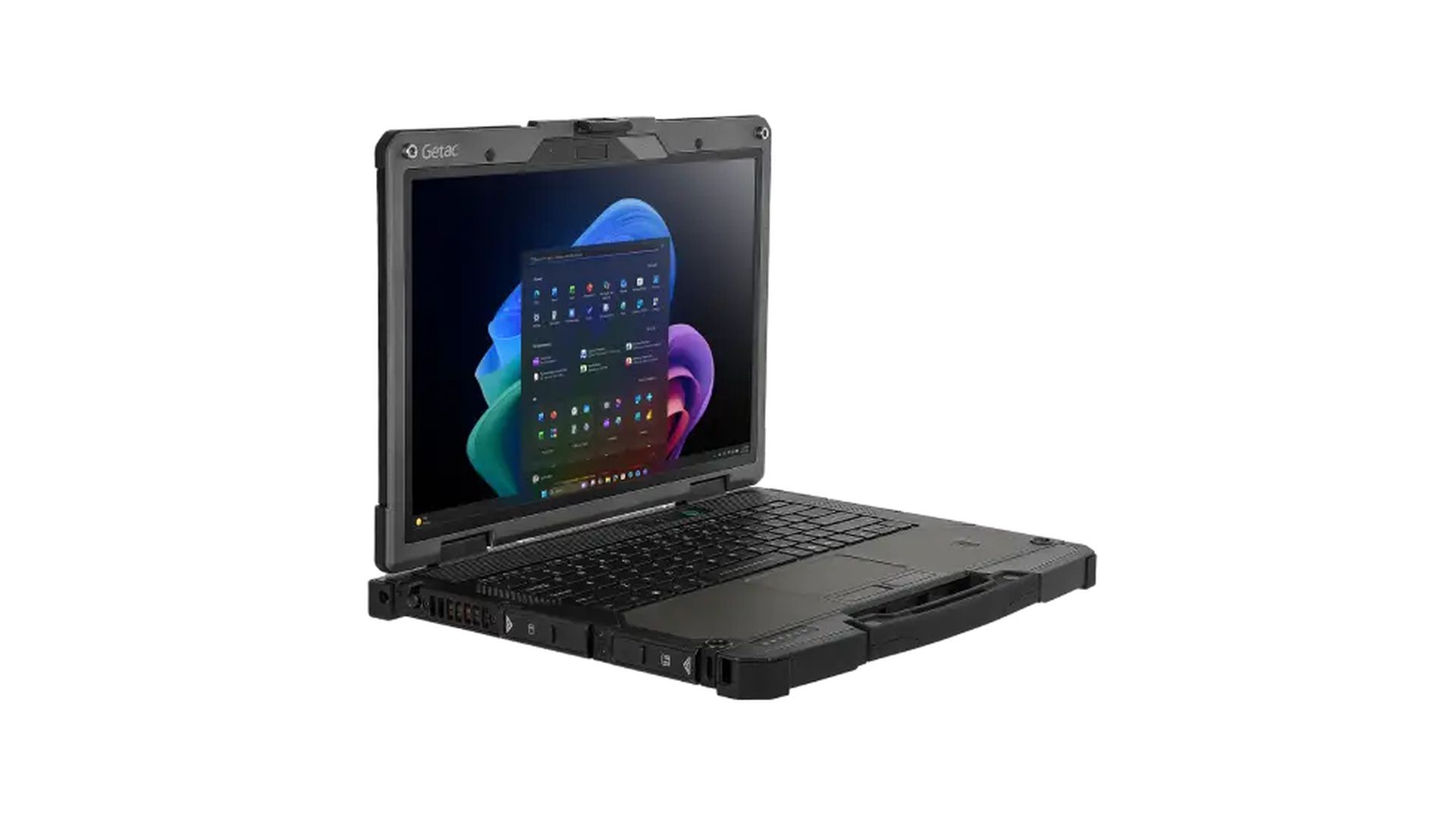
True to Getac’s pedigree, the B360X series does not compromise on connectivity or physical resilience. Modern wireless standards are fully integrated, featuring Wi-Fi 7 and Bluetooth 6 as standard configurations. For remote operations lacking local network infrastructure, users can opt for integrated 4G LTE, 5G Sub-6 connectivity, and a dedicated L1/L5 GPS module for high-precision geospatial tracking.
Wired expansion capabilities are equally comprehensive, offering up to two Thunderbolt 4 ports, a built-in smart card reader, and TPM 2.0 hardware-based security. Security and authentication are bolstered by a 5-megapixel Windows Hello-compatible infrared camera. Storage expandability is another key feature, supporting an optional second solid-state drive that pushes total storage capacity up to 4 terabytes.
On the durability front, the notebooks maintain rigorous military-grade certifications. Both models are certified under MIL-STD-810H, MIL-STD-461G, and IP66 standards, ensuring resistance against extreme dust, powerful water jets, and severe vibrations. The units are also certified to survive a punishing 6-foot (1.8-meter) drop while actively operating, with optional salt fog certification available for maritime and coastal deployments.
Semiconductor Architecture and AI Compute Metrics
The defining characteristic of the B360X and B360X Pro is their deep integration of advanced artificial intelligence hardware. Intel’s "Panther Lake" architecture enables these platforms to deliver up to an impressive 180 platform TOPS (Trillion Operations Per Second) of AI compute capacity.
However, achieving this maximum performance tier depends strictly on hardware configuration. Platform TOPS aggregate the processing power of the Central Processing Unit (CPU), the Neural Processing Unit (NPU), and the integrated graphics engine. Only specific high-end configurations—specifically those featuring Intel’s "X" designation chips—reach the 180 TOPS threshold.
Getac has reserved its sole tier-one offering for this capability, the Core Ultra X7 358H, exclusively for the standard B360X model. This processor integrates a powerful 12-core Arc B390 graphics engine capable of delivering 122 TOPS on its own, complemented by a dedicated 50 TOPS NPU. Conversely, the defense-focused B360X Pro tops out with the Core Ultra 7 356H and 366H processors, which utilize a four-core graphics configuration and a lower baseline metric of roughly 98 platform TOPS.
This places the Pro model’s integrated AI capacity roughly on par with previous-generation hardware. For comparison, Getac’s 2025 B360 lineup powered by the Core Ultra 7 255H achieved approximately 96 TOPS, indicating that the baseline integrated AI computational budget for the defense variant has remained largely static generation-over-generation.
Shift in AI Workloads and the Copilot+ Certification
While raw platform TOPS figures have seen modest changes for certain tiers, the internal distribution of computational power has shifted dramatically. The dedicated NPU component has experienced a substantial upgrade, leaping from 13 TOPS found in older Arrow Lake H processors up to 50 TOPS in the newest generation.
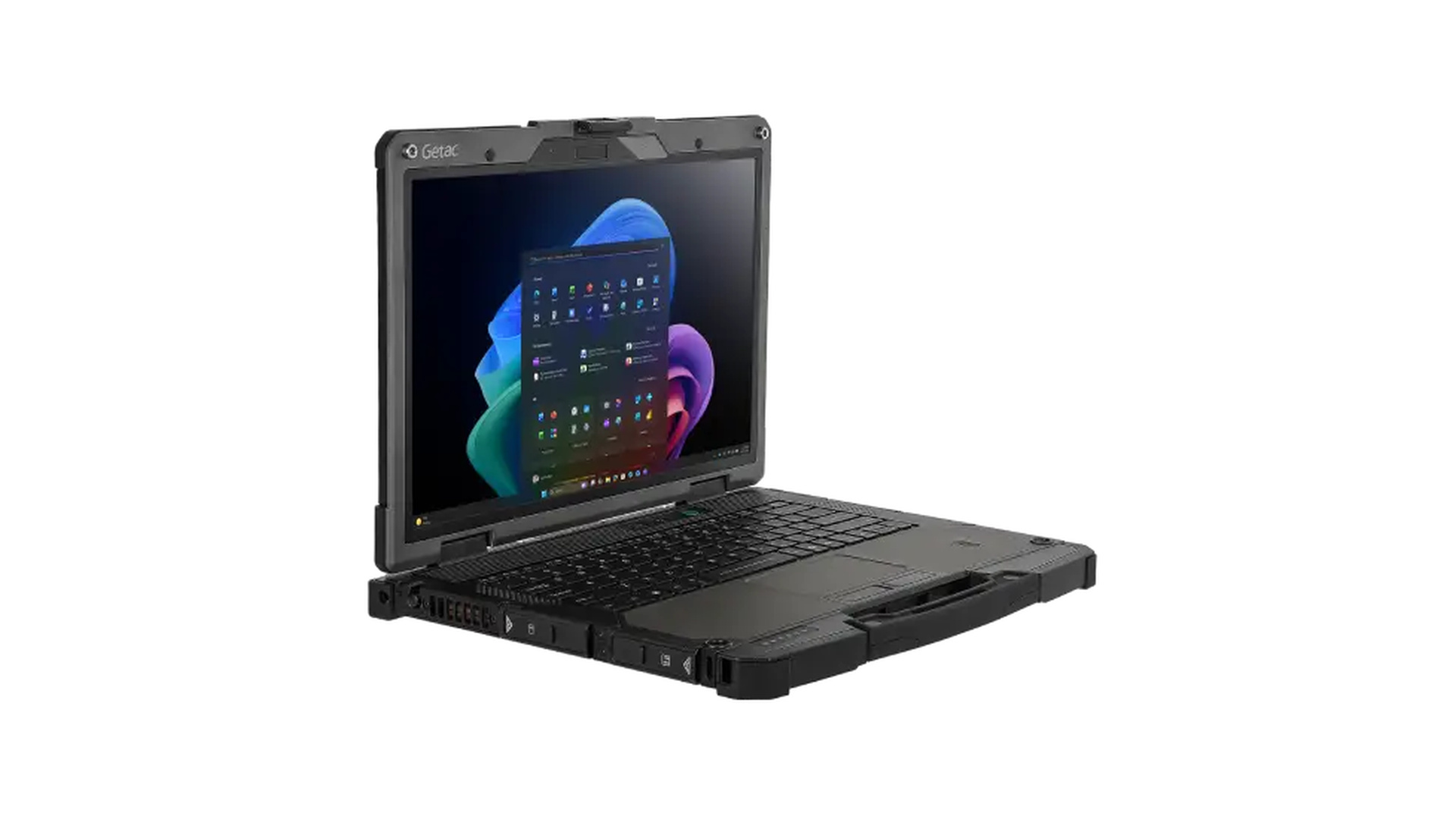
This architectural shift allows the B360X and B360X Pro to comfortably clear the 40 TOPS benchmark established by Microsoft for official Copilot+ PC classification. Consequently, Getac has prominently featured Copilot+ branding across its marketing materials for both notebooks. This capability holds significant practical value for field professionals who require sustained, low-power AI inference capabilities while operating entirely on battery power without cloud connectivity.
Nevertheless, industry analysts and observers note that the practical, day-to-day utility of dedicated NPUs in field operations remains a subject of ongoing industry maturation. While hardware manufacturers swiftly embraced the AI PC branding wave throughout 2024 and 2025, the software ecosystem has evolved at a more measured pace. As software developers increasingly optimize applications to leverage GPUs and CPUs alongside NPUs, the immediate requirement for specialized NPU hardware varies heavily by specific defense and industrial applications.
Architectural Constraints and the Role of Dedicated Graphics
Getac’s decision to limit the flagship X7 processor to the standard B360X rather than the military-grade Pro model is driven primarily by Intel’s underlying platform specifications and hardware lane allocations. The X-series processors require LPDDR5x memory architecture and expose a limited number of PCIe lanes—specifically 12 lanes on the Ultra X7 358H compared to 20 lanes on the Core Ultra 7 356H.
For mission-critical hardware configurations that require dedicated expansion bays, smart card readers, and discrete graphics modules, a higher count of PCIe lanes is essential. To circumvent these platform restrictions, the B360X Pro introduces an alternative performance pathway: an optional Nvidia RTX PRO 500 Blackwell discrete graphics card equipped with 6GB of specialized GDDR7 video memory.
While Getac highlights this option primarily as a visual graphics enhancement, it fundamentally alters the Pro model’s AI processing profile. Nvidia rates the RTX PRO 500 at 294 AI TOPS, though industry experts caution that this figure is calculated using FP4 precision with structural sparsity. Because Intel measures its TOPS metrics using dense 8-bit integer (INT8) operations without sparsity assumptions, direct numerical comparisons between the two architectures require careful context. When normalized for dense INT8 calculations, discrete mobile solutions occupy a unique functional niche.
The inclusion of the Nvidia GPU equips the B360X Pro with 288GB/s of dedicated memory bandwidth and native CUDA support—long considered the industry standard and default target for enterprise and defense AI software deployment. Although the 6GB VRAM limitation restricts the physical size of locally hosted large language models, the inclusion of discrete Nvidia hardware provides field operatives with robust, specialized processing power tailored for complex tactical mapping, real-time sensor fusion, and autonomous system monitoring.
Market Implications and Future Outlook
The introduction of the Getac B360X and B360X Pro underscores the relentless march of artificial intelligence technology into the most demanding physical environments on Earth. By fusing military-grade physical resilience with cutting-edge Intel Panther Lake and Nvidia Blackwell architectures, Getac is actively positioning its hardware ecosystem as a central pillar for future defense modernization and industrial automation.
As global defense agencies and public safety organizations increasingly prioritize edge-AI processing to maintain operational effectiveness in disconnected, intermittent, and low-bandwidth environments, rugged laptop manufacturers face mounting pressure to deliver desktop-class computational power inside indestructible, thermally constrained chassis. Whether field operators fully adopt the advanced AI tooling enabled by these new platforms will largely depend on the continued development of specialized, mission-ready software applications tailored for frontline utility.