






Samsung has officially unveiled the Galaxy W27, a device that redefines the intersection of high-end luxury and mobile engineering. Positioned as the pinnacle of the company’s foldable lineup, the W27 builds upon the robust technical foundation of the Galaxy Z Fold 8 Ultra while introducing a design language tailored for the premium segment. Beyond its aesthetic appeal, the device marks a significant milestone in telecommunications, offering full-scale, non-emergency satellite connectivity—a feature that distinguishes it from its global counterparts.
The launch of the Galaxy W27 is the latest iteration in a long-standing tradition of luxury-focused foldable smartphones from Samsung, specifically designed for the Chinese market. For years, Samsung has partnered with major telecommunications providers in the region to offer devices that marry high-performance hardware with the aesthetic preferences of the luxury consumer. The W27 follows this trajectory, integrating cutting-edge mobile advancements with a distinct visual identity characterized by opulent gold accents and a bold, sophisticated color palette.
Architectural Sophistication and Aesthetic Design
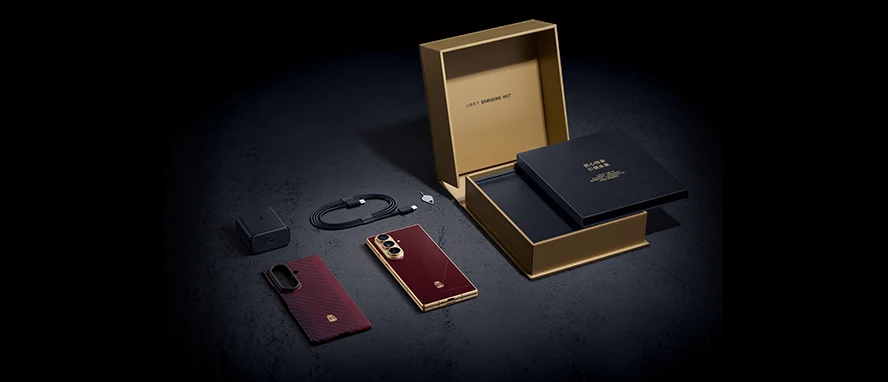
The Galaxy W27 is built upon the architecture of the Galaxy Z Fold 8 Ultra, ensuring that users receive the most advanced processing power currently available. However, where the standard Ultra model leans toward a utilitarian, industrial aesthetic, the W27 prioritizes prestige. The chassis is framed in premium materials, featuring gold-plated accents on the hinge, camera module, and lens rings. These elements are set against a vibrant blue and red color scheme, creating a visual profile that is both modern and unmistakably distinct from the rest of the foldable market.
To ensure the device remains as durable as it is luxurious, Samsung has utilized Corning Gorilla Glass Ceramic 3 for both the outer display and the rear panel. This material choice provides superior scratch and drop resistance, addressing the common concerns regarding the fragility of foldable devices. Furthermore, the W27 carries an IP48 water and dust resistance rating, providing a layer of protection that is increasingly standard in high-end foldables but remains a crucial selling point for consumers investing in such high-value technology.
Technical Specifications and Performance
At the core of the Galaxy W27 lies the Qualcomm Snapdragon 8 Elite Gen 5 for Galaxy processor. This chipset, optimized specifically for Samsung’s ecosystem, ensures that the device can handle intensive multitasking, high-end gaming, and complex artificial intelligence tasks without performance degradation. With 16 GB of RAM and storage capacities reaching up to 1 TB, the hardware is built to remain relevant for years, justifying the high entry price for the device.

The display technology remains a highlight of the Samsung experience. The external screen is a 6.5-inch Dynamic AMOLED 2X panel, offering an FHD+ resolution and a 120 Hz adaptive refresh rate. When unfolded, the user is presented with a sprawling 8-inch internal QXGA+ display. With a peak brightness of 3,000 nits, the panel remains legible even under direct, harsh sunlight, setting a new benchmark for visibility in the foldable category.
The Satellite Communication Revolution
The most significant departure from the standard global foldables is the W27’s native integration with the Tiantong satellite network. Unlike most consumer-grade devices that utilize satellite connectivity exclusively for emergency SOS services, the Galaxy W27 allows for standard voice calls and text messaging. This capability is made possible through a strategic partnership with China Telecom, which manages the Tiantong infrastructure.
For business professionals, remote workers, or travelers in regions with limited cellular coverage, the ability to maintain communication via satellite is a game-changer. This feature effectively eliminates "dead zones," transforming the smartphone from a local communication tool into a truly global one. By moving beyond the "emergency-only" constraint, Samsung is signaling the future of consumer mobile connectivity, where the physical location of the user is no longer a barrier to reliable service.
Camera Capabilities and Software Ecosystem
The photography suite on the Galaxy W27 is designed to rival professional-grade cameras. The primary rear sensor is a 200 MP module equipped with optical image stabilization (OIS), capable of capturing immense detail in various lighting conditions. This is supported by a 50 MP ultrawide lens and a 10 MP telephoto lens with 3x optical zoom.
The software experience is powered by Android 17, layered with Samsung’s proprietary One UI 9.0. This iteration of the user interface places a heavy emphasis on Galaxy AI, a suite of intelligence-driven features that automate organizational tasks, enhance photo editing, and provide real-time language translation. By integrating these AI features directly into the core of the operating system, Samsung has ensured that the W27 is as much a software powerhouse as it is a hardware marvel.
Chronology of Development
The trajectory of the W27 project dates back to the early development phases of the Fold 8 series. While the Fold 8 and Fold 8 Ultra were being developed for a global rollout, the engineering team simultaneously worked on the regional-specific W27 to cater to the specific connectivity and design needs of the Chinese market. The integration of the Tiantong satellite module required a fundamental redesign of the device’s internal antenna array, a process that took several months of rigorous testing to ensure that the added components did not compromise the thinness or the structural integrity of the folding mechanism.

Comparative Analysis: W27 vs. Fold 8 Ultra
While the internal performance metrics—such as processing speed, RAM, and storage—are identical to those of the Galaxy Z Fold 8 Ultra, the W27 is not merely a cosmetic rebrand. The fundamental differences lie in the intended user experience. The Ultra is designed for the power-user, emphasizing raw capability and professional utility. The W27, conversely, is a lifestyle product. Its value proposition is anchored in exclusivity, with limited production runs and a retail presentation that includes bespoke packaging and premium accessories.
Furthermore, the software customizations for the W27 are specifically tuned for regional applications and the unique requirements of the Tiantong network. This localized optimization ensures that the satellite features operate with the efficiency and latency expectations of the target market, a level of integration that is rarely seen in global, mass-market devices.
Market Implications and Future Outlook
The release of the Galaxy W27 at a price point of 18,999 yuan (approximately $2,850) to 21,999 yuan (approximately $3,300) confirms its status as a ultra-premium luxury device. Analysts suggest that the success of the W27 could dictate the pace at which satellite communication is rolled out to the wider Samsung lineup. If the market reception is positive, it is highly probable that the technology utilized in the Tiantong integration will be adapted for international satellite partners, potentially making global satellite calls a reality for future Galaxy S and Z series models.
The implications for the broader foldable market are equally significant. By successfully incorporating both the luxury aesthetic and the advanced satellite functionality into a single, slim form factor, Samsung has raised the barrier to entry for competitors. The device proves that the limitations of the "foldable" category—often criticized for having lower battery life or less advanced camera systems than traditional flagships—have been largely overcome.
Conclusion
The Samsung Galaxy W27 stands as a testament to the company’s ability to cater to niche, high-value segments while maintaining the core innovation that drives the mass market. It is a device that balances the fragility of high-end technology with the necessity of extreme durability, and the complexity of satellite communication with the simplicity of a standard user interface. As the foldable market continues to mature, the W27 will likely be viewed as a pivotal moment where the smartphone ceased to be just a phone and became a truly universal tool for global connectivity, wrapped in the gold-trimmed aesthetic of modern luxury.