









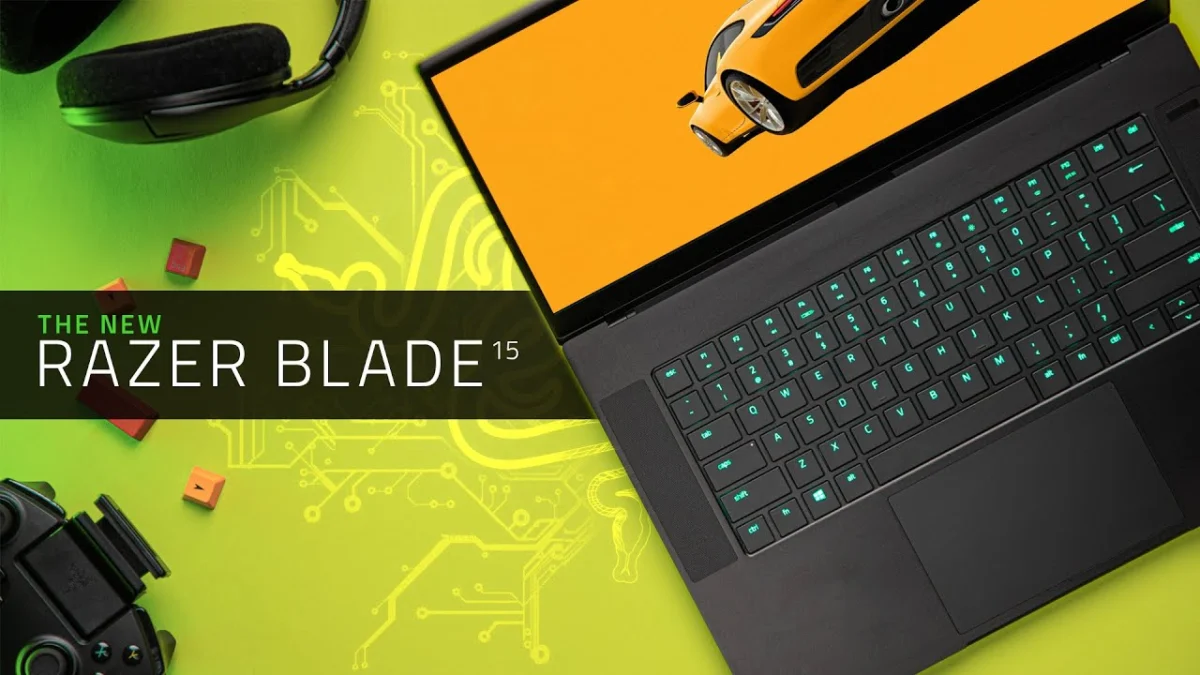
The high-end gaming laptop market continues to evolve amidst severe global semiconductor shortages and unprecedented supply chain disruptions. Against this challenging backdrop, Razer has released its iteration of the Blade 15 Advanced (2021) series. Retaining the core aesthetic blueprint of its predecessors while introducing next-generation silicon from NVIDIA and Intel, this premium portable workstation aims to cement Razer’s position at the pinnacle of enthusiast computing. However, as independent hardware evaluations demonstrate, maintaining a status quo design philosophy while pushing internal wattage limits brings a complex array of trade-offs regarding ergonomics, thermal architecture, and competitive market positioning.
Main Facts and Configurations
The Razer Blade 15 Advanced (2021) lineup spans multiple stock-keeping units (SKUs), catering strictly to the high-end enthusiast segment. Entry into the Advanced series begins at $2,500 USD, a price point that secures an Intel 10th Generation Core i7-10875H processor—featuring 8 cores and 16 threads—paired with 16GB of DDR4 RAM, a 1TB NVMe solid-state drive, and an NVIDIA GeForce RTX 3070 laptop GPU. This configuration drives a 15.6-inch Quad HD (2560 x 1440) IPS-grade display boasting a 240Hz refresh rate.
For consumers prioritizing extreme refresh rates over resolution, Razer offers a 1080p panel option configured at 360Hz for an additional $100. Stepping up to an RTX 3080 GPU with 8GB of VRAM raises the entry cost to $2,900 USD, which simultaneously doubles the onboard system memory to 32GB while retaining the 240Hz Quad HD display. The absolute ceiling of the product stack reaches $3,300 USD, outfitting the machine with an RTX 3080 equipped with 16GB of VRAM and a 4K OLED 60Hz panel.
Remarkably, despite prevailing macroeconomic pressures and pervasive component shortages that have driven up prices across the consumer electronics sector, Razer’s 2021 launch pricing remains flat compared to the previous generation, with entry-level variants even dipping slightly by $100.
Chronology and Hardware Evolution
The evolution of the Razer Blade line has historically been defined by incremental chassis refinements paired with aggressive generation-over-generation internal hardware updates. The 2021 refresh arrives roughly one year after the deployment of the 2020 models, which utilized NVIDIA’s RTX 20-series architecture and 9th Generation Intel Core processors.
By integrating NVIDIA’s RTX 30-series graphics and Intel’s 10th Generation Comet Lake architecture, Razer aimed to capture the performance crown in a sub-20mm aluminum chassis. The introduction of the Quad HD 240Hz display option represents a crucial temporal bridge in mobile displays, satisfying both high-speed competitive gaming and color-accurate content creation. Furthermore, the inclusion of NVIDIA Advanced Optimus technology allows the laptop to dynamically switch between integrated Intel graphics and the discrete NVIDIA GPU based on application demands, altering display refresh behavior depending on whether the system is running desktop tasks or executing exclusive full-screen 3D workloads.
Supporting Data and Technical Performance
Beneath its anodized aluminum exterior, the Blade 15 Advanced (2021) delivers formidable performance metrics, largely due to Razer’s aggressive power tuning. Unlike many competing thin-and-light gaming notebooks that cap their graphic subsystems at 80 watts, Razer permits its RTX 3070 implementation to draw a continuous 95 watts when operating under the system’s "Custom High" performance profile.
This thermal and electrical headroom yields surprising benchmark results. In graphic-heavy AAA gaming evaluations, the Blade 15 Advanced equipped with the 95W RTX 3070 frequently matches or surpasses competing laptops utilizing higher-tier RTX 3080 GPUs configured with lower power limits, such as the ASUS ROG Zephyrus G15. At a native 1440p resolution, frame rates remain consistently high, while core GPU temperatures successfully avoid thermal throttling, remaining safely below 80 degrees Celsius under sustained load. Furthermore, acoustic testing reveals that the custom fan curves manage heat dissipation without generating the deafening noise levels typically associated with high-performance gaming laptops.
However, the internal hardware configuration reveals stark generational divisions when evaluating the CPU. While Intel’s Core i7-10875H remains competitive in lightly threaded workloads and GPU-accelerated creative applications—such as Adobe Premiere Pro and DaVinci Resolve—it is consistently outperformed in multi-threaded productivity benchmarks by contemporary AMD Ryzen processors.
Power efficiency also remains a distinct limitation of the Intel architecture paired with Razer’s physical constraints. To maintain a slim profile, the laptop houses an 80Wh battery. Under heavy operational loads, battery longevity plummets to under an hour and a half, underscoring the ongoing challenge of balancing ultra-slim portability with sustained untethered runtime.
Ergonomics, Design, and Structural Criticisms
Despite internal performance accolades, the physical design and ergonomics of the Blade 15 Advanced have drawn sustained scrutiny from industry reviewers and long-term users alike. Razer has retained its signature boxy, minimalist chassis with the illuminated green lid logo—a design language that is increasingly viewed as stagnant amid industry shifts toward modern 16:10 aspect ratio displays and subdued aesthetic alternatives, such as gunmetal gray finishes or laser-etched branding.
Ergonomic concerns center heavily on the chassis geometry. The sharp 90-degree edges surrounding the palm rest area routinely leave indentation marks on the user’s wrists during extended typing or gaming sessions. Additionally, peripheral connectivity and power delivery present operational friction. The proprietary power adapter utilizes a bulky, stiff braided cord and a bulky connector that, if oriented incorrectly, physically blocks adjacent USB ports.
Input devices present a mixed utility. While the Windows Precision glass trackpad remains industry-leading, the membrane keyboard switches offer suboptimal key travel and tactile feedback when benchmarked against competing offerings from Dell’s XPS lineup or ASUS’s ROG series. Furthermore, built-in webcam performance continues to lag behind industry standards, suffering from aggressive shadow crushing and poor dynamic range.
Broader Market Impact and Implications
The release of the Razer Blade 15 Advanced (2021) underscores the difficult compromises manufacturers face when designing premium portable hardware. By refusing to inflate retail pricing despite acute supply chain constraints, Razer has maintained price stability in a volatile market segment, offering a degree of consumer protection against widespread price gouging.
Nevertheless, the machine occupies an ambiguous market space. At an entry price of $2,500 USD—scaling up to $3,300 USD—it commands a significant financial premium. While alternatives like the ASUS ROG Zephyrus G15 offer superior multi-threaded CPU performance and longer battery life at a $500 discount, persistent supply chain shortages often render such alternatives difficult to acquire. Consequently, the Blade 15 Advanced serves as a textbook example of high-end engineering triumph offset by stagnant ergonomic evolution, proving that raw wattage and benchmark victories cannot entirely overshadow physical design fatigue and user-experience friction.