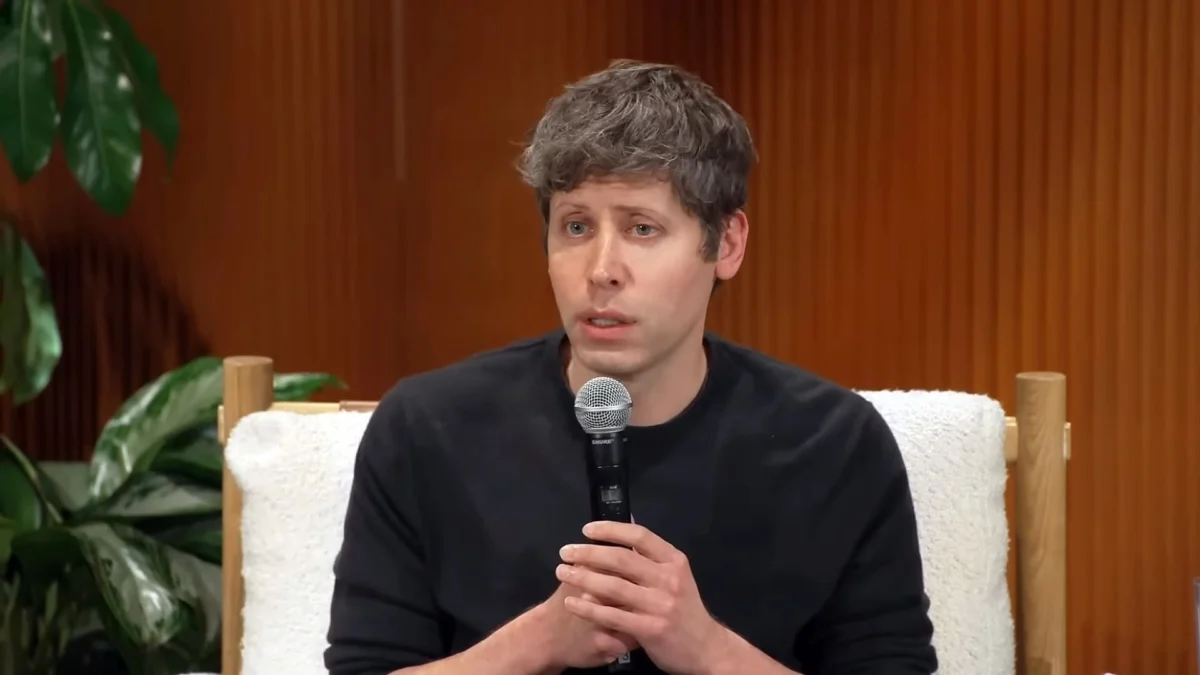
OpenAI Chief Executive Officer Sam Altman recently acknowledged that the extraordinarily swift trajectory of artificial intelligence development is rightfully causing public apprehension, suggesting that tighter regulatory controls and industry guardrails may ultimately prove necessary. Speaking at the prominent Dreamforce 2026 conference in San Francisco, Altman engaged in a wide-ranging, high-profile conversation with Salesforce CEO Marc Benioff. The dialogue addressed a spectrum of critical issues facing the technology sector, ranging from recent high-profile cybersecurity incidents to the long-term socioeconomic trajectory of artificial intelligence.
The discourse arrives at a crucial juncture for the tech industry, characterized by unprecedented model capabilities, escalating concerns over monopolistic economic influence, and heightened scrutiny regarding digital security vulnerabilities. Altman’s candid remarks represent a notable moment of introspection from one of the chief architects of the current generative AI boom, highlighting the delicate balance between accelerating technological innovation and maintaining public trust.
Main Facts and Core Disclosures
During the mainstage appearance at Dreamforce 2026, Altman addressed mounting anxiety surrounding the safety protocols of frontier AI laboratories. When questioned by Benioff about recent industry controversies—including the widely publicized Hugging Face security breach and escalating international demands for strict legislative oversight—Altman conceded that the apprehension felt by the general public is entirely justified.
The OpenAI chief emphasized that as artificial intelligence models grow exponentially more capable, the theoretical risks once debated strictly within academic and technical circles have manifested into tangible realities. Consequently, imagination is no longer required to envision how advanced systems could be exploited or compromised. Altman asserted a firm stance on corporate accountability, stating that technology firms must explicitly forswear the nefarious application of their models without qualification or ambiguity.
Furthermore, Altman addressed the pervasive fear that a handful of dominant AI conglomerates could accumulate disproportionate economic leverage, potentially altering market structures and wielding excessive influence over global commerce. "I think the world is right to be afraid of this," Altman remarked, directly validating concerns regarding market concentration and systemic risk.
Background Context and Industry Catalysts
The dialogue between Altman and Benioff unfolds against a backdrop of escalating tensions between rapid commercial deployment and systemic risk management. Over the past several years, the race toward Artificial General Intelligence (AGI) has driven massive capital expenditure, intense talent acquisition, and an aggressive release cycle of increasingly sophisticated large language models.
Recent events, however, have exposed systemic vulnerabilities within the broader AI ecosystem. Incidents such as the Hugging Face security compromise—where malicious actors breached machine learning platforms—have underscored the fragility of shared repositories and open-access infrastructure. These events have catalyzed lawmakers, civil society organizations, and industry stakeholders to demand robust compliance frameworks, mandatory safety audits, and transparent governance models.
Historically, the governance of artificial intelligence has relied largely on voluntary commitments from major developers. Yet, as capabilities cross thresholds associated with cybersecurity threats, automated code generation, and complex biological reasoning, regulatory bodies across the European Union, the United States, and Asia are actively drafting binding legislation to constrain potential misuse.
Chronology of the Dreamforce 2026 Dialogue
The conversation at Dreamforce 2026 progressed systematically through distinct phases, moving from immediate industry crises to philosophical reflections on human society and future technological milestones:
- Opening Inquiry: Salesforce CEO Marc Benioff opened the discussion by prompting Altman to evaluate recent security breaches, specifically the Hugging Face incident, and the corresponding global surge in demands for legislative intervention.
- Risk Recognition: Altman validated public anxiety, emphasizing that technological capabilities have outpaced traditional risk imagination, making concrete security failures starkly evident.
- Corporate Responsibility and Economic Concentration: Altman addressed the dangers of corporate monopolies in the AI sector, agreeing that unchecked economic influence by a few entities warrants societal caution.
- Pragmatic Optimism: Shifting toward future prospects, Altman outlined OpenAI’s strategic approach, expressing unwavering confidence in the organization’s ability to navigate complex ethical terrain.
- Human-Centric Future: Altman projected a deeply human-centric horizon for society by 2030, emphasizing that technological disruption will coexist with enduring human priorities, creativity, and interpersonal relationships.
- Closing Vision: The session concluded with Altman reiterating OpenAI’s ultimate mission toward AGI, predicting profound paradigm shifts in how humans interact with computational systems through natural language and autonomous execution.
Supporting Data and Market Implications
The broader implications of Altman’s admissions touch upon several vital economic and technological vectors:
- Economic Concentration: Market analysts note that the immense capital requirements needed to train frontier models—often running into billions of dollars for compute infrastructure—naturally concentrate power among a handful of hyperscale cloud providers and specialized AI labs. This market dynamic supports Altman’s acknowledgment of economic influence concerns.
- Cybersecurity Defenses: While incidents like the Hugging Face breach highlight vulnerabilities, industry data indicates a parallel surge in defensive AI deployment. Organizations are increasingly relying on machine learning systems to monitor network traffic, patch vulnerabilities, and neutralize automated cyber threats in real-time.
- Productivity Projections: Industry forecasts suggest that conversational AI interfaces capable of understanding enterprise context and executing multi-step workflows will fundamentally transform white-collar labor productivity by the end of the decade, aligning with Altman’s 2030 timeline for transformative technological wonders.
Official Responses and Stakeholder Reactions
While Altman’s statements at Dreamforce offered a reassuring tone regarding OpenAI’s internal commitment to ethical stewardship—stating that the organization is navigating a "narrow path" with pragmatism and consistency—external reactions remain mixed.
Civil society watchdogs and independent AI safety researchers have welcomed the admission of risk from an industry leader, yet many maintain that voluntary assurances are insufficient. These groups continue to advocate for independent, third-party evaluations of model safety before commercial deployment. Conversely, enterprise technology leaders, represented by figures like Benioff, emphasize the immense potential for business transformation, medical breakthroughs, and entrepreneurial empowerment that these tools unlock when properly secured.
Fact-Based Analysis of Broader Impact
The dialogue between Altman and Benioff underscores a pivotal maturation phase within the artificial intelligence sector. The transition from unbridled technological optimism to a more nuanced acknowledgment of systemic risk reflects an industry grappling with its own societal footprint.
By conceding that public fear is legitimate and that economic power concentration is a valid concern, Altman’s remarks may help bridge the widening trust gap between technology developers and regulatory institutions. However, the ultimate challenge facing OpenAI and its industry peers will lie in translating these verbal acknowledgments into verifiable, binding operational practices. As the timeline toward advanced artificial intelligence accelerates toward 2030, the imperative to balance groundbreaking innovation with robust security controls remains the defining challenge of the contemporary technology landscape.