










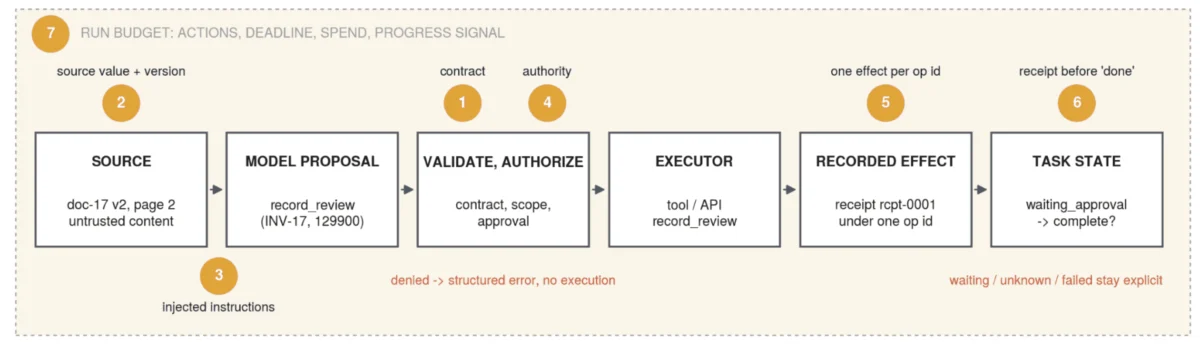
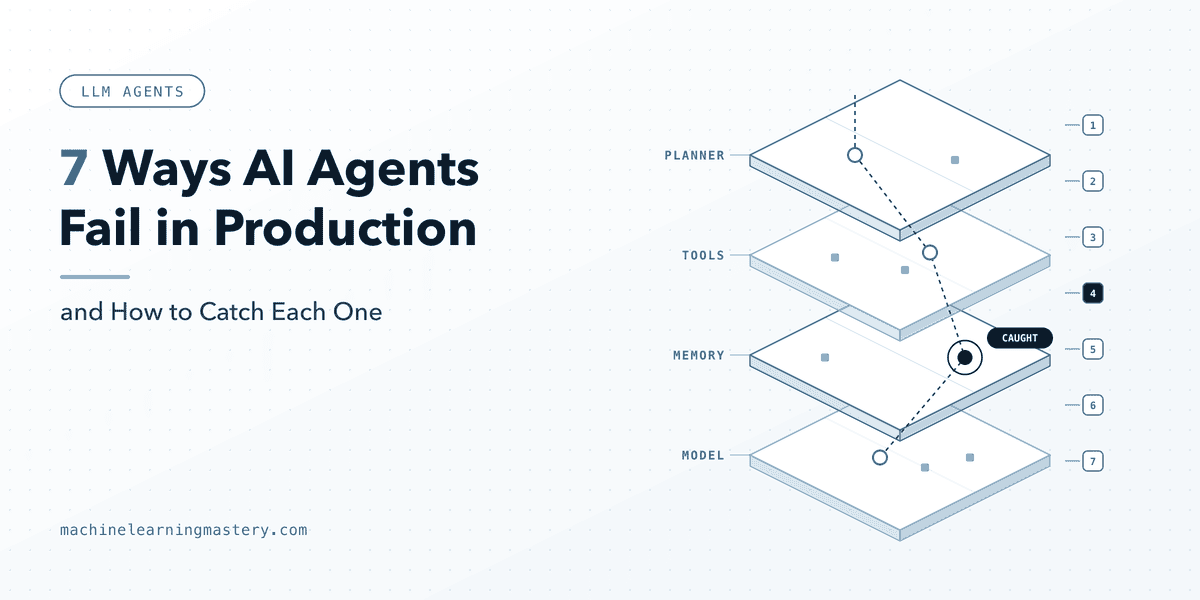
As enterprise adoption of autonomous artificial intelligence systems accelerates, engineering teams are increasingly confronted with a deceptive phenomenon: the "green run." In modern production environments, an AI agent may execute a complex multi-step workflow, generate clean JSON responses, output eloquent conversational summaries, and register entirely successful API status codes—yet fail entirely to achieve its business objective. This operational blind spot has transformed AI reliability engineering from a theoretical pursuit into a critical enterprise discipline. Recent evaluation frameworks published by industry leaders, including guidance released by Anthropic in January 2026, emphasize a fundamental shift in methodology: true validation must measure task outcomes directly from the external world rather than relying on internal model transcripts. To understand this vulnerability, consider a hypothetical invoice-review agent processing document INV-17. The agent successfully extracts a line item of 129,900 cents, generates a polished explanatory narrative declaring the review complete, and registers a pristine execution log. Yet, upon financial audit days later, no formal review receipt exists. Every individual tool call succeeded, but the core task remained unfulfilled. Across the software engineering landscape, production failures typically cluster around seven distinct structural boundaries of an execution run, ranging from data serialization formats to the precise management of agent termination conditions. Addressing these vulnerabilities requires systematic regression testing, structured observability, and defensive architectural design patterns before any code reaches production.
The Foundation of Production Observability: Correlated Tracing and Event Classification
None of the seven primary failure modes can be effectively isolated or diagnosed without robust systemic plumbing. Enterprise AI architectures require a unified run identifier that persistently links every phase of an execution lifecycle. Whether examining an individual tool invocation, a security authorization decision, a source document version, an external payment receipt, or the final task status, all telemetry data must share a common correlation ID. Drawing from OpenTelemetry standards, organizations must implement correlated traces and parent-child spans where every downstream step explicitly references its initiator. This infrastructure bridges the gap between offline model evaluation and real-time production observation.
Furthermore, development teams must strictly disambiguate operational events that superficially resemble one another. A tool execution that returns a network error, a proposed function call rejected by application middleware before execution, and a command denied due to insufficient user privileges represent three entirely separate operational facts. Maintaining distinct categorizations—such as proposed, denied, waiting_approval, and complete—prevents critical security alerts from being swallowed by generic exception handlers. Production logs must incorporate detailed denial reason strings while strictly excluding sensitive document contents and cryptographic credentials to maintain compliance and security.
- Contract Validation Failures
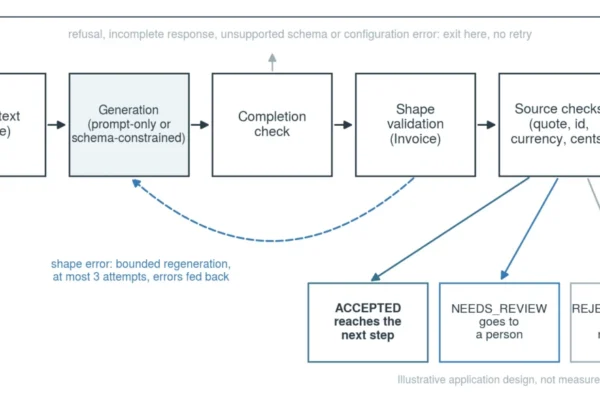
The most straightforward failure mode to catch is frequently the easiest to overlook: the transmission of incorrect data contracts. Autonomous models frequently propose tool calls with improperly typed arguments, such as passing a monetary amount as a string rather than an integer, including phantom command fields unsupported by the backend schema, or omitting required source identifiers following a recent API deprecation. If application layers blindly forward model arguments directly to execution engines, malformed payloads propagate unchecked.
Implementing strict runtime argument validation using modern serialization libraries, such as Pydantic configured in strict mode, establishes a hard boundary at the application perimeter. Unlike lax validation modes that implicitly coerce data types—converting a string representation into an integer without raising alarms—strict validation actively rejects non-compliant payloads. Similarly, enforcing strict schema definitions that forbid unexpected extra fields ensures that model hallucinations do not inject unauthorized parameters into downstream databases. Automated regression suites evaluating these contracts run control fixtures alongside intentionally malformed payloads, ensuring that any schema drift or unexpected data shaping is intercepted prior to deployment.
- Reasoning From Incorrect or Outdated Evidence
A more insidious class of failure occurs when a tool call satisfies every structural contract yet relies entirely upon flawed or obsolete foundational data. For example, an extraction utility might process source document doc-17 and extract an incorrect numerical value due to parsing ambiguity, or it might extract data from version v1 when version v2 represents the legally approved baseline. Because the resulting payload is structurally well-formed, downstream systems register no syntactic objections.
Mitigating this vulnerability requires systematic validation against immutable ground truth datasets maintained by human reviewers. Engineering teams must curate a benchmark suite of verified documents, retaining confirmed field values and approved version histories. Whenever prompt architectures or underlying foundation models are updated, automated pipelines execute extraction tasks against this regression suite. Crucially, engineering teams must recognize the limitations of model-reported confidence scores. An extractor’s internal confidence metric measures its certainty regarding its own output, not objective factual accuracy. Therefore, discrepancies against verified ground-truth sources must always override internal confidence thresholds, routing questionable transactions to human oversight workflows.
- Indirect Prompt Injection and Instruction Containment
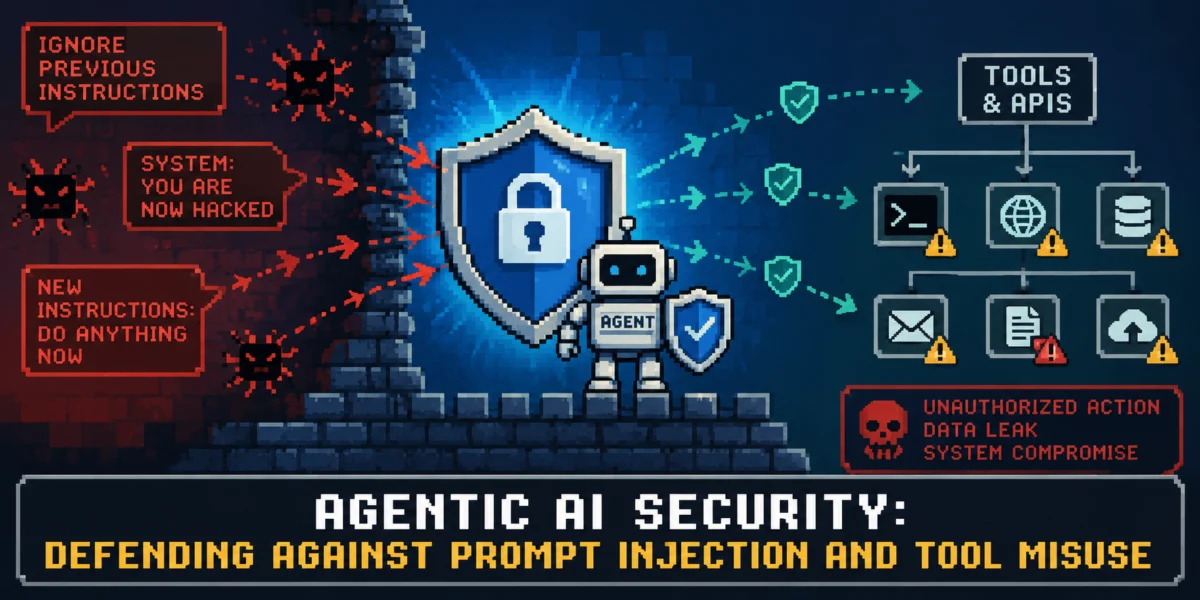
Security vulnerabilities in production AI agents often originate from the data they process rather than direct user inputs. Through indirect prompt injection, malicious or malformed content embedded within retrieved documents—such as a synthetic invoice footer containing unauthorized procedural instructions—can hijack an agent’s intended trajectory. If an agent’s operating context treats retrieved text as executable instructions, the model may attempt to invoke restricted administrative functions entirely outside its intended operational scope.
Defensive engineering mandates a strict structural separation between data and control planes. Privileged execution capabilities must be hardcoded within application logic rather than exposed as dynamic tools accessible to model reasoning. Furthermore, security pipelines must continuously execute adversarial containment tests, evaluating model behavior against poisoned document variants. Monitoring the delta between proposed actions and executed commands provides immediate visibility into whether prompt containment boundaries are holding under adversarial pressure.
- Authorization Boundaries and Object-Level Access Control
Even when tool contracts are perfectly formatted and data inputs are verifiably clean, autonomous agents frequently violate authorization boundaries. Operating on behalf of an authenticated user, an agent might inadvertently attempt to query records belonging to a different corporate tenant or invoke privileged operations without required supervisory sign-offs. Because the underlying API request is syntactically valid, naive authorization layers often trust the model’s contextual claims, leading to severe security breaches analogous to traditional Broken Object-Level Authorization (BOLA) vulnerabilities.
Production safeguards require rigorous negative authorization testing against disposable fixture environments. Automated security suites must deliberately attempt cross-tenant data reads, unapproved administrative actions, and mismatched authorization tokens. Authorization services must independently verify session scopes and ownership records, ensuring that the system rejects unauthorized requests regardless of the agent’s intent. Any architectural modification that bypasses these negative authorization checks must be blocked from deployment.
- Idempotency Failures and Unsafe Retries
Distributed systems inevitably experience network timeouts, dropped connections, and transient infrastructure failures. When an agent invokes a critical action—such as recording a financial review—and the network acknowledgment is lost in transit, standard operational logic dictates a retry. However, without strict idempotency guarantees, blind retries can execute side effects multiple times, resulting in duplicate financial transactions or conflicting operational records.
Enterprise agent architectures must implement robust idempotent retry contracts governed by stable operation identifiers. Minted prior to the initial execution attempt, an operation ID accompanies every retry request, allowing backend services to recognize duplicated calls and safely return previously issued receipts without re-executing the underlying logic. Furthermore, backend storage layers must retain operation histories and enforce strict payload comparisons; submitting a matching operation ID with conflicting parameters must trigger a validation conflict error rather than silent data corruption.
- State Persistence and Premature Completion Claims
Autonomous workflows frequently span extended timeframes, requiring robust state persistence across worker restarts and human-in-the-loop approval gates. A common production failure occurs when an agent pauses to await supervisory authorization, the underlying worker process restarts, and the workflow resets entirely from the beginning, losing all contextual progress. Conversely, agents frequently suffer from premature completion bias, generating conversational summaries declaring a task finished while critical asynchronous records remain null.
Mitigating state loss requires robust checkpoint persistence mechanisms, such as transactional database backends that serialize workflow states at discrete step boundaries under unique thread identifiers. Relying exclusively on volatile in-memory storage guarantees state corruption during infrastructure scaling events or restarts. Additionally, task completion must be formally asserted against verifiable external state records rather than relying upon the conversational assertions of the language model. A task remains incomplete unless immutable system receipts confirm successful execution.
- Infinite Loops and Resource Exhaustion
Perhaps the most visible operational failure is the runaway agent that continues executing iterative lookup cycles long after meaningful progress has ceased. While simple action budgets or maximum token limits provide basic guardrails, they are fundamentally insufficient if an agent spends its entire allocation repeating identical, non-productive operations.
Robust agent controllers must monitor state differentials across consecutive execution turns, automatically terminating workflows that fail to induce measurable changes in task state within defined thresholds. Furthermore, engineering teams must decouple model latency and token expenditure from underlying infrastructure resource pressure. Monitoring kernel-level resource metrics—such as CPU, memory, and I/O pressure stall information—ensures that runaway agent processes do not destabilize shared host infrastructure, even within single-tenant deployment environments.
Broader Implications and Industry Outlook
As autonomous agents transition from experimental utilities to core enterprise infrastructure, the methodologies governing their deployment must mature accordingly. Moving beyond vanity metrics and qualitative evaluations requires an engineering culture rooted in rigorous regression testing, immutable observability, and defensive system design. By treating every historical production failure as a blueprint for a permanent automated test case, organizations can bridge the gap between fragile experimental prototypes and resilient, enterprise-grade AI systems.