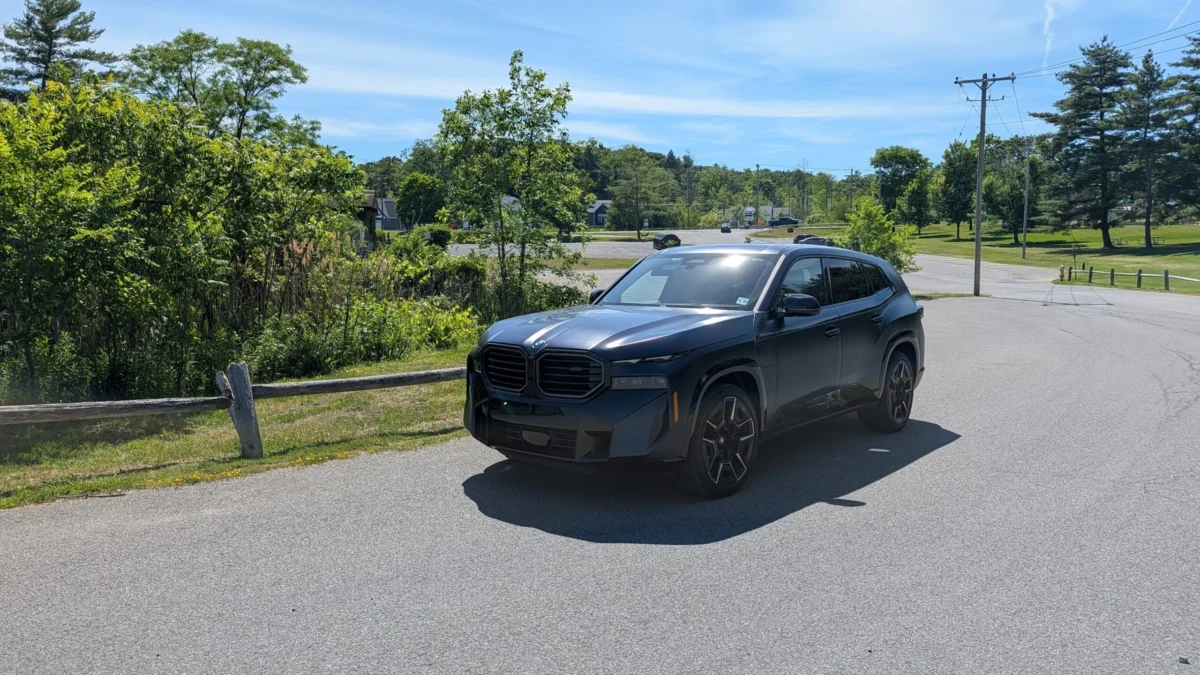
The automotive world is no stranger to polarizing designs, and the BMW XM has firmly cemented its place among them. While its avant-garde styling has ignited debate, a compelling argument can be made that the XM represents a logical evolution from the venerable BMW M5, a vehicle celebrated for its masterful blend of practicality and exhilarating performance. The XM aims to achieve a similar feat, albeit by trading a degree of granular handling prowess for enhanced versatility and a more imposing presence. This in-depth examination delves into the strengths and weaknesses of BMW’s most divisive vehicle to date, exploring whether it might, in certain contexts, even eclipse its flagship sedan counterpart.
Performance Prowess: Where the M5 Still Reigns Supreme
When the accelerator pedal of the BMW XM is pressed, the immediate surge of power is undeniable. Acceleration is swift, propelling the substantial SUV to highway speeds with a ferocity that could quickly lead to exceeding legal limits. This sensation is amplified in the XM Label variant, which boasts a formidable 4.4-liter BMW M TwinPower Turbo V-8 engine augmented by an integrated electric motor. The combined output is a staggering 738 horsepower and 738 lb-ft of torque. This hybrid powertrain delivers blistering straight-line performance, a hallmark of the M division.
However, performance in an automobile is a multifaceted concept that extends beyond mere acceleration figures. Here, the XM encounters inherent limitations when directly compared to the M5. Its significantly larger dimensions, greater weight, and elevated stance translate into a more noticeable presence in corners. The absence of air suspension on the tested model further accentuates the body roll, a phenomenon more pronounced due to the vehicle’s heft. While the XM’s handling remains impressive for an SUV of its caliber, it cannot replicate the razor-sharp agility and planted feel of a lower-slung performance sedan like the M5.
For the driving enthusiast prioritizing a daily driver that can also transition seamlessly to track days, the M5 arguably remains the benchmark. While the XM is certainly capable of track excursions, and indeed features a dedicated, aggressive sport mode, its sheer size and weight remain a constant consideration, particularly on more demanding circuits or tight, winding roads. During a spirited drive through the Catskills, the author found ample enjoyment, yet the vehicle’s substantial footprint served as a subtle, ever-present reminder to exercise a degree of restraint, especially when pushing its limits. The M5, by contrast, offers a more uncompromised track experience due to its more focused engineering and lower center of gravity.
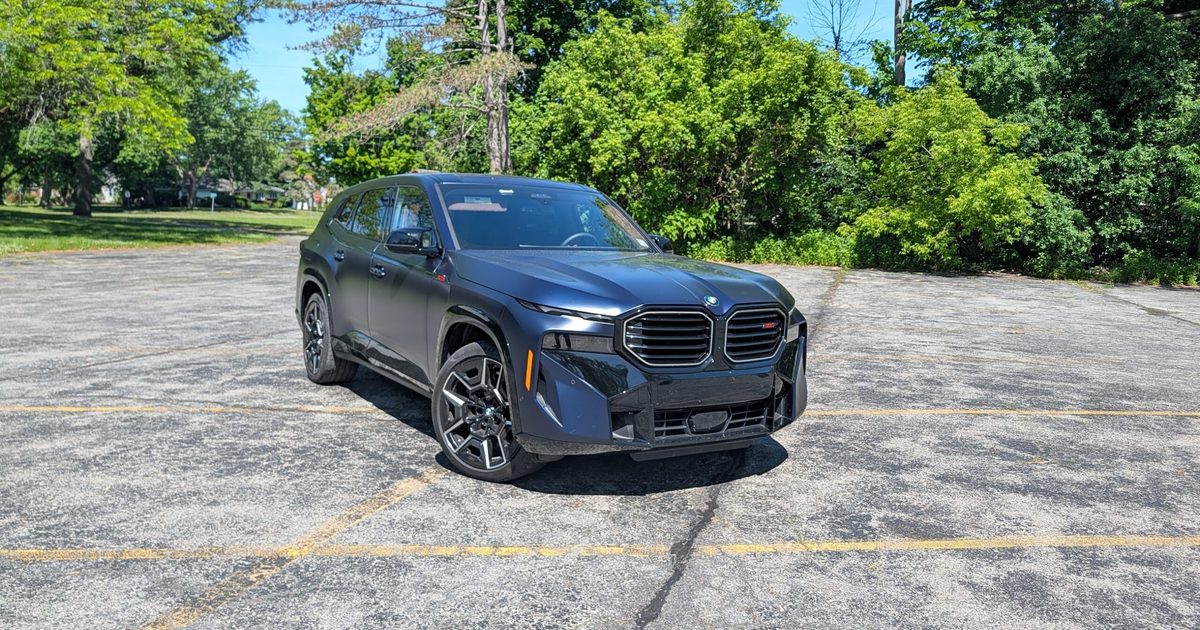
The XM’s Forte: Conquering the Long Haul
In stark contrast to its track-day aspirations, the BMW XM truly shines on extended journeys. A previous road trip in a 2025 BMW M5, spanning from Albany, NY, to New York City and then down Long Island for an event at The Bridge, highlighted the sedan’s limitations as a long-distance cruiser. By the journey’s end, the driver’s body bore the fatigue of a less-than-plush ride, a common trade-off for the M5’s performance-oriented suspension.
The XM, however, offers a markedly different experience. It delivers the comfort one would expect from BMW’s established SUV lineup. Cruising at highway speeds is exceptionally smooth, a testament to BMW’s engineering prowess. The interior is a sanctuary of luxury, featuring optional vented and heated massage seats that actively combat driver fatigue, making extended periods behind the wheel far more palatable. The elevated driving position also contributes to a more relaxed posture, reducing physical strain on longer drives.
While the XM’s fuel economy, particularly when operating solely on gasoline, is undeniably a point of contention – a compromise inherent in such a high-performance hybrid system – it is a trade-off many buyers will readily accept for the vehicle’s overall package. The need for more frequent refueling is a small price to pay for the comfort and capability the XM offers on long-distance expeditions. For those seeking a luxurious and potent companion for cross-country adventures, the XM presents a compelling proposition.
Practicality: A Step Up, But Not a Full-Size Utility Vehicle
The BMW XM occupies the segment of a two-row, full-sized SUV, offering a respectable 18.6 cubic feet of cargo space with the rear seats in their upright position. This expands significantly to 64.3 cubic feet when the rear seats are folded down. While this volume might not rival the largest utility vehicles on the market, it provides a substantial increase in cargo capacity compared to a traditional sedan, making it a practical choice for families and those with active lifestyles.
Furthermore, the XM’s 8.7 inches of ground clearance proves advantageous. When paired with the M xDrive All-Wheel-Drive System and the M Sport Differential, it enhances the vehicle’s capability for light off-road excursions. This offers a level of versatility that a performance sedan simply cannot match. In comparison, the M5’s ground clearance is less than five inches, necessitating careful attention when navigating obstacles such as high curbs or steep driveways to avoid damaging the front fascia. This difference in ground clearance underscores the XM’s broader utility beyond paved roads.
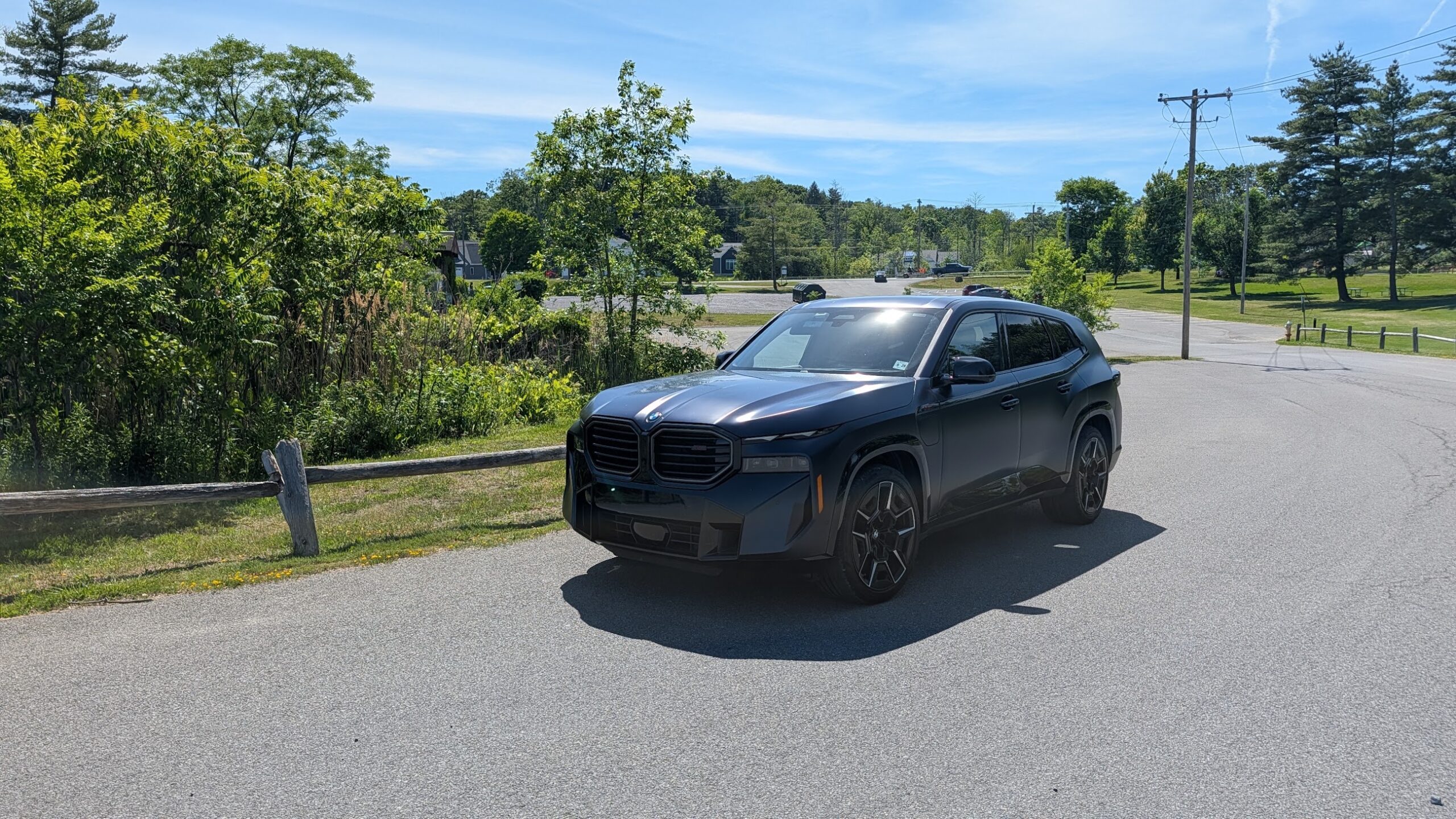
The XM’s Conundrum: A Victim of BMW’s Own Excellence
Despite its considerable merits, the BMW XM faces a unique challenge: its existence within BMW’s own exceptionally strong lineup of performance vehicles. While the XM is undeniably a competent performance SUV, it struggles to carve out a truly distinctive niche that sets it apart from its German stablemates.
For buyers seeking a well-rounded, versatile SUV, the BMW X5 often emerges as a more sensible and arguably more appealing choice. Its balance of comfort, practicality, and performance, while not reaching the stratospheric heights of the XM, offers a more accessible and broadly satisfying package for many.
For those prioritizing a performance SUV with a greater emphasis on space and capability, a BMW X7 equipped with an M package presents a compelling alternative. This larger SUV often comes in at a more competitive price point while delivering exceptional performance and significantly more interior volume than the XM.
Ultimately, if raw performance is the primary driver for a purchase, the iconic M3 and M5 sedans remain the undisputed champions within the BMW M portfolio. Their focused engineering, lighter weight, and lower center of gravity provide a more unadulterated driving experience for enthusiasts who prioritize lap times and dynamic agility above all else.
The BMW XM, therefore, finds itself in an intriguing position. Its existence is justifiable, and it is unlikely that owners who opt for this particular model will be significantly disappointed with its capabilities. However, it occupies a premium segment within a range of vehicles that consistently deliver outstanding performance and value across various categories. The XM’s challenge lies in its inability to definitively outperform or uniquely satisfy a particular need better than other, often more established or cost-effective, BMW models. It is a testament to BMW’s broad and deep product portfolio that a vehicle as capable as the XM can still be perceived as having its greatest competition coming from within its own brand.
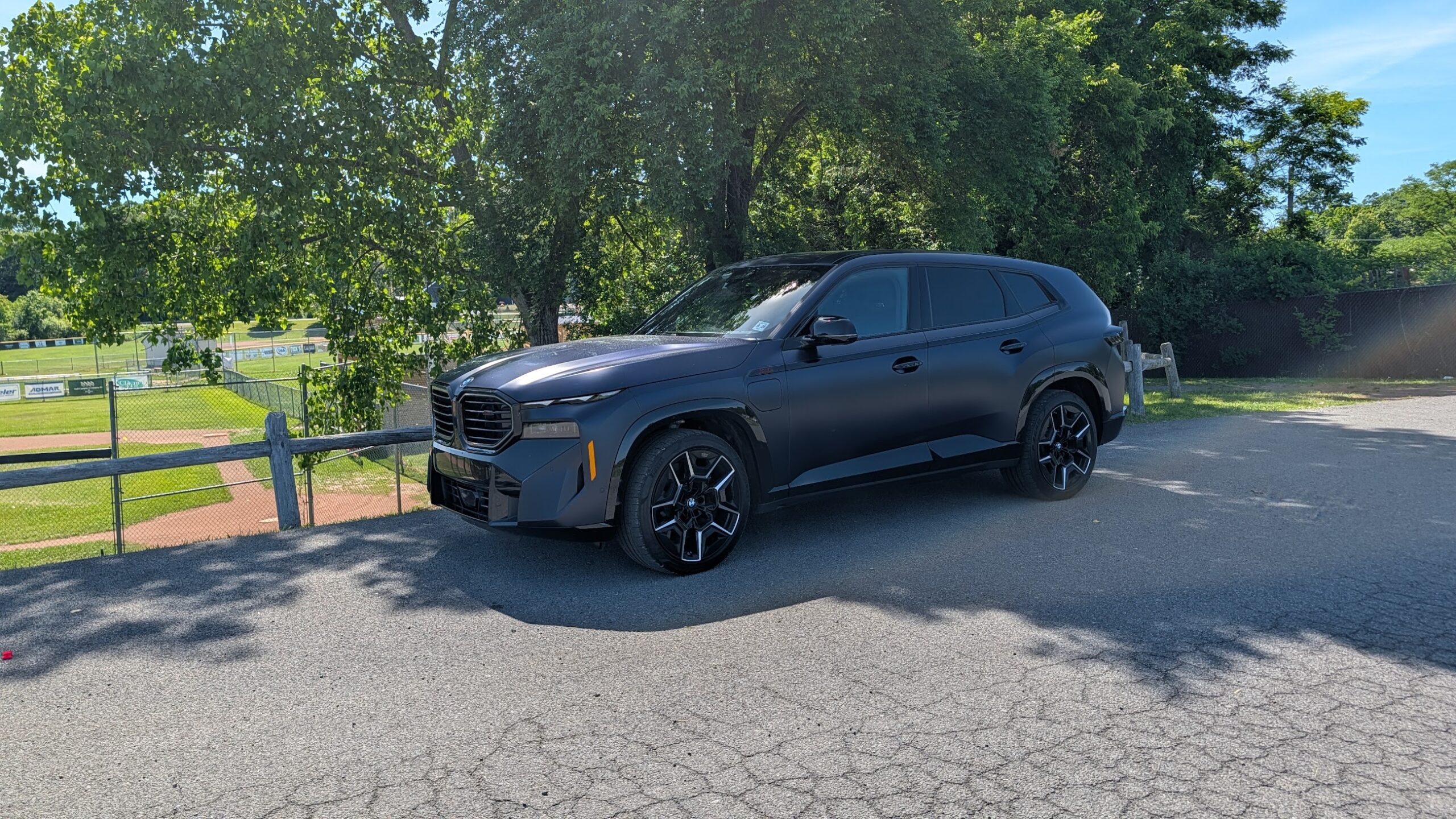
Specifications as Reviewed:
Pricing & Packages
- Base MSRP: $159,600.00
- Total Suggested Retail Price: $163,275.00 (includes $1,175.00 destination charge)
- Added Options: M Driver’s Package ($2,500.00)
Performance & Drivetrain
- Engine: 4.4-Liter BMW M TwinPower Turbo V-8 (32-valve) with cross-bank exhaust manifold and integrated electric motor (Plug-In Hybrid)
- Transmission: 8-Speed M Steptronic automatic transmission with Drivelogic and Launch Control
- Drivetrain: M xDrive All-Wheel-Drive System with M Sport Differential
- Chassis & Handling: Adaptive M Suspension Professional, Active Roll Stabilization, and Integral Active Steering
- Brakes: M Compound 4-wheel ventilated anti-lock disc brakes (ABS) with cross-drilled rotors and black calipers
Fuel Economy & Range
- Combined Fuel Economy: 47 MPGe (Electricity + Gasoline) / 14 MPG (Gasoline only)
- All-Electric Range: Up to 29 miles
- Charging: Complete charge in approximately 2 hours at 240V (Flexible Fast Charger and NEMA 5-15/14-50 adapter bundle included)
Exterior & Interior Styling
- Exterior Color: Frozen Tanzanite Blue Metallic
- Interior Upholstery: Night Blue with Vintage Coffee leather upholstery
- Trim & Accents: Carbon Fiber M Signature interior trim, leather dashboard, extended Shadowline trim, and an illuminated kidney grille
- Wheels: 22-inch M Dual-Spoke Bicolor 922M wheels
- Exhaust: Vertical quad exhaust system
Comfort & Convenience
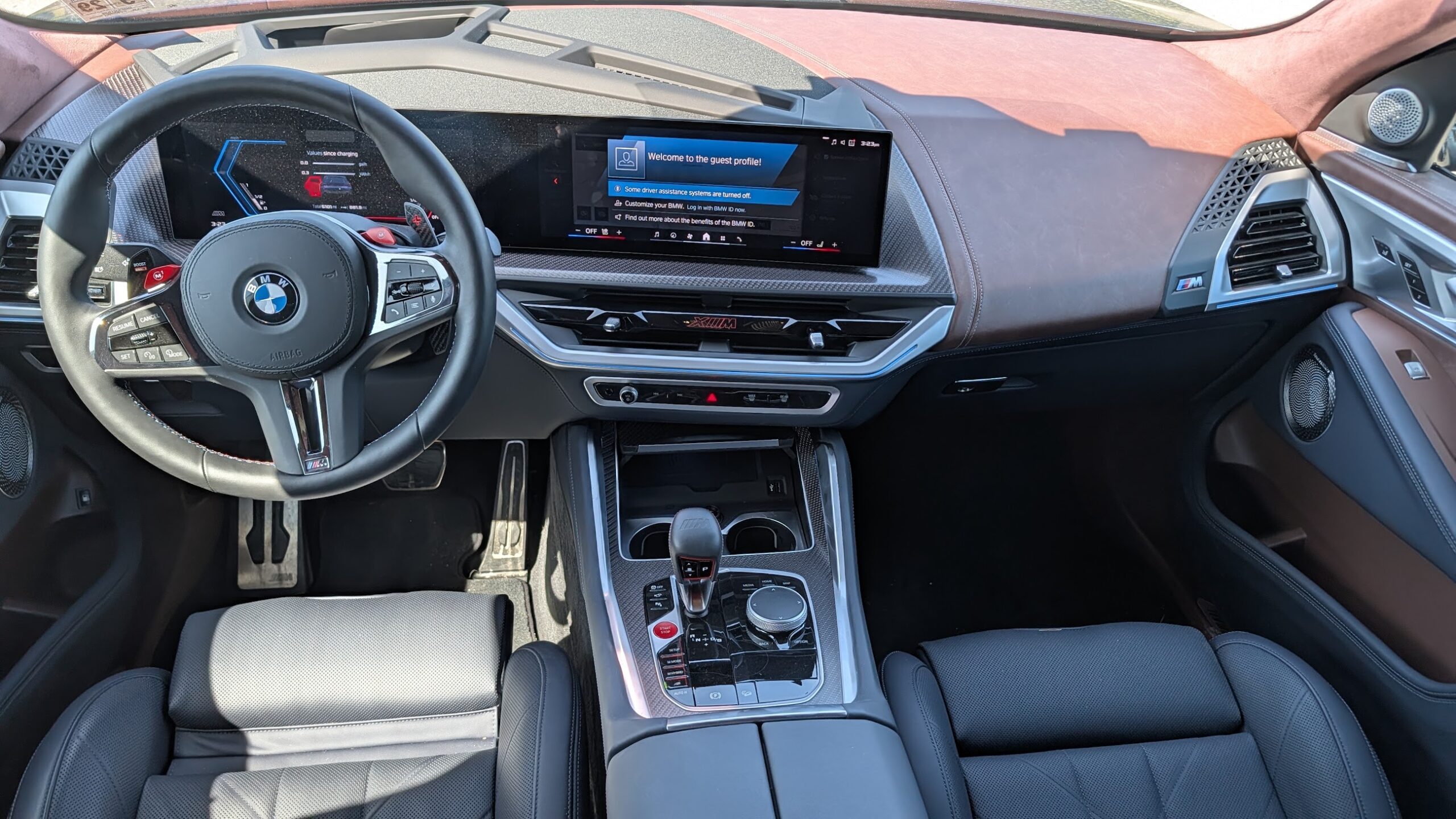
- Seating: Multi-function front seats with lumbar support, massage, ventilation, and heating; heated rear seats; exclusive M Lounge configuration in the rear
- Climate Details: Heated front armrests and steering wheel, alongside heated and cooled cup holders
- Doors: Soft-close automatic doors and Comfort Access keyless entry
Audio & Connectivity
- Sound System: Bowers & Wilkins Diamond Surround Sound System
- Interface: BMW Curved Display running iDrive 8.5, featuring Live Cockpit Pro with navigation
- Smart Tech: Apple CarPlay and Android Auto compatibility, Digital Key Plus, and Personal eSIM 5G connectivity
Safety & Driver Assistance
- Driving Assistant Professional: Includes Highway Assistant (limited term), Traffic Jam Assistant, and Active Cruise Control with Stop & Go
- Parking Assistance: Parking Assistant Plus with Surround View 3D cameras and Park Distance Control
- Security & Recording: Drive Recorder and BMW Assist eCall