












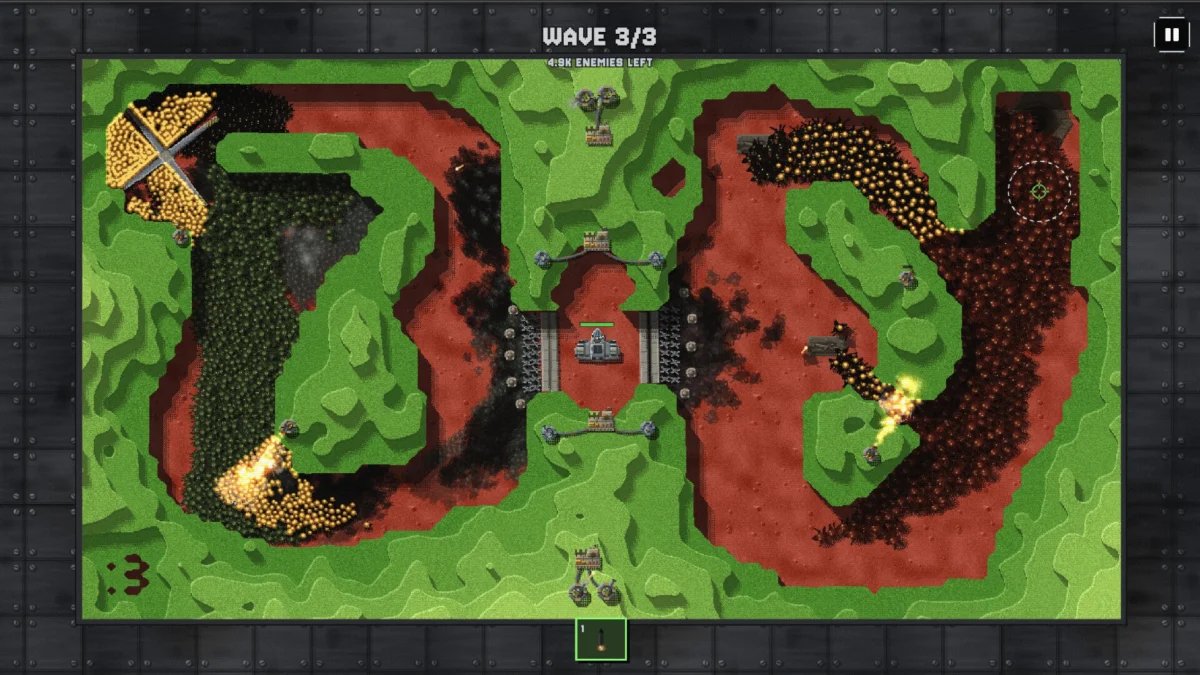
The landscape of real-time strategy gaming is set to undergo a technical shift with the imminent release of Swarmbreaker, a title developed by Paracorn that elevates the traditional tower defense subgenre through the implementation of advanced particle-based fluid dynamics. Scheduled for its full commercial launch on the Steam platform tomorrow, the game distinguishes itself from standard stationary-wave titles by treating its primary antagonists not as individual AI units, but as a cohesive, liquid-like mass. This approach forces players to move beyond static defense strategies, requiring them to account for the physical "flow" of incoming enemy swarms.
The Mechanics of Fluid-Based Warfare
In most traditional tower defense titles, enemy units follow predetermined paths, often interacting with the environment only when they encounter a specific obstacle or reach a player-controlled unit. Swarmbreaker departs from this convention by utilizing a simulation engine that allows its insectoid enemies to behave like a viscous liquid. These swarms cluster, collide, and navigate map topography with a level of realism rarely seen in the genre.
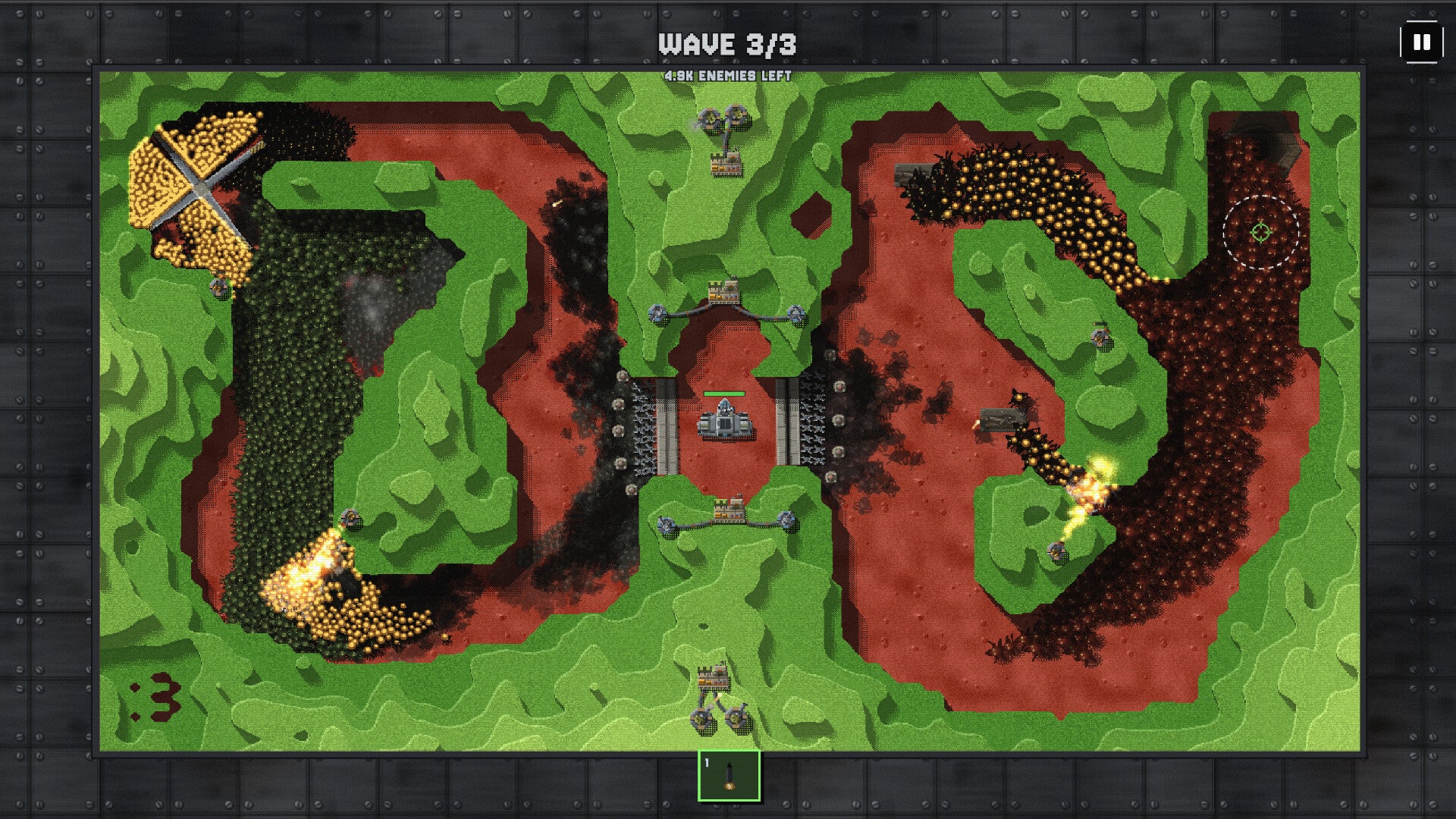
When a wave of these "space bugs" emerges from their burrows, they function as a fluid body. They can be funneled, blocked by terrain, and diverted by environmental hazards. However, this fluid nature also introduces an element of destructive erosion. As the swarm moves across the map, it physically interacts with player-placed structures, such as oil derricks and defensive turrets. If a player fails to adequately control the flow of the swarm, the creatures can overwhelm barricades, effectively dissolving defensive lines through sheer pressure and numerical density.
Development Timeline and Release Strategy
The development of Swarmbreaker has followed a deliberate path toward public testing, prioritizing community feedback before its full release.
- Early Development Phase: The project spent the majority of its development cycle in private alpha testing, where the core fluid simulation engine was optimized to ensure performance stability when handling thousands of individual particle-based entities simultaneously.
- Public Demo Release: Paracorn released a public-facing demo on Steam several weeks prior to the full launch. This allowed the studio to stress-test the simulation under various hardware configurations, ensuring that the computationally expensive fluid dynamics did not result in significant frame-rate drops for players with mid-range gaming hardware.
- Full Commercial Launch: Tomorrow marks the official transition from the demo phase to the full product release. This launch will include a comprehensive suite of maps, additional enemy types, and a broader arsenal of defensive technology.
Technical Analysis: Why Fluid Dynamics Change Strategy
The introduction of fluid-based pathfinding creates a significant shift in tactical necessity. In conventional tower defense games, the "optimal" strategy usually involves finding a singular choke point and placing high-damage-per-second units at that location. In Swarmbreaker, the "trickle-down" effect of the swarm means that a single choke point may not suffice if the volume of the fluid becomes too great.
The game requires players to manage multiple logistical tiers. First, players must secure resource-generating structures—specifically oil derricks—to fund their defense. These derricks are often placed in vulnerable locations, creating a classic strategic dilemma: protect the economy and risk the base, or sacrifice resources to build a more compact, defensible perimeter.
Furthermore, the game includes a manual intervention system. Players have access to an artillery cannon controlled via mouse input. This serves as a "fail-safe" mechanism for when the fluid simulation breaches the primary defenses. However, data from early beta testing indicates that relying solely on manual artillery is unsustainable for long-term survival, as the sheer volume of the swarm will eventually outpace the player’s clicking speed and target acquisition capabilities.
Economic and Tactical Implications
From an analytical standpoint, Swarmbreaker serves as a case study in how developers can modernize aging gaming genres by integrating high-fidelity physics engines. The tower defense genre has historically struggled with stagnation, often relying on the same mechanics established in the early 2000s. By incorporating fluid dynamics, Paracorn is moving the genre toward a more "emergent" style of gameplay, where the player is reacting to the environment rather than simply memorizing enemy pathing.
Industry analysts note that this shift also places a higher burden on the game’s balance design. If the enemy behaves like a fluid, the player’s tools must interact with that fluid in predictable, yet complex, ways. If the physics are too loose, the game becomes chaotic; if they are too rigid, the fluid mechanic loses its distinct appeal. The reception of the demo suggests that the developers have managed to strike a balance where the swarm feels dangerous yet manageable through careful placement of traps and turrets.
Official Developer Perspective
While the studio has remained relatively quiet regarding specific future updates, internal communications and community updates from Paracorn suggest a long-term commitment to expanding the game’s content. The studio’s focus at this juncture is ensuring that the launch version provides a stable foundation for the unique physics engine.
In a recent communication to the community, representatives from the development team highlighted that the primary goal of the game is to "recontextualize the feeling of being overwhelmed." By using liquid-like swarms, the developers intend to create a visceral experience where players can physically see their defenses being eroded and washed away, providing a clearer visual feedback loop regarding which defensive strategies are failing and why.
Broader Impact on the Strategy Genre
The success of Swarmbreaker could potentially influence a new wave of "physics-first" strategy games. While high-end real-time strategy (RTS) titles like Supreme Commander have historically used physics to calculate projectiles and unit movement, Swarmbreaker is one of the few titles to make the physical state of the enemy army a central pillar of the core loop.
If the launch is successful, it may validate the development cost of integrating complex simulations into smaller-budget indie games. For players, this represents an opportunity to experience a more dynamic version of the tower defense formula, moving away from the "set it and forget it" mentality that has plagued the genre for years.
As tomorrow’s release approaches, the gaming community remains attentive to how the final version will scale. With the demo having provided a proof-of-concept for the fluid dynamics, the full version’s ability to maintain that level of performance across more complex, multi-tiered maps will be the definitive metric for the game’s longevity. Whether or not Swarmbreaker becomes a staple of the genre, it has already succeeded in proving that even the most well-trodden game archetypes can still find innovation through the application of modern physics-based design.