








The landscape of consumer personal audio has undergone a seismic shift over the past decade, moving aggressively away from traditional wired connections in favor of Bluetooth integration, active noise cancellation, and proprietary wireless ecosystems. Yet, amidst the proliferation of battery-dependent earbuds and over-ear wireless headsets, a counter-movement has steadily gained momentum among audiophiles and design purists alike. Consumers are increasingly seeking the simplicity, zero-latency reliability, and uncompressed signal integrity of wired personal audio devices. Capitalizing on this burgeoning consumer appetite for retro-inspired audio hardware, multinational technology and entertainment conglomerate Sony has announced the official re-release of one of its most historically significant products: the MDR-3.
Rechristened as the MDR-3R, this modern iteration pays direct homage to the original portable headphones that debuted more than four decades ago. While the audio market has largely marched toward complex digital ecosystems, Sony’s decision to resurrect the MDR-3R represents a calculated nod to its own rich industrial design history. By blending 1979 aesthetics with subtle, necessary contemporary updates, Sony has positioned the new headphones as both a nostalgic collector’s item and a functional, everyday audio accessory for a
new generation of listeners who value physical connection over digital pairing protocols.
Historical Background and the Genesis of the MDR-3
To understand the cultural and technological significance of the MDR-3R, one must examine the landscape of portable audio in the late 1970s. Before the arrival of Sony’s iconic Walkman TPS-L2 in 1979, personal listening was largely confined to bulky, heavy studio monitors that required dedicated home stereo receivers. The concept of taking high-fidelity sound out into the urban environment was revolutionary, and it required an entirely new class of lightweight, efficient transducers.
When Sony introduced the original MDR-3 headphones alongside the Walkman, they established a new paradigm for mobile listening. The designation "MDR" stood for Micro Dynamic Receiver, signaling a radical miniaturization of dynamic driver technology. Prior to these lightweight designs, portable sound reproduction was often compromised by cheap, tinny earbud inserts or excessively heavy headgear. The original MDR-3 broke the mold by offering a comfortable, on-ear supra-aural design that delivered surprisingly rich, balanced acoustic performance despite its diminutive physical footprint.
Over the decades, original units of the MDR-3 have attained legendary status among vintage audio collectors, industrial design enthusiasts, and fans of retro consumer electronics. Their distinctive visual identity—featuring exposed metal headbands and vibrant, high-contrast foam earpads—became emblematic of the dawn of the portable music era. By bringing back the MDR-3R, Sony is tapping directly into this wave of mid-century and late-century nostalgia, joining a broader industry trend where legacy tech brands reintroduce classic hardware to satisfy modern consumers experiencing digital fatigue.
Design Fidelity Meets Modern Utility
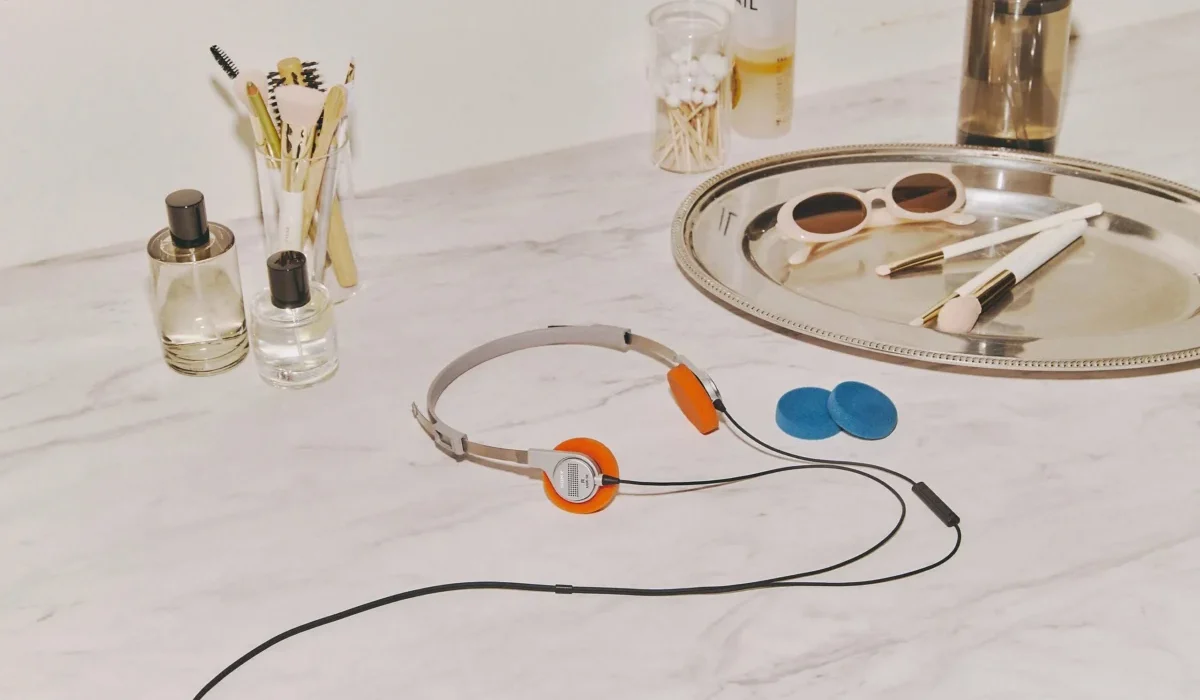
Despite a gap of more than forty years between the debut of the original hardware and the release of the MDR-3R, Sony’s engineering and design teams went to great lengths to preserve the physical integrity of the 1979 model. A casual glance at the MDR-3R reveals an almost exact visual replica of its predecessor. The most striking aesthetic features have been meticulously retained, including the classic blue and orange foam earpads that originally defined the headset’s playful yet functional character.
However, a faithful recreation of a 1979 audio device would present significant usability challenges in the modern computing and mobile landscape. Traditional 3.5mm headphone jacks have been systematically phased out across the vast majority of flagship smartphones, tablets, and ultra-thin laptops. To bridge this technological divide without compromising the core ethos of the device, Sony updated the connection standard to USB-C. This integration ensures seamless compatibility with contemporary hardware, ranging from modern Android smartphones and Apple iPad models to Windows and macOS laptops, all without requiring cumbersome dongles or analog-to-digital adapters.
Beyond the updated connectivity port, the MDR-3R features a discreet, highly functional inline microphone and remote control. This modern addition allows users to manage voice calls, adjust playback, and interact with digital assistants directly from the cable, addressing the functional necessities of daily life in the 2020s. Crucially, these modifications have been implemented with restraint, ensuring that the visual silhouette and tactile experience of the headphones remain fundamentally true to the 1979 original.
Acoustic Architecture and Engineering Specifications
While the exterior pays tribute to the past, the interior acoustic architecture of the MDR-3R remains faithful to the engineering principles that made the original a commercial and critical success. Sony has equipped the new MDR-3R with the exact same 23mm dynamic drivers utilized in the 1979 model. By retaining these historical drivers, Sony has preserved the distinctive sound profile that characterized the late-seventies portable audio revolution.
In an era dominated by digital signal processing (DSP), software-driven equalization, and heavy bass-boosting profiles, the acoustic signature of the MDR-3R offers a refreshing alternative. Audiophiles familiar with the legacy unit report a remarkably balanced, neutral soundstage that prioritizes vocal clarity and natural instrument separation over artificial low-end enhancement. The 23mm drivers deliver an honest, uncolored reproduction of source material, making them well-suited for a wide variety of musical genres, podcasts, and spoken-word content.

Furthermore, the physical construction of the MDR-3R reflects the minimalist engineering philosophy of classic Japanese consumer electronics. The headband and structural chassis are constructed from a durable combination of stainless steel and lightweight aluminum. This material choice yields an extraordinarily lightweight physical profile that rests effortlessly on the user’s ears, eliminating the clamping fatigue often associated with heavier, closed-back over-ear headphones.
The Plug-and-Play Philosophy: Eliminating Modern Friction Points
One of the most compelling selling points of the MDR-3R is its complete rejection of the complexities that govern contemporary wireless audio devices. Modern Bluetooth headphones and true wireless earbuds, while undeniably convenient in terms of cord-free movement, introduce a host of maintenance and reliability challenges that many consumers have grown weary of managing.
Wireless headphones require internal lithium-ion batteries that degrade over time, necessitating regular recharging schedules and eventually leading to the obsolescence of the hardware once the battery cells fail. Furthermore, wireless devices are frequently plagued by Bluetooth pairing dropouts, audio latency issues, firmware update requirements, and codec compatibility hurdles.
The MDR-3R bypasses these friction points entirely through a strict adherence to a plug-and-play philosophy. Because the device draws power directly from the connected USB-C host device, there are no internal batteries to charge, monitor, or replace. There is no pairing menu to navigate, no companion smartphone application required to configure settings, and zero audio latency. Users simply plug the cable into their device and experience immediate, uninterrupted audio playback. This absolute simplicity positions the MDR-3R as a reliable, maintenance-free backup or primary listening device for commuters, remote workers, and students.
Market Positioning, Pricing, and Availability
Sony has strategically positioned the MDR-3R at an accessible price point to encourage impulse purchases from nostalgic consumers and curious audiophiles alike. The headphones are currently available for purchase through official Sony retail channels and authorized electronics distributors at a manufacturer’s suggested retail price of $59 USD.
This competitive pricing places the MDR-3R firmly in the casual-to-mid consumer audio tier, making it an affordable entry point for those looking to experience vintage acoustic styling without making a major financial commitment. Industry analysts note that at this price point, the MDR-3R competes not only with budget-friendly wired earbuds but also with low-end wireless earbuds plagued by poor build quality. By leveraging its historic brand equity and reputation for reliable acoustic engineering, Sony has created a product that offers high perceived value based on its design heritage alone.
Broader Industry Implications and the Counter-Trend of Wired Audio
The commercial release of the Sony MDR-3R is indicative of a broader cultural and economic shift within the consumer electronics market. For the past decade, the prevailing narrative among major tech manufacturers has been the systematic elimination of physical ports in favor of wireless ecosystems. However, consumer behavior has begun to push back against this enforced modernization.
A growing subculture of Gen Z and millennial consumers—often documented across social media platforms like TikTok and Instagram—has embraced wired headphones not merely out of functional necessity, but as a deliberate fashion statement and a rejection of hyper-connectivity. Wired headphones offer a tangible, analog connection to media consumption, free from the notifications and digital distractions that accompany smartphone-paired wireless devices. Furthermore, the resurgence of physical media, including vinyl records, cassette tapes, and CDs, has created a fertile ecosystem for retro-styled hardware like the MDR-3R.
By leaning into this nostalgic counter-trend, Sony has demonstrated a keen awareness of shifting consumer sentiment. Rather than viewing the past as obsolete, the company has successfully reframed its historical catalog as a source of premium, authentic design in an increasingly homogenized technological world.
Conclusion: A Timeless Classic for the Digital Age
The introduction of the Sony MDR-3R successfully bridges the gap between forty-five years of audio engineering history and the demands of modern digital connectivity. By retaining the exact 23mm drivers, lightweight stainless steel and aluminum construction, and iconic blue and orange foam earpads of the 1979 original, Sony has delivered an authentic vintage experience. Simultaneously, the integration of a USB-C connection and an inline microphone ensures that the device remains fully functional within contemporary computing and mobile environments.
At a price point of $59 USD, the MDR-3R offers an appealing blend of historical design, reliable plug-and-play functionality, and uncompressed acoustic performance. As consumers continue to seek relief from the battery anxiety and pairing complexities of modern wireless technology, Sony’s retro-inspired revival proves that sometimes, the best way forward is to look back.