






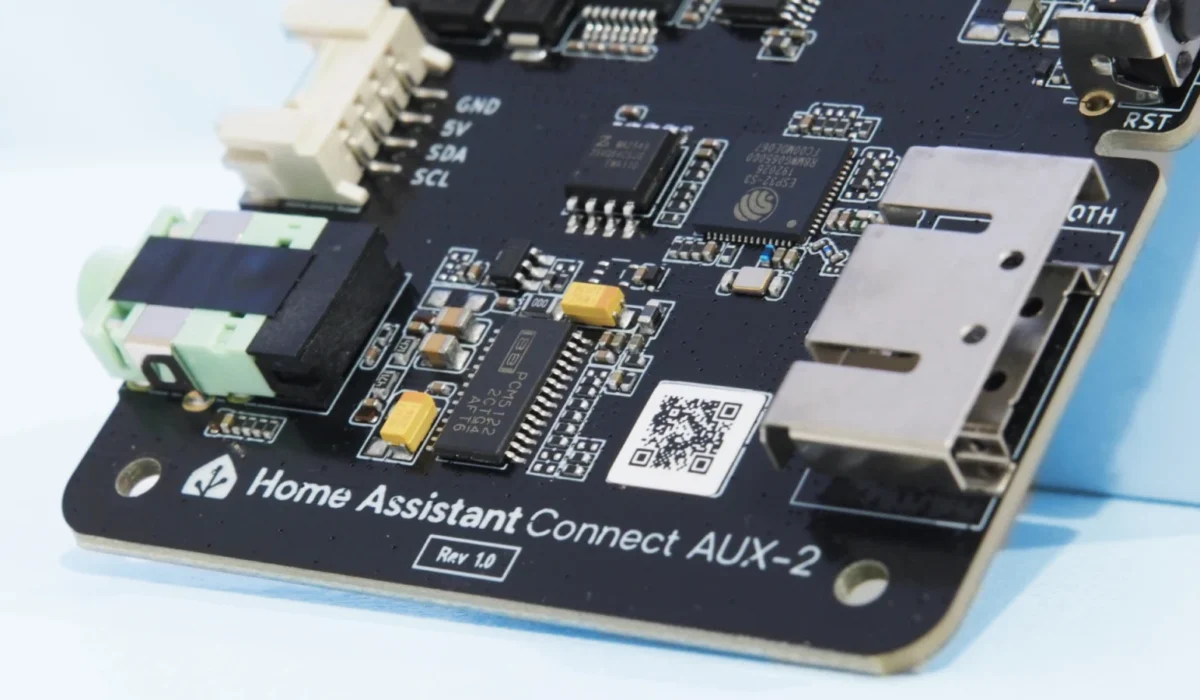
Nabu Casa has officially announced the global release of the Home Assistant Connect AUX-2, a multi-functional hardware device engineered to integrate legacy electronics, audio systems, and local automation peripherals into modern smart home ecosystems. Available worldwide for $69 or €59, the compact box functions as a centralized utility tool capable of high-fidelity audio streaming, RS-232 serial control, Bluetooth proxy extension, and remote adapter housing. The hardware release reflects the commercial entity’s ongoing alignment with the Open Home Foundation, funding initiatives centered on privacy, sustainability, and user sovereignty over connected environments.
The product development cycle of the Connect AUX-2 represents an evolution of modular hardware concepts previously introduced by Nabu Casa. Last October, the organization showcased portable Z-Wave capabilities utilizing Wi-Fi and Power over Ethernet (PoE), establishing the foundational architecture for remote adapter connectivity. Concurrently, internal engineering teams were investigating methods to reliably bridge legacy serial-controlled machinery into the Home Assistant software ecosystem. Because PoE infrastructure accounted for the majority of the projected hardware expenditure, developers determined that incorporating auxiliary input/output ports would be economically viable.
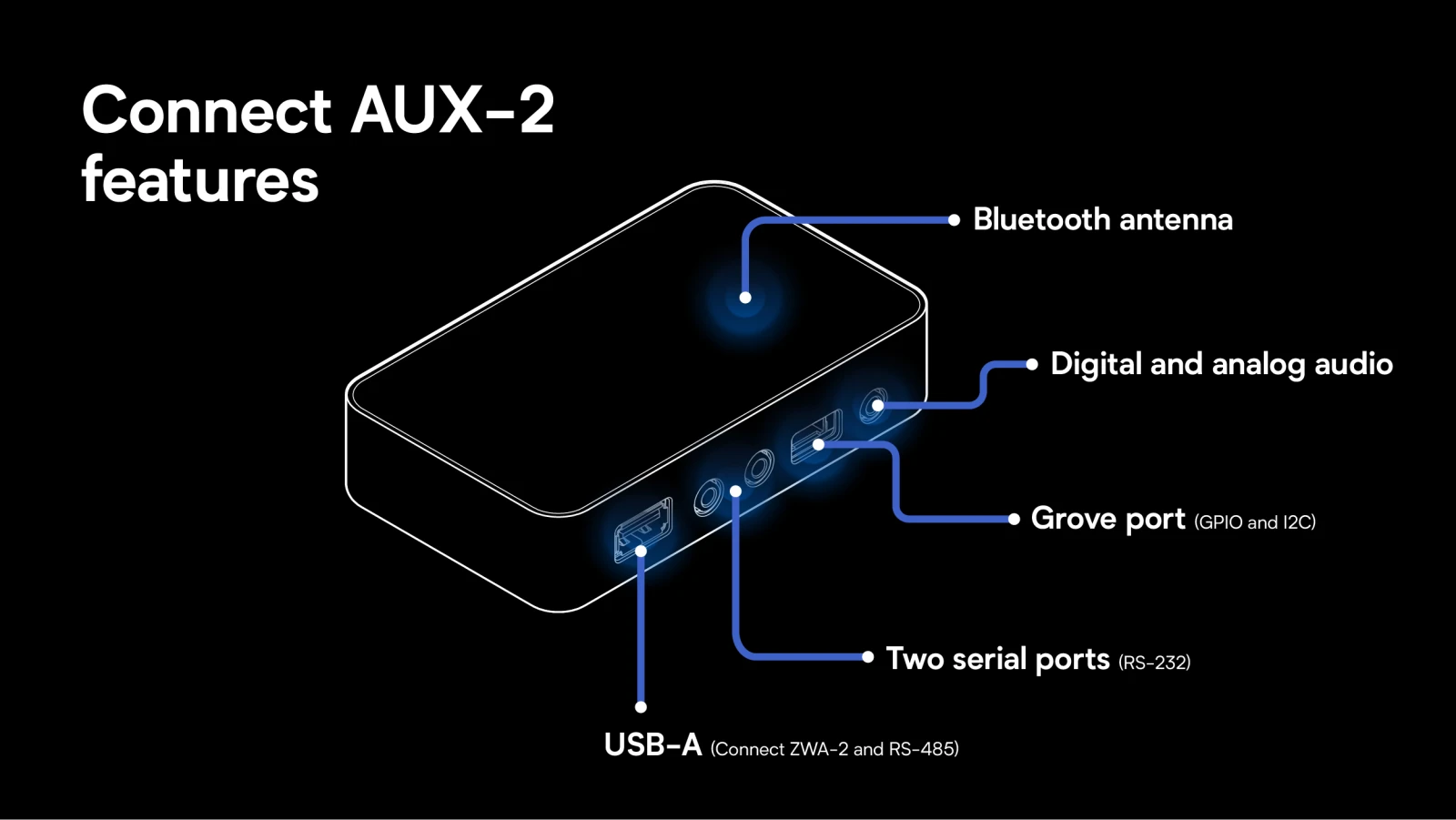
The resulting device merges several distinct technical specifications into a single housing. Named for its core capabilities—Audio, USB, and X for serial communication—the AUX-2 underwent multiple design iterations. Engineers added a combined analog and digital audio jack to support emerging self-hosted audio streaming protocols, integrated a second serial port to accommodate complex automation setups, incorporated a versatile Grove connector for external environmental sensors, and optimized the onboard Bluetooth antenna.
At the core of the Connect AUX-2’s feature set is its emphasis on circular economy principles and device longevity. By enabling consumers to repurpose functioning electronics that lack native smart connectivity, the hardware serves as an alternative to premature equipment replacement. The underlying philosophy aligns with the Open Home Foundation’s "no device left behind" initiative, which posits that the most environmentally sustainable device is the one already owned by the consumer.
Advanced Audio Integration and Multi-Room Synchronization
A primary capability of the Connect AUX-2 is its ability to modernize legacy hi-fi equipment and standalone amplifiers. Many high-end audio receivers manufactured decades ago remain mechanically and acoustically sound but are excluded from contemporary multi-room streaming configurations. The AUX-2 addresses this gap by combining an optical digital audio input with a bi-directional serial control port.
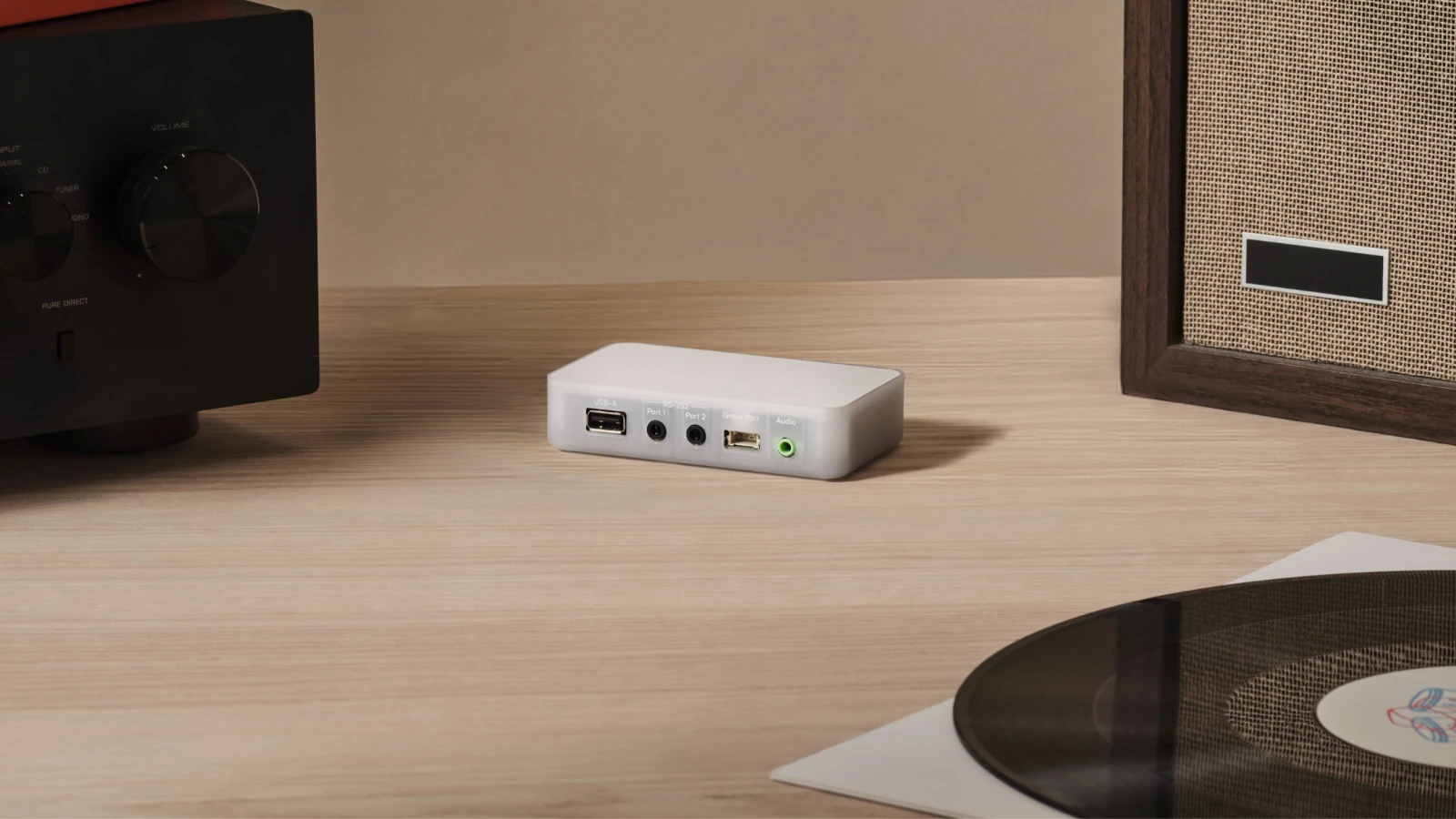
The optical digital interface delivers lossless, CD-quality audio signals directly to connected amplifiers. Simultaneously, the serial connection provides automated control over power states, volume levels, and input sources, allowing legacy equipment to be managed from system standbys without drawing excessive standby power. According to hardware specifications, the AUX-2 maintains an operational power draw of under two watts.
Furthermore, the hardware features an upgraded digital-to-analog converter (DAC) that surpasses previous iterations found in Nabu Casa hardware releases, ensuring compatibility with a wide array of auxiliary inputs. The device automatically detects whether an attached audio cable utilizes an analog or digital format and dynamically switches playback parameters accordingly.
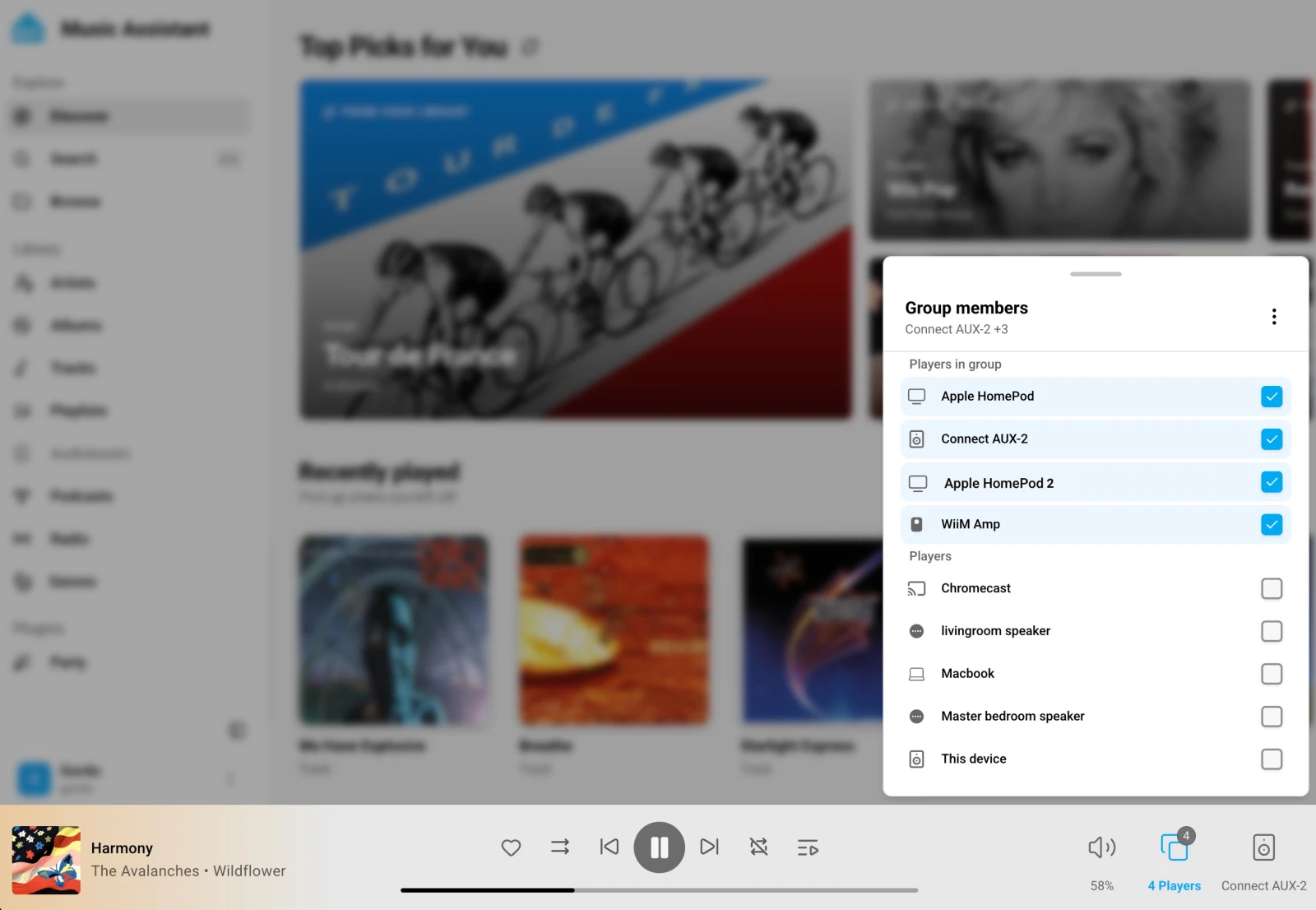
This audio pipeline is superintended by Music Assistant, an open-source music management platform that aggregates various streaming providers and local digital music libraries into a unified interface. Recent updates to Music Assistant introduced the Sendspin audio protocol, which facilitates synchronized audio playback across disparate smart speaker brands. Consequently, users can group multiple Connect AUX-2 units alongside commercial hardware ecosystems—such as Apple HomePods or Sonos speakers—achieving synchronized multi-room audio without proprietary ecosystem lock-in.
Granular Hardware Control via Serial and Modbus Protocols
The integration of serial communication ports provides an alternative to cloud-dependent applications for household appliances, solar inverters, and climate control systems. Industrial and commercial control systems have relied on serial standards for decades due to their reliability and resistance to network interference. The Connect AUX-2 equips users with two physical serial ports, enabling simultaneous management of multiple hardware peripherals.
Out of the box, the AUX-2 implements the RS-232 communication standard, which is widely represented on legacy audio-visual receivers and television displays. Additionally, users can utilize the onboard USB-A port in conjunction with an inexpensive RS-485 adapter to communicate with Modbus-compatible devices, such as solar power generation systems and industrial environmental sensors.
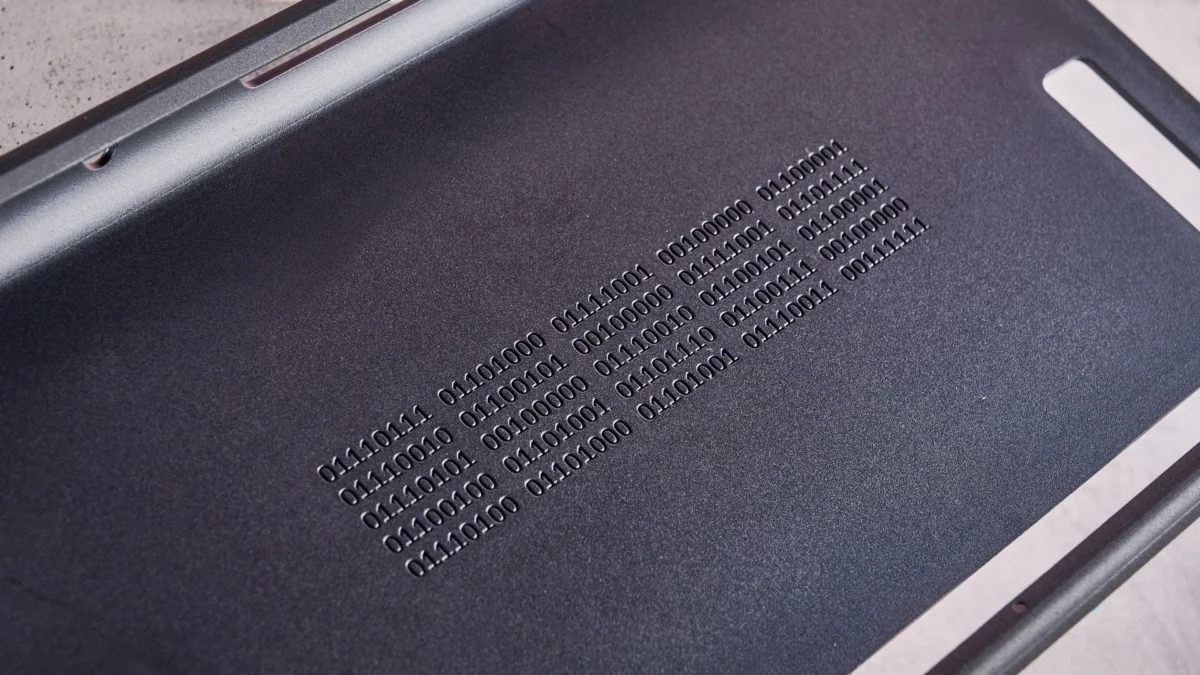
To mitigate installation challenges commonly associated with serial cabling, Nabu Casa incorporated physical toggle switches on the underside of the device. These switches allow installers to adapt to varying receive (RX) and transmit (TX) pin configurations without disassembling the hardware casing or modifying custom cables. The inclusion of these features allows users to isolate smart televisions from external internet connections—thereby restricting telemetry collection—while retaining local, automated control via Home Assistant integrations.
Network-Extended Radio Adapters and Bluetooth Proxy
Signal attenuation remains a significant challenge in large or densely constructed residential environments, where central home automation servers are frequently housed in basements or utility closets. While radio frequency adapters for protocols like Z-Wave and Zigbee offer robust performance, their utility is often constrained by physical tethering to USB ports on the primary host controller.
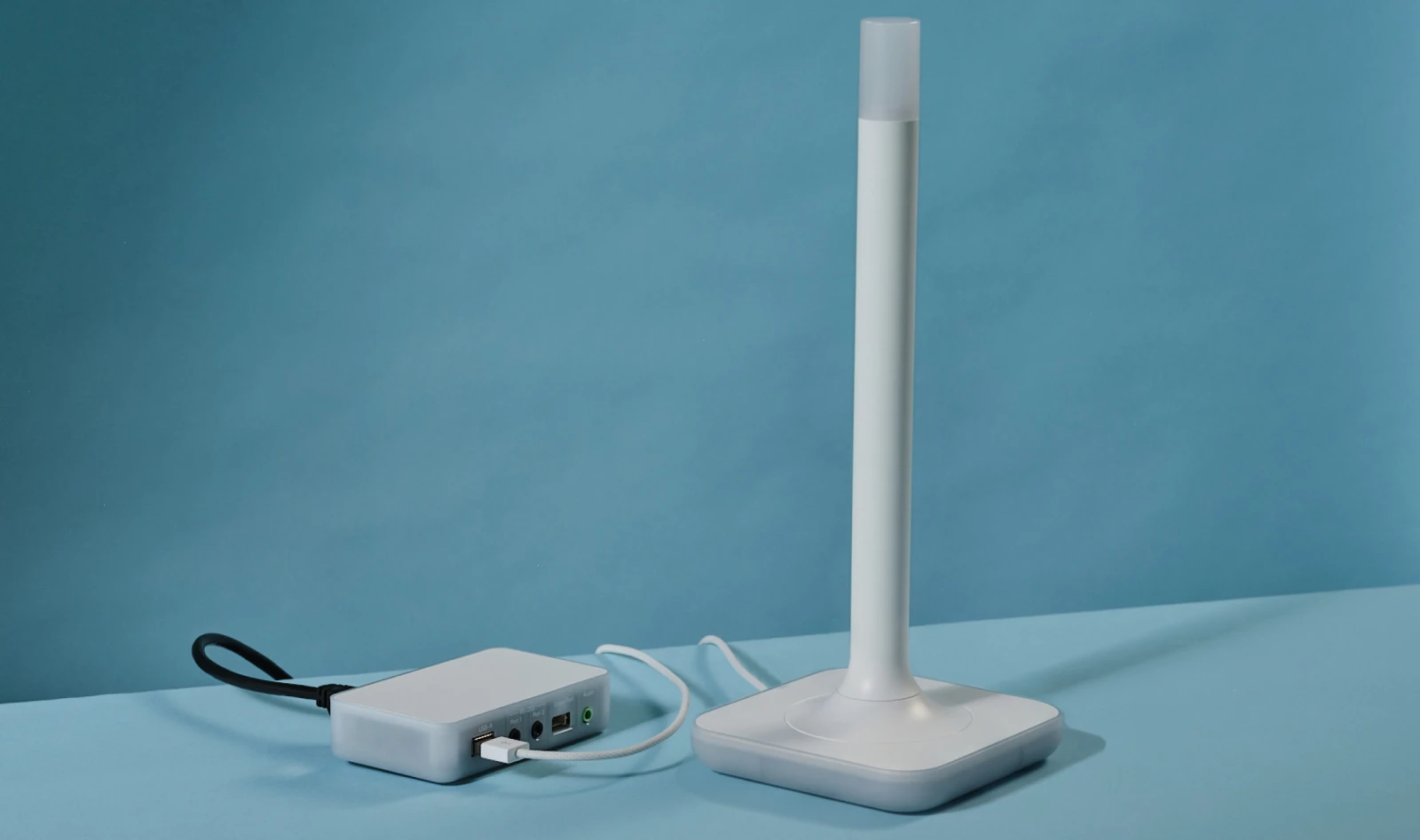
The Connect AUX-2 resolves this limitation by functioning as a network-attached host for compatible USB adapters, such as the Connect ZWA-2. By routing adapter data over a local area network or a dedicated Ethernet connection, users can deploy radio transceivers in optimal physical locations throughout a building. While long-term testing confirms high reliability for Z-Wave implementations over network connections, the manufacturer notes that Zigbee deployment remains experimental due to sensitivity to network latency and potential RF interference. Thread connectivity, owing to stringent latency thresholds, is currently unsupported over network bridges.
In addition to serving as a remote adapter housing, the AUX-2 operates as a native Bluetooth proxy within the Home Assistant architecture. Equipped with an optimized internal antenna and decoupled from Wi-Fi interference when operating via Ethernet, the device extends Bluetooth coverage throughout a residence, facilitating the direct local pairing of environmental sensors, presence detectors, and smart locks without reliance on manufacturer-specific cloud hubs.
Modular Extensibility and Power over Ethernet Implementation
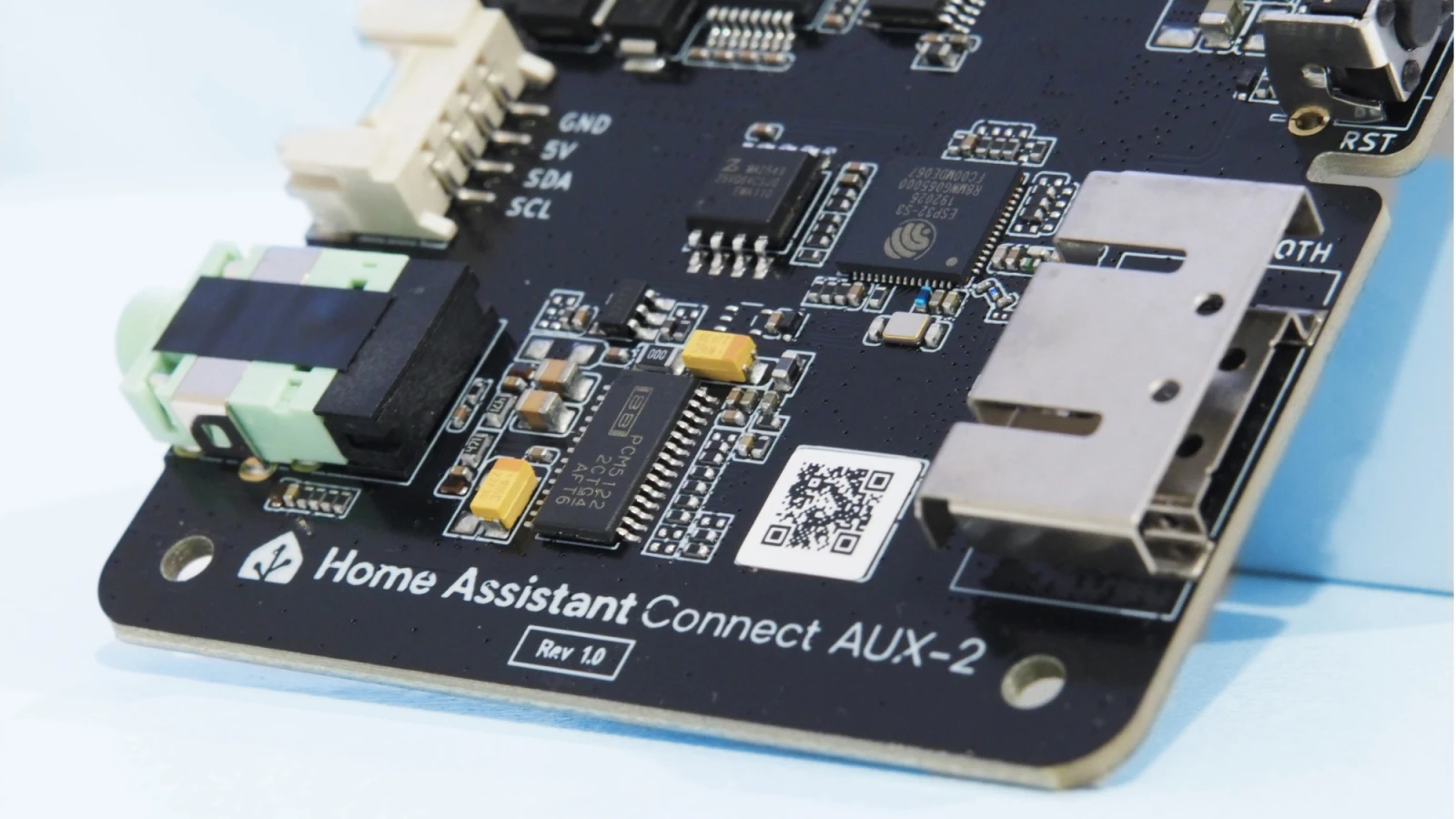
Reflecting the open-source ethos of the Home Assistant community, the Connect AUX-2 is designed for hardware modification and firmware flashing. The device eschews proprietary plastic clips and adhesives in favor of a four-screw enclosure, providing immediate access to the internal printed circuit board. Nabu Casa has committed to publishing complete PCB schematics and 3D-printable case designs to encourage community development and custom peripheral integration.
For hardware telemetry expansion, the device features a Grove port supporting General Purpose Input/Output (GPIO) and Inter-Integrated Circuit ($I^2C$) protocols. This interface allows users to attach inexpensive environmental sensors—measuring ambient temperature, humidity, or barometric pressure—directly to the AUX-2. These metrics are exposed instantly to the Home Assistant environment for use in automated control loops, such as monitoring server rack temperatures or uninterruptible power supply (UPS) performance.
A frequently requested feature integrated into the AUX-2 is Power over Ethernet (PoE) support. By combining power delivery and data transmission into a single Ethernet cable, the hardware offers installation flexibility in locations lacking standard electrical outlets. Extensive compatibility testing across commercial network switch hardware ensures stable power delivery under varying network loads. Alternatively, the device can be powered via a standard USB connection and communicate wirelessly via Wi-Fi.
Market Implications and Economic Model
The commercial release of the Connect AUX-2 underscores a broader strategic shift within the smart home sector toward interoperability, data privacy, and hardware longevity. By providing standardized bridges for proprietary or legacy equipment, Nabu Casa aims to mitigate consumer frustration arising from discontinued cloud services and mandatory software updates.
As a commercial partner of the Open Home Foundation, Nabu Casa directs revenues generated from hardware sales toward the continuous development of the Home Assistant software ecosystem and core infrastructure projects. This funding model links commercial hardware acquisition directly to open-source software advancement, ensuring that protocol integrations—such as enhanced serial communication and network-based radio routing—remain accessible to the broader DIY automation community without subscription paywalls.