





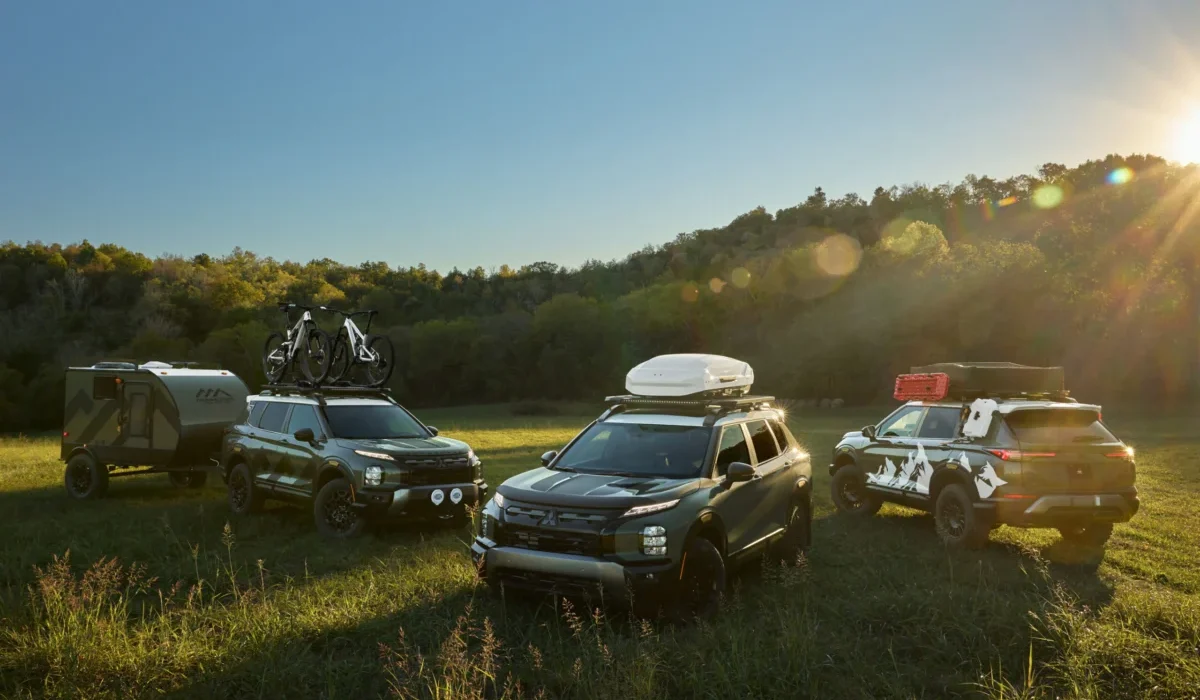
Mitsubishi Motors has officially marked its high-profile return to the Specialty Equipment Market Association (SEMA) Show in Las Vegas after a hiatus lasting more than a decade. The Japanese automaker chose the premier automotive specialty products trade event to unveil the 2028 Mitsubishi Outlander Diamond Trail Edition, a vehicle engineered to serve as the spearhead for a new generation of rugged, off-road-focused production models. By reaching back into its rich heritage of all-terrain engineering—a legacy built through decades of grueling international rally competition, including the legendary Dakar Rally—Mitsubishi is revitalizing the foundational DNA that once defined its global market presence.
The debut of the Outlander Diamond Trail Edition at SEMA is more than a mere design exercise; it represents a strategic pivot for the brand. As consumer demand for adventure-ready, rugged utility vehicles continues to dominate the global automotive landscape, mainstream and crossover manufacturers are increasingly forced to look beyond basic urban utility. Mitsubishi’s return to SEMA after a 14-year absence underscores a concerted corporate effort to inject vitality, adventure-oriented capability, and emotional appeal back into its vehicle lineup. Industry analysts view the announcement as a critical litmus test for the brand’s ability to capture a larger share of the lucrative enthusiast and outdoor-lifestyle demographics.
Evolution of the S-AWC System and Performance Upgrades
Beneath the rugged exterior aesthetics, the 2028 Outlander Diamond Trail Edition sets itself apart from standard crossover offerings through a comprehensive suite of mechanical and software enhancements. Most notably, Mitsubishi has upgraded its signature Super-All Wheel Control (S-AWC) system, making the torque-vectoring all-wheel-drive architecture faster to react and more precise in its power distribution.
Engineers have integrated an entirely new "Rock mode" into the vehicle’s multi-mode drive selector. This specialized setting is specifically calibrated to optimize individual wheel brake control, effectively mitigating wheel-slip in low-traction environments while simultaneously maximizing grip across uneven, rocky terrain. By dynamically managing brake pressure and torque transfer, the system allows the crossover to navigate obstacles that would typically stall standard family-haulers.
In addition to software recalibrations, the Diamond Trail Edition features heavily revised physical geometry designed to improve off-road clearance. The vehicle incorporates newly redesigned front and rear bumpers that drastically improve approach and departure angles, reducing the likelihood of scraping or damaging body panels when transitioning over steep inclines or descending into deep ruts. Sturdy over-fenders have been fitted to accommodate the wider stance and protect the vehicle’s flanks from flying debris, rocks, and brush.
Exterior Styling and Aesthetic Heritage
Aesthetically, the Outlander Diamond Trail Edition pays homage to vintage overland vehicles while maintaining modern sophistication. The exterior is coated in an exclusive, nature-inspired hue known as Trail Green Metallic. To further emphasize its classic outdoor credentials, buyers can specify a contrasting white roof, a design cue reminiscent of iconic vintage utility vehicles and expedition wagons.
The front fascia receives a purposeful refresh, highlighted by a matte-black upper and lower grille assembly paired with black Dynamic Shield trim, replacing the bright chrome accents typically found on standard trim levels. This darkened theme extends to the headlights, which feature black bezels to impart a more aggressive, focused gaze. Sturdy black alloy wheels are wrapped in heavy-duty Nexen Roadian ATX all-terrain tires, providing a functional balance between highway composure and genuine off-road bite. Capping off the exterior modifications are raised black roof rails, engineered to support heavy rooftop cargo systems, awnings, or rooftop tents for extended backcountry excursions.
Interior Craftsmanship and Practicality
Inside the cabin, the Diamond Trail Edition balances rugged utility with modern comfort. Recognizing that outdoor enthusiasts frequently encounter wet, muddy, or sandy conditions, Mitsubishi has outfitted the interior with durable, water-resistant upholstery. This specialized material allows occupants to enter the vehicle following hiking, kayaking, or mountain biking excursions without fear of permanently staining or damaging the seating surfaces.
Cabin ergonomics remain consistent with the high standards of the current Outlander generation, offering generous passenger space across three rows while integrating intuitive infotainment technologies and advanced driver-assistance systems. The inclusion of easy-to-clean cargo mats and protective door sill plates ensures that the cabin remains resilient against the wear and tear associated with active outdoor lifestyles.
Timeline and Market Availability

The introduction of the 2028 Outlander Diamond Trail Edition at SEMA marks the beginning of a prolonged rollout phase for the brand. According to official corporate timelines shared at the exhibition, the vehicle is slated to officially enter production and arrive at North American dealerships in calendar year 2027.
This phased timeline allows Mitsubishi to build sustained marketing momentum leading up to the vehicle’s commercial launch. The SEMA display serves as a testing ground for public and media reception, providing the manufacturer with valuable feedback regarding consumer appetite for factory-backed off-road packages. Dealership networks across the United States and Canada have already expressed enthusiasm, anticipating that the Diamond Trail badge will attract showroom traffic from buyers who might otherwise gravitate toward traditional truck-based SUVs.
Historical Context: A Decade-Long Absence from SEMA
Mitsubishi’s absence from the SEMA Show since 2012 represents a significant chapter in the company’s recent corporate history. During the early 2000s, the brand was a regular fixture on the Las Vegas convention center floor, frequently showcasing high-performance variants like the Lancer Evolution and heavily modified Eclipses that catered directly to the tuning and aftermarket subculture.
However, as corporate priorities shifted in the 2010s toward mainstream crossovers, fuel efficiency, and stabilizing global operations, high-profile aftermarket activations were scaled back. The 2026 return signals a renewed corporate confidence. Under the umbrella of the Renault-Nissan-Mitsubishi Alliance, the brand has steadily stabilized its product portfolio, modernized its core offerings, and achieved consistent sales growth in key global regions. Returning to SEMA with an adventure-focused crossover rather than a traditional sports sedan illustrates a strategic alignment with current consumer trends, shifting away from asphalt-bound tuning toward the booming overland and outdoor recreation market.
Broader Industry Implications and Competitor Analysis
The launch of the Diamond Trail sub-brand positions Mitsubishi to directly challenge established competitors in the ruggedized compact and mid-size crossover space. Over the past several years, mainstream automakers have rushed to introduce dedicated off-road trims to their SUV lineups. Notable examples include Subaru’s Wilderness series, Honda’s TrailSport models, Ford’s Timberline family, and Toyota’s TRD Off-Road and woodland editions.
These factory-engineered off-road packages have proven to be immensely popular and highly profitable. They allow automakers to command premium pricing while appealing to consumers who value the aesthetic and psychological reassurance of all-terrain capability, even if the vehicle spends the majority of its operational life navigating suburban pavement. By introducing the Outlander Diamond Trail Edition, Mitsubishi is successfully filling a gap in its own portfolio, providing dealers with a direct competitor to vehicles like the Subaru Forester Wilderness and Toyota RAV4 TRD Off-Road.
Furthermore, analysts note that the success of the Diamond Trail line could pave the way for similar rugged treatments across other models in Mitsubishi’s global lineup, such as the smaller Eclipse Cross or future electrified platforms. As the automotive industry transitions toward electrification, integrating mechanical and software-based off-road systems like the enhanced S-AWC framework ensures that Mitsubishi can maintain its engineering credibility regardless of powertrain evolution.
Official Corporate Statements and Future Outlook
While specific executive commentary at the SEMA unveiling emphasized the emotional connection between the brand’s historic rally victories and its current design trajectory, corporate representatives stressed that the Diamond Trail Edition is a clear indicator of where the company is heading.
"Our return to SEMA is a celebration of what has always made Mitsubishi special: a relentless drive to explore, conquer challenging terrain, and engineer vehicles that inspire confidence in any environment," a company spokesperson noted during the press briefing. "The Outlander Diamond Trail Edition is not just a concept or a styling exercise; it is a preview of a rugged new chapter for our brand—one that honors our past while delivering the capability our modern customers demand."
As the automotive sector looks toward the latter half of the decade, the success of the 2028 Mitsubishi Outlander Diamond Trail Edition will serve as an important bellwether for the brand’s long-term resurgence in North America. By leaning into its heritage of durability, enhancing its proprietary all-wheel-drive technology, and meeting consumer demand for adventure-ready utility, Mitsubishi is positioning itself to capture a vital and growing segment of the modern automotive market.