





Home Assistant has officially rolled out its 2026.11 update, marking what developers have described as the most expansive and feature-rich release in the platform’s history. Driven by years of community development, architectural refactoring, and extensive beta testing, the latest iteration introduces a fully integrated Marketplace to replace HACS, sophisticated target exclusion logic for automations, native support for Matter 1.5 cameras, and deep integration for long-range wireless protocols such as LoRaWAN.
This release also coincides with the return of the annual "Month of What the Heck?!" campaign, which shifts its focus toward household members and non-technical residents who interact with smart home setups daily. Alongside global community meetups spanning more than 30 countries, the November update solidifies Home Assistant’s position as a premier, interoperable open-source home automation ecosystem.
From Community Store to Native Marketplace
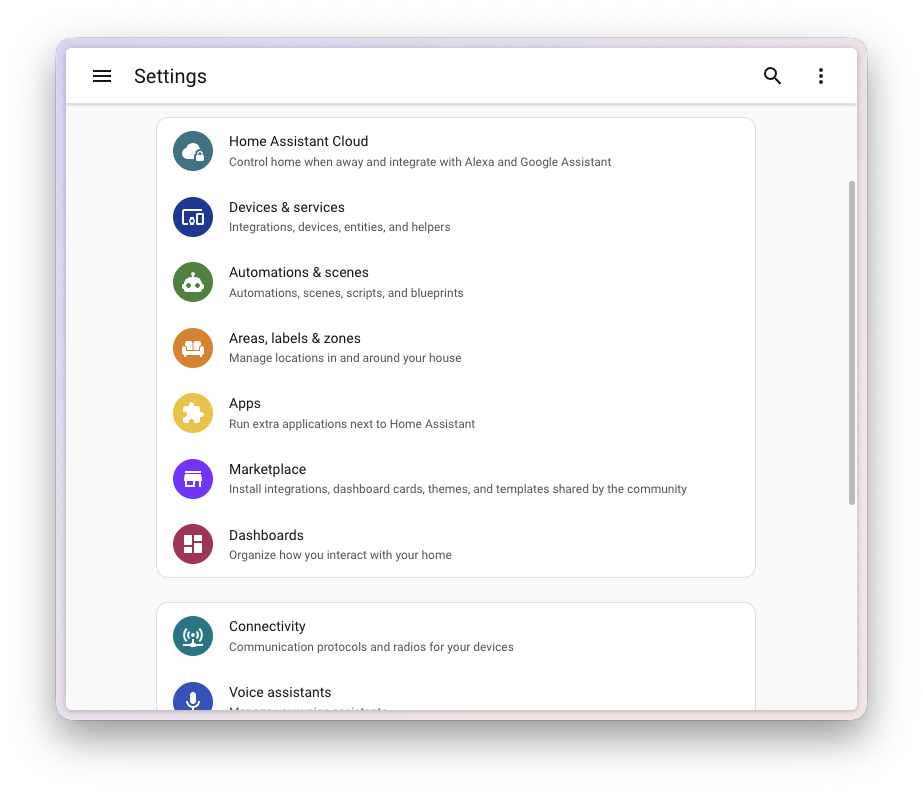
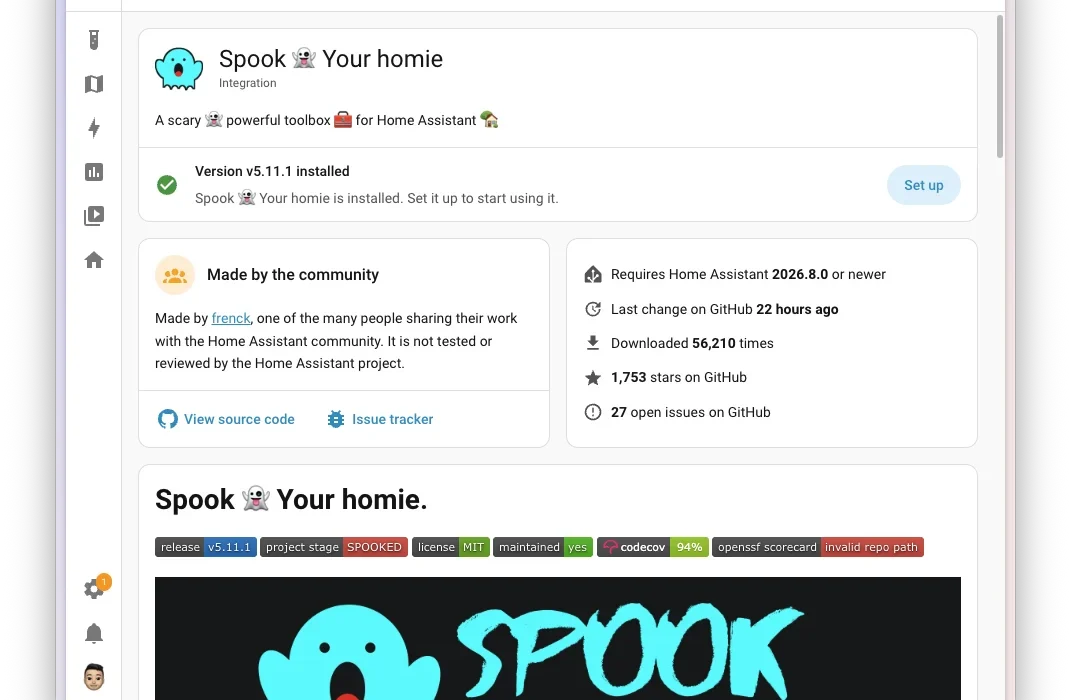
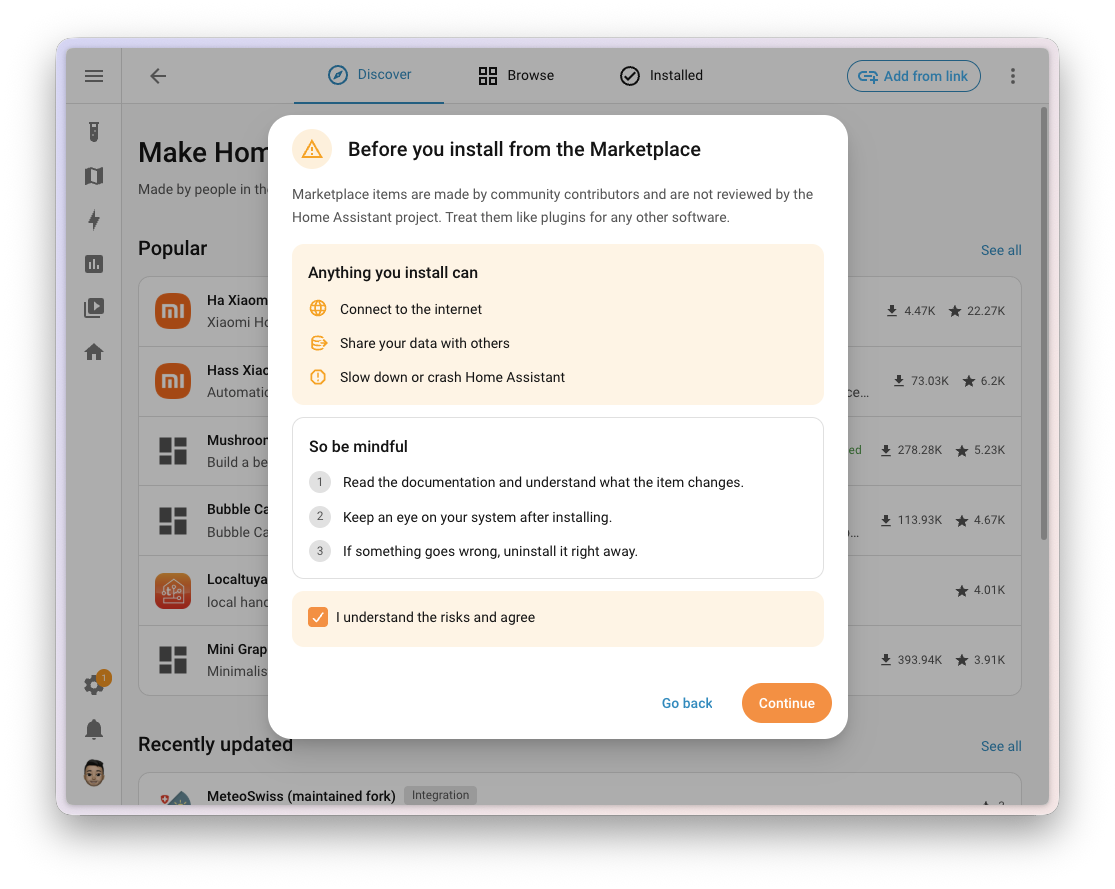
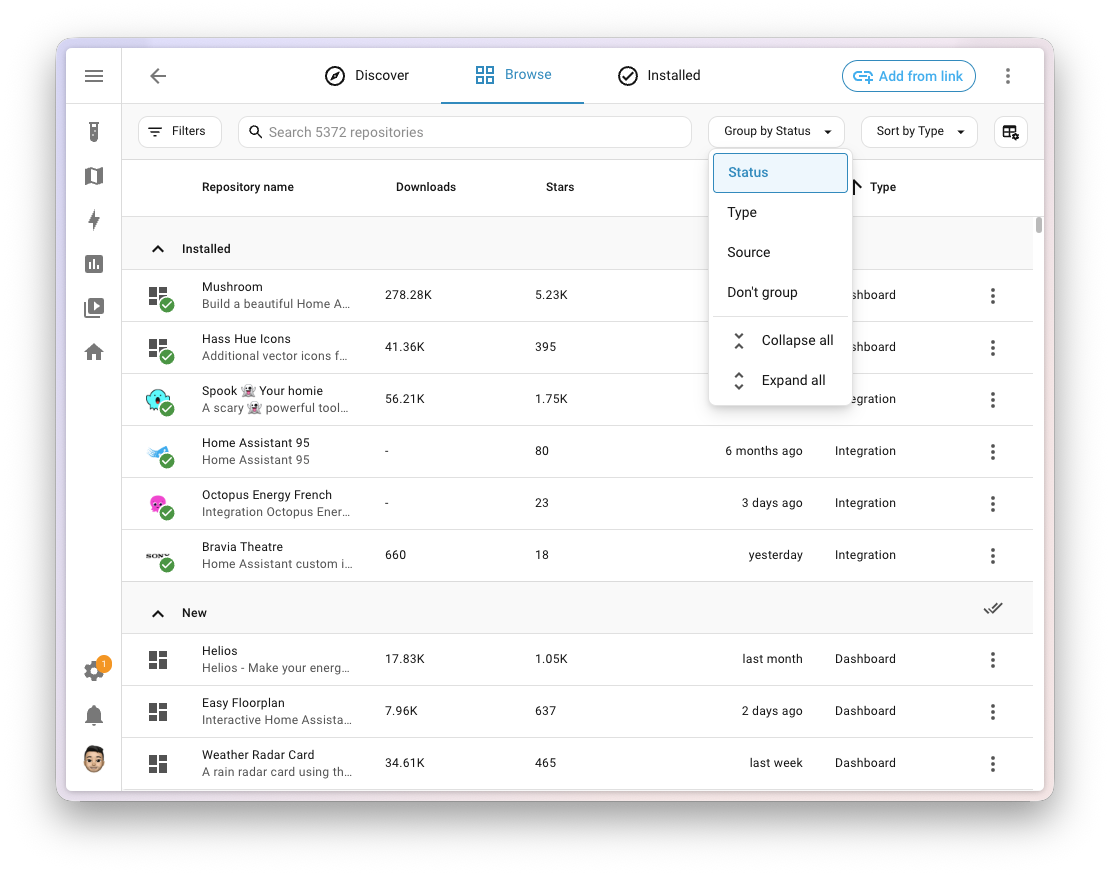
For years, the Home Assistant Community Store (HACS) served as the decentralized hub for custom integrations, themes, and dashboard cards created by independent developers. Beginning with version 2026.11, HACS has been formally absorbed into Home Assistant under the banner of the new Marketplace, directly embedded within the system settings across all installation types, including standalone containers.
Originally spearheaded by community developer @ludeeus—who previously donated the project to the Open Home Foundation—the transition aims to remove technical barriers for novice users. Administrators can now browse, install, and update community-driven assets without manually downloading files or maintaining an external GitHub account for basic installations. Furthermore, every installed community project now generates an update entity, unifying third-party software maintenance with the core system update cycle.
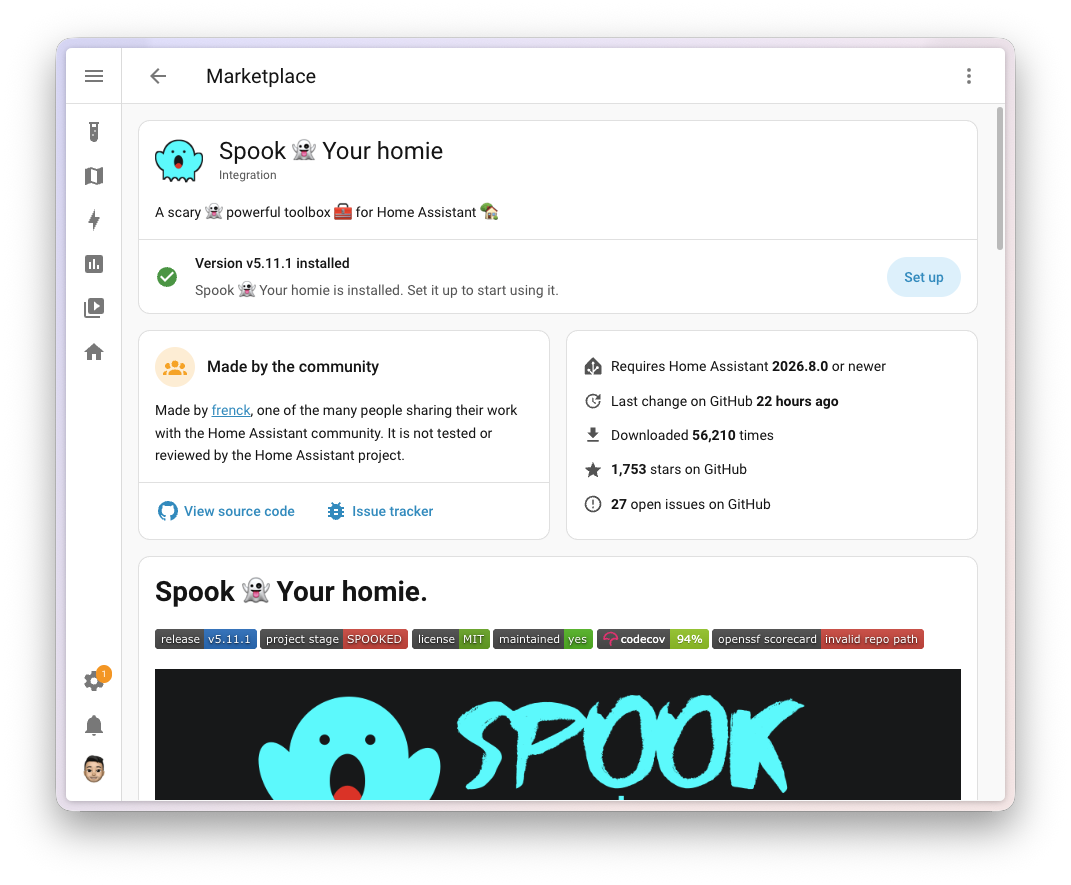
While the Marketplace significantly lowers the barrier to entry, developers maintain a strict security posture. Upon opening the Marketplace for the first time, users must explicitly acknowledge that community-written assets are not audited, tested, or officially supported by the Home Assistant core development team. For regions with strict network restrictions, such as mainland China, the platform includes automated fallback configurations and mirror support provided by regional open-source communities.
Refined Automations and Dynamic Dashboard Sections
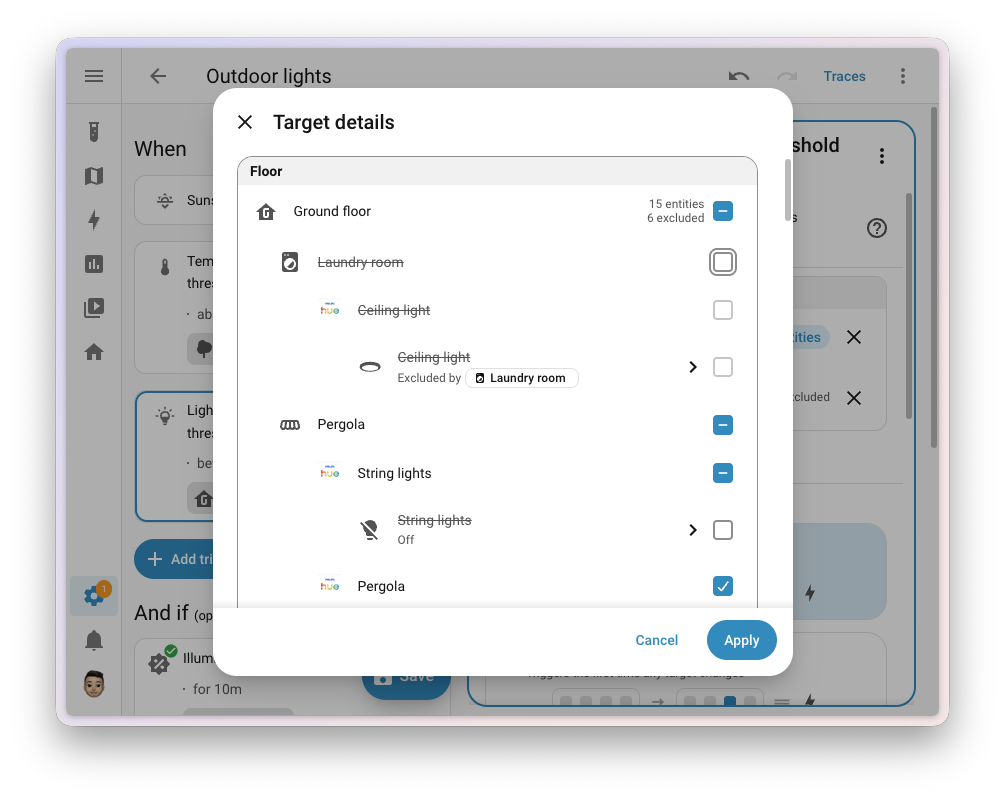
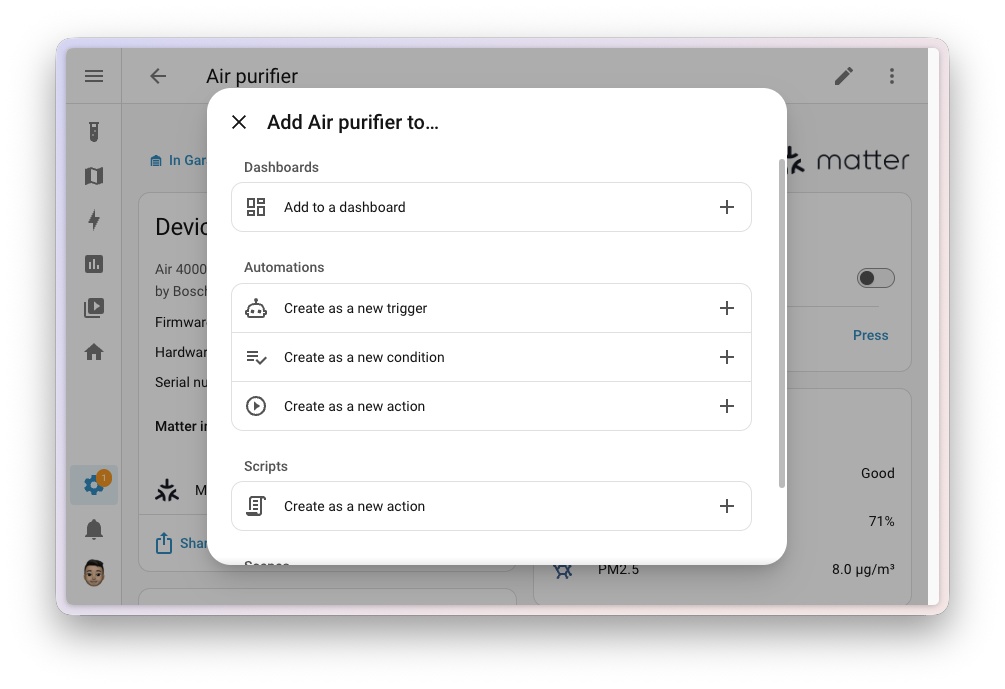
Automation logic has received a significant upgrade with the introduction of target exclusions. Previously, configuring an automation to target an entire area, floor, or label—such as turning on all ground-floor lights—prevented users from omitting specific devices without manually listing every individual entity, thereby sacrificing the dynamic nature of target-based scripting.
With version 2026.11, users can explicitly exclude specific entities, devices, areas, or labels within any trigger, condition, or action block. These exclusions remain dynamic; if a new device is later added to an excluded zone, it is automatically bypassed without requiring manual updates to the automation script.
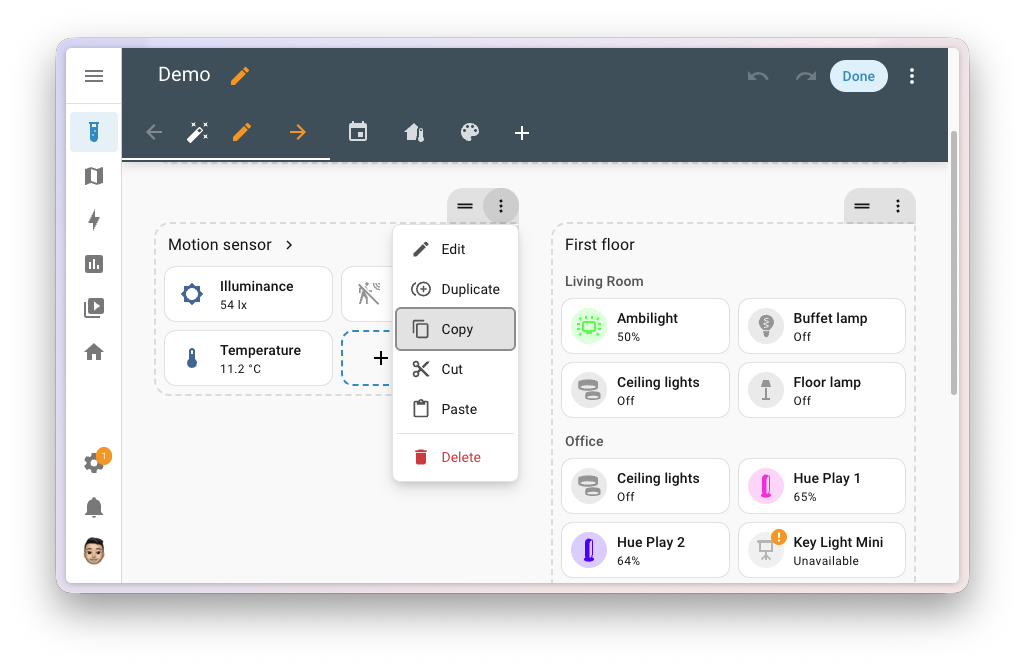
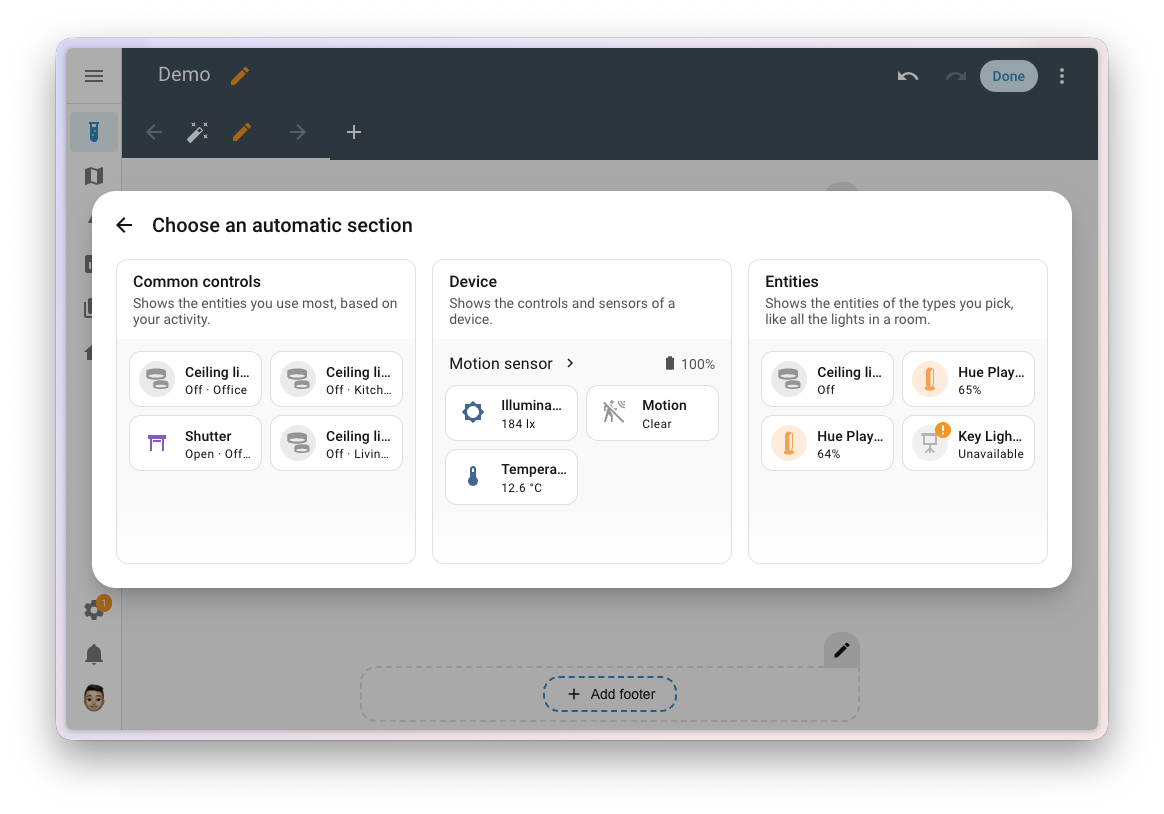
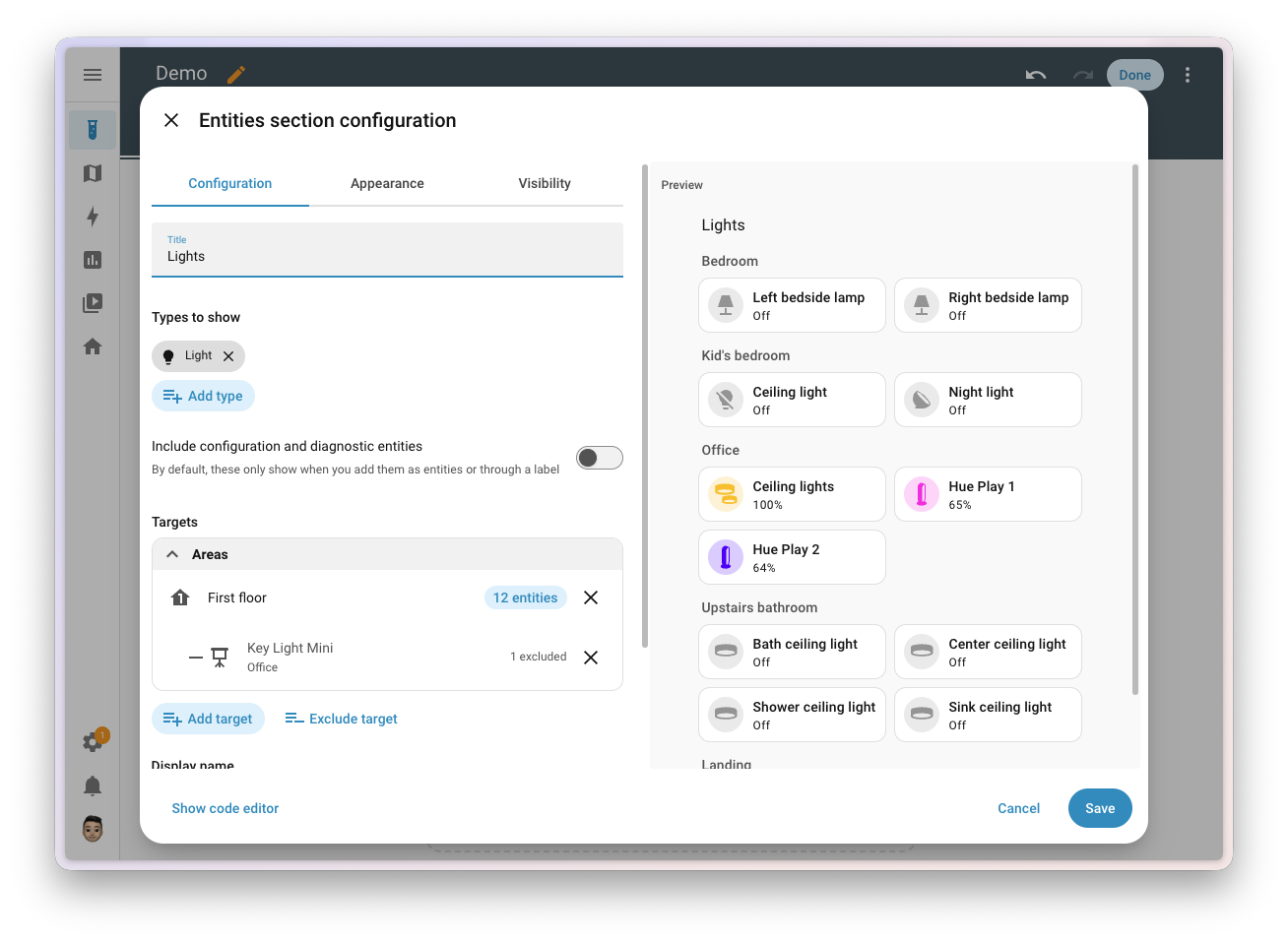
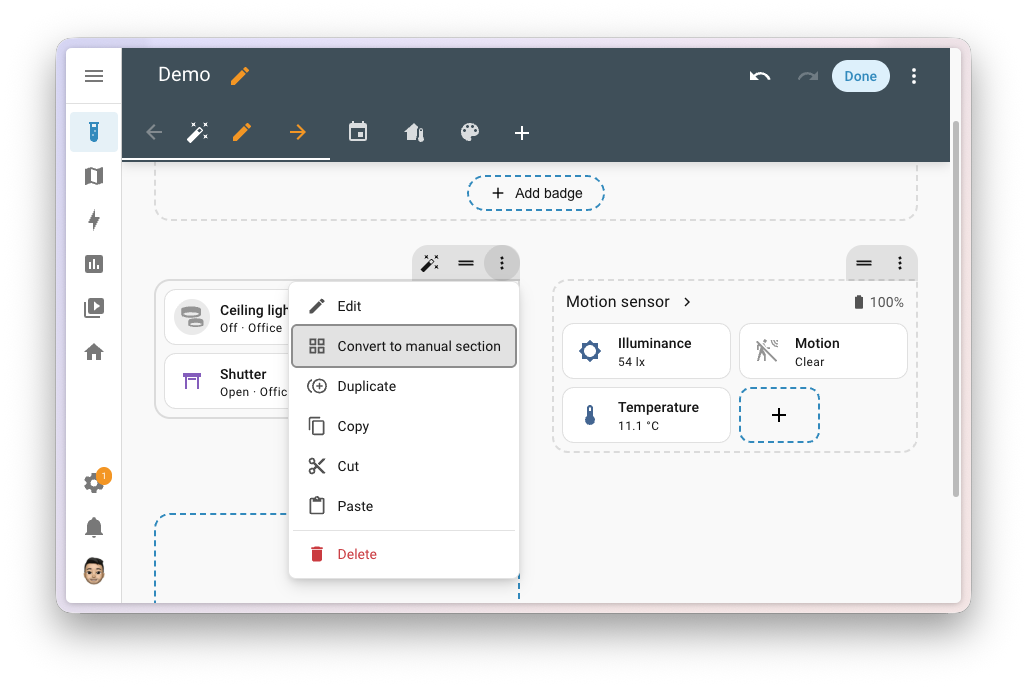
Concurrently, the dashboard editing experience has been enhanced with copy-and-paste functionality for dashboard sections, alongside the introduction of "automatic sections." These intelligent layout blocks automatically populate and filter cards based on device states, common controls, or specific entity parameters. New native visual cards, including dedicated date displays, color-tinted sensors, and direct visual configuration for alert states, further reduce reliance on manual YAML coding.
Entity Naming Overhaul and Contextual Integration
Addressing a pain point that has persisted for over four years, Home Assistant 2026.11 introduces a complete redesign of entity naming architecture. Historically, users relied on complex, manual naming conventions to maintain readability across hundreds of smart devices. Under the new paradigm, users name an attribute once—such as designating a sensor simply as "Temperature"—while the system automatically appends contextual metadata based on the device and its physical area, resulting in unified labels like "Thermostat Temperature."
Although this change introduces a backward-incompatibility that may alter existing dashboard element appearances, it streamlines user interfaces across companion mobile apps, logbooks, and voice assistant interactions. Entity IDs, underlying automations, and scripts remain unaffected, preserving critical automation logic while reducing administrative overhead.
Expanding Hardware Compatibility: Matter Cameras and LoRaWAN
Hardware integration depth continues to accelerate, most notably with the adoption of the Matter 1.5 standard. Home Assistant now natively supports Matter-compatible security cameras, streaming live video feeds directly to web browsers and mobile devices via WebRTC. Additionally, a new Labs preview feature introduces two-way audio capabilities for supported Matter and Reolink hardware, enabling direct voice communication through smart doorbells and cameras.
In a move to extend smart home monitoring beyond traditional Wi-Fi and Zigbee ranges, version 2026.11 introduces native LoRaWAN support. By connecting network servers such as ChirpStack or The Things Network, users can seamlessly incorporate low-power, long-range environmental sensors deployed in remote areas, gardens, or detached outbuildings. A newly established LoRaWAN dashboard page provides comprehensive mapping and signal-strength telemetry, bridging wide-area IoT networks directly into the local automation environment.
Enhanced Troubleshooting and Diagnostic Tooling
Debugging complex smart home failures has historically presented challenges for users managing large device arrays. The latest release introduces several diagnostic enhancements, including a new "Triggered by" filter within the Activity panel to isolate whether an action was initiated by a user, an automation, or an external integration API.
Furthermore, trace visualization tools now allow administrators to click directly through to nested script executions, maintaining contextual continuity across complex automation chains. The inclusion of live, integration-specific log viewers and a new "Action history" tab within system tools ensures that tracing unexpected device states requires significantly less manual log parsing. For local storage management, users can now designate local drives or attached USB storage volumes for system backups and media storage, decoupling intensive data operations from the primary operating system drive.
Implications and Future Outlook
The release of Home Assistant 2026.11 reflects a broader maturation trend within the open-source home automation sector. By converging community-driven ecosystems like HACS into the core software architecture, the Open Home Foundation is systematically lowering the technical thresholds required to deploy advanced, privacy-focused smart home networks.
As the platform expands its native capabilities into commercial standards like Matter 1.5 and industrial-grade protocols like LoRaWAN, Home Assistant is increasingly positioning itself as a universal orchestration layer capable of bridging fragmented commercial ecosystems. System administrators and users planning upgrades should carefully review the extensive list of backward-incompatible changes—particularly concerning entity naming conventions and specific integration configurations—before deploying the update to production environments.