








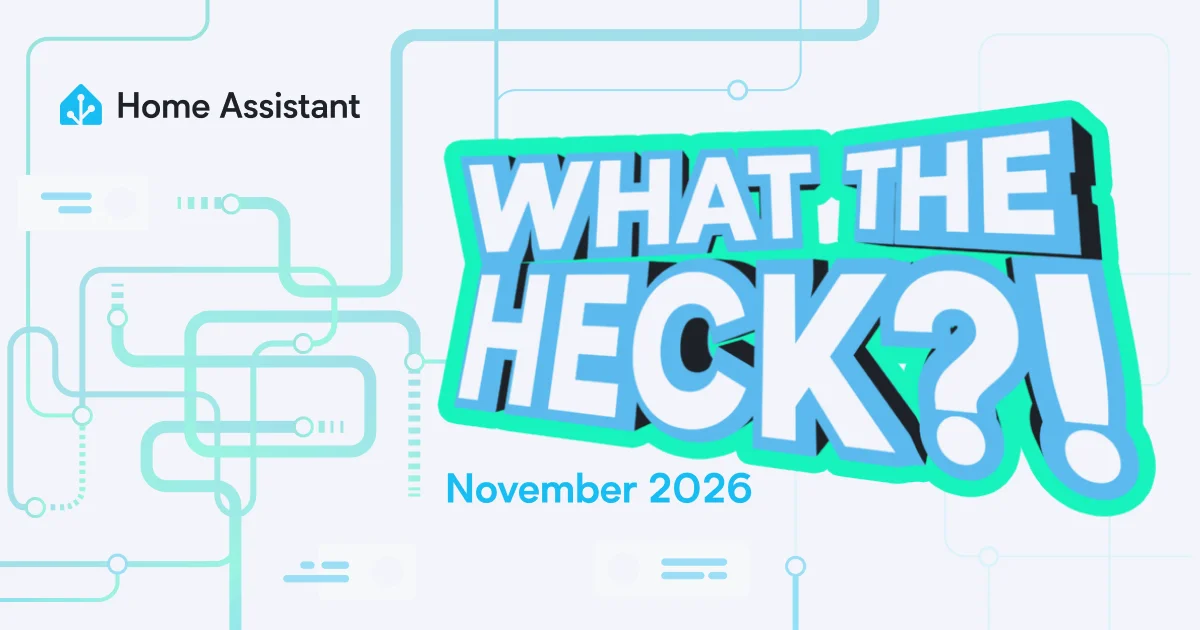
Home Assistant, the prominent open-source home automation platform managed by the Open Home Foundation, has officially inaugurated its biennial feedback initiative known as the Month of "What the Heck?!" for November 2026. This month-long event serves as a dedicated channel for users worldwide to voice persistent frustrations, confusing user interface elements, and operational friction points encountered within the platform. Unlike standard bug tracking systems, the campaign targets subjective usability hurdles—ranging from deeply buried configuration menus to unexpected automated behaviors that baffle household members.
The initiative marks the return of an exercise last conducted in 2024, reflecting the platform’s philosophy that development teams, deeply entrenched in technical intricacies, often lose sight of everyday user friction. By establishing a centralized forum category, the organization aims to aggregate user grievances to directly influence upcoming product roadmaps and UI/UX improvements across the core platform, mobile companion applications, and official documentation.
Background Context and the Evolution of Smart Home Accessibility
Over the past decade, the smart home landscape has evolved from a niche hobby for programmers writing custom YAML scripts into a mainstream consumer category deployed across millions of residences. Home Assistant has occupied a unique space in this ecosystem, prized for its local-first architecture, privacy guarantees, and near-limitless integration capabilities. However, this expansive feature set has historically correlated with a steep learning curve.
In response to growing pains associated with accessibility, the Open Home Foundation has placed significant strategic emphasis on making smart home technology approachable for everyone residing in a home, rather than solely catering to the technical administrator who initially performed the installation. This shift acknowledges a common household dynamic: one tech-savvy individual configures the system, while other family members must navigate interfaces, automations, and physical device controls that may lack intuitive design.
A recent platform update illustrates the type of user experience barrier the campaign seeks to dismantle. Until the release of Home Assistant 2026.10, user profile pictures could only be altered by a system administrator through advanced administrative settings. This technical constraint meant that household members wishing to personalize their profile icon were forced to rely on the administrator. By decentralizing this capability—allowing all users to update their profile imagery directly—the development team observed immediate positive impacts on user ownership and comfort within the application. Organizers hope to uncover hundreds of similar friction points throughout November 2026.
Chronology and Operational Framework of the Campaign
The Month of "What the Heck?!" operates on a structured, temporary timeline designed to concentrate community feedback into an actionable window:
- Launch (November 1): The official discussion category opens on the Home Assistant community forum, welcoming submissions from all user tiers.
- Duration (Entirety of November): Users submit discrete topics detailing specific usability issues, illogical workflows, or documentation gaps. Community members, moderators, and software contributors actively review, discuss, and vote on submissions.
- Immediate Iteration: Historically, software contributors begin addressing straightforward interface bugs and minor quality-of-life complaints while the event is actively running.
- Post-Campaign Analysis (December onward): Core developers and foundation leadership aggregate the feedback to establish development priorities for the subsequent release cycles of the following year.
Participants are required to adhere to specific community guidelines to ensure the data remains manageable for developers. Most notably, users are instructed to isolate individual complaints into separate forum threads rather than consolidating multiple grievances into a single post. This granular approach facilitates accurate voting metrics, targeted commentary, and direct linkage to software pull requests.
Broadening Participation: Engaging Non-Technical Household Members
A primary distinction of the 2026 campaign is an explicit push to capture feedback from non-technical participants and individuals who live alongside a Home Assistant deployment without managing it. Historically, community-driven feedback platforms disproportionately represent power users, developers, and enthusiasts who are comfortable navigating advanced configuration files and technical documentation.
To counteract this bias, organizers have issued a call to action for primary administrators to actively interview the people they live with. Rather than asking superficial questions regarding whether the smart home functions correctly, maintainers are encouraged to probe deeper into daily annoyances, accidental automation triggers, or interface elements that cause confusion. By translating these external observations into the forum—retained in the authentic language of the affected household members—the project aims to bridge the empathy gap between software engineers and everyday consumers.
Furthermore, the campaign accommodates international participants through a formalized translation policy. Users who are not native English speakers are encouraged to post utilizing machine translation tools while appending their original text within a hidden collapsible section. This methodology preserves linguistic nuance and ensures precise comprehension by global developers without erecting language barriers for non-anglophone communities.
Scope of Feedback and Exclusions
The parameters of the Month of "What the Heck?!" are intentionally broad regarding user experience, yet strict concerning technical categorizations:
- Included Domains: Feedback encompasses the core Home Assistant interface, the mobile companion applications for iOS and Android, official documentation portals, installation procedures, and general integration usability.
- Excluded Domains: The forum category is not designated for reporting critical software bugs, which are triaged through GitHub issue trackers. Similarly, requests for brand-new device integrations or third-party applications fall outside the scope of the event and are directed to dedicated feature request channels.
Event organizers emphasize that the campaign does not operate as a strict popularity contest. While community voting metrics highlight the widespread nature of specific frustrations, high vote counts do not guarantee immediate implementation. Technical feasibility, architectural alignment with the Open Home Foundation’s long-term vision, and maintenance sustainability ultimately dictate which feedback items transition into active development.
Analytical Implications for the Open Source Ecosystem
The execution of structured, large-scale qualitative feedback events highlights a maturing operational model within the open-source software community. Traditional software development often relies on telemetry data or quantitative error logs to guide engineering efforts. While effective for identifying system crashes or performance bottlenecks, telemetry frequently fails to capture subjective user dissatisfaction or cognitive friction.
By soliciting qualitative narratives of household annoyance, Home Assistant leverages crowdsourced human-centered design principles. The implications of this campaign extend beyond minor interface polishes; they test the viability of scaling a highly technical, enthusiast-driven platform into a universally accessible household appliance. As the smart home market faces increased competition from centralized, proprietary ecosystems backed by multinational technology conglomerates, initiatives like the Month of "What the Heck?!" provide open-source projects with a vital mechanism to align community-driven engineering output with mainstream consumer expectations.