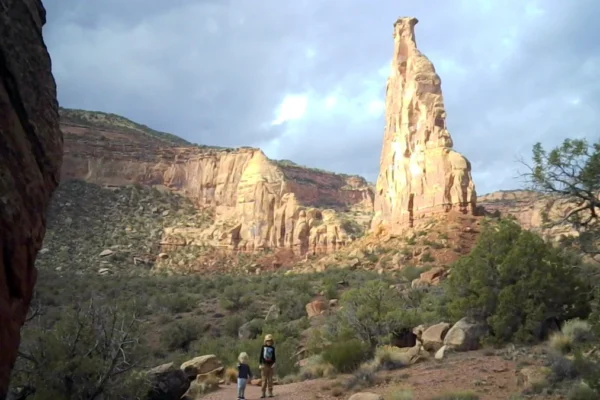












The rugged terrain of western Kazakhstan serves as a living museum of Pleistocene megafauna, where the saiga antelope (Saiga tatarica) still roams much as it did during the last Ice Age. Outliving woolly mammoths, saber-toothed cats, and giant deer, these resilient ungulates have traversed the Eurasian steppe for millennia. Today, however, the ancient migratory pathways of the saiga face an unprecedented existential threat from modern infrastructure, agricultural expansion, and border fencing. Biologists and conservationists are engaged in a race against time to understand, map, and protect these migratory corridors before human development permanently fractures the population.
Main Facts and the Current Landscape
Recent field audits conducted by the Association for the Conservation of Biodiversity of Kazakhstan (ACBK) highlight the acute vulnerabilities facing the saiga during its critical seasonal rutting season. Traveling through the remote steppe near the Russian border alongside veteran conservationists Alexandr and Albert—who collectively possess more than twenty-five years of field experience tracking the species—researchers observed massive congregations of saigas engaging in annual mating rituals.
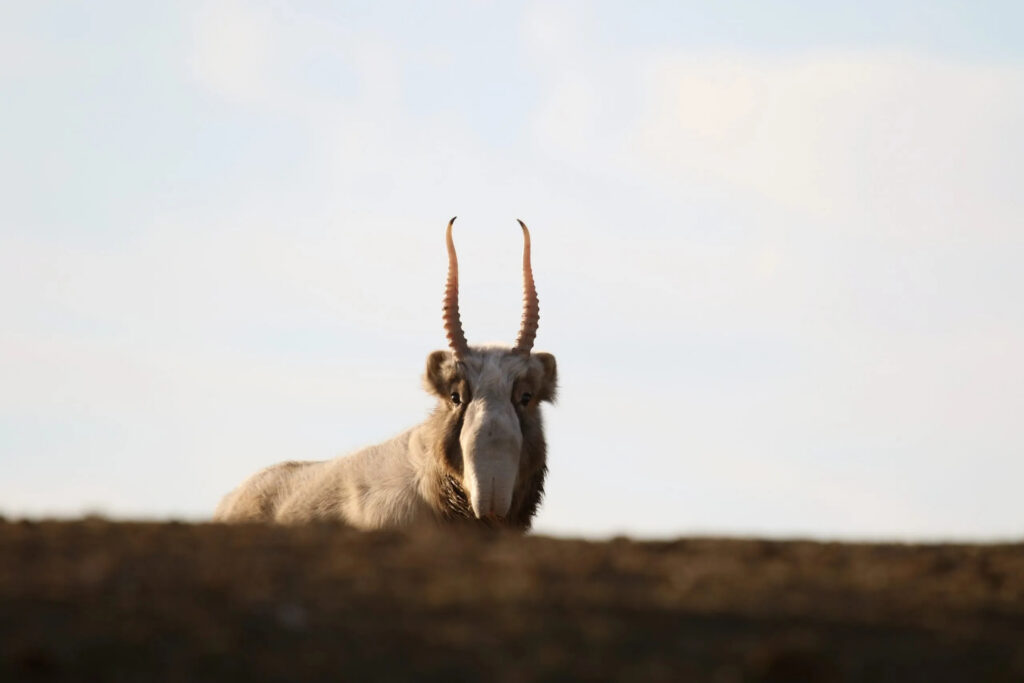
Distinguished by their bulbous, trunk-like snouts, male saigas utilize their elongated noses to filter out dust during dry periods and warm frigid air during harsh Siberian winters. During the rutting season, a prominent nose serves as an indicator of physical fitness and virility, drawing intense scrutiny from female onlookers. However, this high-energy period often leaves exhausted males vulnerable to exhaustion while simultaneously drawing them into concentrated geographic zones that intersect with human infrastructure.
Historical Chronology and Human-Wildlife Intersections
The history of Central Asia is inextricably linked to nomadism, a tradition rooted in the geography of the Eurasian steppe.
- Prehistoric Era: Saigas coexisted with Pleistocene megafauna, serving as ecological guides for early human caravans navigating the unforgiving terrain. Cave art dating back to the seventh century BCE depicts the antelope with reverence, emphasizing their elusive and hardy nature.
- The Silk Road Era: Seasonal migration corridors carved by nomads and wildlife alike eventually laid the groundwork for segments of the Great Silk Road. Western Kazakhstan, positioned along the fertile banks of the Ural River, emerged as a vital transcontinental crossroads demarcating the boundary between Europe and Asia.
- Soviet Era (20th Century): Traditional nomadic practices underwent a forced transformation under Soviet-era sedentarization policies. Human populations were systematically locked into agricultural plots, a policy that largely failed due to unsuitable steppe soil while simultaneously disrupting traditional understandings of landscape navigation.
- Post-Soviet Industrialization: The collapse of the Soviet Union brought increased economic development, characterized by the rapid expansion of unmonitored roads, high-speed railways, and international border fences. These linear barriers increasingly fragment the once-continuous range of the saiga.
Supporting Data and Tracking Insights
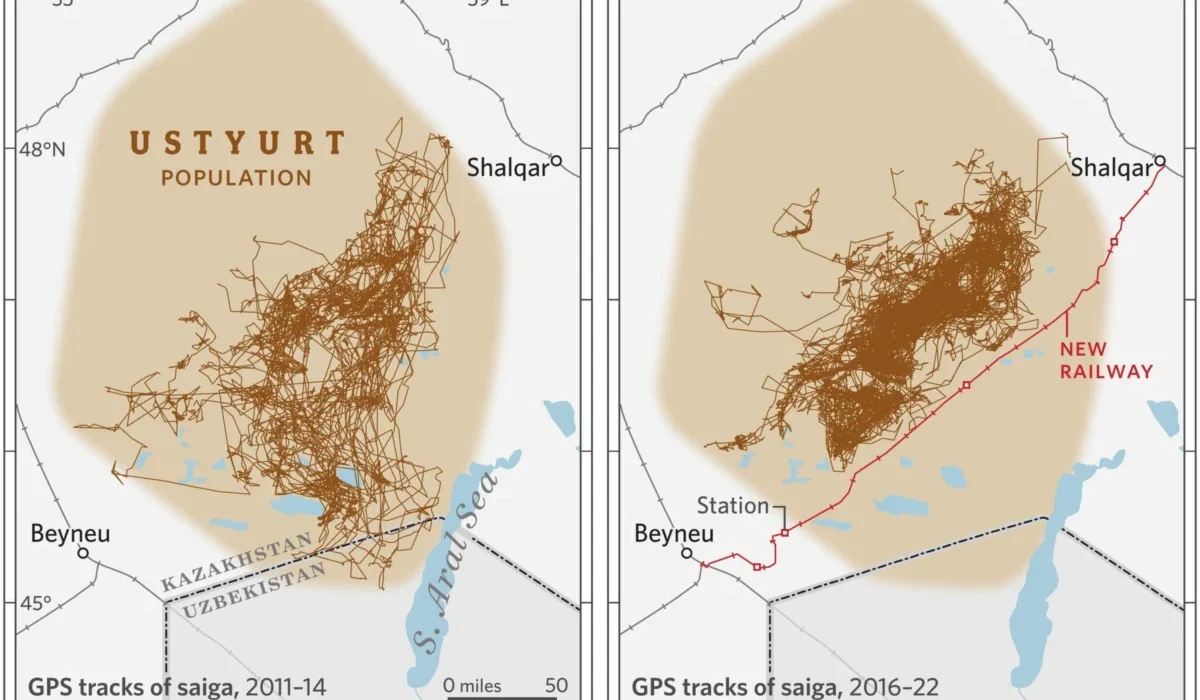
The implementation of GPS satellite tracking collars has revolutionized saiga conservation, allowing researchers to monitor real-time movements across vast, treeless expanses. Data collected by ACBK and partner organizations demonstrate how physical barriers abruptly alter historical migration routes.
Historical data from 2014, for instance, illustrates how a newly constructed railway line in Uzbekistan abruptly halted the southern migration of a collared saiga population. Pre-construction telemetry data showed fluid seasonal movements across the international boundary, whereas post-construction data revealed animals milling hopelessly on the northern side of the tracks, cut off from traditional water sources and winter grazing grounds.
Conservation science literature frequently compares this disruption to the loss of a shared language. Just as human nomadic populations forced into sedentary lifestyles lost generational navigational expertise, young saigas learn migration routes, foraging sites, and shelter locations through observation and cultural transmission. When linear infrastructure slices through the landscape, these inherited generational pathways fade from memory.
Conservation Responses and Mitigation Strategies
In response to these systemic threats, ACBK has spearheaded targeted mitigation efforts in partnership with the Kazakh and Uzbek governments. These initiatives aim to reestablish permeability across the fragmented steppe:
- Saiga-Friendly Crossings: Engineers have constructed dozens of specialized overpasses and grade-separated crossings featuring gently sloping dirt ramps that match the elevation of railway tracks, creating the illusion of a natural gap.
- Strategic Fencing Modifications: To prevent catastrophic collisions, cattle-guard fencing is installed at safe distances from railway intersections. Furthermore, ACBK has collaborated with Uzbek authorities to modify rigid barbed-wire border barriers into X-shaped wooden and metal barricades. These structures successfully deter unauthorized vehicular traffic while leaving sufficient clearance for saigas to pass underneath.
- Protected Area Designation: Informed directly by ACBK’s telemetry data, the government established a new wildlife sanctuary in western Kazakhstan, providing a legally protected corridor for seasonal movements.
Broader Implications for Ecological Connectivity
The plight of the saiga antelope transcends regional conservation, offering a case study in the challenges of balancing modern infrastructure development with the preservation of ancient migratory ecosystems. As linear infrastructure projects continue to expand globally, the fragmentation of rangelands threatens numerous migratory species worldwide.
The ongoing efforts in Kazakhstan demonstrate that effective wildlife management requires transboundary cooperation, empirical data derived from modern tracking technology, and physical infrastructure designed to accommodate non-human movement. Without such interventions, the saiga risks becoming a relic of a bygone era, confined to isolated patches of a once-boundless steppe. Through proactive restoration and evidence-based policy, however, conservationists hope to preserve not only the saiga, but the ecological integrity of the Eurasian landscape itself.