








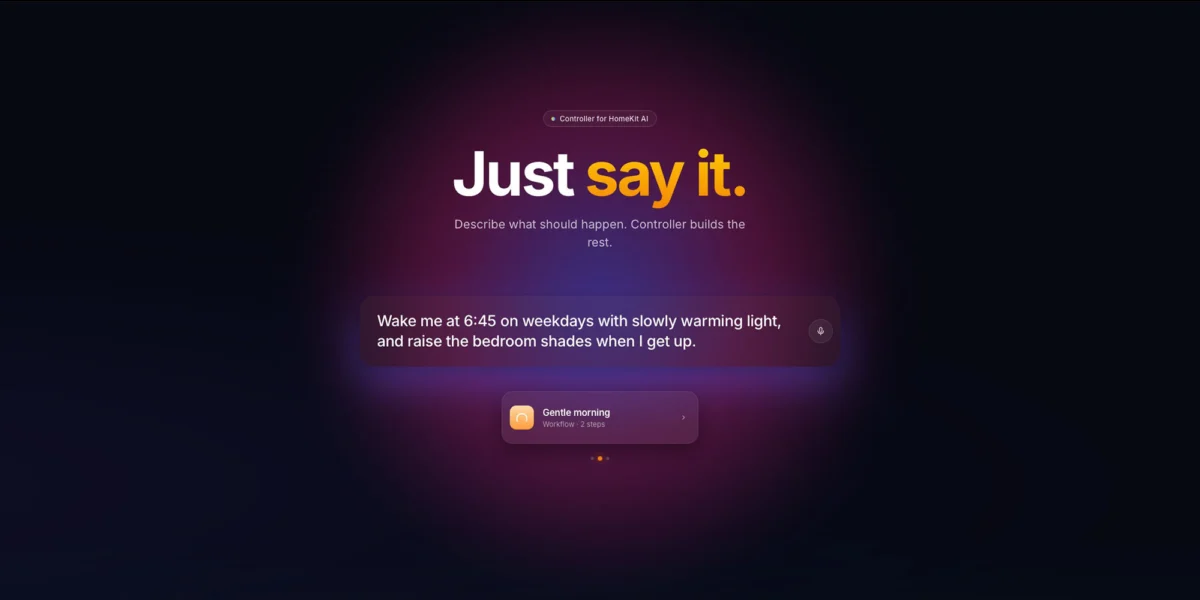
The smart home automation landscape has undergone a significant shift this week as the popular third-party utility, Controller for HomeKit, has integrated generative artificial intelligence to streamline the creation of complex device interactions. By introducing a "Just say it" feature, the developers are targeting the primary pain point for many smart home enthusiasts: the steep learning curve and tedious manual configuration required to build sophisticated, multi-device automation workflows. Instead of navigating complex conditional logic menus, users can now describe their desired outcomes in natural language, which the application then translates into actionable HomeKit scenes, triggers, and automations.
The Evolution of HomeKit Automation
To understand the significance of this update, one must examine the trajectory of Apple’s HomeKit ecosystem. When HomeKit launched in 2014, it was praised for its focus on privacy and local control, but it was often criticized for its rigid interface. For years, users relied on the native Apple Home app, which, while user-friendly for basic tasks like toggling lights, lacked the granular control necessary for complex logic.
Third-party developers stepped into this vacuum. Apps like Controller for HomeKit became essential tools for power users who wanted to go beyond simple schedules. These apps allowed for advanced features such as "if-this-then-that" scenarios based on complex variables like time of day, occupancy, sensor thresholds, and device states. However, building these automations required a deep understanding of logical operators, which alienated the average consumer. The integration of AI represents a bridge between the power-user capability of these third-party utilities and the accessibility of a consumer-grade interface.
Technical Implementation and Workflow
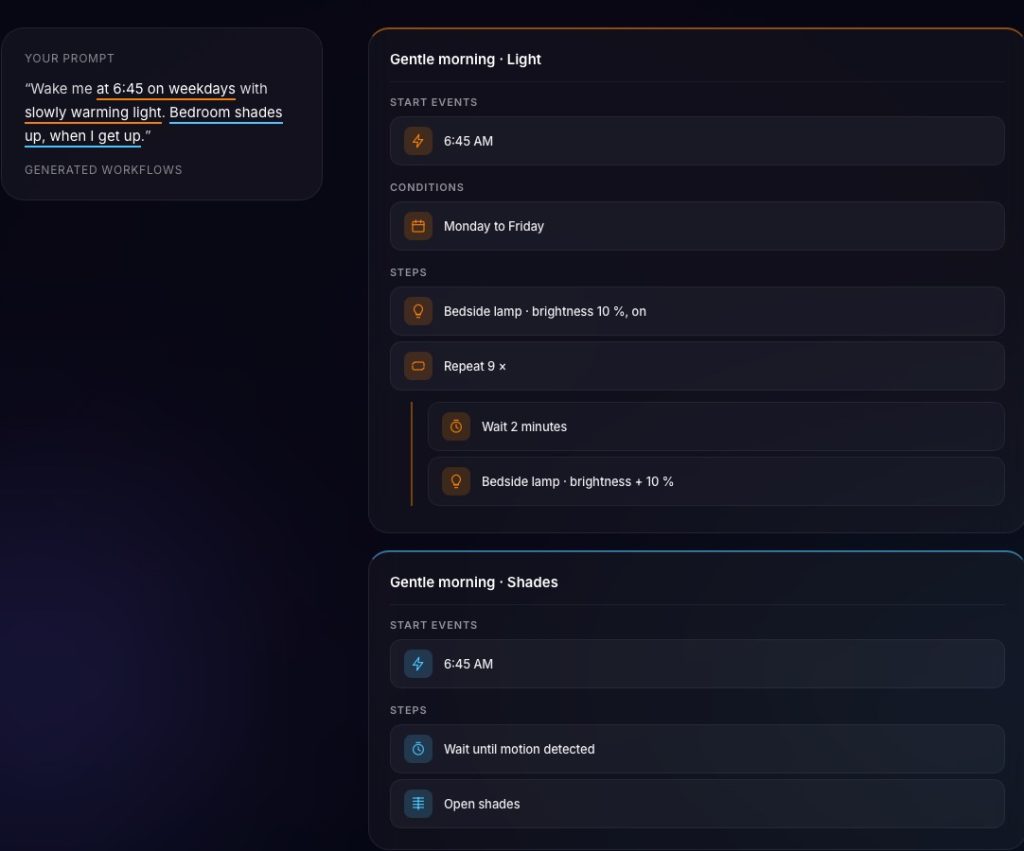
The "Just say it" feature functions as an abstraction layer between the user’s intent and the HomeKit framework. When a user inputs a prompt—such as "Wake me at 6:45 on weekdays with slowly warming light, and raise the bedroom shades when I get up"—the AI processes this request through a series of natural language understanding models. It identifies the specific entities (lights, shades), the temporal conditions (6:45, weekdays), and the desired state changes (slowly warming brightness, opening shades).
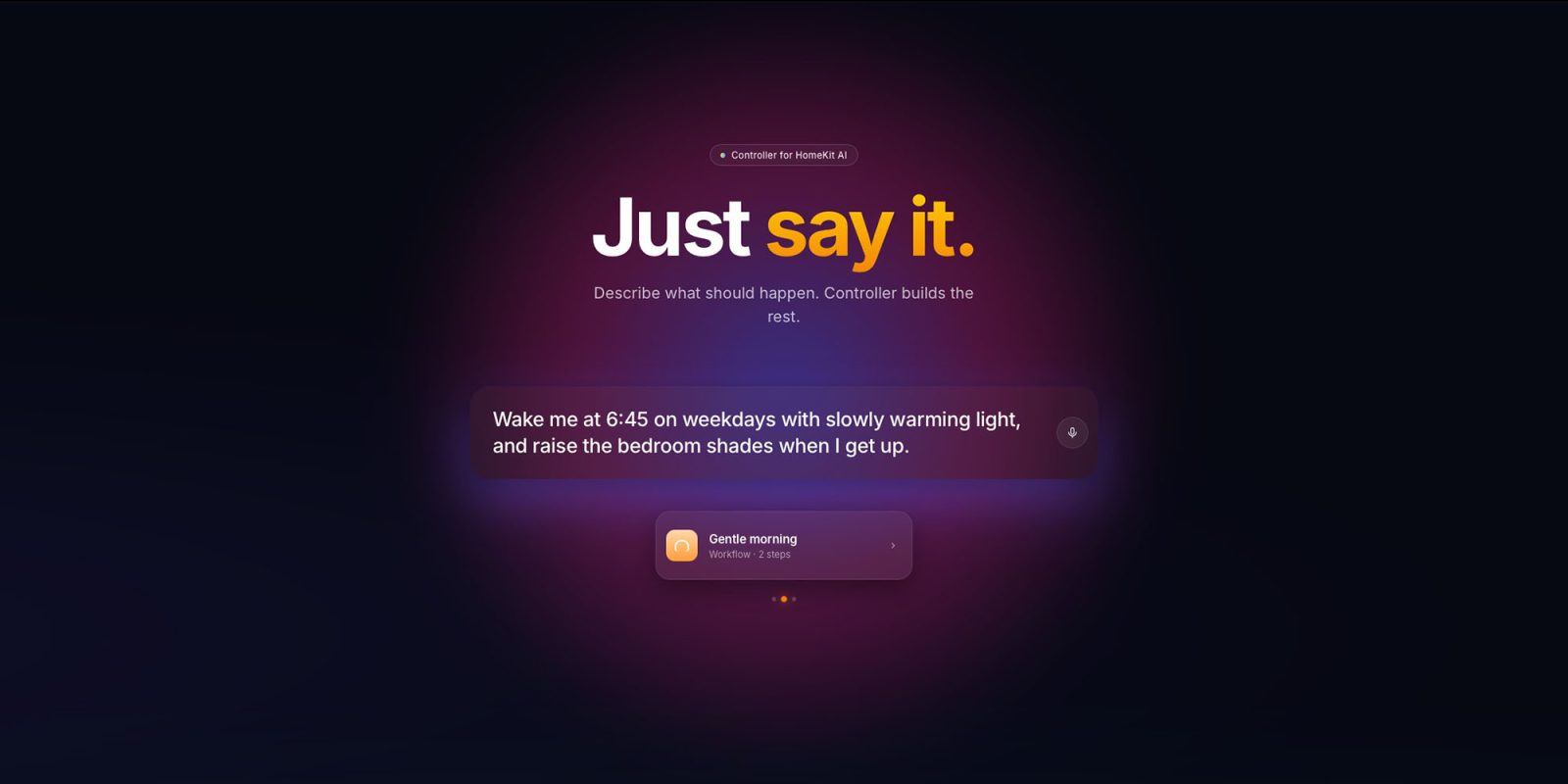
The app then automatically generates the necessary HomeKit "scenes" and "automations" to execute this sequence. This process drastically reduces the time investment for setting up smart homes. Previously, a user might spend fifteen minutes manually configuring scenes for lighting, setting up time-based triggers, and adding conditions to ensure the shades only open when the user is actually awake. With the AI integration, that same task is distilled into a single prompt, completed in seconds.
Early User Testing and Performance
Initial reports from early adopters suggest that the system is highly effective at parsing common domestic scenarios. For instance, testing a request such as "If someone comes home after midnight, turn only the hallway light to 15%" demonstrated that the AI correctly interprets conditional logic. It distinguishes between the state of the home ("after midnight") and the specific action required ("turn hallway light to 15%").
For users who have invested in large ecosystems with dozens of smart switches, sensors, and appliances, this feature serves as a significant productivity booster. It also lowers the barrier to entry for users who may have been intimidated by the prospect of programming their own home. By automating the "busy work" of home management, the developer is effectively repositioning the app from a technical utility to a comprehensive smart home assistant.
Market Context and Industry Trends
The move by Controller for HomeKit arrives at a pivotal moment in the broader home automation market. The industry is currently transitioning toward the Matter standard, an interoperability protocol designed to unify devices from various manufacturers. As the number of devices in an average household grows, the complexity of managing them increases proportionally.
Industry analysts have noted that the "fragmentation of intent" is the next major hurdle for smart homes. When a household possesses devices from five different manufacturers, the management software must be robust enough to handle communication between them. By leveraging AI to write the automation code, Controller for HomeKit is not just adding a gimmick; it is solving a scaling problem.
Data from the smart home sector indicates that the average smart home user is adding 2.4 new devices per year. As these numbers rise, the "automation debt"—the time required to keep these devices working in harmony—becomes a burden. AI-driven configuration tools are emerging as the industry standard solution to this debt, allowing users to spend less time managing their technology and more time benefiting from it.
Strategic Implications for Privacy and Local Control
One of the most critical aspects of this update is how it interacts with Apple’s stringent privacy guidelines. Historically, Apple has been skeptical of cloud-based AI processing within its ecosystem. The developers of Controller for HomeKit have stated that they are mindful of the privacy-first nature of HomeKit. By keeping the logic creation local where possible, they aim to ensure that the user’s home configuration remains private.
However, the use of large language models (LLMs) often necessitates some level of cloud interaction. While the specific architecture of the "Just say it" feature has not been fully disclosed by the developers, it is expected to follow the industry trend of anonymizing requests before they are sent to an AI processor. This ensures that even if the AI is "thinking" about the automation, it is not tracking the specific personal habits of the user in a way that could be linked back to a persistent profile.
Pricing and Subscription Dynamics
Controller for HomeKit operates on a tiered subscription model, which is common for apps that require ongoing development costs to maintain compatibility with Apple’s evolving HomeKit APIs. The app is currently priced at $40 per year for the "Essentials" tier and $80 per year for the "Plus" tier.
This pricing strategy reflects the app’s position as a premium tool for power users. While casual users may find the native Apple Home app sufficient, the "Plus" tier is clearly targeted at those who manage complex, multi-hub environments. The inclusion of the new AI feature in this subscription tier provides a clear value proposition: users are paying for the time saved by the AI and the expertise required to maintain such an integration. A seven-day free trial is currently being offered to allow prospective users to test the AI’s capabilities against their specific hardware setup before committing to a paid plan.

Future Outlook
Looking ahead, the success of the "Just say it" feature will likely depend on its reliability and its ability to handle edge cases. As users experiment with more complex requests, the developers will need to refine the AI’s ability to handle conflicting instructions. For example, if a user asks for two automations that might interfere with each other, the app will need to be smart enough to warn the user or suggest a conflict-resolution path.
The integration of AI into home management is likely to become a standard feature across the entire smart home landscape within the next 24 months. Apple itself is expected to continue integrating more advanced intelligence into its own Home app. However, third-party developers like those behind Controller for HomeKit have the advantage of being able to iterate faster and offer more granular control than a one-size-fits-all solution from a tech giant.
For now, the app provides a compelling look at the future of the smart home. By shifting the focus from "how to program a device" to "what I want my home to do," the developers have successfully removed the most significant friction point in the user experience. As the technology matures, it will be interesting to observe how other developers in the space respond to this new standard of natural language automation. For the end-user, the result is a more responsive, intuitive, and capable home environment.