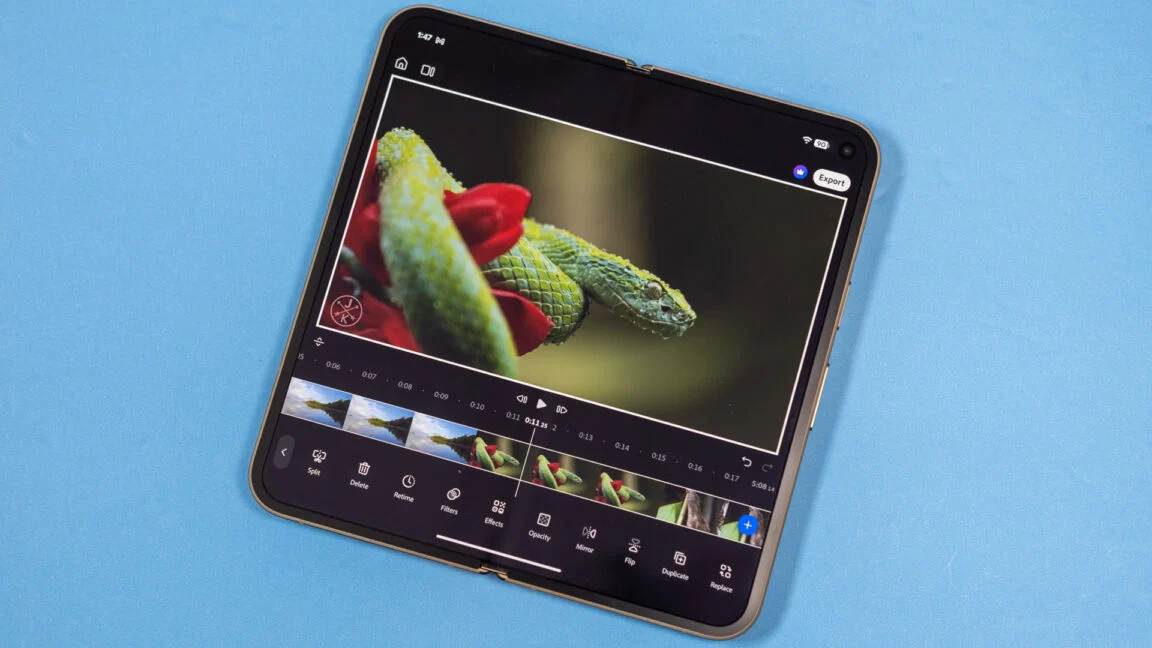
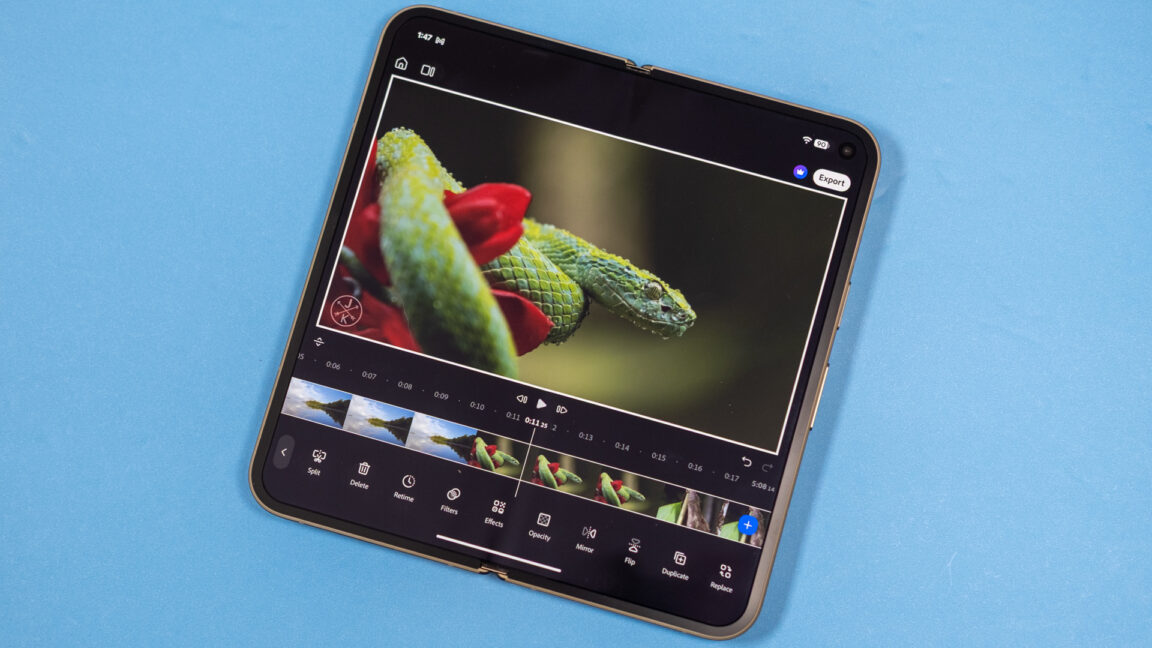
Adobe has officially expanded its professional-grade mobile creative suite by bringing the Premiere mobile application to the Android platform. This launch marks a significant milestone for mobile content creators, bridging the gap between casual video trimming and professional-level non-linear editing (NLE) on devices that have historically been viewed as consumption-focused rather than production-ready. While the iOS iteration of the software has been available to creators for the past year, the arrival on Android, coupled with robust hardware optimization for Googlebook laptops, suggests a strategic pivot by Adobe to capture the massive and diverse Android user base.
Performance Benchmarks and Hardware Compatibility
One of the most persistent concerns regarding mobile video editing has been the thermal and processing limitations of smartphones. During initial testing, the application demonstrated a surprising level of stability when handling high-bitrate 4K footage. When importing multiple high-resolution clips, the app maintained a consistent playback experience without the typical "choking" or frame-dropping often associated with mobile NLEs.
However, the software does show its limitations when processing complex, newly added video tracks, which can introduce a latency of approximately one minute as the application caches data. Export times, while not instantaneous, defy previous expectations for mobile-based rendering. On a Google Pixel device—a handset not traditionally marketed for workstation-level performance—the rendering of a three-minute 4K60 video in high-quality mode was completed in roughly three minutes. This one-to-one ratio of duration to render time is highly competitive for the mobile sector.
To ensure a baseline level of performance, Adobe has set the minimum hardware requirement at 5GB of RAM. This threshold is calculated to provide enough overhead for the application’s background processing, multi-track timeline management, and real-time playback engine. By focusing on this requirement, Adobe is targeting the mid-to-high-end Android segment, effectively excluding entry-level budget devices that would struggle to maintain a fluid editing experience.
A Strategic Pivot: Integration with Googlebook Laptops
The launch is not limited to handheld smartphones. Adobe has explicitly stated that the new Premiere mobile app has been optimized for Googlebook laptops, a growing category of high-performance mobile computing devices. This optimization indicates that Adobe is viewing these devices as legitimate secondary editing stations for creators on the move.
While the desktop version of Premiere Pro remains the industry standard for feature-length films and high-end broadcast production, the mobile version offers a streamlined interface that removes the clutter of professional-grade tools that are often unnecessary for social media content, vlogs, and rapid-turnaround news reporting. For power users, the mobile app serves as a high-fidelity drafting table, allowing for rough cuts and color grading on the go, which can then be exported or synced for final polishing on a full desktop system. However, Adobe has clarified that the full, uncompromised desktop version of Premiere will not be available on Googlebook devices, reinforcing a clear product segmentation between the mobile-optimized experience and the workstation-grade desktop software.
The Role of Generative AI in the Creative Workflow
Perhaps the most significant addition to the mobile Premiere experience is the deep integration of generative artificial intelligence. Unlike many of its competitors, Adobe has made the core editing features of the app free, requiring no subscription or Creative Cloud account for basic video manipulation. The monetization model is centered squarely on the platform’s advanced AI capabilities.
The app introduces a suite of generative features, including image-to-video and text-to-video synthesis. To ensure legal and ethical compliance, Adobe has integrated its "commercial safe" Firefly model, which is trained on licensed or public-domain imagery. Beyond its proprietary models, Adobe has taken a platform-agnostic approach by integrating third-party AI engines, including Google Veo, Google Omni, Luma Ray, and Kling.
The pricing structure for these services is built around an "AI Credit" system. Every user receives 250 monthly credits at no cost. These credits are consumed based on the computational intensity of the request:
- Veo Fast clips: 80 credits each.
- Firefly video generation: Higher consumption tiers.
For professional creators who require a higher volume of AI-generated assets, Adobe offers a subscription tier at $70 per year or $8 per month, which increases the monthly allocation to 1,200 credits. This tiered approach allows Adobe to monetize the high cost of cloud-based GPU inference while keeping the core editing utility accessible to the general public.
Chronology of the Adobe Mobile Transition
The journey to bring professional editing to Android has been a long-term roadmap for Adobe. The following timeline outlines the evolution of Adobe’s mobile video strategy:
- 2020-2022: Adobe begins consolidating its mobile offerings, moving away from fragmented apps toward a unified creative cloud experience.
- 2023: Adobe releases the revamped Premiere mobile app for iOS, focusing on a simplified UI and cloud-synced workflows.
- Early 2024: Internal testing of Android hardware begins, focusing on optimizing for high-bitrate codecs and variable refresh rate screens.
- September 2026: Official global launch of Premiere for Android, featuring expanded support for Googlebook laptops and third-party AI model integration.
Implications for the Creator Economy
The release of a fully featured Premiere app for Android is expected to have a broad impact on the creator economy. Currently, the Android ecosystem has lacked a single, unified "gold standard" NLE that matches the ubiquity of Premiere Pro on desktop. By providing a free, robust editing tool, Adobe is positioning itself to become the default starting point for a new generation of creators who operate exclusively on Android or ChromeOS-based hardware.
From a market analysis perspective, this move addresses a long-standing complaint from Android users who felt sidelined by Adobe’s historical focus on Apple’s ecosystem. By utilizing "commercial safe" models like Firefly, Adobe is also providing a layer of legal protection that many free, AI-heavy mobile editors currently lack. As AI-generated content becomes more prevalent in media, the ability for creators to attribute and verify their content through Adobe’s infrastructure will likely become a competitive advantage.
Future-Proofing Mobile Production
The integration of diverse AI models—such as Kling and Luma—into the Premiere interface suggests that Adobe is attempting to position the app as a "hub" for AI creative services. Rather than forcing users to switch between different browser-based AI tools to generate assets, creators can now stay within the Premiere interface, import those assets, and stitch them together into a final product.
While the mobile version of Premiere will not replace the desktop application for professional cinematic workflows, it effectively democratizes high-end video production tools. For the independent creator, the combination of free, high-performance editing and integrated AI capabilities significantly lowers the barrier to entry. As hardware performance on Android devices continues to improve, it is likely that Adobe will continue to unlock more professional features within the mobile app, potentially moving toward a future where the distinction between mobile and desktop editing becomes less about performance capabilities and more about workflow preferences.
For now, the Android release stands as a testament to the maturation of mobile hardware and the industry’s shift toward cloud-assisted creative tools. Whether for a student filming a documentary on a phone or a professional journalist editing a segment on a Googlebook, the tools available in the new Premiere mobile application represent a significant step forward in making high-quality, professional video production a truly portable endeavor.