The automotive industry and the global community of electric vehicle enthusiasts are once again turning their attention toward the Tesla Roadster, as the company has officially reopened reservation channels for the high-performance sports car. Following a multi-year period of silence and significant delays, Tesla is inviting prospective owners to secure a production slot with a $50,000 deposit. This development arrives just weeks before a highly anticipated official reveal event, scheduled to take place at SpaceX’s rocket-testing facility in Waco, Texas, on October 1.
The reopening of the reservation page marks a distinct shift in the vehicle’s long-standing, often turbulent development cycle. For those who have followed the project since its initial announcement, the move carries a sense of familiarity, as the company previously opened and closed reservation windows multiple times since the vehicle was first unveiled in 2017. As the countdown to the October event begins, the industry is analyzing the move as a potential signal that Tesla is finally moving from the conceptual phase to the manufacturing reality of the vehicle.
A Timeline of Ambition and Delay
To understand the gravity of the current reservation window, one must examine the timeline of the second-generation Roadster. The vehicle was first introduced to the public in November 2017, appearing as a "one more thing" surprise at the conclusion of the Tesla Semi truck launch event. At the time, the prototype was billed as the fastest production car ever made, with bold performance targets that captured the imagination of the public and investors alike.
Initial reservations were categorized into two tiers: a standard reservation requiring a $50,000 deposit, and the exclusive "Founders Series," which demanded a total upfront payment of $250,000. For years, the project remained in a state of suspended animation. While Tesla focused its resources on scaling the production of the Model 3, Model Y, and the development of the Cybertruck, the Roadster was repeatedly pushed to the back of the queue.
High-profile individuals, including tech entrepreneur and OpenAI CEO Sam Altman and prominent technology reviewer Marques Brownlee, were among those who placed early deposits. However, as 2020—the original target year for production—came and went without a delivery, many of these early supporters opted to withdraw their funds, citing a lack of clarity regarding a final production timeline.
The Financial Mechanics of the New Reservation
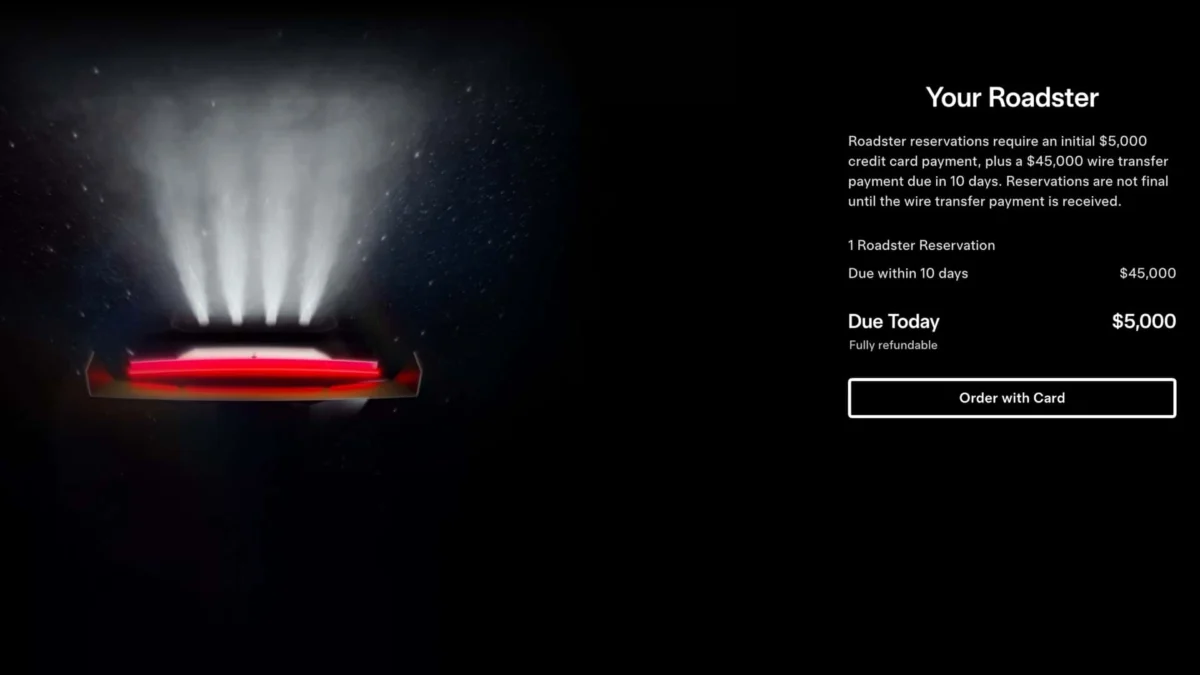
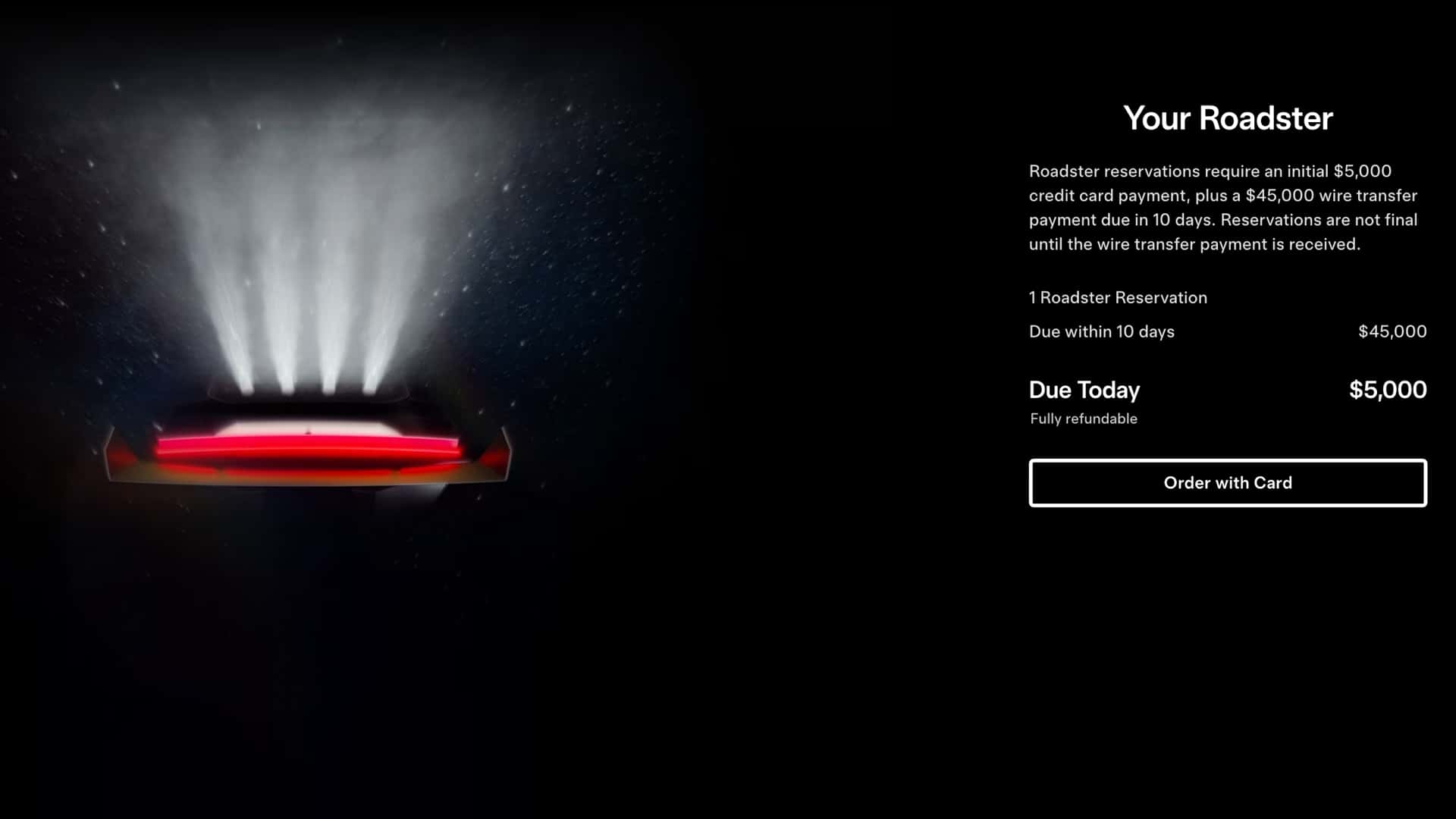
The current reservation process is structured to prioritize commitment from prospective buyers. Upon navigating to the official Tesla reservation page, customers are prompted for an immediate $5,000 initial payment. This is followed by a requirement to wire the remaining $45,000 within a ten-day window. While the initial $5,000 deposit is fully refundable, the total $50,000 commitment represents a significant capital outlay for a vehicle that has yet to see a final production version roll off an assembly line.
From a financial perspective, the collection of these deposits provides Tesla with a substantial influx of interest-free capital, though the primary function of these reservations remains the gauge of market demand and the formalization of a customer database. The "brand-new 3 Series money" required for a mere reservation highlights the premium market segment that the Roadster is targeting, placing it in direct competition with legacy hypercar manufacturers and boutique electric performance brands.
Performance Claims and Technical Evolution
Since its 2017 debut, the technical specifications for the Roadster have been in a constant state of flux. Tesla’s initial claims included a 0–60 mph time of under two seconds, a top speed exceeding 250 mph, and a range of over 620 miles. In subsequent years, CEO Elon Musk has publicly suggested even more radical capabilities, including the integration of "SpaceX technology" to enable the car to perform short-distance flight, and a 0–60 mph acceleration time of approximately one second.
However, the reality of physics has tempered some of these claims. Musk has acknowledged that high-capacity battery packs, necessary for a 600-mile range, add significant weight, which is fundamentally at odds with the agility required for a high-performance sports car. Consequently, the final production specifications remain a subject of intense speculation.
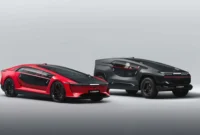
Recent teaser imagery on the Tesla website suggests a design language that leans into the company’s "Cybertruck" aesthetic—a departure from the softer, more traditional curves seen on the original 2017 prototype. This "cyber" refresh, similar to the updates seen on the Tesla Semi before it entered production, indicates that the vehicle may have been significantly re-engineered to align with Tesla’s current design ethos and manufacturing capabilities.
The October 1 Reveal: High Stakes in Texas
The upcoming event at the SpaceX facility in Waco is being treated by industry analysts as a definitive test of credibility for the program. Reports from outlets such as The Information suggest that the event will feature two distinct versions of the vehicle: a standard street-legal production model and a specialized version featuring thruster technology.
The decision to hold the reveal at a rocket-testing site is intentional, underscoring the brand’s desire to bridge the gap between automotive performance and aerospace engineering. Elon Musk has been transparent about the uncertainty of the event, stating on the All In podcast that while he guarantees "excitement," he does not guarantee "success." This admission reflects the high level of technical risk involved in integrating propulsion technologies into a passenger vehicle.
Market Implications and Industry Reaction
The implications of a successful Roadster launch go beyond the sales of a niche luxury vehicle. For Tesla, the Roadster serves as a halo product—a vehicle designed to showcase the absolute limits of the company’s battery, powertrain, and software technology. Its presence on the market is meant to burnish the brand’s image as an industry leader in innovation.
However, the long-standing delay has also opened the door for competitors. Brands such as Rimac, Lotus, and various hypercar startups have utilized the intervening years to release their own high-performance electric vehicles. Rimac, in particular, has established a firm foothold in the ultra-high-performance EV market with the Nevera, effectively filling the void that Tesla left open during the Roadster’s extended hiatus.
The success of the Roadster will likely depend on whether Tesla can deliver a vehicle that feels technologically relevant today. If the car is released with performance metrics that have already been surpassed by competitors, it may struggle to justify its price point. Conversely, if the vehicle introduces true paradigm-shifting technology—such as legitimate flight capabilities or a "SpaceX package" that drastically alters acceleration physics—it could cement Tesla’s status as the leader in cutting-edge automotive engineering for the next decade.
Looking Toward the Future
As the October 1 deadline approaches, all eyes are on the production timeline. For the reservation holders, the primary demand is clarity. After nearly a decade of waiting, the market is no longer looking for promises or viral social media posts; it is looking for a definitive production schedule, a firm price, and evidence of a supply chain capable of producing a complex, low-volume vehicle.
The reopening of the reservation page is, if nothing else, a signal that Tesla is ready to bring the conversation back to the product. Whether the Roadster will ultimately be remembered as a triumph of engineering or a long-running experiment in delayed gratification remains to be seen. For now, the automotive world waits to see if the reality in Texas can match the ambition of the original 2017 vision. The upcoming event will not only provide the first real look at the production version but will also serve as a litmus test for the enduring loyalty of the Tesla fan base and the company’s ability to execute on its most ambitious promises.