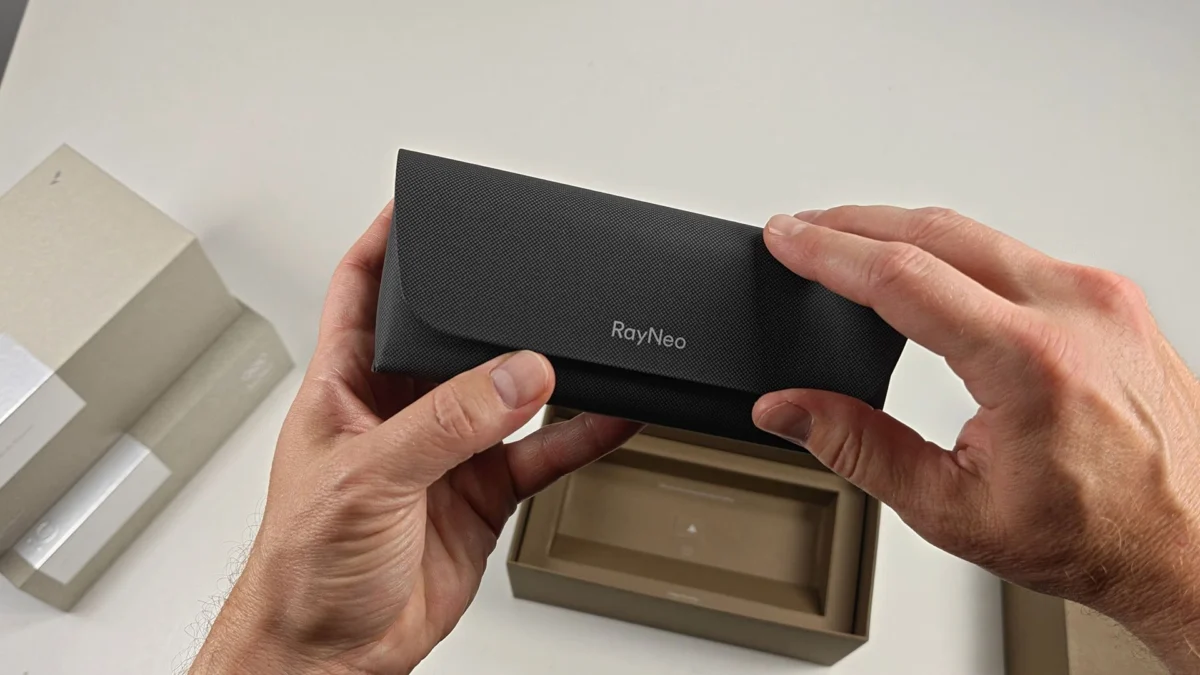
The consumer augmented reality (AR) hardware landscape continues its rapid evolution as manufacturers vie for dominance in the highly lucrative and intensely competitive sub-$300 price bracket. RayNeo, a prominent player in the wearable technology sector, has officially expanded its portfolio with the launch of the RayNeo GT smart glasses. Priced competitively at $299, these new glasses arrive hot on the heels of the company’s recent RayNeo Air 4 Pro release, signaling an aggressive product lifecycle and a clear ambition to capture market share through rapid iteration.
Despite matching the price point of its predecessor, the RayNeo GT introduces a series of meaningful hardware refinements, including a reduced overall weight, integrated native spatial tracking capabilities, and advanced display technologies. As consumers increasingly look for lightweight, versatile alternatives to bulky virtual reality headsets for media consumption, productivity, and gaming, the RayNeo GT enters the market with a compelling spec sheet designed to challenge established competitors like Xreal and Viture.
Evolution of Design and Ergonomics
One of the most immediate improvements found in the RayNeo GT is its physical profile. Weighing 8 grams less than the Air 4 Pro, the GT model demonstrates a concerted effort by engineers to minimize facial fatigue during extended viewing sessions. Furthermore, RayNeo has addressed a long-standing criticism of consumer AR glasses by introducing three distinct Interpupillary Distance (IPD) size configurations.
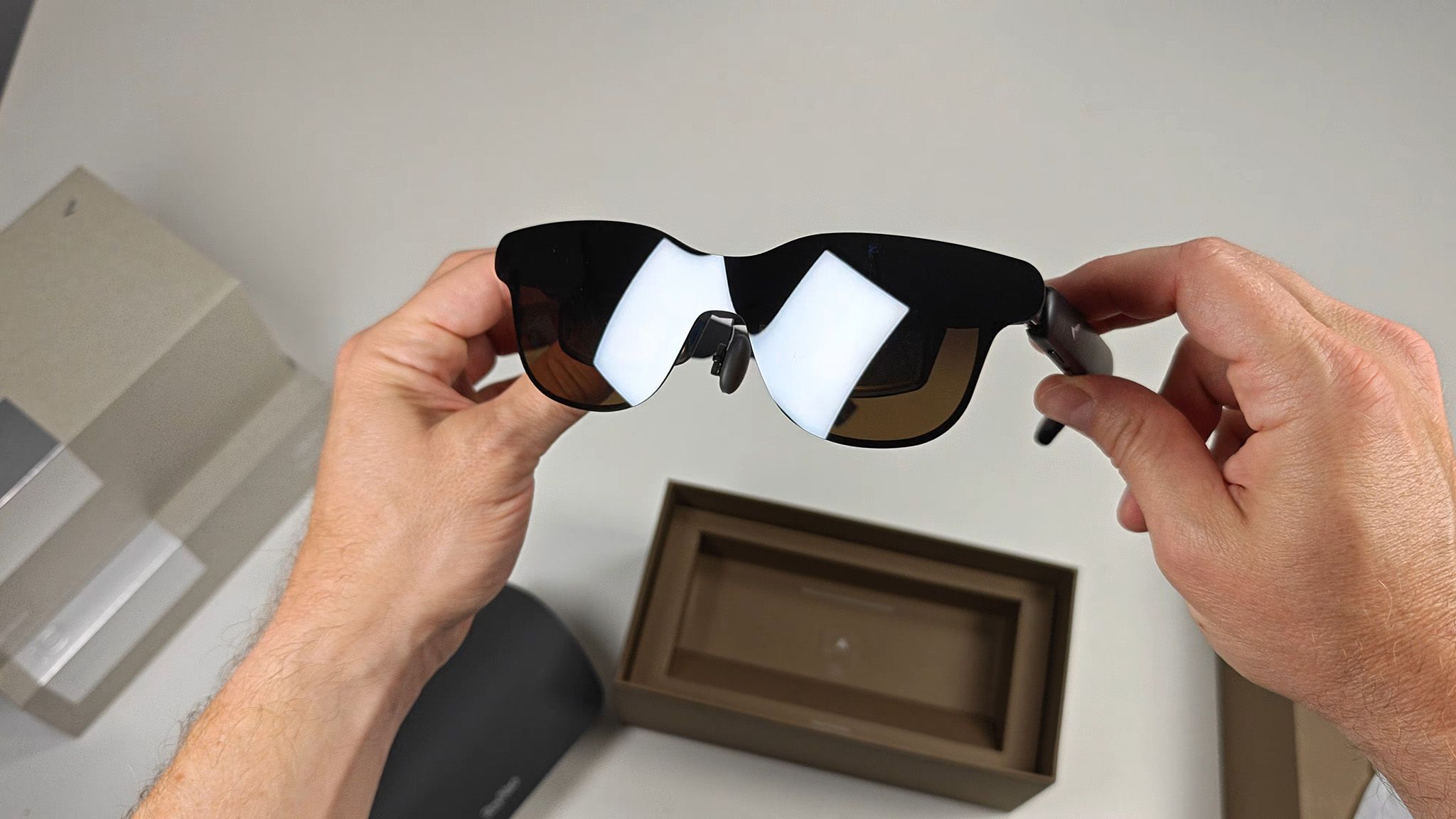
Historically, fixed-IPD AR glasses have alienated a significant portion of the consumer base with facial measurements outside the industry average, often resulting in double vision or eye strain. The RayNeo GT solves this by offering small (accommodating an IPD of 63 or lower), medium (64–67), and large (68+) size options. This modular sizing approach allows for a more personalized fit, complemented by adjustable nosepieces that enable users to vertically center the micro-OLED projection relative to their pupils. Additional design touches, such as included temple pads, distribute pressure evenly across the temples and ears, facilitating multi-hour wearability without discomfort.
Display Performance and Visual Engineering
At the core of the RayNeo GT’s visual architecture are native 10-bit micro-OLED displays paired with the Vision 4000 chipset. This silicon integration enables several advanced display features typically reserved for higher-tier hardware, including standard-dynamic-range (SDR) to high-dynamic-range (HDR) conversion and software-level support for 12-bit Dolby Vision content.
The inclusion of a 3840Hz Pulse Width Modulation (PWM) dimming rate represents a significant technical achievement for a $299 device. High-frequency PWM dimming effectively mitigates screen flicker, a primary culprit behind digital eye strain and headaches associated with low-persistence wearable displays.
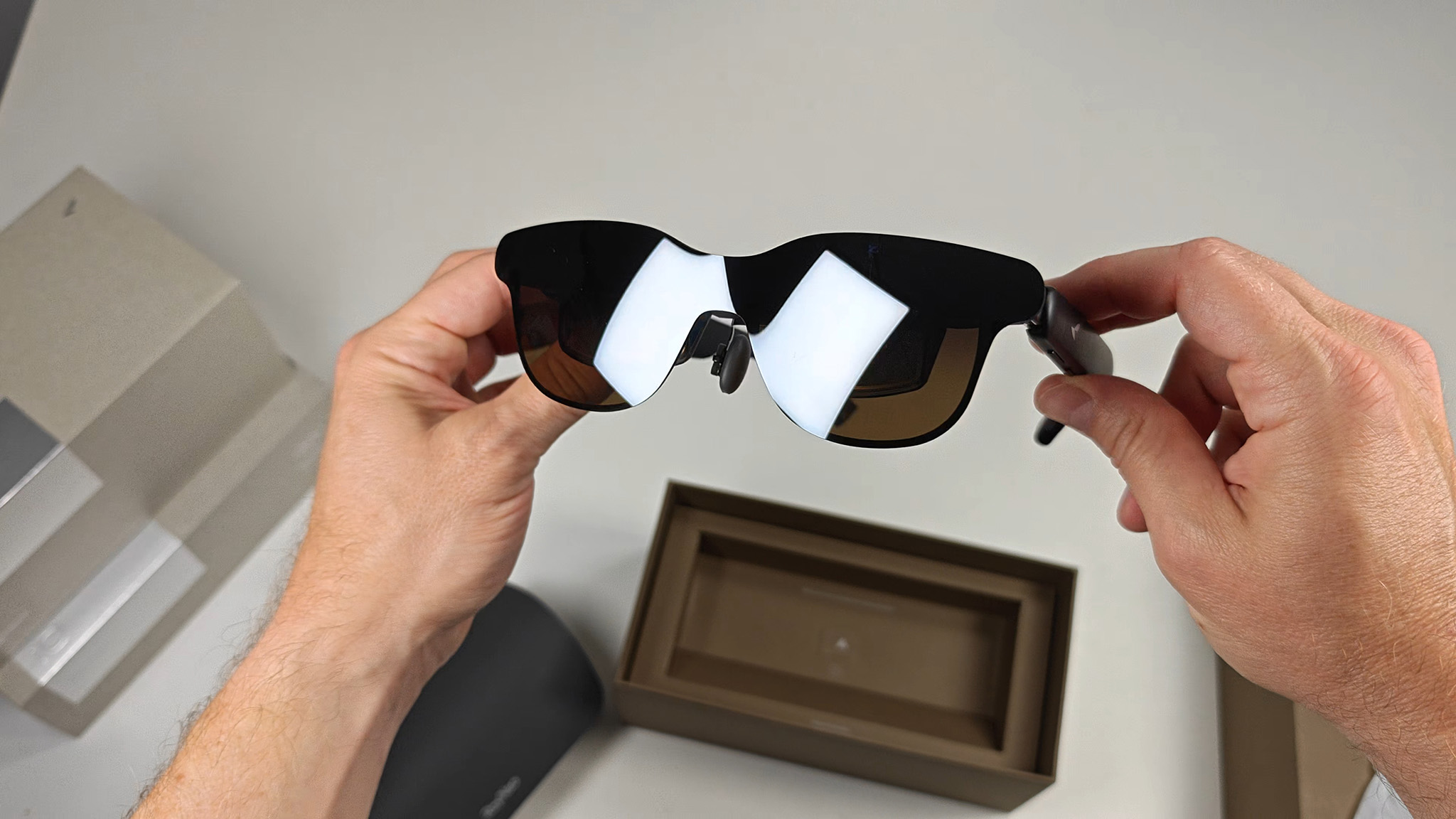
While the industry-standard 47-degree Field of View (FoV) is maintained in this iteration, the visual clarity is bolstered by the display’s inherent brightness and color depth. However, hardware limitations persist in specific environmental conditions. Notably, the RayNeo GT lacks tinting capabilities or electrochromic dimming. While the micro-OLED panels are sufficiently luminous for dimly lit environments—such as commercial aircraft cabins or darkened rooms—ambient daylight can easily wash out the projected image. Consequently, users operating the glasses outdoors or in brightly lit offices will likely need to rely on physical light-blocking covers to preserve contrast and visual fidelity.
Spatial Tracking and Navigation Controls
The integration of native 3-Degrees of Freedom (3DoF) spatial tracking represents a major functional upgrade for the GT series. Powered by a dedicated onboard tracking chip, the glasses allow users to anchor virtual screens in physical space or allow the display to follow their head movements seamlessly.
Navigation between these spatial modes—steady, anchor, and a traditional 0DoF follow mode—is managed via a tactile physical button located on the top right temple. While 3DoF and 6DoF anchoring modes offer enhanced immersion by keeping virtual monitors stationary relative to the room, they rely on black-frame insertion (low-persistence flickering) to reduce motion blur. For users sensitive to display flicker, switching to the 0DoF follow mode provides a more stable, flicker-free viewing experience at the cost of fixed spatial positioning.
Ecosystem Integration and Media Consumption
To fully leverage the advanced processing and display capabilities of the RayNeo GT, the hardware is frequently paired with RayNeo’s proprietary Pocket TV accessory. Functioning as a pocket-sized remote control powered by the Google TV operating system, the device effectively transforms the smart glasses into a standalone, portable entertainment center.
The Pocket TV streamlines streaming workflows, granting access to major video-on-demand applications without requiring a tethered smartphone or laptop. Nevertheless, user feedback indicates certain operational constraints, particularly regarding offline media management. Because the Pocket TV exhibits limitations when handling offline downloads, industry analysts recommend utilizing a mobile smartphone as the primary controller and playback device for travelers requiring local content access.
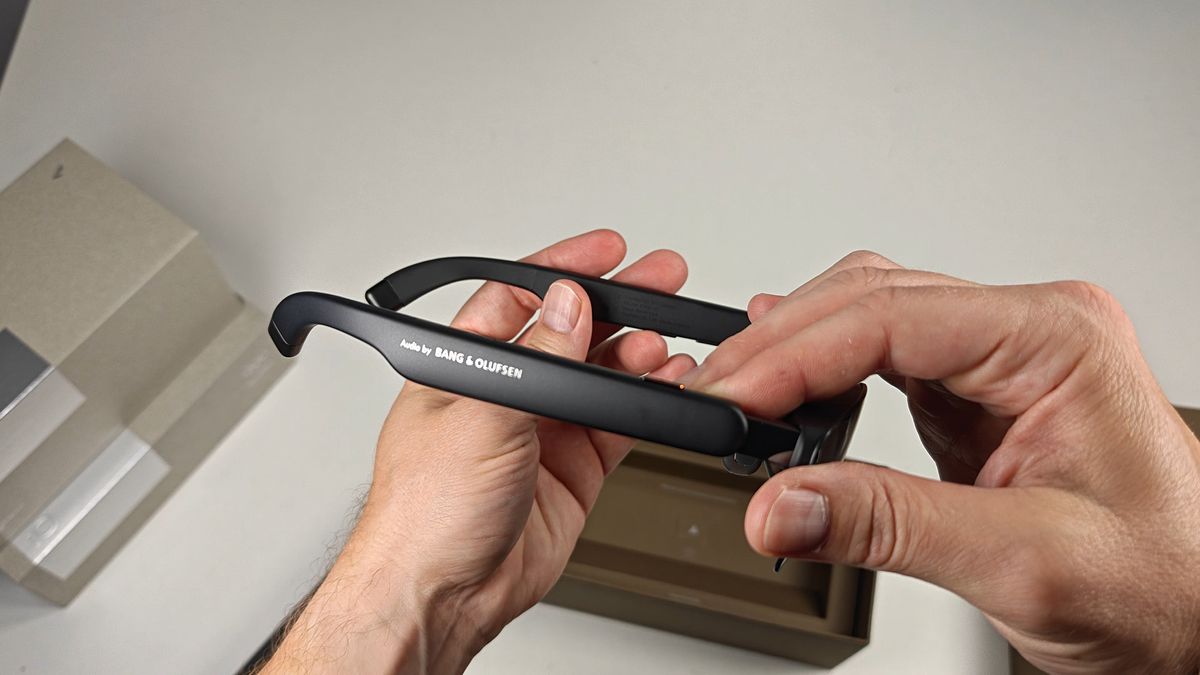
Audio performance has similarly been refined. The RayNeo GT utilizes an open-ear, four-speaker configuration that delivers clear, robust audio output without requiring the cumbersome sound tubes featured on predecessor models. For users demanding private or highly directional audio, auxiliary sound tubes remain available as separate aftermarket purchases, though the stock open-ear speakers prove adequate for most casual listening scenarios.
Market Implications and Competitive Landscape
The launch of the RayNeo GT underscores a broader industry trend: the commoditization of high-definition wearable displays. By packing features such as native 3DoF, high-frequency PWM dimming, and multi-tier IPD sizing into a $299 envelope, RayNeo is aggressively lowering the barrier to entry for spatial computing accessories.
Industry observers note that while modular alternatives—such as the Xreal XBX A01+ series—continue to appeal to enthusiasts seeking deep hardware customization, plug-and-play media consumption devices like the RayNeo GT are capturing mainstream consumer interest. As competition within the sub-$300 sector intensifies, manufacturers are under mounting pressure to eliminate usability compromises, such as inadequate ambient light management and limited sizing options.
Ultimately, the RayNeo GT establishes a new benchmark for value in the consumer AR market. By balancing ergonomic improvements with sophisticated display processing, the device successfully bridges the gap between niche technological novelty and practical, everyday consumer electronics.