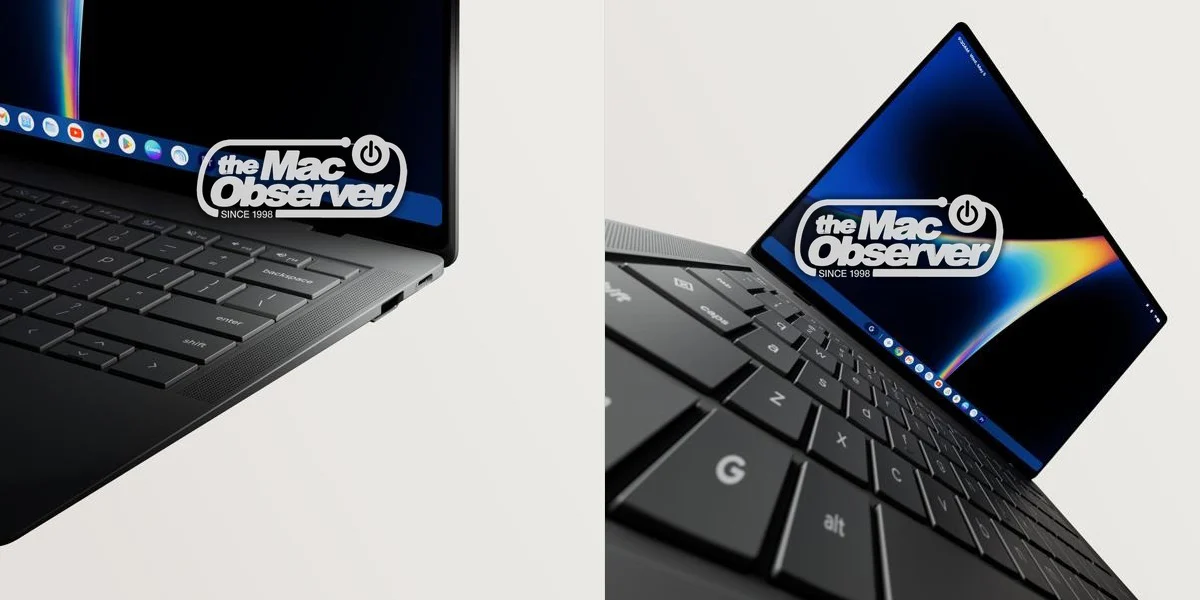
Following the initial unveiling of the Asus-manufactured Googlebook last month, a new series of high-resolution images has emerged, offering a granular perspective on the device’s physical architecture. These latest visuals, first reported by The Mac Observer, confirm several design choices that signal a departure from traditional Chromebook aesthetics, moving toward a more premium, high-performance laptop profile.
![Asus Googlebook shows off a big trackpad and plenty of ports in leaked images [Gallery]](https://9to5google.com/wp-content/uploads/sites/4/2026/09/asus-googlebook-leak-6.jpg?quality=82&strip=all&w=1200)
The imagery highlights a robust port selection, including two USB-C ports, dual USB-A ports, and a dedicated 3.5mm headphone jack. This configuration suggests that Google and Asus are targeting a professional demographic that requires legacy connectivity without sacrificing the modern utility of USB-C. The keyboard deck features a noticeably tactile layout with sufficient key travel, a stark contrast to the shallow, membrane-heavy keyboards often found in budget-tier laptops. Furthermore, the inclusion of a large, expansive trackpad indicates a focus on user experience and productivity, likely optimized for the refined gesture controls found in the latest iteration of Google’s software ecosystem.
Architectural Nuances and Design Language
Beyond the basic inputs, the design language of the new Googlebook indicates a sophisticated approach to hardware aesthetics. The display bezels are remarkably thin, with the panel extending nearly to the edge of the chassis, maximizing the screen-to-body ratio. A subtle yet distinct lightbar is visible on the exterior lid, a feature that has historically been reserved for high-end gaming laptops or unique branding statements, hinting at a potential integration with Google’s notification system or voice assistant, Google Gemini.
![Asus Googlebook shows off a big trackpad and plenty of ports in leaked images [Gallery]](https://9to5google.com/wp-content/uploads/sites/4/2026/09/asus-googlebook-leak-3.jpg?quality=82&strip=all)
Internal cooling appears to be a priority for this iteration. The internal images confirm the presence of an active cooling fan, a design choice that differentiates this model from the fanless, low-power devices typically associated with the standard Googlebook branding. This inclusion suggests that the device may house a high-performance processor, likely designed for intensive multitasking, local AI processing, or cloud-based professional workflows. Additionally, the integration of a dedicated "G" key—positioned where one might expect a Windows key or a Command key—serves as a physical manifestation of Google’s increasing emphasis on its own hardware-software integration.
A Chronology of the Googlebook Initiative
The journey toward the Asus-manufactured Googlebook began in earnest earlier this year as rumors circulated regarding Google’s desire to re-enter the premium laptop market. In August 2026, the first concrete details were made public, confirming that Google had entered a strategic partnership with Asus to design and manufacture a device that sits above the current Chromebook Plus tier.
![Asus Googlebook shows off a big trackpad and plenty of ports in leaked images [Gallery]](https://9to5google.com/wp-content/uploads/sites/4/2026/09/asus-googlebook-leak-4.jpg?quality=82&strip=all)
This timeline reflects a broader shift in Google’s hardware strategy. For years, the company relied on the Pixelbook series to serve as the gold standard for its desktop operating system. However, following the discontinuation of the Pixelbook line, a vacuum emerged in the premium market. The upcoming Googlebook, slated for pre-orders next week, represents the culmination of an eighteen-month development cycle aimed at reclaiming that high-end space. By leveraging Asus’s manufacturing prowess—a company already deeply familiar with the ChromeOS ecosystem through its successful line of educational and consumer Chromebooks—Google is positioning this new device as a direct competitor to the MacBook Air and premium Windows ultrabooks.
Market Context and Strategic Implications
The entry of this specific device into the market comes at a pivotal time for the personal computing industry. With the rapid integration of Large Language Models (LLMs) and local AI-driven productivity tools, the hardware requirements for portable computers have evolved. A laptop today is expected to do more than just render web pages; it must handle complex, localized computations to ensure user privacy and reduce latency.
![Asus Googlebook shows off a big trackpad and plenty of ports in leaked images [Gallery]](https://9to5google.com/wp-content/uploads/sites/4/2026/09/asus-googlebook-leak-5.jpg?quality=82&strip=all)
The inclusion of an active cooling system and what appears to be a high-performance chipset suggests that Google is preparing its software to run more intensive applications. This could indicate the expansion of the Googlebook platform to include professional-grade video editing, advanced software development, and AI-assisted data analysis. If the device performs as the hardware suggests, it could signal a pivot for the entire ecosystem, moving away from "web-first" computing toward a "hybrid-local" model that provides the reliability of cloud storage with the power of desktop-class hardware.
From a competitive standpoint, the Googlebook is likely to put pressure on both Apple and Microsoft. While the MacBook remains the industry leader in power efficiency and the Windows ecosystem dominates in terms of software compatibility, the Googlebook offers a unique value proposition: a seamless integration with Google’s suite of services, enhanced security features, and a simplified software architecture that reduces maintenance overhead for enterprise and individual users alike.
![Asus Googlebook shows off a big trackpad and plenty of ports in leaked images [Gallery]](https://9to5google.com/wp-content/uploads/sites/4/2026/09/asus-googlebook-leak-2.jpg?quality=82&strip=all)
Technical Specifications and Hardware Analysis
While official specifications remain under wraps until the formal launch, the physical evidence provided by the leaked images allows for a reasonable analysis of the device’s target performance tier.
- Chassis Construction: The thin profile and edge-to-edge display suggest a premium alloy construction, likely aluminum or a magnesium-lithium composite, designed for both durability and weight reduction.
- Authentication: The presence of a fingerprint sensor integrated into the chassis confirms a shift toward biometric security as a standard, moving away from relying solely on account-based passwords or PINs.
- Connectivity: By retaining USB-A ports while simultaneously providing dual USB-C ports, Asus is clearly attempting to bridge the gap between legacy peripherals and modern docking standards. This is a critical factor for enterprise clients who are often hesitant to move to a "USB-C only" environment.
- Audio-Visual Experience: The large trackpad and the display’s corner-to-corner design imply that the device will be marketed as a high-end multimedia machine, likely featuring high-fidelity speakers and a webcam optimized for the high-bandwidth video conferencing required by modern remote work.
Expectations for the Upcoming Launch
With pre-orders scheduled to open next week, consumer and analyst attention has shifted toward pricing and distribution. There is significant speculation regarding whether the Googlebook will follow a subscription-based hardware model—similar to the Google Pixel Pass—or if it will be sold as a traditional one-time purchase.
![Asus Googlebook shows off a big trackpad and plenty of ports in leaked images [Gallery]](https://9to5google.com/wp-content/uploads/sites/4/2026/09/asus-googlebook-leak-1.jpg?quality=82&strip=all)
Industry analysts suggest that if Google prices this device aggressively, it could significantly disrupt the mid-to-high-end laptop market. However, success will ultimately depend on the software experience. If the OS can effectively leverage the hardware’s capabilities—particularly the cooling system and the dedicated "G" key functions—the Googlebook could become the flagship device that redefines what a Google-branded computer is capable of.
Google has remained tight-lipped regarding the exact date of the full reveal, but the rapid influx of information suggests that a major media event is imminent. As the industry watches, the focus remains on whether this partnership with Asus will yield a device that can finally stand toe-to-toe with the most entrenched competitors in the laptop industry. For now, the hardware details paint a picture of a device that is well-built, thoughtfully designed, and clearly aimed at the modern, power-user demographic that Google has been missing for several years.
![Asus Googlebook shows off a big trackpad and plenty of ports in leaked images [Gallery]](https://9to5google.com/wp-content/themes/ninetofive/dist/images/google-preferred-source-badge-dark.png)
As we approach the pre-order window, potential customers should expect further disclosures regarding the processor architecture, battery life, and the specific software enhancements that will differentiate the Googlebook from the standard array of Chromebooks currently on the market. The next week will likely be filled with further leaks and official teasers as the company prepares to pull back the curtain on its most significant hardware launch in recent years.