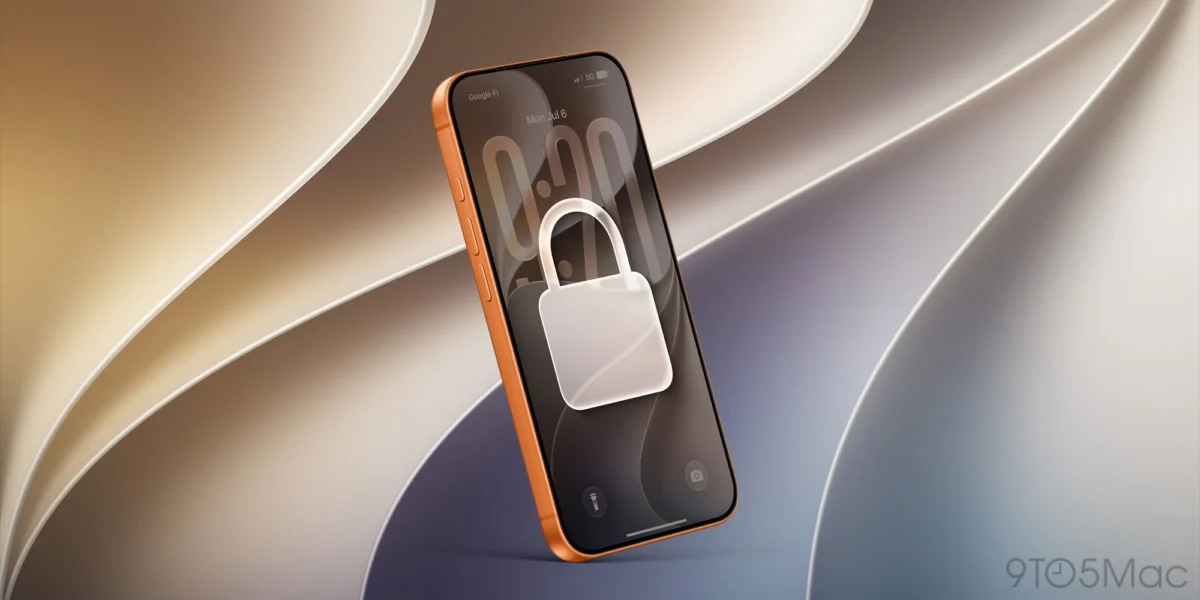
Apple continues to make significant engineering progress on a sophisticated security feature designed to automatically lock an iPhone when algorithms detect the device has been physically snatched from its owner’s hand. While the Cupertino-based technology giant has yet to formally announce the tool, fresh code discovered within the latest software development cycle indicates that the company is actively refining the system, focusing heavily on precision, reliability, and the mitigation of false positives.
The initiative addresses a rapidly growing category of street crime involving opportunistic thieves who target distracted pedestrians, snatching active devices directly from their grips while apps remain open and unlocked. By bridging the gap between sudden physical displacement and device security, Apple aims to render stolen hardware virtually useless before perpetrators can disable tracking, change Apple ID credentials, or access sensitive financial applications.
Evolution of the Anti-Snatching Initiative
The existence of Apple’s anti-snatching project first came to light earlier this year through code analysis of early iOS development builds. Security researchers and developers inspecting system frameworks discovered experimental routines aimed at interpreting sudden kinetic movements indicative of a grab-and-run incident.

In the subsequent months, Apple has transitioned from conceptual frameworking to active background testing. Fresh references uncovered in the iOS 27.2 beta 2 cycle demonstrate that the underlying infrastructure—internally designated as "AutoLock"—is operational at a foundational level within the operating system. However, Apple has deliberately kept the final execution mechanism disabled in current beta builds. This cautious rollout strategy allows engineers to test telemetry gathering and behavioral triggers in the wild without accidentally locking out legitimate users due to rapid movements or sudden shifts in orientation.
How the AutoLock System Operates
Developing an automated mechanism that can reliably distinguish between a violent theft and everyday user behavior—such as stepping abruptly onto public transportation, running for a train, or making a sudden hand gesture—presents a formidable engineering challenge. To overcome this hurdle, Apple has devised a multi-layered evaluation framework that relies on a sophisticated voting system.
According to internal system references, the AutoLock service synthesizes data from multiple hardware sensors to evaluate potential theft scenarios. When a sudden physical displacement signal requests a device lock, the system cross-references this event against a suite of intelligent safeguards designed to veto false positives. These contextual filters include:
- Biometric Authentication Status: Recent successful facial recognition or fingerprint scans can temporarily suppress lock triggers, recognizing that the legitimate owner is actively interacting with the device.
- Foreground App Activity: Certain high-engagement application states or continuous user inputs serve as contextual evidence that the device is safely in the hands of its intended operator.
- Familiar Location Awareness: Drawing inspiration from the robust architecture of Stolen Device Protection, the system evaluates geographical context. If an anomaly occurs in a known, trusted environment—such as a user’s home or workplace—the threshold for triggering an automated lock is adjusted significantly.
- Adaptive Backoff Mechanisms: To prevent operational frustration caused by repetitive erroneous triggers, the software incorporates a suppression window that temporarily suspends automatic locking protocols following consecutive lock events.
This holistic approach ensures that the operating system evaluates the totality of the device’s environment rather than reacting rashly to a single isolated sensor reading.

Contextual Background: The Rise of Street-Level Device Theft
Apple’s ongoing development of the AutoLock feature arrives against a backdrop of escalating smartphone thefts in major metropolitan areas globally. Law enforcement agencies across North America, Europe, and Asia have reported an alarming surge in targeted device snatching, where perpetrators exploit the window of vulnerability that exists between a user unlocking their phone and the device timing out naturally.
Traditionally, smartphone security relied heavily on reactive measures: remote tracking via the Find My network, remote activation of Lost Mode, and remote wiping capabilities. While effective for recovering lost property or rendering a device dormant after the fact, these measures often require user intervention and depend heavily on cellular connectivity. Furthermore, sophisticated criminals have increasingly utilized specialized Faraday bags, rapid SIM card removal, and social engineering tactics to block remote signals immediately following a theft.
By introducing an autonomous, proactive layer of security that locks the device the millisecond a snatching motion is validated, Apple hopes to neutralize the value proposition for street thieves. A device that locks itself mid-air or instantly upon separation from the owner’s hand provides virtually no opportunity for perpetrators to extract data or bypass security controls.
Regulatory and Consumer Security Trends
The push toward proactive hardware and software security aligns with broader regulatory expectations and consumer advocacy demands. Over the past several years, lawmakers and consumer protection groups have intensified pressure on major technology companies to implement robust anti-theft measures that go beyond basic passcodes and remote tracking.

Apple has steadily expanded its security ecosystem to address these modern threats. Last year’s introduction of Stolen Device Protection added an essential layer of friction for high-risk actions—such as changing an Apple ID password or viewing saved keychain credentials—when an iPhone is detected away from familiar locations. The prospective AutoLock feature serves as the natural precursor to those measures, shifting the defensive timeline from post-theft protection to instantaneous, real-time threat neutralization.
Industry Implications and Future Outlook
While the inclusion of AutoLock references in iOS 27.2 beta 2 confirms that internal testing is robust, industry analysts urge caution regarding deployment timelines. Apple notoriously iterates on advanced security features over multiple software development cycles to ensure absolute reliability. If a security feature introduces high rates of false positives—locking users out of their phones during normal physical activity—it risks consumer backlash and operational friction.
Consequently, Apple is expected to continue refining the sensor telemetry algorithms and voting logic throughout the beta testing phase. Whether the feature makes its public debut in an upcoming point release of the current iOS generation or is held back for a major annual software rollout remains entirely at the discretion of Apple’s engineering leadership.
Ultimately, the maturation of the AutoLock project underscores a paradigm shift in mobile device security. As smartphones increasingly function as digital wallets, identity vaults, and primary communication hubs, the boundary between physical security and digital defense continues to dissolve, necessitating innovative, sensor-driven solutions to protect users in an unpredictable physical world.