The Cooler Master Hyper 212 Evo, a venerable name in the realm of CPU air cooling, continues to command significant attention from the PC building community even a decade after its initial release. In 2021, with an ever-evolving landscape of high-performance components, the enduring relevance of this budget-friendly cooler prompted a comprehensive re-evaluation, aiming to ascertain its performance in modern computing systems and its continued value proposition. This analysis delves into the cooler’s design, historical context, installation complexities, and contemporary performance against both stock and higher-end alternatives, offering a detailed perspective on why it remains a topic of frequent discussion among enthusiasts.
A Decade of Dominance: The Hyper 212 Evo’s Genesis and Market Impact
Launched in 2012, the Cooler Master Hyper 212 Evo entered a burgeoning PC hardware market where custom building was rapidly gaining traction. At the time, stock CPU coolers provided by manufacturers like Intel and AMD were often adequate for basic operation but frequently fell short under sustained loads, leading to higher temperatures and increased noise levels. High-end air coolers from brands such as Noctua and Thermalright offered superior performance but came with a premium price tag, creating a significant gap in the mid-range and budget segments.
The Hyper 212 Evo positioned itself perfectly within this void. Its innovative (for the time) Heatpipe Direct Touch (HDT) technology, which allows copper heatpipes to make direct contact with the CPU’s integrated heat spreader, promised efficient heat transfer at a cost-effective price point. This design philosophy resonated deeply with a community increasingly focused on maximizing performance per dollar. The cooler quickly became a de facto recommendation for budget and mid-range builds, offering a substantial upgrade over stock solutions without breaking the bank. Its widespread availability and consistent performance cemented its status as a market staple, a position it remarkably maintained for years, even as newer technologies and designs emerged.
The enthusiasm for the Hyper 212 Evo’s re-evaluation in 2021 underscores its unique legacy. In an era dominated by discussions around exorbitant graphics card prices and scarce high-end processors, the appeal of a sub-$35 component that can significantly enhance a system’s thermal performance and acoustics remains compelling. It highlights a segment of the PC market that values practical, affordable upgrades capable of making a tangible impact on everyday computing experiences.
Technical Specifications and Design Philosophy
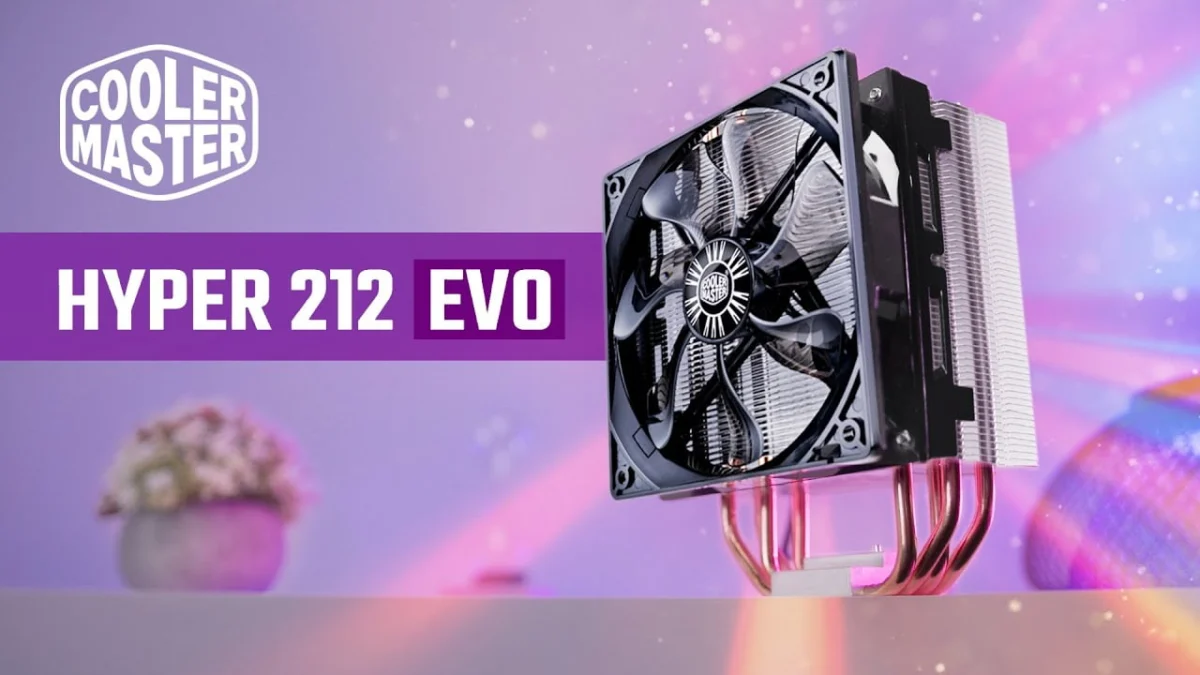
The Hyper 212 Evo’s design is characterized by its fundamental simplicity and functional efficiency. Measuring 120mm wide, 158.5mm high, and 77mm deep with its single 120mm fan installed, it represents a moderate increase in size compared to standard stock coolers. This larger footprint contributes directly to its enhanced cooling capacity, allowing for a greater surface area for heat dissipation. However, its dimensions are not without potential considerations; while generally compatible with most ATX cases, specific configurations, particularly those with tall RAM modules or in smaller form factor (ITX) builds, may encounter memory clearance issues, especially if all RAM slots are populated.
At the core of the 212 Evo’s thermal management system are its four direct-contact copper heatpipes. This HDT technology was a significant selling point upon its release and continues to be a feature found in various air coolers, from entry-level to some higher-end models (when executed with precision, as seen in solutions like the Arctic Freezer 50). HDT is particularly effective at lower to mid-range heat loads, making it well-suited for the CPUs the 212 Evo is typically paired with. The heatpipes efficiently draw thermal energy away from the CPU and transfer it to an array of aluminum fins, which are then cooled by the airflow from the attached fan.
The included fan is a straightforward 120mm unit, devoid of modern aesthetic enhancements like RGB lighting. It operates at a maximum speed of 2000 RPM, generating an acoustic output of approximately 36 dBA at full tilt. While not the quietest fan on the market, its performance profile is designed to provide effective airflow across the fin stack. A notable design choice are the plastic fan clips, which, despite their perceived fragility compared to metal alternatives, offer a user-friendly experience, eliminating the common frustration of metal clips detaching during installation or adjustment.
The Hyper 212 Evo’s price point, typically ranging from $30 to $35 USD, and often found for even less during sales, solidifies its position as an exceptional value proposition. This affordability, coupled with its proven performance, has been a cornerstone of its enduring appeal.
The Evolving Lineage: Hyper 212 V2 and Black Edition
Cooler Master has not rested solely on the laurels of the original Hyper 212 Evo. Over time, the company has introduced several iterations, expanding the 212 series to cater to evolving market demands and address feedback. Two prominent variants are the Hyper 212 Evo V2 and the Hyper 212 Black Edition, both of which offer distinct improvements and considerations for potential buyers.
The Hyper 212 Evo V2 represents a thoughtful refinement of the original design, rather than a complete overhaul. It is typically sold in parallel with the original Evo, offering an upgraded experience for a slightly higher cost, often $15 to $20 more in regions like Canada. Key enhancements include:
- Stepped-back Heatpipe Design: This modification aims to significantly improve memory compatibility by offsetting the cooler’s base, allowing for greater clearance over RAM slots, even with tall heat spreaders. This addresses one of the primary compatibility concerns of the original Evo.
- Revised Mounting Kit: The V2 features a vastly improved installation system, a critical upgrade given the well-documented difficulties associated with the original Evo’s mounting hardware. This streamlined process makes installation considerably less cumbersome and more user-friendly.
- Updated SickleFlow Series Fan: The V2 is equipped with a newer generation SickleFlow fan, engineered to deliver better acoustic performance and enhanced airflow, particularly at lower RPMs. This results in a quieter operation without sacrificing significant cooling potential.
While the V2 offers compelling upgrades, its higher price point necessitates a value assessment. The additional cost, while seemingly minor, represents a significant percentage increase over the original Evo’s already low price, potentially pushing it into competition with other entry-level coolers that might offer similar performance or features.
The Hyper 212 Black Edition is another popular variant, primarily distinguished by its sleek, all-black aesthetic, which appeals to users prioritizing system visuals. Beyond the cosmetic changes, it also incorporates functional improvements:
- Larger Base: This can potentially improve thermal contact and heat transfer efficiency.
- Upgraded Fan: Similar to the V2, the Black Edition typically includes a more advanced fan, often contributing to better acoustics and airflow compared to the original Evo’s fan.
- Metal Mounting Clips: Unlike the plastic clips of the Evo, the Black Edition utilizes metal clips for fan attachment. While robust, some users find these more challenging to manipulate than the Evo’s plastic alternatives, contributing to a slightly less user-friendly experience during fan installation or removal.
Intriguingly, the price difference between the Black Edition and the original Evo can often be negligible, especially during sales, making it a compelling option for those who prefer the darker aesthetic and upgraded fan without a significant financial outlay. Cooler Master’s strategy of maintaining these diverse Hyper 212 models allows them to capture various segments of the budget cooling market, offering options that balance cost, ease of installation, performance, and aesthetics.
The Installation Gauntlet: A Legacy of Frustration
While the Hyper 212 Evo excels in performance-to-price ratio, its Achilles’ heel, as widely acknowledged by the community and reaffirmed by recent re-evaluations, lies in its installation process. The mounting system, largely unchanged since its 2012 debut, is notorious for being cumbersome, overly complex, and at times, physically challenging, particularly on AMD motherboards. It stands in stark contrast to the simplified, tool-less, or minimally-tooled installation procedures common in modern CPU coolers.
The process on an AMD motherboard exemplifies these difficulties:
- Backplate Management: Users must first remove the motherboard’s existing AMD backplate. Cooler Master’s proprietary metal backplate then needs to be aligned and held in place, ensuring the green-stickered "feet" face upwards.
- Stud and Washer Assembly: Metal studs are inserted through the motherboard from the front, secured by plastic washers, and then threaded into the Cooler Master backplate from behind. This often requires holding the motherboard aloft with one hand while manipulating small components with the other.
- Tiny Nuts and Tightening: Miniature, Lego-sized nuts are then gently threaded onto the studs. A common pitfall is overtightening one nut, which can cause the backplate to unevenly lift, making subsequent nut installation nearly impossible. The provided adapter, a small wrench-like tool, is necessary to tighten these nuts with a screwdriver, as standard wrenches often cannot fit into the confined space. Moreover, the bolts can pivot in their sockets, necessitating manual stabilization from behind the motherboard while tightening from the front – a multi-handed operation.
Once the backplate is secured, the process moves to mounting the cooler itself:
- Crossbar Alignment: A critical step involves correctly positioning the crossbar bracket in the "AMD position" and feeding it through the cooler’s base. A small pin must precisely align with a corresponding hole on the bracket, a detail easily missed if instructions are not meticulously followed.
- Cooler Placement and Tightening: The cooler, with the crossbar now loosely attached, is placed over the CPU. The crossbar, however, has a tendency to shift considerably, requiring the installer to meticulously hold it in place while simultaneously tightening the four spring-loaded screws in an alternating pattern. This delicate balancing act demands patience and precision to ensure even mounting pressure.
The cumulative effect of these steps is a process that is not only time-consuming but also carries a risk of minor injury, as noted by reviewers who have reported cutting themselves during installation. This archaic mounting system is perhaps the most significant drawback of the original Hyper 212 Evo. The Hyper 212 Evo V2’s revised mounting kit is a direct response to this feedback, representing a substantial improvement that, for many, might alone justify the slightly higher price point.
Performance Benchmarking: A Timeless Thermal Solution?
The re-evaluation of the Hyper 212 Evo in 2021 centered on its thermal performance against modern CPUs, specifically a modified Ryzen 9 5950X, to simulate various thermal loads (95W, 125W, and 150W) within a closed case environment. This approach allows for a realistic assessment of the cooler’s capabilities across a spectrum of entry-level to mid-range CPU demands, and even a challenging high-end scenario. The comparative coolers included the Noctua NH-U12S (a benchmark for higher-end air cooling), the Cooler Master Hyper 212 Black Edition (an internal competitor), and AMD’s Wraith Stealth and Wraith Spire (common stock coolers). A critical cutoff of 90°C was established, beyond which AMD’s Precision Boost Overdrive (PBO) begins throttling, and sustained operation is generally discouraged for CPU longevity.
95W Thermal Load:
At 95W, simulating a range of lower to mid-range CPUs at stock frequencies, the Hyper 212 Evo demonstrated highly impressive results. While the Noctua NH-U12S maintained a slight lead (approximately 4°C cooler) at very low fan speeds, the performance gap diminished significantly as fan speeds and corresponding decibel levels increased. Notably, the Evo performed marginally better than the 212 Black Edition in repeated tests, suggesting its core design remains highly efficient for this thermal envelope. Against the stock AMD Wraith coolers, the Evo was a clear winner, delivering substantially lower temperatures and drastically reduced noise levels, preventing the CPU from approaching throttling limits that the stock coolers struggled with.
125W Thermal Load:
Stepping up to a 125W load, representative of slightly overclocked mid-range processors or higher-end CPUs at stock speeds, the Hyper 212 Evo began to show the inherent limitations of its budget-oriented design. At lower fan speeds, it fell further behind the 212 Black Edition and the NH-U12S. To achieve comparable temperatures, the Evo’s fan had to spin at higher RPMs, leading to increased acoustic output. This indicates that while it can manage 125W, it does so less efficiently (i.e., louder) than more premium solutions or even its slightly upgraded Black Edition sibling. The AMD Wraith Spire, rated for 95W, predictably failed to maintain the CPU below the 90°C threshold at this wattage, underscoring the necessity of an aftermarket cooler like the Evo for such loads. Despite needing to run louder, the Evo’s ability to handle 125W at its price point reaffirms its exceptional value.
150W Thermal Load:
The 150W test, designed to push entry-level coolers beyond their typical limits, proved to be too demanding for the Hyper 212 Evo. Even with its fan spinning at maximum RPM, the cooler was unable to dissipate heat fast enough, leading to the CPU quickly reaching and exceeding the 90°C thermal cutoff. This outcome was largely anticipated, as the original 212 Evo was never engineered to manage such high heat loads. This result serves to delineate the cooler’s practical boundaries and sets a baseline for future comparisons with more robust cooling solutions.
Replicating the Hyper 212 Evo V2 Performance
To provide insight into the performance benefits of the Hyper 212 Evo V2, a test was conducted using the original Evo chassis fitted with a Cooler Master SickleFlow fan possessing specifications identical to those found in the V2. This simulated upgrade aimed to gauge the impact of the V2’s improved fan technology.
The results indicated that the upgraded SickleFlow fan indeed delivered tangible improvements. At lower decibel levels and a 95W load, temperatures were consistently reduced by 2°C to 3°C compared to the original Evo’s fan. These benefits, however, tended to plateau as fan speeds increased. Similar trends were observed at higher wattages. This suggests that the V2’s fan is optimized for better acoustics and airflow at lower RPMs, making it a more efficient and quieter cooler overall. However, the performance gains are incremental. The decision to opt for the V2, with its slightly improved thermal and acoustic performance, alongside its significantly enhanced installation experience and memory compatibility, largely hinges on an individual’s willingness to invest the additional $15-$20 for these quality-of-life upgrades. When coolers are overwhelmed at very high heat loads, the fan upgrade offers little to no practical difference, as the core heatsink design becomes the limiting factor.
Conclusion: An Enduring Value Proposition
The 2021 re-evaluation unequivocally confirms the Cooler Master Hyper 212 Evo’s status as a remarkably resilient and value-driven CPU cooler. Ten years post-release, its ability to effectively cool modern mid-range CPUs and provide a substantial upgrade over stock solutions at an unparalleled price point is genuinely surprising and commendable. Its continued popularity among the PC building community is well-deserved, a testament to Cooler Master’s original, effective, and cost-efficient engineering.
However, the cooler is not without its significant drawbacks. The installation process, a relic of a bygone era, remains its most glaring deficiency. The complex, multi-step mounting procedure, particularly on AMD platforms, is cumbersome and frustrating, potentially deterring novice builders and testing the patience of experienced ones. The reported instances of minor self-injury during installation underscore the need for a more user-friendly design, a need that the Hyper 212 Evo V2 successfully addresses.
Despite these installation challenges, the Hyper 212 Evo represents an exceptional value proposition. For budget-conscious builders seeking to replace their stock cooler, reduce CPU temperatures, and achieve quieter operation without a significant financial outlay, the Evo remains a highly compelling choice. Its performance at 95W and 125W loads makes it perfectly suited for a vast majority of mainstream CPUs that do not demand extreme cooling solutions. While it cannot handle the most strenuous 150W loads, this limitation aligns with its intended market segment.
The enduring legacy of the Hyper 212 Evo is a powerful reminder that innovative, practical, and affordable engineering can withstand the test of time, continuing to serve a vital role in the ever-evolving world of personal computing. Its story highlights the appeal of fundamental performance and value over ephemeral trends, solidifying its place as a quintessential component in the DIY PC landscape.