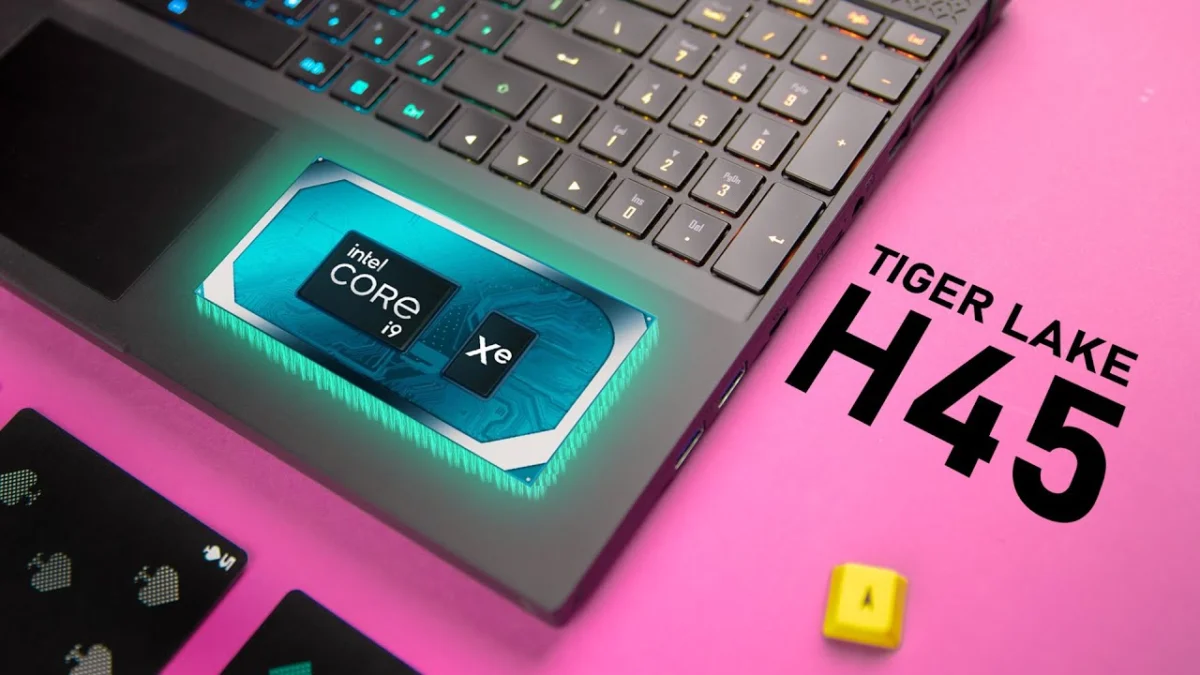
The highly anticipated launch of Intel’s 11th Gen Core H-series processors marks a pivotal moment in the competitive landscape of high-performance laptops, signaling Intel’s determined effort to reclaim market share from AMD’s formidable Ryzen Mobile lineup. This new generation of "Tiger Lake-H45" silicon, built on a refined 10nm SuperFin process and featuring the Willow Cove architecture, aims to deliver substantial performance gains and introduce a suite of advanced platform capabilities designed to redefine the gaming and enthusiast laptop experience.
A Shifting Landscape: Intel’s Recent Challenges and AMD’s Ascent
For several years, Intel has faced significant competitive pressure across its CPU portfolio, particularly from AMD’s resurgent Ryzen processors. On the desktop front, Intel’s 10th and 11th Gen offerings, including the "Rocket Lake" series, struggled to consistently outperform AMD’s Ryzen 3000 and 5000 series, which often offered superior multi-threaded performance and better power efficiency. The 11th Gen desktop chips, while introducing new architectures, were constrained by a reliance on an older 14nm process, leading to a mixed reception and a general sentiment of "meh" among reviewers and consumers.
However, the situation in the gaming and enthusiast laptop segment has been even more challenging for Intel. The company’s 10th Gen "Comet Lake" mobile processors found themselves in a direct struggle against AMD’s groundbreaking Ryzen Mobile 4000 series, introduced in early 2020. These Ryzen chips, based on the Zen 2 architecture, offered unprecedented core counts and multi-threaded performance in a mobile form factor, quickly establishing AMD as a dominant force in the high-performance laptop space. The subsequent release of the Ryzen Mobile 5000 series, leveraging the Zen 3 architecture, further solidified AMD’s lead, delivering impressive single-core and multi-core improvements.
AMD’s rapid rise was somewhat mitigated by production constraints, which limited the availability of Ryzen-based laptops. This scarcity inadvertently provided Intel a narrow window of opportunity to counterpunch. Industry analysts have widely observed that while AMD’s performance was undeniable, the inability to consistently meet demand left a vacuum that Intel could potentially fill with a compelling new architecture. The introduction of the 11th Gen H-series is Intel’s strategic response, aimed at leveraging this window to regain momentum and demonstrate its continued innovation in mobile computing.
The Genesis of Tiger Lake H45: A New Architectural Foundation
The 11th Gen H-series processors are a direct evolution of the "Tiger Lake" architecture, which first debuted in ultraportable notebooks as power-efficient U-series chips. Unlike previous generations that often relied on incremental refinements of older processes, Tiger Lake represents a comprehensive overhaul. It features the new 10nm SuperFin manufacturing process, a significant leap from the long-standing 14nm node, promising improved transistor performance and power efficiency. Complementing this is the new Willow Cove core architecture, designed for enhanced instruction per cycle (IPC) performance.
Initial implementations of Tiger Lake in U-series chips and the more powerful H35 models (found in devices like the ASUS TUF Dash F15) demonstrated strong lightly-threaded performance, significantly improved integrated graphics (Xe-LP), and better power efficiency. These early successes set the stage for the full-scale H45 variant, which scales the architecture to meet the demanding requirements of enthusiast gaming laptops.
At CES 2021, Intel provided a tantalizing glimpse of its upcoming H-series processors, teasing three key specifications that captured industry attention: 5GHz clock speeds, 8 physical cores, and 20 PCIe Gen4 lanes. These figures hinted at a significant architectural and platform upgrade, promising a return to high clock frequencies while simultaneously addressing modern connectivity needs. The official launch of the H45 series confirms these teasers, presenting a "mutation" of the Tiger Lake design scaled up to 8 cores and 16 threads, capable of achieving seriously high clock speeds, signaling Intel’s renewed ambition in the high-performance mobile segment.
Intel’s 11th Gen H-Series Lineup: A Deep Dive into Performance Cores
The new 11th Gen Core H-series processors are structured to cater to various tiers of high-performance laptops, offering both 6-core/12-thread and 8-core/16-thread configurations. All these chips are rated at a 45W Thermal Design Power (TDP), with the flagship HK model offering configurable power up to 65W for maximum sustained performance. The H35 series, positioned for thinner and lighter gaming laptops, will continue to serve its niche, offering a bridge between ultraportables and full-fledged gaming machines.
-
Core i9-11980HK: The Flagship Overclocker
The undisputed star of the lineup is the Core i9-11980HK. This 8-core, 16-thread processor boasts impressive clock speeds, capable of boosting up to 5.0GHz on two cores and maintaining 4.5GHz across all eight cores. This level of all-core frequency is particularly notable for a mobile chip, putting it on par with or even exceeding the capabilities of some desktop CPUs like the Rocket Lake i7-11700K, which operates at a much higher 125W+ TDP. Crucially, the "HK" designation signifies an unlocked multiplier, allowing for user overclocking via Intel’s Extreme Tuning Utility (XTU) for manual control or through the Speed Optimizer feature for an automated performance boost. This flexibility caters directly to the enthusiast segment, providing avenues for pushing performance boundaries.
-
Core i9-11900H and i7-11800H: The Mainstream Powerhouses
Beneath the HK flagship, the Core i9-11900H and Core i7-11800H are expected to be the workhorses of the enthusiast laptop market. Both are 8-core, 16-thread processors, offering a compelling blend of performance and efficiency. The i7-11800H, in particular, appears to strike an excellent balance, delivering performance estimated to be only 7% to 9% slower than the i9-11980HK, making it a highly attractive option for the majority of gaming laptops. All three 8-core Tiger Lake CPUs share a substantial 24MB of L3 cache, exceeding the cache available in some desktop Rocket Lake CPUs, a design choice expected to yield higher performance in many applications. Intel also highlights the "Frequency at cTDP" column, indicating the base frequency at a 35W configurable TDP, showcasing the chips’ adaptability for thinner designs. Native memory support has also been upgraded across the board, moving from DDR4-2933 to DDR4-3200, a welcome boost for overall system performance. -
Core i5 Models: Accessible Gaming Performance
The lineup also includes two Core i5 models, both featuring 6 cores and 12 threads. These chips offer very competitive clock speeds, but Intel has implemented a strategic reduction in L3 cache, cutting it to 12MB. This decision is clearly aimed at differentiating these models from their higher-end 8-core counterparts and positioning them as more cost-effective solutions. Beyond the core count and cache, the primary difference between the two Core i5 models is a minor 50MHz variation in integrated GPU frequency, a distinction that is largely inconsequential for laptops equipped with discrete graphics cards.
Integrated Graphics: Xe-LP with a Strategic Reduction
Despite carrying the "UHD Graphics" moniker, the integrated graphics in the 11th Gen H-series processors are based on Intel’s modern Xe-LP architecture, similar to the rest of the Tiger Lake family. However, these specific implementations are scaled down to 32 Execution Units (EUs), a significant reduction compared to the 48, 80, or 96 EU variants found in the quad-core Tiger Lake chips.
This decision, while potentially disappointing for those hoping for a powerful integrated GPU in a high-performance, discrete-GPU-less thin-and-light laptop, is rooted in practical design and market considerations. Firstly, integrating a 96 EU IGP alongside an 8-core CPU would result in an exceptionally large die size, driving up manufacturing costs and complexity. Secondly, and more critically, Intel’s discussions with its OEM partners confirmed that these higher-end H-series processors are almost exclusively paired with dedicated, high-performance discrete GPUs. In such configurations, the integrated graphics primarily handle desktop tasks and video decoding, with the heavy lifting for gaming and demanding visual workloads falling to the discrete GPU. Thus, the 32 EU configuration provides sufficient capability for these auxiliary tasks without significantly impacting die size or cost.
A Platform Revolution: PCIe Gen4, Thunderbolt 4, and WiFi 6E
Beyond the CPU cores, the 11th Gen H-series introduces a completely revamped platform that significantly enhances connectivity and data throughput, setting it apart from its predecessors and current competitors.
-
PCIe Gen4: Unlocking New Performance Tiers
The most impactful platform upgrade is the move to a top-to-bottom PCIe Gen4 architecture. The CPU provides 20 PCIe Gen4 lanes: 8 dedicated to the discrete GPU and 12 available for high-speed storage. This is a substantial advantage over AMD’s Ryzen Mobile 5000 series, which, to conserve power, remains limited to PCIe Gen3 lanes for both GPUs and storage solutions. The availability of PCIe Gen4 for the GPU directly impacts gaming performance by providing higher bandwidth for graphics data transfer, especially when coupled with features like Resizable BAR (ReBAR), which Intel supports at launch.The 12 dedicated PCIe Gen4 lanes for storage open up exciting possibilities, particularly for RAID configurations with high-speed NVMe SSDs. Such setups could dramatically improve loading times and overall system responsiveness. This aligns perfectly with upcoming technologies like Microsoft Direct Storage, a Windows API designed to reduce CPU overhead during intensive I/O operations from fast NVMe SSDs in modern games. Intel claims that even with a single PCIe Gen4 SSD, users can expect up to 80% higher bandwidth and 75% faster access times compared to the previous Comet Lake platform, which was limited to PCIe Gen3 SSDs. Additionally, an extra 24 PCIe Gen3 lanes are provided by the PCH (Platform Controller Hub), totaling 44 platform PCIe lanes, offering extensive options for peripherals and additional storage, though their implementation ultimately rests with laptop manufacturers.
-
Thunderbolt 4: Universal High-Speed Connectivity
Native support for Thunderbolt 4, a technology that debuted with the initial Tiger Lake U-series, is a key feature of the H-series platform. Offering a blistering 40Gbps bidirectional bandwidth, Thunderbolt 4 provides unparalleled versatility. It supports multiple high-resolution displays (e.g., two 4K monitors or one 8K monitor) from a single port and enables high-speed data transfer to external storage and docking stations. A significant implication of Thunderbolt 4 is the requirement for all certified laptops to support charging via the port. While convenient, some concerns exist that this might lead to the loss of a dedicated high-speed data port if it’s primarily used for power, echoing trends seen in some ultraportable designs. -
Killer WiFi 6E: The Future of Wireless Connectivity
The 11th Gen H-series laptops also include native support for Killer WiFi 6E. This advanced wireless standard extends WiFi operation into the 6GHz band, offering a substantial increase in available spectrum. With four times the amount of space compared to the crowded 5GHz band, WiFi 6E promises significantly higher bandwidth, lower latency, and reduced interference, especially in densely populated areas. This advancement aims to provide a smoother, more reliable wireless experience, although its full benefits will depend on the widespread adoption of WiFi 6E routers and devices, which is expected to take some time.
Intel’s Performance Claims: A Direct Challenge to AMD
Intel’s presentation of performance benchmarks positioned the 11th Gen H-series as a formidable contender, directly challenging AMD’s Ryzen 5000 Mobile chips. While these are Intel’s internal figures and await independent verification, they paint an optimistic picture.

In gaming, Intel claims impressive gains. The flagship Core i9-11980HK reportedly outperforms the previous generation’s i9-10980HK by a significant margin. More critically, Intel demonstrated the i9-11980HK beating AMD’s Ryzen 9 5900HX in several gaming titles, even when paired with an NVIDIA RTX 3080 Mobile GPU running at a 10W lower TGP (Total Graphics Power) than its AMD counterpart. Although AMD does offer an even higher-end Ryzen 9 5980HX, its advantage lies primarily in a 200MHz higher maximum boost clock, suggesting it wouldn’t drastically alter these comparative results.
Intel also highlighted the performance of its more mainstream Core i5-11400H, asserting its ability to trade blows with the higher-end Ryzen 9 5900HS. This is particularly noteworthy given that the i5-11400H is a 6-core chip compared to the Ryzen 9’s 8 cores and was benchmarked with an RTX 3060 GPU running at 15W less. While not a clean sweep, these results suggest the i5-11400H will offer a superior gaming experience compared to AMD’s mainstream Ryzen 5 5600H.
For content creation and productivity, Intel’s claims were presented as average increases across various applications compared to their 10th Gen chips. These percentage gains align with what was observed in the initial Tiger Lake ultrabooks. However, direct comparisons against AMD in these workloads were more generalized, with Intel focusing on "leading performance" rather than specific benchmark numbers. Independent testing will be crucial to validate these claims, especially given AMD’s strong multi-threaded performance in content creation tasks. Nevertheless, even if the real-world gains are more modest than Intel’s most optimistic projections, any significant improvement would be a welcome development for consumers seeking powerful mobile workstations.
Broader Market Implications and Crucial Factors for Success
The success of Intel’s 11th Gen H-series processors will not solely hinge on raw performance figures. Several critical factors will determine their impact on the market and their ability to genuinely challenge AMD’s current dominance.
-
Pricing Strategy: AMD’s Ryzen Mobile platforms have become exceptionally competitive on price, especially as they are increasingly paired with high-end discrete GPUs. Intel cannot afford to position its 11th Gen H-series laptops at a significant premium if it intends to gain substantial market share. An aggressive pricing strategy will be essential to make these new, feature-rich laptops accessible and attractive to consumers.
-
Laptop Design and OEM Collaboration: Powerful specifications are meaningless without well-engineered laptop designs. Previous generations have seen instances where promising CPU/GPU combinations were undermined by poor thermal management, inadequate cooling systems, or suboptimal power delivery, leading to underperforming devices (e.g., the MSI Bravo 15 or Dell G5 15 SE, which were strong on paper but flawed in execution). Intel must work closely with its OEM partners to ensure that 11th Gen H-series laptops are not only powerful but also feature robust cooling, optimized power limits, and user-friendly designs that maximize the potential of the new silicon.
-
Performance Realization: While the Tiger Lake architecture and 11th Gen processors represent a significant step forward, the variability in laptop CPU and GPU wattages means that raw specifications do not always translate directly to consistent real-world performance. A laptop with a higher TGP for its GPU and CPU will almost always outperform one with lower power limits, even if they share the same core components. Consumers will need to scrutinize individual laptop reviews that detail power configurations to make informed decisions.
-
Availability and Supply Chain: Perhaps the most immediate determinant of success will be availability. AMD’s production constraints have been a consistent challenge, limiting the supply of Ryzen-based laptops. If Intel can leverage its manufacturing capabilities to flood the market with a wide array of 11th Gen H-series laptops before AMD fully addresses its supply issues, it could secure a significant advantage. The summer months typically see a surge in demand for gaming laptops, making timely and ample supply a critical factor in this competitive race.
Conclusion: A Win for Consumers
The launch of Intel’s 11th Gen H-series processors marks a significant turning point in the high-performance laptop market. After a period of AMD’s strong dominance, Intel has demonstrated a renewed commitment to innovation, delivering a compelling new architecture, advanced platform features like PCIe Gen4 and Thunderbolt 4, and aggressive performance targets. The next few months promise to be exceptionally dynamic for anyone considering a new gaming or enthusiast laptop.
Ultimately, this intensified competition between Intel and AMD is a net positive for consumers. It drives both companies to innovate faster, offer better performance, integrate cutting-edge features, and potentially lead to more competitive pricing across the board. The renewed back-and-forth between these two technology giants ensures a vibrant market with diverse choices, cementing the idea that vigorous competition is always a victory for the end-user.