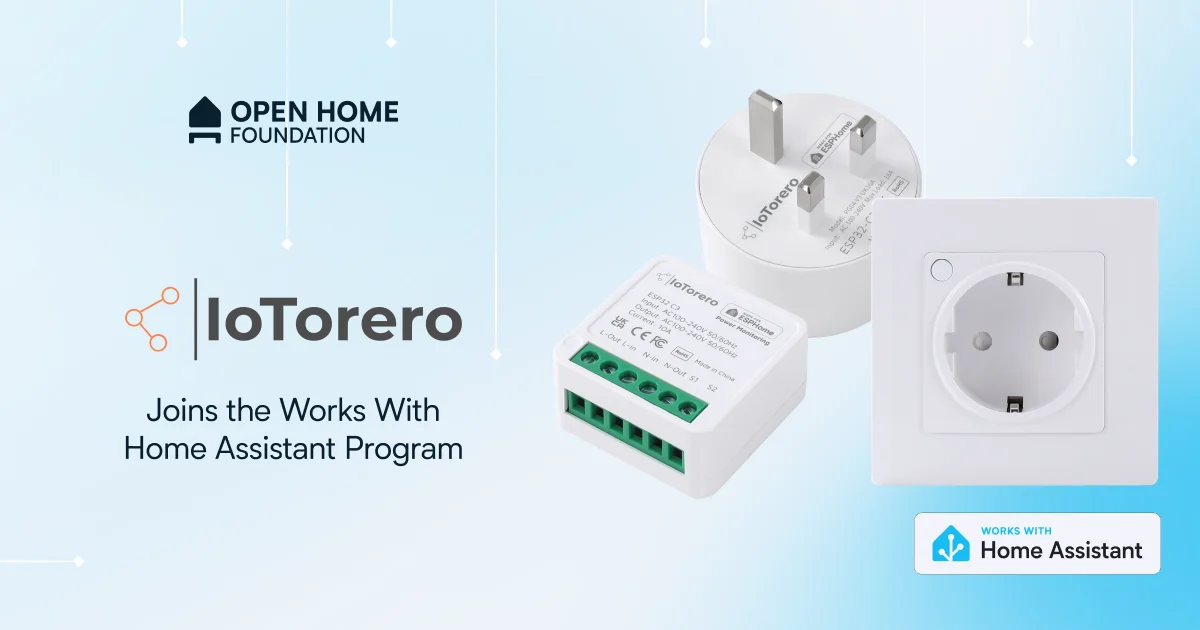
The Home Assistant ecosystem reached a significant milestone this month with the official induction of IoTorero into the Works with Home Assistant program. This partnership marks a strategic expansion for the open-source smart home platform, as IoTorero becomes the first manufacturer to offer ESPHome-ready smart plugs and relays with official certification. Known formerly as Athom Technology, the company has rebranded to IoTorero, a name that reflects its commitment to the "Internet of Things" while signaling a departure from the industry’s reliance on cloud-dependent infrastructure. The inclusion of seven specific devices into the program ensures that users can access hardware that is not only pre-flashed with open-source firmware but also rigorously tested for compatibility, privacy, and local-first operation.
The Evolution of IoTorero and the Shift Toward Open Hardware
Founded in 2020 under the name Athom Technology, the company quickly carved out a niche within the enthusiast community by specializing in hardware that embraced the ESPHome and Tasmota firmware environments. While most mainstream smart home manufacturers utilize proprietary, closed-source software that requires a persistent internet connection to function, Athom—now IoTorero—focused on providing a bridge between mass-produced hardware and the flexibility of open-source development.
The rebranding to IoTorero in 2026 represents more than a cosmetic change; it is a declaration of the company’s focus on the "Internet of Things" as a local, user-controlled entity. Unlike standard IoT gadgets that often become "bricks" if a manufacturer’s servers are shut down or if internet connectivity is interrupted, IoTorero’s devices are designed to function independently of any external cloud. This philosophy aligns directly with the "Open Home" pillars established by the Open Home Foundation: privacy, choice, and durability.
By joining the Works with Home Assistant program, IoTorero has moved from being a specialized "tinkerer’s brand" to a certified partner. This transition simplifies the user experience significantly. Previously, users seeking ESPHome-based solutions often had to manually flash firmware onto devices, a process that required technical knowledge and sometimes physical modification of the hardware. IoTorero’s certified devices arrive pre-flashed and ready for immediate integration, lowering the barrier to entry for privacy-conscious consumers who may not have extensive programming experience.
Technical Analysis of the Certified Hardware Suite
The initial wave of certification covers seven primary devices, spanning a variety of regional requirements and form factors. These include smart plugs tailored for the European (EU), American (US), United Kingdom (UK), and French (FR) markets, as well as a specialized Power Monitoring Mini Relay designed for hardwired installations.
The ESP32-C3 Architecture and Energy Monitoring
At the heart of the newly certified smart plugs is the ESP32-C3 chipset. This choice of hardware is significant for several reasons. The ESP32-C3 is a RISC-V based microcontroller that offers a balance of low power consumption and high performance, making it ideal for smart home applications. Furthermore, these plugs are equipped with advanced energy monitoring capabilities.
According to technical specifications, the certified plugs monitor four key metrics:
- Voltage: Ensuring the stability of the power supply to the connected appliance.
- Current: Measuring the flow of electricity in real-time.
- Active Power: Providing an accurate reading of wattage consumed.
- Total Consumption: Aggregating energy usage over time to help users identify high-drain appliances.
This level of granular data is a cornerstone of the modern sustainable home. By integrating these metrics directly into the Home Assistant Energy Dashboard, users can automate appliances based on grid demand or solar production, directly contributing to carbon footprint reduction and lower utility costs.
The Power Monitoring Mini Relay
In addition to the consumer-facing smart plugs, the Power Monitoring Mini Relay addresses the needs of more complex smart home setups. Approximately the size of a matchbox, this device is designed to be installed behind existing wall switches or inside appliance cabinets. It allows for the automation of "dumb" appliances and lighting circuits without requiring the replacement of existing aesthetic fixtures. Like the smart plugs, it maintains full energy monitoring and local control, ensuring that even hardwired components of the home remain under the user’s absolute jurisdiction.
The ESPHome Advantage and the New Device Builder
The partnership coincides with a major technological leap for ESPHome itself. In July 2026, the ESPHome team released version 2026.6.0, which introduced a radically redesigned User Interface (UI) and a new "Device Builder" tool. Historically, ESPHome required users to write or edit YAML configuration files to customize their hardware. While powerful, this was often intimidating for newcomers.
The new visual workspace allows users to manage their IoTorero devices through a graphical interface. Because IoTorero maintains a public GitHub repository of configurations for all their devices, the Home Assistant ecosystem can automatically suggest components and layouts. This means that while the devices work "out of the box," the path to advanced customization—such as changing the behavior of an LED indicator or adjusting the frequency of energy reporting—is now accessible via a code-free environment.
Aiden Tang, CTO and Co-Founder of IoTorero, emphasized the importance of this accessibility in a recent statement: "Since inception in 2020, IoTorero has been dedicated to the research, development, and manufacturing of open source smart home hardware products. By joining the Works with Home Assistant program, we ensure that customers can select and purchase our products with complete confidence, knowing they receive high-quality devices pre-flashed with ESPHome firmware."
Enhancing Connectivity: The Role of Bluetooth Proxies
One of the most innovative features of the certified IoTorero lineup is the inclusion of Bluetooth proxy capabilities. Modern smart homes often struggle with "dead zones" for Bluetooth Low Energy (BLE) sensors, such as temperature probes, moisture sensors, or plant monitors. Traditionally, solving this required purchasing dedicated Bluetooth hubs or placing the main Home Assistant server in a central location.
IoTorero’s devices solve this by acting as a distributed network of bridges. When a smart plug is positioned in a room, it can pick up signals from nearby BLE devices and relay that data back to the Home Assistant server over the local Wi-Fi network. This "proxy" functionality effectively extends the range of the entire smart home network without requiring additional hardware.
From a sustainability perspective, this feature is vital. By repurposing a smart plug as a connectivity bridge, the need for single-purpose electronic devices is reduced. This aligns with the Open Home Foundation’s mission to minimize e-waste by maximizing the utility of existing hardware.
Certification Standards and the Open Home Foundation
The "Works with Home Assistant" badge is not merely a marketing tool; it is a technical certification that requires manufacturers to adhere to strict operational standards. To achieve this status, IoTorero’s hardware underwent rigorous in-house testing using the Home Assistant Green hub as the reference standard.
The certification criteria include:
- Local Control: The device must be controllable without an internet connection.
- No Cloud Dependency: The device must not require a manufacturer’s cloud service to function or be configured.
- Privacy: No user data should be transmitted to external servers without explicit consent.
- Long-term Support: The manufacturer commits to maintaining the integration and hardware compatibility as the Home Assistant platform evolves.
Furthermore, these devices carry the "Made for ESPHome" badge. This prerequisite ensures that the hardware is optimized for the ESPHome environment, guaranteeing that firmware updates will not "break" the device and that the hardware components are fully documented for the community.
Market Implications and Future Outlook
The entry of IoTorero into the official partner program signals a maturing of the smart home market. For years, the industry was dominated by "walled gardens" where interoperability was an afterthought. The success of the Home Assistant ecosystem, supported by Home Assistant Cloud (Nabu Casa) and the Open Home Foundation, has created a viable alternative to the ecosystems provided by Big Tech.
For consumers, the benefit is clear: hardware that is owned, not rented. In an era where cloud services are frequently discontinued, the assurance that a smart plug bought today will function a decade from now—regardless of the manufacturer’s financial status—is a powerful value proposition.
Looking forward, the relationship between IoTorero and the Home Assistant team is expected to yield further hardware releases. As the smart home moves toward the Matter standard, the role of ESPHome as a bridge for legacy and specialized hardware remains crucial. IoTorero’s commitment to keeping their configurations public on GitHub ensures that even as new technologies emerge, the community will have the tools necessary to adapt and innovate.
The certification of IoTorero’s ESPHome devices is a win for the open-source movement, providing a blueprint for how hardware manufacturers can thrive by empowering users rather than restricting them. As more devices join the "Works with Home Assistant" list, the vision of a truly private, local, and sustainable smart home becomes an attainable reality for a broader audience.