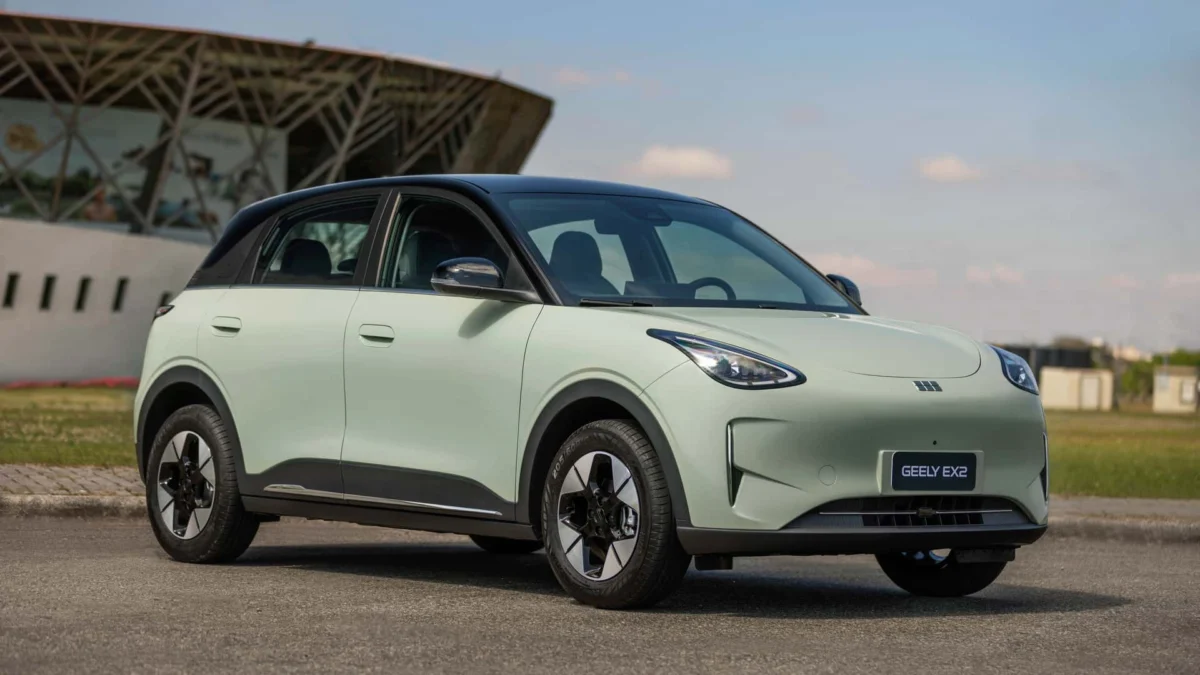
In a remarkable display of market dominance, a compact electric hatchback from China’s Geely Auto has not only captured the title of the country’s best-selling vehicle in 2025 but is also maintaining its impressive lead well into 2026. The Geely E2, known by various monikers including the Geely EX2, Geely Galaxy Xingyuan, and Geome Xingyuan, has become a powerhouse in the intensely competitive Chinese automotive landscape. Preliminary estimates for the first half of 2026 indicate that the E2 has found approximately 244,000 buyers, a figure that significantly outpaces major global and domestic rivals. This volume positions it ahead of well-established models such as the Tesla Model Y, which reportedly sold around 215,000 units, the highly anticipated Xiaomi SU7 with approximately 182,000 sales, and the Leapmotor A10, which garnered around 171,000 buyers in the same period.
This surge in popularity begs the question: what is driving the Geely E2’s extraordinary success, and could this formula be replicated in markets beyond China, particularly in Europe? The vehicle’s ability to outsell larger, more established SUVs and sedans underscores a significant shift in consumer preferences and the evolving dynamics of the automotive industry, especially within the burgeoning New Energy Vehicle (NEV) sector.
The Rise of the Affordable Electric Hatchback
Geely’s unassuming five-door electric hatchback has defied expectations by not only entering but dominating a market often perceived to favor larger, more imposing vehicles. This achievement is particularly noteworthy given that New Energy Vehicles (NEVs) – a category encompassing battery electric vehicles (BEVs), plug-in hybrid electric vehicles (PHEVs), and range-extended electric vehicles – now constitute a commanding 63 percent of all new car sales in China. This statistic highlights the nation’s aggressive push towards electrification and the widespread acceptance of alternative powertrains by consumers.
The Geely E2’s success can be attributed to its strategic positioning in terms of both size and affordability, hitting a sweet spot that appeals to a broad spectrum of buyers. Measuring 162.0 inches (approximately 4.11 meters) in length, the E2 is at the larger end of the B-segment hatchback class. This places it in direct competition with, and often exceeding in dimensions, popular European counterparts such as the Renault 5, Peugeot 208, and the BYD Dolphin Surf. Its wheelbase of 104.3 inches (approximately 2.65 meters) contributes significantly to its interior volume and cargo capacity, allowing it to punch above its weight class and offer a practicality often associated with larger vehicles.
However, it is the E2’s aggressive pricing strategy that truly sets it apart. In China, the E2 starts at a remarkably low price of ¥64,800 (approximately $9,000 USD). This makes it only marginally more expensive than the ultra-compact Wuling Hongguang Mini EV, which retails from ¥44,800 ($6,600 USD), and importantly, undercuts the BYD Seagull (known as the Dolphin Surf in Europe), which begins at ¥69,900 ($10,300 USD). In stark contrast, the premium Tesla Model Y commands a starting price of ¥263,500 ($38,900 USD) in the Chinese market. This vast price differential highlights the E2’s appeal to budget-conscious consumers who are seeking an entry into electric mobility without compromising on essential features and practicality.
Modern Design Meets Practical Features
Beyond its compelling price point and dimensions, the Geely E2 also distinguishes itself through its design philosophy. Eschewing overly futuristic or polarizing aesthetics that can sometimes alienate mainstream buyers, the E2 sports clean, modern lines that project an image of understated sophistication and broad appeal. This balanced approach to design ensures that the vehicle is attractive to a wide demographic, from younger urban commuters to families seeking an economical and practical second car.
The interior of the Geely E2 is equally impressive, offering a wealth of features that belie its affordable price tag. Standard equipment includes an 8.8-inch digital instrument cluster, providing clear and customizable driver information, and a substantial 14.6-inch central infotainment display that serves as the hub for connectivity and entertainment. The vehicle also comes equipped with full-LED headlights, enhancing visibility and contributing to its modern appearance. For driver convenience and safety, adaptive cruise control is also included as standard, a feature often reserved for higher-tier vehicles.
Practicality is further enhanced by its generous cargo space. The E2 offers 13.2 cubic feet (approximately 374 liters) of storage behind the rear seats, which can be expanded to an impressive 46.6 cubic feet (approximately 1,320 liters) when the rear seats are folded down. This versatility makes it suitable for a range of tasks, from daily grocery runs to weekend getaways. Adding to its practical utility is a convenient 2.5-cubic-foot (approximately 71-liter) front trunk, often referred to as a "frunk," which provides additional secure storage for smaller items or charging cables.
Under the hood, the E2 is powered by a single, rear-mounted electric motor. This setup is paired with affordable and durable Lithium Iron Phosphate (LFP) batteries, a choice that contributes to the vehicle’s overall cost-effectiveness and longevity. Depending on the specific trim level and battery configuration, the E2 offers a range of 157 to 214 miles (approximately 253 to 344 kilometers) on a single charge. This range is more than adequate for the vast majority of daily commuting needs and short to medium-distance travel, alleviating range anxiety for many potential buyers.
A Winning Formula in a Shifting Market
The Geely E2’s success in China is a clear testament to a well-executed strategy that prioritizes affordability, practicality, and modern technology. In a market as dynamic and fast-paced as China’s electric vehicle sector, where innovation is constant and competition is fierce, the E2 has managed to carve out a significant niche by offering a compelling package that directly addresses the needs and desires of a large segment of consumers. Its ability to blend a competitive price with a solid range, ample interior space, and a suite of desirable features has proven to be a winning formula.
Geely’s Global Ambitions and European Potential
The question now arises whether this successful formula can be translated to international markets, particularly Europe, where Geely already has a significant presence through brands like Volvo, Polestar, and Lotus, and where its own-branded vehicles are also gaining traction. In Europe, the Geely E2 is already being sold in select markets, such as Italy, where its pricing starts at around €20,900. This price point positions it competitively within the European small electric car segment, challenging established players and offering a more affordable alternative to many existing electric models.
The European market presents both opportunities and challenges. On one hand, the demand for affordable electric vehicles is growing rapidly, driven by government incentives, increasing environmental awareness, and rising fuel costs. The E2’s combination of a sub-€21,000 starting price, practical dimensions, and decent range could make it a highly attractive option for European consumers looking for an accessible entry into EV ownership. Its size is well-suited for urban environments and narrow European streets, and its cargo capacity meets the needs of many small families and individuals.
However, European consumers often have different expectations regarding vehicle refinement, build quality, and advanced driver-assistance systems compared to their Chinese counterparts. Geely will need to ensure that the E2 meets these expectations to succeed. Furthermore, the European market is already becoming crowded with a growing number of small electric hatchbacks from both established European manufacturers and increasingly capable Chinese brands like BYD and MG. Geely’s established reputation for quality and its existing dealer networks across Europe will be crucial assets in this competitive landscape.
Broader Implications for the Global Auto Industry
The meteoric rise of the Geely E2 has significant implications for the global automotive industry. It underscores the growing capabilities of Chinese automakers not only in terms of technological innovation but also in their ability to produce high-volume, cost-effective vehicles that can compete on a global scale. The success of models like the E2 suggests that the era of Western automakers holding a near-monopoly on desirable and affordable small cars may be drawing to a close.
Furthermore, the E2’s performance highlights the critical role of battery technology and manufacturing in driving down the cost of electric vehicles. Geely’s use of LFP batteries, which are generally less expensive than nickel-manganese-cobalt (NMC) chemistries, is a key factor in its affordability. As LFP technology continues to mature and scale, it is likely to become even more prevalent in mass-market EVs, further democratizing electric mobility.
The E2’s triumph is also a clear signal that consumers are increasingly prioritizing value for money, practicality, and essential features over premium branding or cutting-edge, often complex, technologies. While luxury EVs and high-performance models continue to capture headlines, it is the sensible, well-executed, and affordable options that are driving mass adoption.
Looking Ahead: Geely’s Trajectory and Market Forecasts
As 2026 progresses, all eyes will be on whether the Geely E2 can maintain its remarkable sales momentum and solidify its position as a long-term bestseller. Its continued success will likely depend on Geely’s ability to adapt to evolving consumer demands, navigate global regulatory landscapes, and potentially introduce updated versions with enhanced features or performance.
Industry analysts are closely watching Geely’s strategy, anticipating whether the company will replicate the E2’s success by introducing similar value-oriented electric models in other key markets. The company’s commitment to electrification, backed by substantial investment in research and development and manufacturing capacity, suggests that the E2 may be just the beginning of a broader offensive by Geely to capture a significant share of the global electric vehicle market.
The narrative of the Geely E2 is more than just the story of a single car; it is a compelling chapter in the ongoing transformation of the automotive world. It demonstrates that innovation and affordability can go hand-in-hand, and that a well-designed, practical, and competitively priced electric vehicle can indeed conquer even the most challenging markets. The implications for consumers, competitors, and the future of transportation are profound, signaling a more diverse, accessible, and electrified automotive landscape for years to come.
Motor1’s Take: The Geely E2 stands as a powerful testament to the fact that in the automotive world, sometimes simplicity, affordability, and practicality are the most potent ingredients for success. With an impressive array of standard features, a surprisingly spacious interior for its compact dimensions, and an ultra-competitive price tag, it’s not difficult to understand why this unassuming five-door electric hatchback has made such a colossal impact in China. Its burgeoning sales figures are a clear indicator that Geely has struck a chord with consumers seeking accessible and functional electric mobility, and its potential for broader international appeal, particularly in Europe, is a development worth closely monitoring.