






The long-awaited release of Grand Theft Auto VI by Rockstar Games, a subsidiary of Take-Two Interactive, has officially rewritten the history books of the global entertainment industry. Launching to unprecedented demand, the title raked in an astonishing $3.79 billion globally during its opening weekend, instantly cementing its status as the most lucrative entertainment launch in history. This staggering financial milestone not only eclipses previous gaming benchmarks but also surpasses the opening box office records of cinematic giants, setting a towering standard for modern media.
The launch day itself generated $1.09 billion within the first 24 hours of availability, driven by massive midnight releases and digital downloads worldwide. Approximately 32.5 million eager players secured copies of the game at its standard baseline price of $79.99, while millions more opted for premium and ultimate collector editions priced at $99.99 and above. Industry analysts note that this initial sales volume outpaces the launch performance of its predecessor, Grand Theft Auto V, by more than 325 percent, showcasing the exponential growth of the gaming market and the unmatched cultural pull of the franchise over the past decade.
A Decade in the Making: The Evolution of a Cultural Phenomenon
To fully understand the magnitude of the Grand Theft Auto VI launch, one must examine the monumental legacy left by Grand Theft Auto V. Released initially in September 2013, GTA V went on to sell over 200 million copies worldwide over a span of thirteen years, establishing itself as the second best-selling video game of all time behind Minecraft. Throughout its lifespan, GTA V transcended multiple console generations, continually reinventing its online ecosystem and maintaining a robust, active player base that generated billions in recurrent consumer spending.
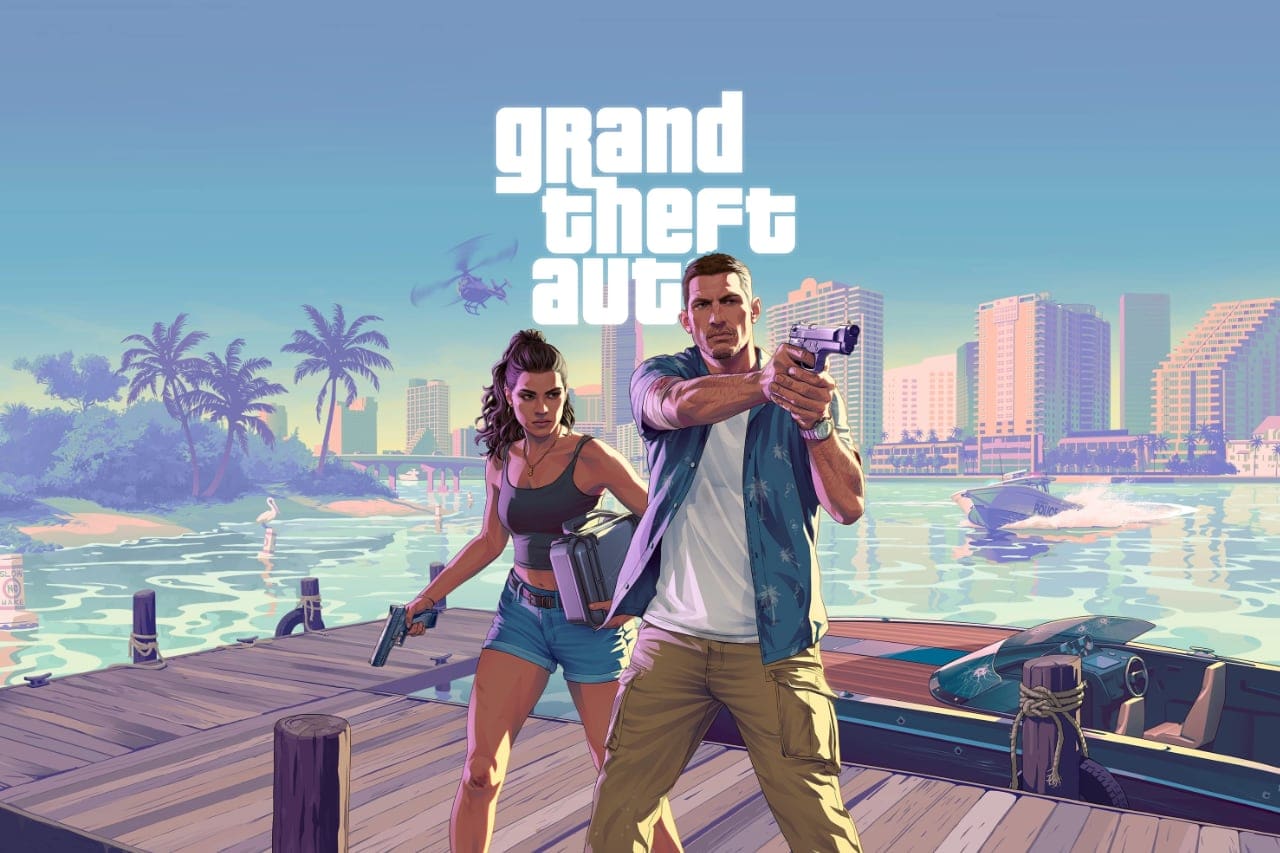
The thirteen-year gap between the fifth and sixth installments is the longest hiatus in the franchise’s history, building a level of anticipation that few creative properties have ever experienced. Rockstar Games utilized this extended development cycle to push hardware limits to their absolute maximum, crafting a meticulously detailed open world centered around a modernized, satirical take on Vice City and its surrounding regions. The inclusion of dual protagonists, Jason and Lucia, introduced a fresh narrative dynamic that modern critics have widely praised for its depth, pacing, and character chemistry.
Global Box Office Rivals Left in the Dust
The economic impact of Grand Theft Auto VI extends far beyond the traditional boundaries of the video game industry, positioning it favorably against Hollywood’s greatest cinematic triumphs. For comparison, Marvel Studios’ 2019 blockbuster Avengers: Endgame previously held the record for the biggest global entertainment opening, pulling in approximately $2.94 billion during its historic theatrical run. GTA VI managed to surpass this milestone within a fraction of the time, demonstrating that interactive digital entertainment commands significantly greater purchasing power and consumer engagement than traditional cinema.
Entertainment economists note that the average video game consumer is willing to invest a higher upfront cost for a product designed to provide hundreds of hours of interactive entertainment. By contrast, a cinematic release caps its consumption at a single ticket price for a two-to-three-hour experience. This fundamental difference in media consumption models has allowed blockbuster video games to capture a dominant share of global entertainment spending.
Critical Reception and Metacritic Dominance
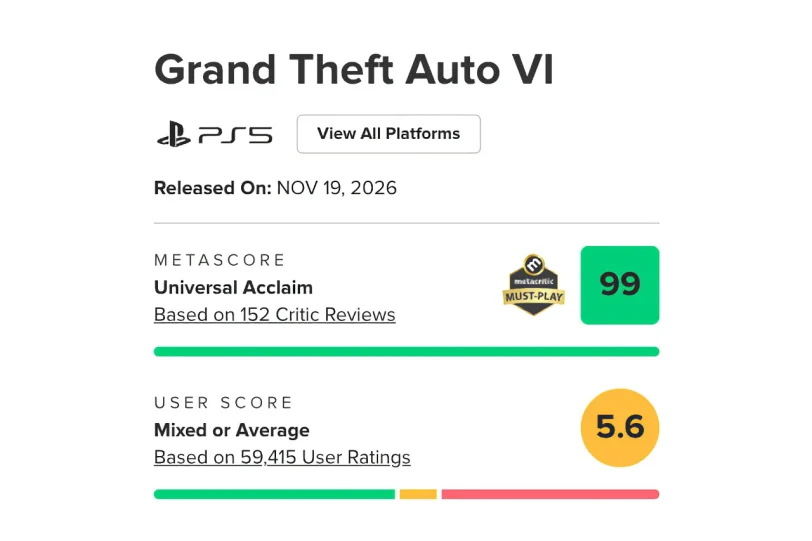
Prior to the commercial release, review embargoes lifted to reveal a wave of critical consensus that positioned Grand Theft Auto VI among the greatest video games ever made. On Metacritic, the premier aggregator of critical reviews, the PlayStation 5 version of GTA VI debuted with a near-perfect Metascore of 99 out of 100, based on 152 professional reviews, safely earning the coveted "Must-Play" designation.
This score places GTA VI in extremely elite company, matching the historical benchmark set by Nintendo’s legendary The Legend of Zelda: Ocarina of Time in 1998. Reviewers universally lauded the title’s breathtaking graphical fidelity, advanced artificial intelligence, physics engine, and the sheer density of its living, breathing open world. Publications praised Rockstar Games for successfully modernizing the satirical tone of the series while delivering a gripping cinematic narrative that respects the player’s agency.

Technical Performance and Optimization Realities
Despite the overwhelming critical acclaim from professional reviewers, the broader consumer base experienced a more polarized introduction to the game. On community-driven rating platforms and user forums, player reception reflected a wider spectrum of technical and gameplay discussions. On platforms like PlayStation 5, user review metrics placed the average score around 5.6 out of 10, reflecting a classic divergence between professional critics and consumer expectations.
The primary point of community debate centered on hardware optimization and performance modes. Players on current-generation consoles were forced to choose between a Quality mode running at 30 frames per second with maximum graphical fidelity and ray tracing, or a Performance mode targeting higher frame rates at the expense of certain visual details. While Rockstar Games implemented advanced scaling technologies and dynamic resolution systems to maintain stability, high-end PC enthusiasts and players with rigorous technical standards scrutinized minor frame drops during intensive urban scenarios and complex physics simulations.
Nevertheless, technical analysts emphasized that rendering an open world of this unprecedented scale on current console hardware represents a monumental engineering achievement. The seamless streaming of assets, dynamic weather systems, and reactive civilian behaviors require immense processing power, making minor performance trade-offs an inevitable reality for launch-day hardware.
The Controversy of Review Bombing and Digital Ecosystems
As with many major entertainment releases of the digital age, Grand Theft Auto VI quickly became a target for review bombing—a coordinated phenomenon where users flood online aggregate sites with negative scores to express various grievances. In the case of GTA VI, these user scores ranged from absolute zeros driven by platform exclusivity debates, pricing structures, and social commentary to maximum scores from passionate supporters.
Industry analysts have increasingly criticized user review systems for their vulnerability to manipulation, noting that they often fail to reflect the genuine quality of a product. Despite the influx of polarized user scores, Take-Two Interactive’s stock price remained resilient, supported by robust physical retail sales and record-breaking digital storefront activity across the PlayStation Store and Microsoft Store.
Market Availability, Pricing Structure, and Future Outlook
Grand Theft Auto VI is currently available worldwide for purchase on PlayStation 5 and Xbox Series X/S consoles. Digital storefronts offer the standard edition for $79.99, while the comprehensive Ultimate Edition is priced at $99.99. For collectors seeking physical memorabilia, specialized physical bundles and merchandise packages have retailed upwards of $319.99, all of which experienced immediate sell-outs across major retailers.
Looking forward, industry analysts project that Grand Theft Auto VI will maintain a dominant presence in the global economy for the remainder of the decade. With the impending launch of the next iteration of GTA Online, Take-Two Interactive is positioned to generate continuous, recurring revenue streams that will likely surpass the financial longevity of its predecessor. As Rockstar Games continues to issue hotfixes, performance patches, and future content expansions, GTA VI stands firmly as the defining cultural artifact of modern interactive entertainment.