










For five decades, What Hi-Fi? has chronicled the relentless march of consumer electronics, serving as a primary witness to the transformative shifts in home entertainment. From the transition from bulky cathode-ray tube (CRT) monitors to the razor-thin, self-emissive displays of today, the publication’s archives function as a historical record of technological ambition. By examining the industry’s greatest triumphs and its most notable misfires, one can map the trajectory of modern domestic life, where the television has evolved from a simple broadcast receiver into a central, artificially intelligent nerve center for the modern household.
The Rise of the Smart TV Ecosystem
The early 2010s marked a definitive turning point in how consumers interacted with their hardware. Before this era, the television was a passive recipient of signals—reliant on scheduled terrestrial broadcasts or external hardware like DVD and Blu-ray players. The emergence of the smart TV, pioneered by the 2008 launch of the Samsung PAVV Bordeaux 750, fundamentally altered this dynamic by integrating internet connectivity and application-based content delivery directly into the chassis.
By the 2011 Consumer Electronics Show (CES) in Las Vegas, the smart revolution was in full swing. Major manufacturers, including Sony, Panasonic, and LG, pivoted their product roadmaps to prioritize internet-enabled platforms. At the time, the industry was focused on integrating early web services such as Skype, eBay, and Napster. While these specific platforms have since faded into obsolescence, the architectural shift they necessitated—moving toward software-defined hardware—laid the groundwork for the modern streaming era.

The implications were profound. In 2012, Samsung’s LED ES8000 introduced voice and gesture controls, signaling a shift toward human-centric interaction models. While the dream of replacing the remote control entirely proved premature, the core technology matured into the voice-activated, AI-driven operating systems found in contemporary sets. Today, integration with platforms like Apple TV, Disney+, and native AI recommendation engines is not merely a feature; it is the industry standard. This transition from "dumb" displays to "smart" platforms represents one of the most successful, long-term technological adoptions in the history of consumer electronics.
The 21:9 Experiment: A Lesson in Practicality
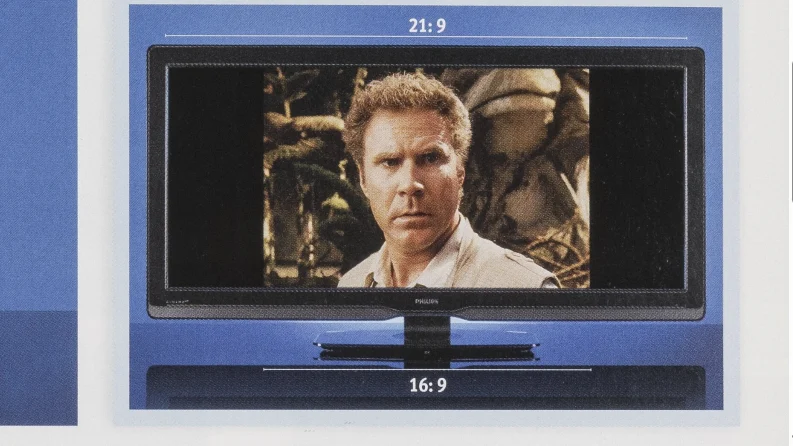
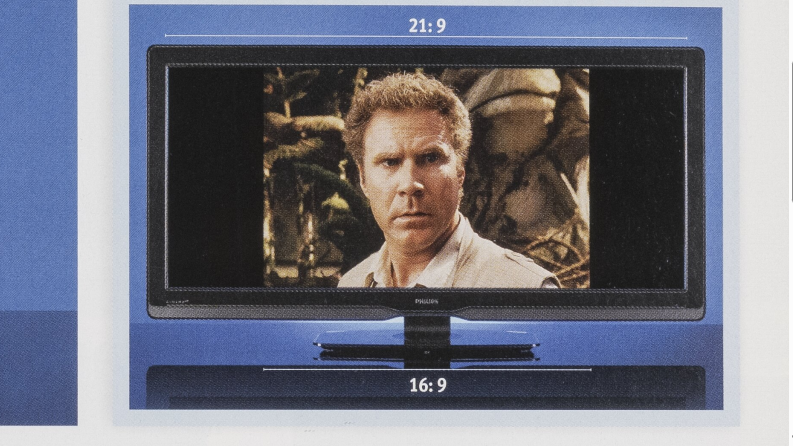
Not every technological leap achieved such seamless integration. The 2009 introduction of the Philips Cinema 21:9 was an audacious attempt to solve a specific problem: the presence of black bars on wide-screen cinematic content. Designed with an aspect ratio of 2.35:1, the display was intended to provide a native, immersive experience for film enthusiasts.
Despite receiving critical praise for its picture quality and the inclusion of Philips’ proprietary Ambilight technology, the 21:9 format struggled to gain market traction. The fundamental flaw lay in the television’s rigidity. Standard broadcast content, which adheres to the 16:9 aspect ratio, was either stretched, cropped, or surrounded by vertical black bars, necessitating constant adjustments by the user. Furthermore, the hardware configuration caused issues with subtitles, which were often cut off during wide-screen playback.
The failure of the 21:9 TV serves as a primary example of how hardware innovation can be hindered by the lack of content standardization. While the format persists today in the professional gaming monitor market, where users can customize their display settings, it failed to bridge the gap to mainstream home cinema because it prioritized a specific visual aesthetic over user convenience and versatility.

The Aesthetic Shift: The Pursuit of the Slimline Screen
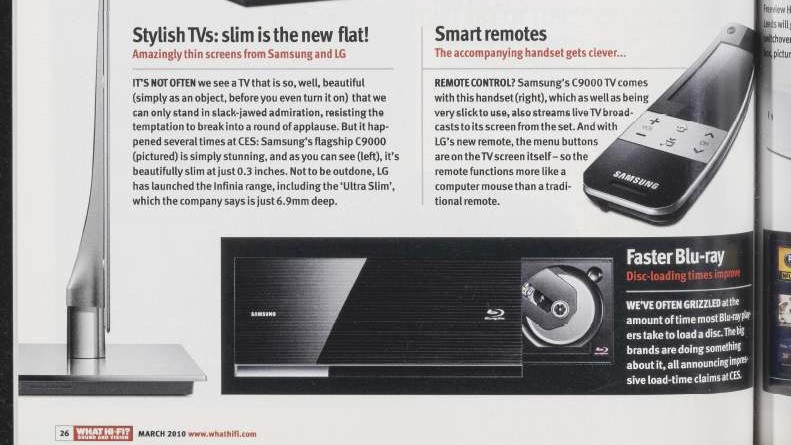
If the smart TV revolution was a triumph of functionality, the trend toward slimmer profiles was a triumph of design and material science. During the 2010s, manufacturers engaged in an intense race to minimize the depth of television chassis. The 2010 headline "Slim is the new flat!" captured the industry zeitgeist, as companies moved rapidly away from the footprint of older LCD and plasma sets.
The 2010 launch of the Samsung C9000, which boasted a depth of just 3.4cm, set a new benchmark for aesthetics. This trajectory has continued unabated, with modern OLED panels like the LG W6 reaching thicknesses as low as 0.9cm. This shift was not merely cosmetic; it was made possible by the migration away from bulky internal components and the adoption of advanced mounting technologies.
The economic impact of this shift was significant. While ultra-thin displays began as luxury, high-cost items, the manufacturing processes were quickly refined, allowing budget-conscious consumers to purchase slim-profile TVs within a decade. This move solidified the television’s place as a piece of "living room furniture" rather than just an appliance, allowing it to integrate more cleanly into modern interior design.
The 3D Television: A Cautionary Tale of Over-Hype
Perhaps the most notable "miss" in the last 15 years was the aggressive push toward 3D television technology. Following the massive success of films like Avatar in theaters, the industry attempted to force 3D into the home environment. By 2011, almost every major manufacturer had integrated 3D capabilities into their flagship and mid-range lines.
Industry reports from the time suggested that 3D would become a ubiquitous feature, yet the reality proved to be vastly different. The decline of 3D was accelerated by several factors: the physical discomfort caused by the need for specialized glasses, the limited availability of high-quality 3D content for the home, and the high price point of the sets themselves. By the mid-2010s, major manufacturers had quietly ceased production of 3D-capable consumer TVs.
The failure of 3D underscores the importance of user experience. While the technology was technically impressive, the friction involved in its daily use outweighed the perceived visual benefits. However, recent developments, such as the emergence of glasses-free 3D projection technology from companies like Xgimi, suggest that the dream of volumetric or 3D home entertainment remains an active area of research, even if the original consumer implementation was a commercial failure.
OLED: The Pinnacle of Display Technology
In contrast to the short-lived 3D trend, OLED (Organic Light-Emitting Diode) technology represents one of the industry’s most significant successes. First introduced to the commercial market in 2007 with an 11-inch screen, OLED technology reached maturity in the early 2010s, fundamentally changing the expectations for contrast and black levels.
Unlike traditional LED-backlit screens, which rely on a separate light source, OLED pixels are self-emissive. This allows each individual pixel to be toggled off completely, resulting in "perfect" blacks and infinite contrast ratios. The 2013 launch of the Samsung KE55S9C, priced at a staggering £7,000, served as the initial proof of concept for the high-end market.
Today, the technology has reached a state of mass-market viability. With current flagship models like the Samsung S99H, the price-to-performance ratio has improved drastically, allowing mainstream consumers to access a level of visual fidelity that was once reserved for professional studios. OLED has become the cornerstone of modern home cinema, and its continued evolution—through improvements in brightness and burn-in prevention—suggests it will remain the dominant technology for the foreseeable future.
Conclusion and Future Outlook
The historical record provided by fifty years of home entertainment journalism reveals a clear pattern: successful innovations are those that prioritize user experience, content accessibility, and tangible performance gains. While some technologies, such as the 21:9 aspect ratio and 3D displays, failed to find their place in the mainstream, they were instrumental in pushing the boundaries of what was technically possible.
As the industry looks toward the next fifty years, the focus is likely to shift further toward integration with immersive environments, such as augmented reality (AR) and virtual reality (VR), and the refinement of AI-driven content personalization. The television has come a long way from the cathode ray tubes of the 1970s, but the core mission—to bring the theater experience into the home—remains the central driving force of the industry. The archives of the past five decades not only document these changes but provide a roadmap for the next generation of engineers and designers striving to redefine how we perceive the world from our living rooms.