









The landscape of the city-building genre has long been defined by the granular management of a single, isolated metropolis. From the grid-based traffic logistics of Cities: Skylines to the historical micro-management of Banished, the player’s agency has traditionally been confined to a singular set of municipal borders. However, Nepos Games has signaled a structural shift in this design philosophy with the launch of County of Fortune into Steam Early Access. By tasking players with the simultaneous development of an entire administrative region, the title moves beyond the "one-city" paradigm, introducing a macro-scale approach that incorporates medieval political maneuvering, regional resource interdependence, and demographic migration.
The Evolution of Regional Management in Simulation Gaming
For decades, the city-builder genre has navigated between two poles: the hyper-focused simulation of individual citizens and the sprawling, macro-level management of vast territories. Titles such as the SimCity series famously introduced the "region" concept, yet gameplay often felt like a collection of siloed maps rather than a cohesive, breathing ecosystem. County of Fortune represents an attempt to bridge this divide.
In the current gaming market, there is a palpable demand for systems that simulate the "long-form" evolution of geography. Players are increasingly seeking experiences that offer a sense of continuity across space rather than depth within a single, static point. The introduction of this title follows a trend of "grand strategy" mechanics being integrated into traditional simulation frameworks—a hybrid model that mirrors the complexity of historical feudal systems rather than the static planning of modern urbanism.
Core Mechanics and Regional Interdependence
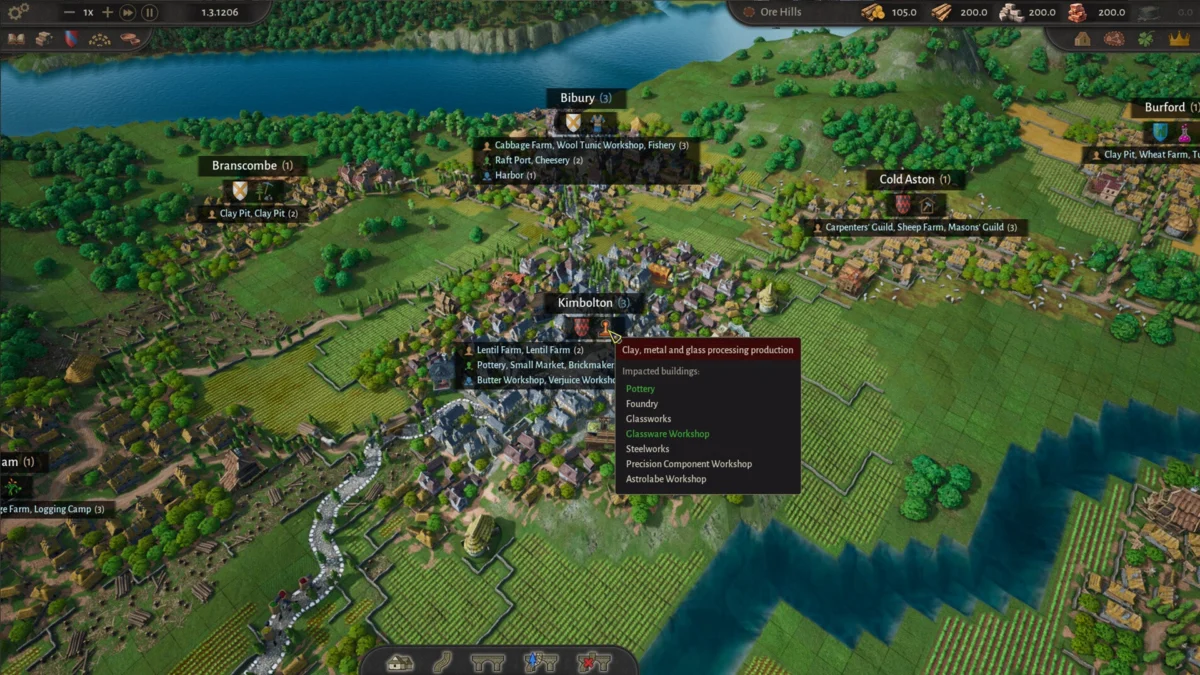
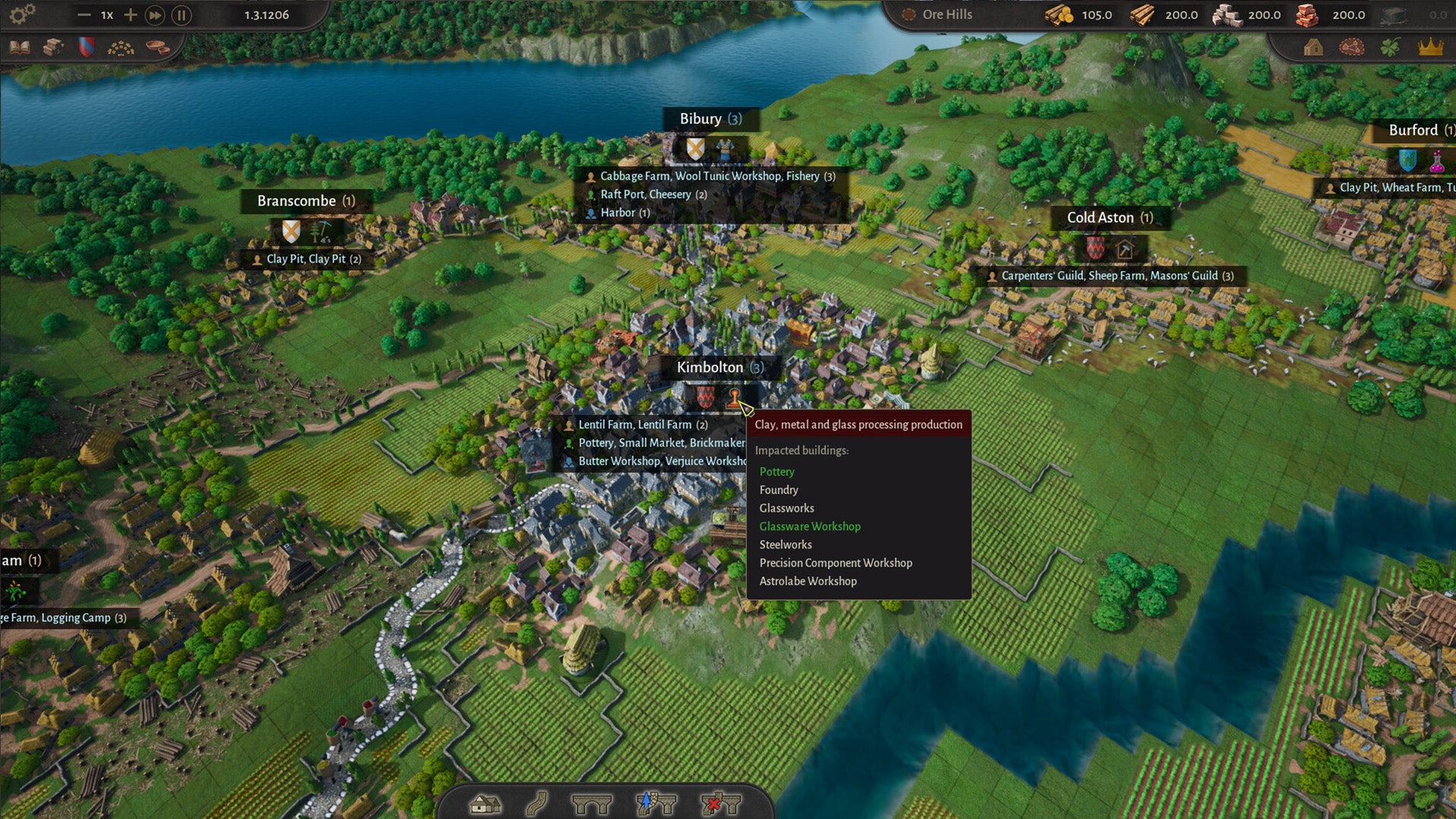
At the heart of County of Fortune lies the procedural generation of a medieval county, where the player is not merely an architect but a regional administrator. The gameplay loop is structured around the strategic placement of settlements on a topological map. Unlike conventional builders where the terrain is an obstacle to be flattened, the geography here is the primary driver of economic specialization.
Each settlement, once established on the medieval grid, begins to develop based on its proximity to specific biomes. A village situated near a river basin will naturally pivot toward agriculture and water-based trade, while a settlement near mountain ranges may focus on mineral extraction and defensive fortification. This specialization is not just an aesthetic choice; it is a fundamental requirement for the "living region" system. Because no single town is self-sufficient, the player must establish robust trade routes to ensure the flow of resources between disparate settlements.
The economic implications of this design are significant. By forcing the player to manage multiple nodes of production, the game shifts the focus from "how do I optimize this one block" to "how do I optimize the flow of goods across twenty miles of terrain." This creates a logistical challenge that mirrors the historical development of trade hubs in the Middle Ages, where regional stability was contingent upon the reliability of supply lines and the safety of merchant travel.
The Human Element: Politics, Migration, and Mayors
One of the most notable departures from traditional city-builders is the introduction of independent AI agents that govern the player’s creations. Once a settlement reaches a certain size, it is no longer under the player’s direct, omnipotent control. Instead, the game introduces a tier of "named mayors" who assume administrative duties. This transition marks the point where the game shifts from a construction simulation to a political management sim.
According to the developer’s documentation, this secondary phase of gameplay involves the interaction of noble houses and migrating cultures. These AI-driven entities possess their own agendas, which may clash with the player’s original vision for the county. For instance, a noble house may prioritize territorial expansion or military buildup, potentially straining the resources of a village that the player intended to be a peaceful farming hub.
This creates a dynamic of "emergent narrative," where the history of the county is written not just by the player’s buildings, but by the friction between the player’s initial design and the subsequent actions of the inhabitants. The integration of migrating cultures adds a layer of demographic complexity; different cultures bring unique bonuses or complications, forcing the player to adapt their regional strategy to reflect the shifting social makeup of their populace.
Early Access Chronology and Development Status
The release of County of Fortune into Early Access on Steam marks the beginning of a critical feedback cycle for Nepos Games. Early Access remains a standard practice for the simulation genre, allowing developers to scale their complex systems based on user-reported bottlenecks.
Development Timeline:
- Announcement Phase: The project was unveiled with a focus on regional, rather than municipal, scale, drawing interest from fans of grand strategy and historical sims.
- Initial Build: The foundation of the procedural generation engine was finalized to ensure that no two maps share the same topological footprint, emphasizing the importance of geographic literacy.
- Early Access Launch: The game debuted in its current state, featuring the core settlement-placement mechanics, regional trade systems, and the early implementation of the "Mayor" AI.
- Future Roadmapping: The developer has indicated that the coming months will focus on deepening the political AI, refining trade route automation, and adding more cultural diversity to the migrating population groups.
Data-Driven Strategy and Geographic Literacy
To succeed in County of Fortune, players must demonstrate an understanding of real-world environmental factors. The game’s engine calculates the viability of a town based on several key variables:
- Topological Profile: The slope and altitude of the land, which affect construction speed and resource accessibility.
- Resource Density: The statistical probability of finding iron, timber, or fertile soil in specific grid sectors.
- Climate Variance: Temperature and rainfall patterns that dictate crop cycles and the survival rate of the population during harsh seasons.
- Proximity Indices: The distance between towns, which serves as a multiplier for trade costs and the effectiveness of military support.
By presenting these variables in an accessible, visual interface, the game encourages a form of "geographic literacy." Players must think like medieval planners, choosing locations that provide natural defensibility and access to waterways, rather than simply maximizing space efficiency.
Broader Implications for the Simulation Genre
The success of County of Fortune could serve as a bellwether for the future of the city-builder genre. If players respond positively to the "regional macro-management" model, it may encourage other developers to move away from the isolated-map design that has dominated the industry since the late 1990s.
The movement toward "connected simulations" suggests that the next generation of builders will be defined by scale. As computing power increases, the ability to simulate not just the plumbing of a single city, but the economic and political interplay of a whole region, becomes more feasible. This shift also aligns with the growing popularity of games that offer "emergent" storytelling, where the player is one actor among many in a dynamic, evolving world.
From an analytical standpoint, the challenge for Nepos Games will be maintaining the balance between macro-level control and the necessary micro-level details. If the regional simulation becomes too abstract, the player may lose the sense of attachment to their settlements. If it becomes too granular, the "county-wide" vision may collapse under the weight of excessive micromanagement. Striking that balance will be the primary objective during the Early Access period.
Conclusion
County of Fortune invites players to abandon the safety of the singular city-builder in favor of a more complex, uncertain, and expansive experience. By weaving together elements of logistical strategy, political intrigue, and regional economics, it attempts to capture the chaotic beauty of historical development. As the game continues to evolve through the Early Access cycle, its ability to maintain the delicate tension between the player’s grand design and the autonomous, often unruly, lives of the inhabitants will determine its ultimate legacy. For those who have grown weary of building the perfect city in a vacuum, the prospect of managing the fortunes of an entire county offers a compelling, if daunting, new horizon.