











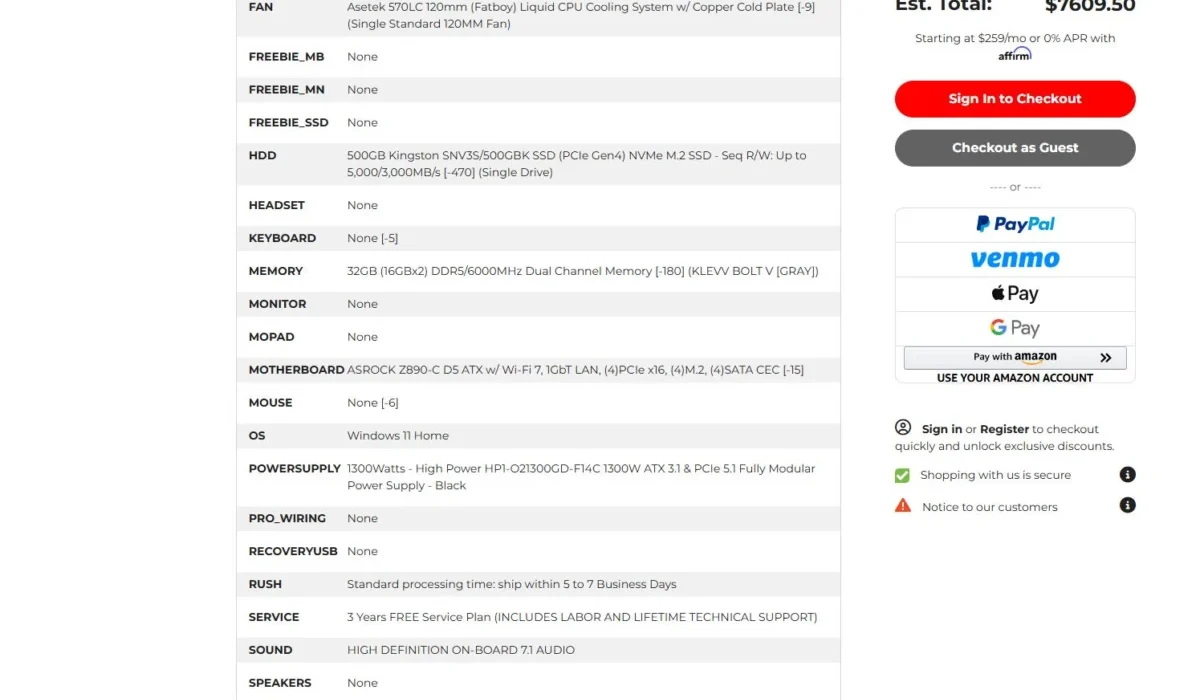
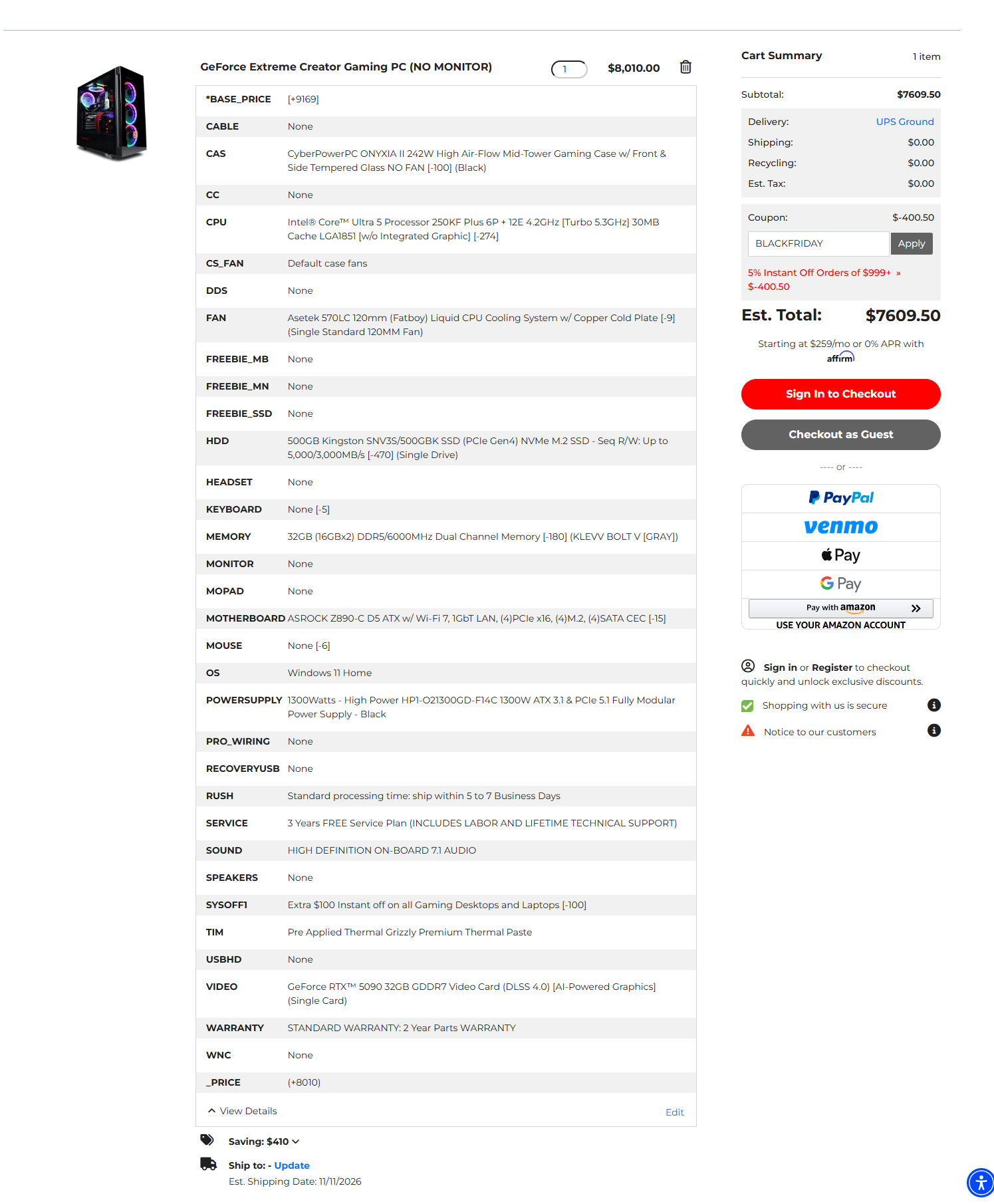
The current state of the consumer PC hardware market has reached a surreal milestone, characterized by extreme price inflation for Nvidia’s flagship components. With standalone retail prices for Nvidia’s GeForce RTX 5090 graphics cards skyrocketing to unprecedented levels—sometimes pushing past the $8,000 to $9,000 threshold through third-party resellers and scalpers—enthusiasts and professionals alike are scrambling for alternative acquisition routes. Enter the pre-built desktop market, which has unexpectedly emerged as a relative sanctuary for high-end hardware buyers. A striking example of this market anomaly can be found in a CyberPowerPC configuration, which offers a complete, ready-to-run desktop system equipped with an ASUS TUF Gaming GeForce RTX 5090 for $7,609.50 after a modest $400.50 promotional discount.
When juxtaposed against individual component listings—where the ASUS TUF Gaming RTX 5090 alone has been spotted on major e-commerce platforms like Amazon approaching $7,679—buyers are essentially acquiring an entire high-performance computing system at little to no additional cost over the standalone GPU. This bizarre economic inversion underscores profound shifts in global supply chains, silicon manufacturing constraints, and the surging demands of artificial intelligence workloads that continue to disrupt traditional PC building economics.
Anatomy of the CyberPowerPC GeForce Extreme Creator Build
While the primary selling point of the CyberPowerPC GeForce Extreme Creator Gaming PC is unquestionably its powerhouse graphics processor, the rest of the hardware stack has been assembled to provide a formidable foundation for demanding tasks. At the heart of the system sits Intel’s Core Ultra 5 250KF processor. This modern CPU features a hybrid architecture comprising six performance cores and twelve efficiency cores, capable of reaching a maximum turbo frequency of 5.3GHz. Although enthusiasts might argue that a Core Ultra 7 or Ultra 9 would better complement an RTX 5090 in theoretical maximum benchmarks, the 250KF offers substantial multi-threaded and single-core horsepower capable of handling modern gaming, content creation, and intensive background applications without creating an immediate bottleneck.
To ensure stable power delivery under heavy loads, the system integrates a robust 1,300-watt fully modular power supply unit, providing ample headroom for the massive electrical draws associated with Nvidia’s flagship architecture. Thermal management is handled by an Asetek 570LC liquid cooler, keeping the processor operating within safe thermal parameters during prolonged computational sessions.
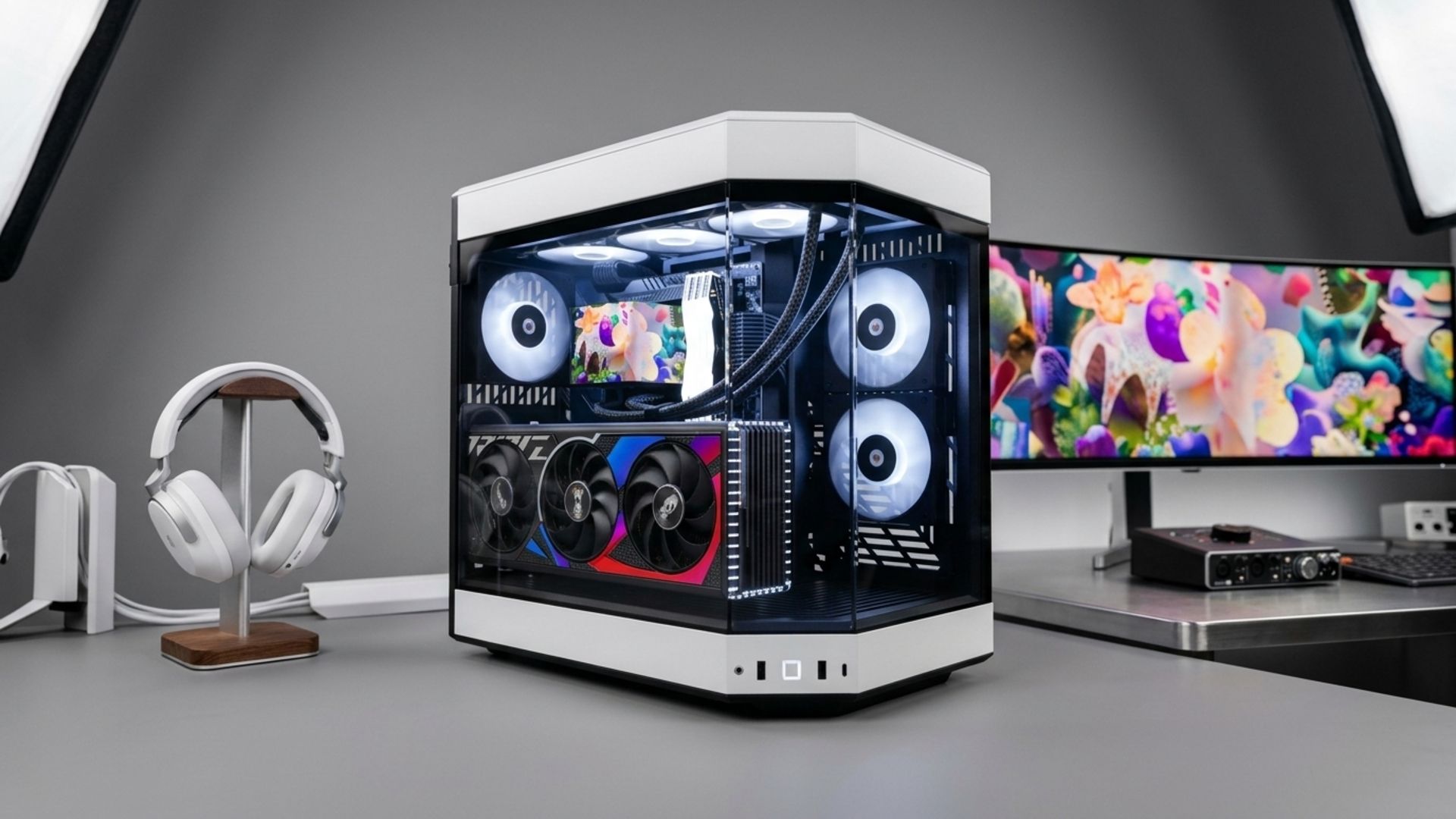
Memory and storage configurations are similarly aligned with modern performance standards. The system comes equipped with 32GB of high-speed DDR5 RAM operating at 6,000MHz, ensuring adequate bandwidth for memory-intensive multitasking, video editing, and complex simulation software. Storage is provided by a 500GB Kingston NVMe solid-state drive utilizing a PCIe Gen4 interface. While 500GB is relatively modest for a system in this price tier—especially given the massive installation footprints of contemporary AAA video games, which frequently exceed 100GB per title—it offers a fast boot drive that users can easily supplement with secondary high-capacity SSDs or hard drives down the line.
Rounding out the core specifications are an ASRock Z890-C D5 motherboard providing modern feature sets, Wi-Fi 7 connectivity for cutting-edge wireless networking speeds, the Windows 11 Home operating system, and the CyberPowerPC Onyxia II chassis. Furthermore, the manufacturer bundles a two-year parts warranty alongside lifetime technical assistance and labor coverage, offering peace of mind for an investment of this magnitude. Prospective buyers must note, however, that the advertised $7,609.50 price tag strictly covers the system tower itself; peripherals such as a high-refresh-rate monitor, mechanical keyboard, and gaming mouse must be purchased separately.
Chronology of the RTX 5090 Price Surge
To understand how a pre-built PC costing over $7,600 can be viewed as a prudent financial maneuver, one must examine the rapid escalation of graphics card pricing following the rollout of Nvidia’s RTX 50-series architecture. The trajectory of the RTX 5090 from its highly anticipated announcement to current market availability has been marked by intense volatility, severe supply constraints, and unprecedented demand from both enterprise artificial intelligence developers and affluent gaming enthusiasts.
In the months leading up to the initial product launches, industry analysts predicted high price points due to the escalating costs of advanced TSMC manufacturing nodes and cutting-edge packaging technologies. However, the actual market realization far exceeded worst-case projections. Almost immediately upon release, retail inventories vanished within seconds of going live, swept up by automated bot scripts and high-frequency scalpers.
By the end of the first quarter following the launch, standalone retail pricing for high-end partner cards—such as models from ASUS, MSI, and Gigabyte—began climbing exponentially. Independent retailers and third-party marketplace vendors listed individual cards at $8,000, $9,000, and occasionally higher. This hyper-inflationary trend was further exacerbated by rumors surrounding Nvidia’s subsequent hardware roadmap, including speculation regarding potential delays or niche positioning for future iterations like an RTX 6000 series. Consequently, consumers found themselves trapped in a market where acquiring a bare GPU was often more expensive, or at best comparably priced, to purchasing an entire system built around it.
Desktop Versus Laptop RTX 5090 Variants
As consumers navigate the high-end hardware landscape, manufacturers have introduced mobile variants of the RTX 5090 designed for high-performance gaming laptops. While these portable machines often command lower overall price tags than ultra-enthusiast desktop towers, buyers must be acutely aware of the fundamental technical differences separating mobile GPUs from their desktop equivalents.
In the realm of personal computing, nomenclature can frequently obscure hardware realities. Laptop manufacturers are strictly constrained by the physical dimensions of a portable chassis, battery longevity limits, and thermal dissipation thresholds. To fit within these tight parameters, mobile graphics processors must operate at significantly lower total graphics power (TGP) targets compared to desktop cards, which benefit from massive triple-slot or quadruple-slot cooling assemblies, dedicated room air circulation, and direct connection to high-capacity wall power.
Consequently, a laptop marketed with an RTX 5090 will deliver markedly lower real-world rendering and gaming performance than a desktop counterpart bearing the same numerical designation. Furthermore, the desktop iteration of the RTX 5090 features an expansive 32GB pool of ultra-fast GDDR7 memory. This massive VRAM buffer provides a critical advantage not only for extreme-resolution gaming with path tracing enabled, but also for local artificial intelligence model training, large language model inference, and professional video production workflows that demand massive data throughput. Comparing a mobile workstation directly to a desktop system based solely on the GPU marketing name creates a misleading impression of performance equivalence.
Broader Market Implications and Industry Analysis
The viability of pre-built systems like the CyberPowerPC GeForce Extreme Creator as cost-saving alternatives highlights a fundamental structural shift in the PC hardware ecosystem. Historically, custom building a personal computer was championed as the most cost-effective method for acquiring top-tier performance, allowing consumers to bypass the assembly margins charged by system integrators. Today, however, the extraordinary premiums commanded by scarce standalone components have inverted traditional market logic.
System integrators maintain enterprise supply chain relationships and long-term allocations with major component manufacturers, granting them access to wholesale hardware pricing that individual consumers cannot secure on the open retail market. As a result, when retail GPU prices decouple entirely from suggested manufacturer retail prices (MSRP), pre-built manufacturers can package these flagship components into complete systems and offer them at prices that under-cut the cumulative cost of buying individual parts à la carte.
This dynamic has profound implications for the PC enthusiast community. For professional creators, data scientists utilizing local workstation hardware, and ultra-enthusiast gamers, pre-built desktops are transitioning from a convenience purchase for novices into a strategic financial workaround. By bundling the GPU with a motherboard, CPU, RAM, power supply, and chassis, system builders are absorbing part of the supply shock, providing a turnkey solution that avoids the predatory pricing found in secondary scalper markets.
Nevertheless, purchasing a system at this price tier requires careful consideration of long-term upgrade paths and individual component quality. While the inclusion of the ASUS TUF Gaming GeForce RTX 5090 and an ASRock Z890 motherboard provides a formidable baseline, users looking to maximize the potential of a 32GB GDDR7 graphics card over a multi-year lifecycle may eventually need to invest in secondary storage expansions or higher-tier processors.
Ultimately, the CyberPowerPC GeForce Extreme Creator serves as a fascinating case study in contemporary hardware economics. In a market where obtaining Nvidia’s premier graphics processor has become an exercise in financial endurance, turning to comprehensive pre-built systems is no longer just an alternative—it has become one of the few rational pathways remaining for high-end PC acquisition.