







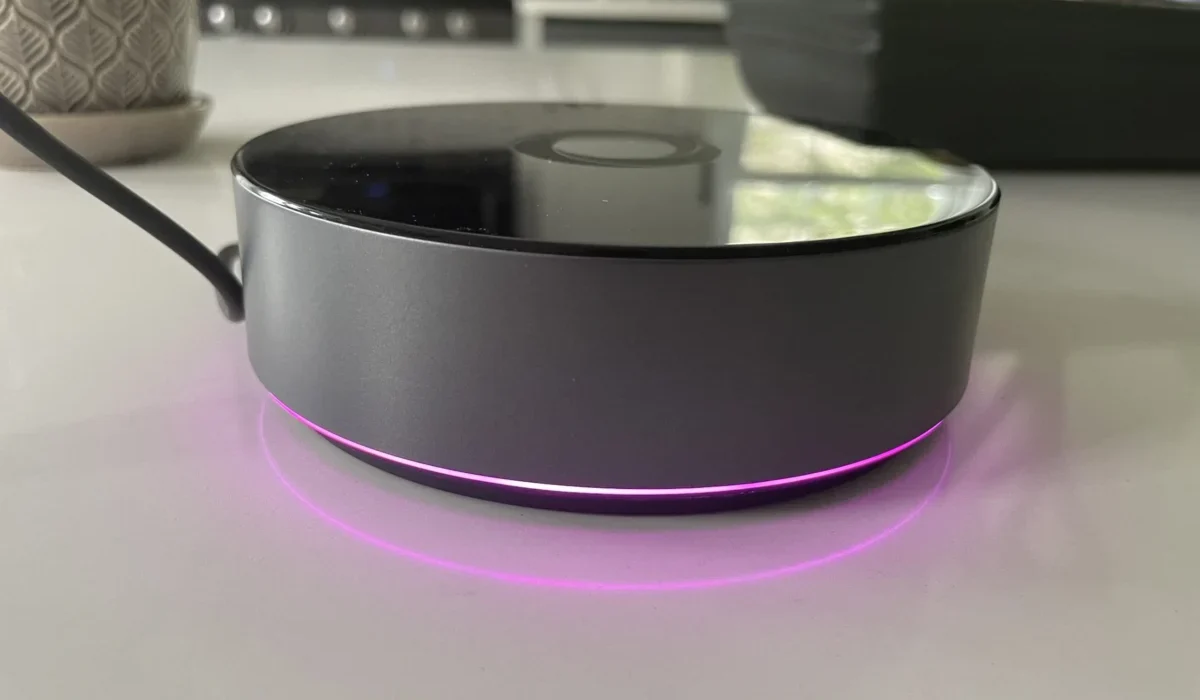
Following the successful U.S. launch of the $69 Homey Bridge earlier this year, the market for localized smart home management has expanded with the official arrival of the $399 Homey Pro. While the Homey Bridge offered a cloud-reliant entry point for consumers, the Pro model is positioned as a high-performance, privacy-focused alternative designed to reduce reliance on external servers and eliminate the subscription-based limitations associated with its lower-cost sibling. As the smart home landscape pivots toward the Matter interoperability standard, the Homey Pro seeks to establish itself as the central nervous system for complex, multi-protocol ecosystems.
The Evolution of the Homey Ecosystem
The release of the Homey Pro marks a significant hardware iteration over the original 2019 model. The manufacturer reports a 3.5-fold increase in CPU performance, complemented by 8 GB of internal storage and 2 GB of RAM—a doubling of memory capacity compared to the Homey Bridge. These technical specifications are not merely for performance; they are fundamental to the device’s architecture, which prioritizes local control over cloud-based execution.
By shifting the computational load from remote servers to the local hub, the Homey Pro offers enhanced privacy and functional resiliency. In the event of an internet outage, the device remains operational, ensuring that automated routines—provided they do not require external cloud data—continue to function without interruption. This design philosophy directly addresses a growing concern among smart home enthusiasts regarding the fragility of cloud-dependent ecosystems, where a single server failure can render an entire home’s automation suite dormant.
Technical Specifications and Connectivity
The U.S. model of the Homey Pro is equipped with an extensive array of radio protocols, including Wi-Fi (2.4 GHz and 5 GHz), Bluetooth, infrared (IR), Zigbee, and Z-Wave. The inclusion of an 833 MHz radio provides backward compatibility for legacy devices, while the integration of a Thread radio positions the hub for future-proofing as the industry transitions to the Matter standard.
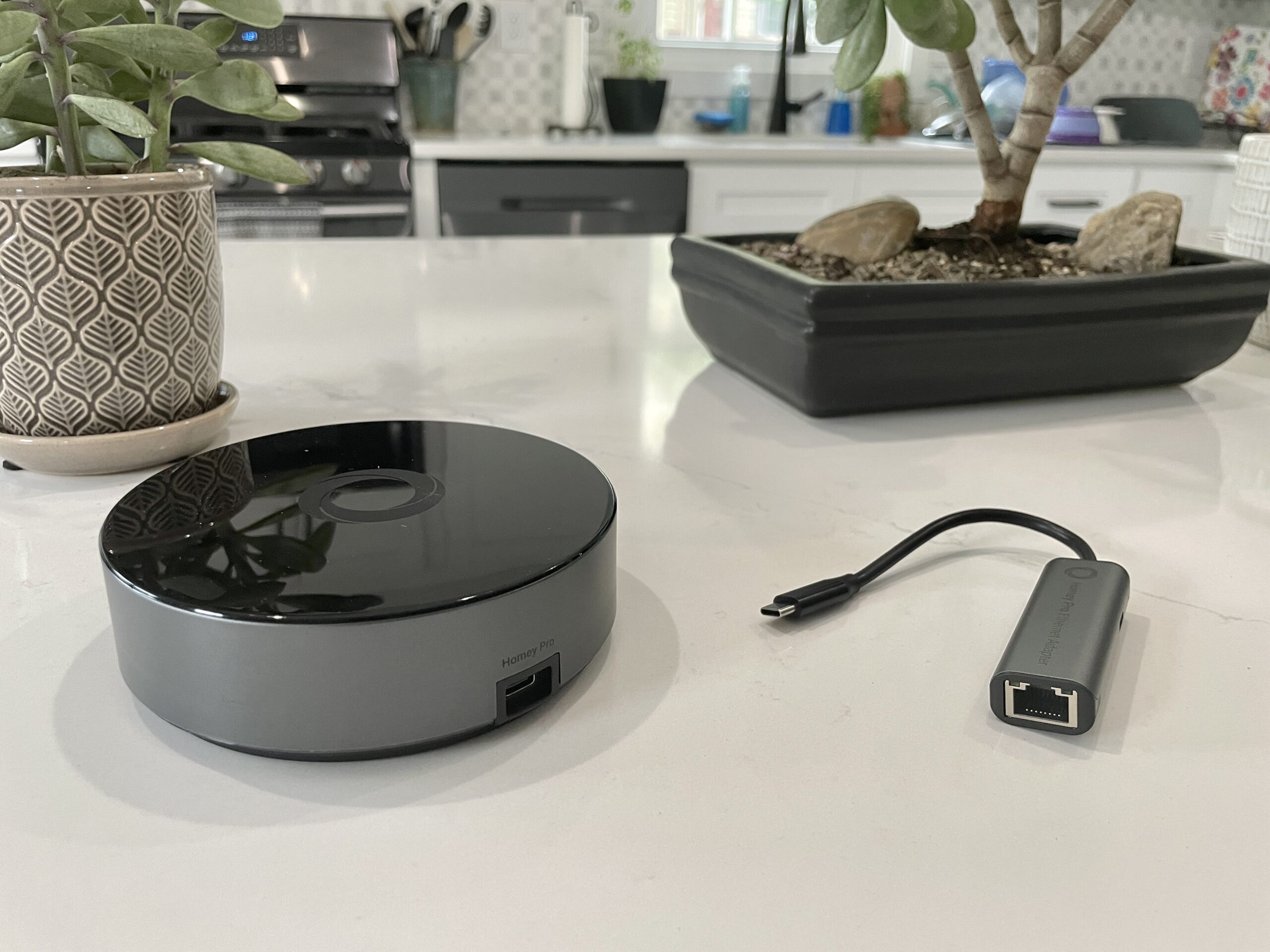
For users seeking a hardwired connection, an optional Ethernet adapter is available for an additional $29. This is a notable departure from the Wi-Fi-only nature of the Homey Bridge and appeals to power users who prioritize network stability. Furthermore, the Homey Pro sidesteps the five-device limitation inherent to the Bridge, allowing for a much larger, unrestricted device footprint. While the Bridge requires a $2.99 monthly subscription for advanced features and expanded connectivity, the Homey Pro is free of such requirements, save for an optional $0.99 monthly fee for cloud-based data backups.

Integration Challenges and the Compatibility Gap
Despite its technical prowess, the Homey Pro faces significant hurdles regarding the breadth of its ecosystem support. While the manufacturer claims compatibility with over 50,000 devices, real-world application reveals a more nuanced reality. During testing, the hub struggled to integrate with several prominent consumer brands, including specific models from Schlage, Ecobee, Nanoleaf, Govee, and various smart plug manufacturers.
The primary point of friction appears to be the current state of Matter support. While the industry is moving toward this universal standard, the implementation is not yet comprehensive. For instance, devices operating exclusively over the Thread protocol—a cornerstone of the Matter standard—often failed to pair with the Pro. Furthermore, even when a brand is natively supported, specific hardware iterations within that brand may not be recognized. For example, while certain Nanoleaf panels are compatible, the standard Nanoleaf Essentials bulbs remain unsupported.
The inconsistency extends to established smart home staples. A Schlage Encode Wi-Fi lock, though appearing in the setup menu, failed to register any devices upon authentication. Similarly, specific newer models of the Ecobee thermostat line were omitted from the integration list, despite the brand’s general support status. These discrepancies highlight a recurring challenge in the smart home sector: the disparity between marketing claims of "universal" support and the technical reality of proprietary APIs and evolving standards.

User Interface and Management Logic
Where the Homey Pro excels is in its software experience. The mobile application stands out for its modern design and intuitive organizational features. The initial setup process is remarkably streamlined, utilizing a logical, location-based approach that allows users to categorize devices by floor and room early in the configuration. This structure is a distinct improvement over the often-cluttered interfaces provided by competitors.
Automations are managed through a system titled "Flows." These are distinct from the linear "If This Then That" logic found in basic smart home assistants. Homey’s Flow system allows for complex conditional logic, including "And," "Or," and "Else" statements, as well as the ability for one routine to trigger another. For power users, the web-based interface provides an advanced mode that allows for deep customization, rivaling the capabilities of open-source platforms like Home Assistant.
Energy Management and Developer Utility

A standout feature of the Homey Pro is its energy monitoring capability. By manually entering the wattage of connected devices, users can track power consumption in near real-time. The system intelligently adjusts these estimates based on device activity—for instance, reflecting lower power draw when a light is dimmed. For devices that report their own power usage, the system provides accurate, telemetry-based data.
For developers and hobbyists, the Homey Pro offers an open-API approach. Users can generate API keys through the web interface to create custom integrations using JavaScript and Node.js. This, combined with the underlying architecture that appears to function as a local Node.js server, provides a level of extensibility that is largely absent in mainstream, consumer-grade hubs. However, this functionality is clearly marketed toward a niche audience, as it remains largely inaccessible to the average user.
Chronology and Market Context
The Homey Pro enters a market that has seen significant volatility in recent years. The 2019 launch of the original Homey Pro established the brand as a premium alternative to hubs from Amazon or Samsung. The subsequent acquisition of Homey by Athom and the later release of the Homey Bridge in 2023 reflected a strategic shift toward capturing both ends of the market—the subscription-based casual user and the "prosumer."

Industry analysts note that the shift toward local processing is a reaction to the privacy concerns that have plagued cloud-connected devices. By keeping data processing within the home, companies like Athom are attempting to mitigate the risks of data breaches and the sudden cessation of services when manufacturers shut down their cloud servers.
Official Responses and Future Outlook
Following reports regarding device incompatibility, representatives from Homey clarified that their support documentation is centralized in their "Apps" repository, where users can verify the compatibility of specific devices before purchase. The company also clarified that Matter-over-Wi-Fi devices should generally be compatible, while acknowledging that Thread-based Matter devices are still in the process of being fully integrated into the platform’s software stack.
The implications for the smart home industry are clear: the transition to a fully interoperable ecosystem is ongoing and incomplete. For the consumer, the Homey Pro represents a high-ceiling investment. Its potential as a local, private, and highly customizable hub is substantial, but it is currently hampered by a fragmented landscape of device protocols.

Conclusion: A Specialized Tool for the Informed Consumer
For the average consumer, the $399 price tag combined with the current limitations in device support makes the Homey Pro a difficult recommendation without prior verification of one’s current hardware. However, for the user who has moved away from cloud-dependent devices and is seeking a robust, local-first alternative to manage a complex network of Zigbee, Z-Wave, and IR devices, the Homey Pro is a powerful, albeit demanding, solution.
The decision to adopt the platform should be driven by an audit of the user’s current smart home inventory. Those who are willing to navigate the complexities of "Flows" and are seeking to reclaim their data privacy will find a capable partner in the Homey Pro. As the industry matures and Matter adoption increases, the value proposition of such a local-centric hub is likely to grow, but for now, the user must prioritize due diligence before making the transition.