For decades, the ultralight backpacking community has engaged in a rigorous debate regarding the inclusion of reading material on the trail. While literature offers a vital psychological respite during long hours confined to a tent during inclement weather or while unwinding at camp, traditional books and standard e-readers are frequently classified as nonessential luxury items. Consequently, weight-conscious hikers routinely leave these items behind to shave ounces off their base weight. However, recent developments in micro-electronics have challenged this calculus. The introduction of the pocket-sized X3 e-reader by Chinese manufacturer Xteink has reignited discussions among backpacking enthusiasts, offering a device small and light enough to justify its inclusion for those seeking screen-free downtime in the backcountry. Weighing a mere 58 grams and boasting a playing-card-sized display, the device has prompted field evaluations to determine whether ultra-compact reading technology represents a functional advancement or an unnecessary redundancy for endurance hikers.
Technical Specifications and Design Evolution
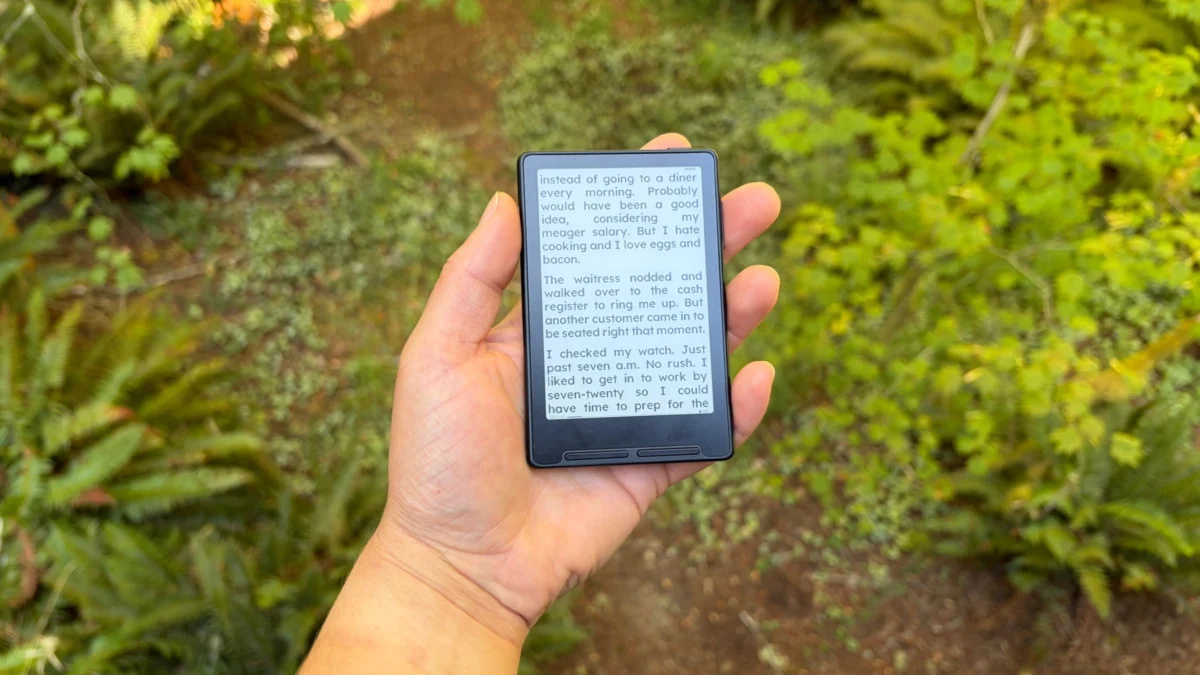
The Xteink X3 deviates significantly from mainstream e-readers currently dominating the consumer electronics market. Measuring ultra-slim at 5.1 millimeters in thickness and tipping the scales at 58 grams—roughly equivalent to the weight of a standard candy bar—the device is engineered for maximum portability. Its 3.7-inch display matches the surface area of a standard playing card, placing it in a distinct category compared to conventional devices such as the Amazon Kindle or Kobo models, which typically feature screens ranging from six to seven inches.
To achieve this diminutive form factor, manufacturers stripped away several standard features. The X3 operates entirely without a touchscreen interface, relying instead on a physical four-button navigation array situated directly on the chassis. Furthermore, the device lacks an integrated front light. This design choice mirrors early-generation e-ink technology, requiring users to rely on external illumination, such as a headlamp, when reading in dark environments like a tent at night.
Despite these minimalist compromises, the hardware delivers substantial functional efficiency. Xteink estimates battery longevity between 10 and 14 days under standard usage conditions of one to two hours of daily reading. Field tests indicate that the low-power consumption of the e-ink display easily meets these benchmarks, allowing extended backcountry excursions without necessitating portable solar chargers or supplemental power banks. Priced at approximately $69, the device occupies an accessible market tier for outdoor enthusiasts willing to experiment with niche electronics.
The Ultralight Dilemma: Weight, Battery Preservation, and Digital Detox
The primary challenge for backpackers who enjoy literature is balancing the psychological benefits of reading against the rigid physical demands of ultralight philosophy, where every single gram is scrutinized. Traditional paperback books are heavy and vulnerable to moisture, while standard e-readers—though significantly lighter than paper—still add upwards of 150 to 200 grams to a pack.
While smartphones offer a readily available alternative since most hikers carry them anyway for navigation and emergency communication, utilizing a phone for reading introduces distinct disadvantages. Wilderness conservationists and outdoor educators frequently advocate for a "digital detox" experience, encouraging backcountry travelers to disconnect from cellular notifications and internet connectivity. Moreover, smartphone batteries are a critical resource reserved strictly for digital cartography, topographical applications, emergency communication, and wildlife photography. Depleting a phone battery via leisure reading introduces operational risks in remote environments where electrical grids are inaccessible.
The X3 addresses this specific operational friction. By functioning as a dedicated, single-purpose offline reading device, it preserves smartphone battery reserves while simultaneously insulating the user from digital distractions. The device was originally conceptualized for urban commuters, featuring a magnetic attachment system designed to mount onto the back of a smartphone for quick access during routine transit. However, its convergence of negligible weight and robust battery life inadvertently aligned with the performance criteria demanded by long-distance hikers and ultralight backpackers.
Functionality, File Transfer Limitations, and Trail Durability
Integrating the Xteink X3 into an existing gear workflow involves specific technical workflows and limitations. Field evaluations demonstrate that transferring pre-downloaded EPUB files from personal computers or secondary storage devices is a relatively straightforward process. Users can rapidly sideload independent digital libraries without proprietary software hurdles.
However, significant friction arises when attempting to access digital library collections. Modern e-reader users frequently rely on library integration software, such as the Libby application, which synchronizes seamlessly with platforms like Amazon Kindle to borrow digital titles. The X3 currently lacks a streamlined, native integration with public library lending systems, presenting a notable barrier for readers who depend on borrowed digital literature rather than purchased EPUB files.
Navigation on the device also demands a transitional adaptation period. Without touch-sensitive glass, turning pages and accessing menus requires deliberate tactile inputs via the physical control buttons. While functional, this mechanical navigation is noticeably less intuitive than contemporary capacitive touchscreens.
Regarding physical durability, the X3 requires pragmatic handling in harsh outdoor environments. The manufacturer has not rated the device as waterproof or water-resistant, distinguishing it from several ruggedized, premium e-readers available from major brands. Consequently, backcountry users must implement basic protective measures—such as storing the device inside a sealed polyethylene barrier bag (Ziploc) within their pack—to safeguard internal components against heavy condensation, torrential rain, or accidental submersion during river crossings. Field testers report that while the device does not require excessive coddling, it lacks the rugged structural armor typical of specialized tactical outdoor gear.
Industry Implications and Market Reception
The emergence of micro-electronics like the Xteink X3 highlights a broader trend within the outdoor recreation equipment sector: the cross-pollination of urban lifestyle technology into specialized wilderness applications. Manufacturers increasingly design compact consumer electronics with form factors that appeal organically to niche subcultures, even if the original product roadmap targeted metropolitan commuters.
Industry analysts note that while minimalist e-readers will likely remain a specialized sub-segment rather than replacing traditional smartphones or full-sized tablets for the general population, their utility within ultra-minimalist communities is gaining traction. For thru-hikers tackling long-distance trails such as the Appalachian Trail or the Pacific Crest Trail, minimizing base weight remains an overriding priority, yet mitigating mental fatigue and camp boredom is equally vital for psychological endurance.
The market response suggests that devices balancing extreme weight reduction with long-term battery autonomy will continue to attract interest from the ultralight community, provided their mechanical limitations—such as manual file transfers and lack of integrated backlighting—are offset by substantial weight savings. Ultimately, whether the X3 is classified as a functional innovation or a passing novelty depends heavily on an individual hiker’s priorities: those who demand seamless library integration and backlit screens will likely retain traditional tablets, while purists prioritizing strict weight limits and screen-free evenings may find the ultra-compact form factor to be a transformative addition to their pack.