







At the 2026 Android Dev Summit, Google made a pivotal announcement that promises to reshape the mobile ecosystem: the upcoming launch of the Quick Share SDK. This developer-focused toolkit is designed to bridge the long-standing divide between Android and iOS, enabling seamless, native peer-to-peer file sharing directly within third-party applications. Scheduled for a rollout in the first half of 2027, the SDK represents a significant departure from current mobile conventions, moving away from system-level sharing sheets toward integrated, app-specific transfer experiences.
The Evolution of Wireless File Sharing
For over a decade, mobile operating systems have relied on proprietary solutions for wireless data exchange. Apple’s AirDrop, introduced in 2011, set the gold standard for convenience but remained strictly confined to the walled garden of the iOS and macOS ecosystem. Android users, conversely, navigated a fragmented landscape of solutions, ranging from the now-defunct Android Beam to the more recent Google Nearby Share, which was eventually rebranded and unified under the "Quick Share" banner in collaboration with Samsung.
The announcement at the 2026 Android Dev Summit marks the next evolutionary step. By providing an SDK that developers can embed directly into their applications, Google is effectively commoditizing high-speed, local file transfers. Instead of forcing users to export a file to the system’s clipboard or share sheet—a process that often involves multiple taps and context switching—applications will soon be able to facilitate "Tap to Share" functionality natively. This shift is expected to improve user retention and engagement, as content stays within the app’s ecosystem throughout the entire sharing workflow.
Technical Architecture and Design Principles
The Quick Share SDK is built upon five foundational pillars, each aimed at balancing performance with security and ease of implementation. During the summit, Google engineers emphasized that the architecture is designed to be lightweight, ensuring that developers do not need to build or maintain complex server-side infrastructure to support peer-to-peer data transfers.
First, end-to-end encryption serves as the cornerstone of the SDK. By ensuring that data remains encrypted throughout the transit process, Google aims to address long-standing security concerns regarding wireless transfers, making it a viable solution for enterprise and sensitive consumer applications. Second, the SDK supports offline functionality. By leveraging Wi-Fi Direct and Bluetooth Low Energy (BLE), devices can negotiate high-speed transfers even in areas with no cellular or internet connectivity, a critical requirement for global markets where data access may be inconsistent.
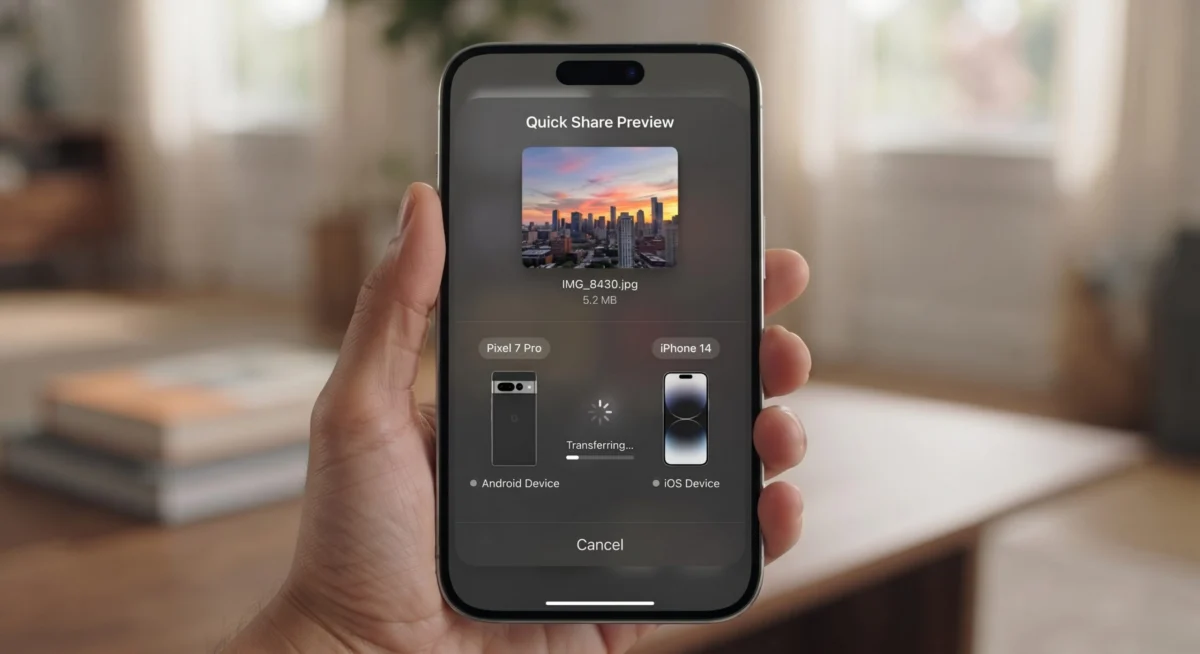
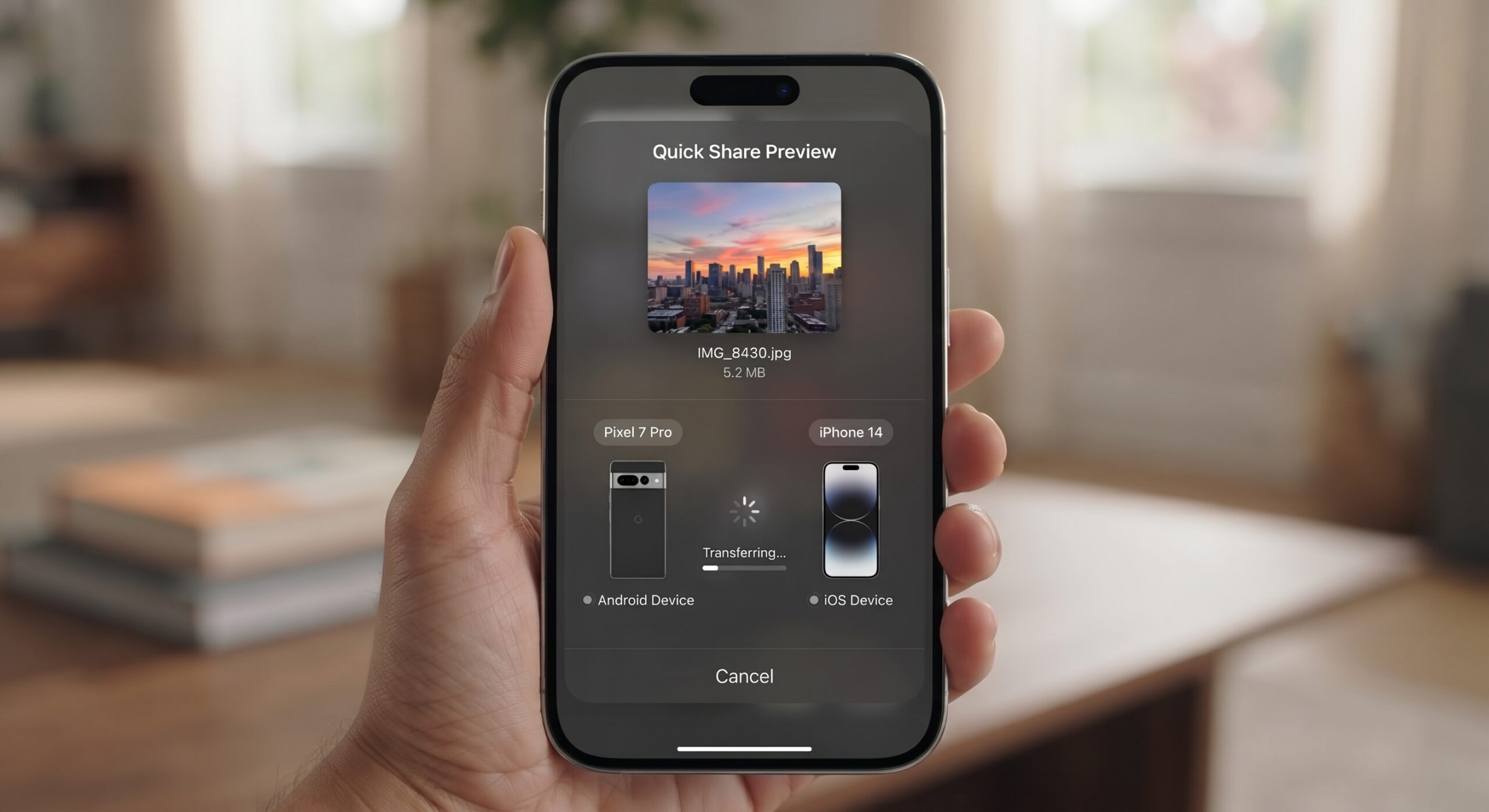
Third, the user interface implementation is being overhauled. Instead of the traditional, intrusive system-wide share sheet that often obscures the underlying application, the SDK utilizes a discreet bottom sheet. This UI component provides a visual preview of the content being shared, maintaining visual continuity within the app’s design language. Fourth, the SDK is designed for high-speed interoperability. By standardizing the communication protocols between Android and iOS, Google is effectively creating a universal language for file exchange that works regardless of the host operating system. Finally, the developer experience is prioritized through a simplified API, allowing teams to integrate complex networking code with minimal lines of code, thereby reducing the "time-to-market" for new features.
Timeline and Developmental Chronology
The roadmap for Quick Share’s expansion has been a multi-year effort. In early 2024, Google and Samsung announced the merger of their respective sharing technologies, a move that consolidated the Android ecosystem under the Quick Share brand. This was followed by a series of incremental updates throughout 2025 that improved speed and device discovery.
The 2026 Android Dev Summit served as the formal unveiling of the cross-platform roadmap. According to industry analysts present at the event, the decision to open the SDK to iOS developers is a strategic play to standardize mobile file sharing. Throughout late 2026 and early 2027, Google is expected to release beta documentation and sandbox environments for select partners. The general availability for the developer community is slated for the first half of 2027, with the expectation that major productivity and social media applications will adopt the technology shortly thereafter.
Industry Implications and Market Impact
The implications of a universal file-sharing SDK are substantial. For application developers, the primary benefit is a reduction in development overhead. Currently, developers who wish to offer a high-quality sharing experience often have to write custom wrappers or rely on disparate third-party APIs that may not function consistently across different device manufacturers. A unified SDK provided by Google—and designed for compatibility with Apple’s hardware—could become the industry standard for content distribution within mobile apps.
From a market perspective, this move signals a shift in Google’s strategy toward "ecosystem-agnostic" services. By building a bridge to iOS, Google is not only enhancing the Android experience but also positioning its services as essential infrastructure for all mobile platforms. This echoes similar strategies seen with Google Drive, Chrome, and Gmail, where the company’s services often perform as well on Apple devices as they do on their own.
However, challenges remain. The integration of such a tool requires cooperation from Apple, particularly regarding background processes and hardware access on iOS. While Apple has historically been protective of its AirDrop technology, the move toward more open standards—partly driven by global regulatory pressures like the European Union’s Digital Markets Act—may facilitate the adoption of the Quick Share SDK. Industry experts suggest that if Google can provide a secure, reliable implementation, the pressure on Apple to support these open standards may increase, potentially leading to a more harmonious mobile landscape.
Analysis of Peer-to-Peer Trends
The shift toward decentralized, peer-to-peer (P2P) data transfer is gaining momentum as mobile data costs rise and the demand for instant content sharing increases. In 2025, P2P transfer apps saw a 22% increase in global adoption, driven largely by the professional use of tablets and smartphones for collaborative work.
The Quick Share SDK capitalizes on this trend by eliminating the need for cloud-based staging. When a user sends a document or media file via the new SDK, the data travels directly from device A to device B. This not only increases transfer speeds—especially for large files like 4K video or high-resolution imagery—but also reduces the server costs for application developers who would otherwise have to host that data on their own cloud infrastructure.
Perspectives from the Developer Community
Initial reactions from the developer community have been largely positive. Mishaal Rahman, a prominent analyst in the Android space, highlighted the utility of the announcement on social media, noting that the ability to embed this functionality directly into apps would change the way users perceive in-app sharing.
"The move to make this a developer-first tool is the smartest way to ensure adoption," noted one lead mobile engineer at a major social media firm, speaking on condition of anonymity. "Currently, if we want to build a seamless sharing experience, we are stuck with the system share sheet, which feels disconnected. If we can control the UI and the transport layer with a robust SDK, it allows for a much more cohesive user experience."
Future Outlook
As we look toward the first half of 2027, the focus for Google will be on documentation, stability, and security audits. The company has stated that further technical specifications will be released in the coming months, likely including a comprehensive guide on how to handle cross-platform permissions and privacy settings.
The success of the Quick Share SDK will ultimately depend on its adoption rate among major developers. If the toolkit proves to be as efficient as promised, it could render current, siloed sharing methods obsolete within a few years. For the end user, this represents a significant victory, as the friction that currently exists when moving content between an Android phone and an iPhone—or even between two different apps on the same device—is poised to vanish.
By prioritizing interoperability, Google is setting the stage for a future where mobile hardware is secondary to the services running on it. As mobile devices continue to become the primary tools for productivity, the ability to move data without restriction will be a defining feature of the next generation of mobile operating systems. The Quick Share SDK is more than just a new feature; it is a fundamental shift toward an open, interconnected mobile future.