




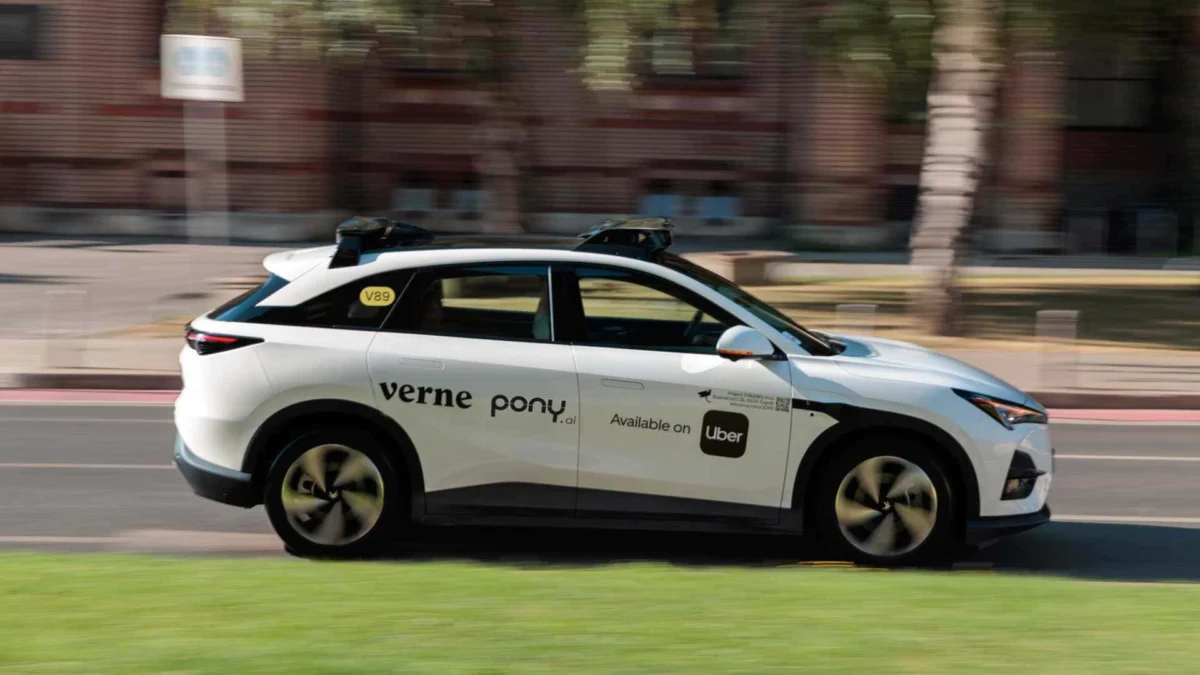
Uber is aggressively accelerating its transition from a traditional ride-hailing app into a centralized platform for autonomous mobility, unveiling a strategic roadmap that commits $10 billion toward integrating 2,000 robotaxis into its global fleet by the end of 2027. This ambitious capital expenditure underscores the company’s urgent shift toward commercial execution in the self-driving sector, a pivot intended to solidify its position as the premier gateway for autonomous vehicle (AV) providers seeking scale and consistent consumer demand.
The strategy, detailed by CEO Dara Khosrowshahi during the company’s most recent earnings call, marks a transition from experimental pilot programs to full-scale commercialization. According to internal projections, approximately 1,000 of these robotaxis will be deployed within the United States, while the remaining half will be distributed across strategic markets in Europe, Asia, and the Middle East. The company has set an incremental milestone of having 700 units active by the close of 2025, providing a foundation for its accelerated growth through the subsequent two years.
The Strategic Pivot: Commercializing Autonomy at Scale
Uber’s pivot to autonomous infrastructure is driven by a need to solve long-term operational challenges, specifically the costs associated with human drivers and the inherent volatility of labor markets. By positioning itself as the "operating system" for autonomous transit, Uber aims to capture value regardless of which technology firm manufactures the hardware or develops the software.
"Our focus on autonomous is now on commercial execution," said CEO Dara Khosrowshahi. "The next phase is about delivering the results that demonstrate Uber’s advantage as a platform for commercializing AVs at scale."
This approach relies on a dual-strategy: maintaining current partnerships while simultaneously de-risking the platform by ensuring it is not reliant on a single provider. With gross bookings up 20 percent year-over-year to $59.8 billion, the company possesses the liquid capital necessary to fund this expansion, though executives have acknowledged that once the fleet exceeds 10,000 units, the company will likely need to pursue third-party capital infusions to sustain its long-term goal of 120,000 active robotaxis.
The Waymo Disconnect and the Competitive Landscape
Despite the confidence projected in the latest earnings call, Uber faces a complex reality regarding its relationship with industry leader Waymo. Currently, the two entities operate in an uneasy alliance; in cities like Atlanta and Austin, Uber users can hail a Waymo vehicle through the Uber interface. However, this partnership is increasingly fraught with tension.
Recent reports from the Financial Times indicate that the relationship may be nearing its conclusion. Executives at Waymo have reportedly expressed skepticism regarding the long-term utility of the Uber integration, with some internal voices describing the deal as a "crapshoot" for riders who remain uncertain whether they are summoning a human-driven vehicle or an autonomous one. Furthermore, reports suggest that Waymo intends to sunset its exclusive integration deal with Uber in specific markets by January 2028.

The discrepancy in scale between the two firms is striking. Waymo currently operates a fleet of approximately 4,000 vehicles across 15 U.S. cities and has publicly stated its intent to double that figure to 8,000 by the end of the year. Furthermore, Waymo’s aggressive roadmap includes plans for a 20,000-vehicle fleet by 2027—a target that dwarfs Uber’s immediate 2,000-vehicle goal by a factor of ten. This widening gap in deployment speed suggests that while Uber wants to be the platform, Waymo is rapidly becoming the infrastructure itself.
A Chronology of Autonomous Ambition
The evolution of Uber’s autonomous strategy has been non-linear. Following the 2020 sale of its internal self-driving unit, Advanced Technologies Group (ATG), to Aurora Innovation, Uber pivoted from developing its own proprietary technology to a "platform-first" approach.
- 2020: Uber divests its self-driving unit, signaling an end to in-house hardware development.
- 2022-2023: The company begins establishing high-profile partnerships, notably with Waymo, Motional, and various regional providers to integrate autonomous options into the app.
- 2024: Uber expands its reach into international markets, including a partnership with Wayve to launch autonomous services in London, marking a significant entry into the UK market.
- 2025 (Q1): Uber commits $10 billion to a 2,000-unit global fleet expansion, formalizing its role as a commercial orchestrator rather than a developer.
- 2028 (Projected): Expected termination of existing exclusive partnership agreements with industry leaders like Waymo, forcing a reliance on alternative partnerships or proprietary fleet management.
The Economic Implications of the Robotaxi Model
The transition to an autonomous fleet carries significant financial implications for the gig economy. Uber’s business model has historically relied on the low barrier to entry for human drivers, who provide their own vehicles and insurance. Transitioning to a robotaxi model requires a massive shift in capital allocation, moving from a low-asset business to one that must manage, maintain, and potentially finance a fleet of high-tech vehicles.
Industry analysts note that while robotaxis offer the potential for higher margins—eliminating the need for driver payouts—they introduce heavy operational expenses, including fleet maintenance, charging infrastructure, and remote monitoring centers. The "third-party capital" mentioned by Uber leadership highlights the recognition that the transition from a software-based app to a hardware-heavy service provider is an expensive endeavor.
Moreover, the success of this model is predicated on regulatory approval. As cities grapple with the impact of AVs on traffic congestion and public safety, Uber’s ability to scale depends on its success in navigating municipal legislation. In London, for instance, the partnership with Wayve has been carefully curated to comply with local transport authority requirements, a blueprint the company intends to replicate in other global hubs.
Future Outlook and Market Risks
As the company looks toward its goal of 120,000 robotaxis, the primary risk remains the loss of market share to vertically integrated competitors. If companies like Waymo, Tesla, or Chinese manufacturers like BYD decide to bypass third-party platforms in favor of their own ride-hailing apps, Uber’s value proposition—its massive user base—could be threatened.
Conversely, if Uber successfully establishes a "plug-and-play" ecosystem for various autonomous developers, it could become the indispensable utility of urban transport. By aggregating demand, Uber provides AV companies with the critical volume needed to achieve profitability. The next 36 months will be decisive; the company must successfully transition from these initial 700 vehicles to its 2,000-unit target while managing the fallout from its cooling relationship with the industry’s most successful player.
Ultimately, Uber’s $10 billion bet is a hedge against obsolescence. As the automotive industry shifts toward software-defined, autonomous transit, the company is attempting to ensure that it remains the primary interface between the vehicle and the passenger. Whether this capital-intensive strategy can coexist with its existing high-growth, low-asset model will define the next decade of the company’s trajectory. As it stands, the race to scale is no longer just about developing the best software; it is about who can dominate the streets of the world’s most lucrative urban centers first.