








The lifespan of consumer electronics is historically defined by corporate support cycles. Once a manufacturer officially discontinues a product, the software powering that hardware is typically frozen in time. For photographers using legacy digital single-lens reflex (DSLR) and high-end compact cameras, this reality has long meant accepting the limitations of older firmware, regardless of subsequent technological developments or user requests. However, recent experiments conducted by developer Marcus Low demonstrate that modern artificial intelligence tools, combined with reverse-engineering techniques, are beginning to dismantle these long-standing boundaries. By utilizing AI coding agents to modify the proprietary firmware of legacy cameras such as the Sigma DP2x and the Nikon D3, Low has initiated a conversation about hardware longevity, user ownership, and the untapped capabilities buried within older photographic equipment.
The Chronology of AI-Assisted Firmware Development
The trajectory of Low’s firmware experimentation began not with Nikon, but with the Sigma DP2x, a specialized compact camera released in 2009 that paired a large APS-C sensor with a retracting lens mechanism. For many users of compact cameras featuring extendable optics, the physical movement of the lens assembly represents a primary point of mechanical failure. Every instance of powering the camera on and off initiates a gear-driven sequence that moves the lens barrel outward and inward, progressively wearing down internal components toward the dreaded mechanical "lens error."
To address this vulnerability, Low turned to artificial intelligence to analyze the camera’s system architecture. Utilizing an AI coding assistant, he successfully reverse-engineered the Sigma DP2x firmware to alter its power-down behavior, configuring the software to keep the lens extended when the camera is switched off. By minimizing the frequency of extension and retraction cycles, the modification theoretically reduces long-term physical wear on the lens motor and gear train. Alongside this modification, Low integrated a digital shot counter and additional system tweaks, releasing the project publicly as the DP2x Longevity Firmware Update.
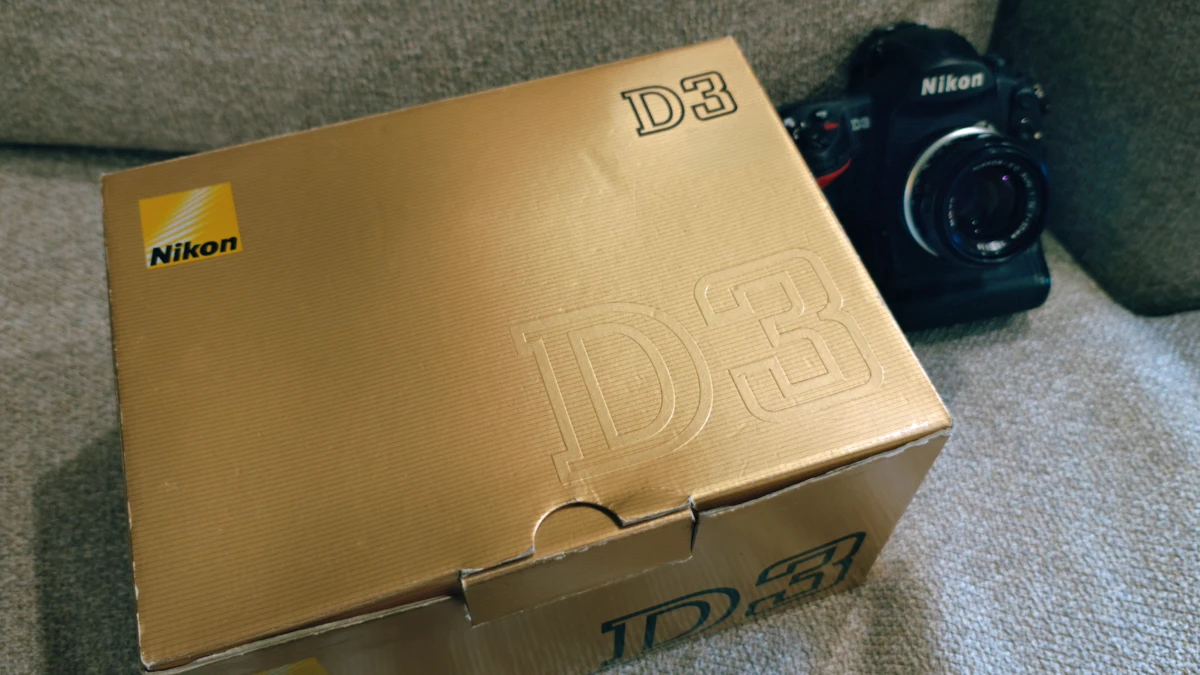
Building upon the insights gained from the Sigma project, Low identified a technical overlap: the Sigma DP2x operates on a Fujitsu FR-family processor, an architecture shared by the sub-CPU of the Nikon D3, a professional flagship DSLR originally released in 2007. Recognizing this architectural commonality, Low transitioned his methodology toward Nikon’s professional ecosystem, culminating in a custom firmware patch for the Nikon D3 dubbed Project "Trap Focus."
Technical Mechanics of the Nikon D3 "Trap Focus" Modification
The primary objective of Project Trap Focus is to bridge the operational gap between modern digital automation and vintage manual-focus lenses. When shooting with manual-focus glass on a traditional DSLR, the standard workflow requires the photographer to manually adjust the focus ring until the viewfinder’s in-focus indicator confirms critical sharpness, at which point the user manually depresses the shutter release button.
Low’s patched sub-CPU firmware modifies this operational logic by leveraging the D3’s existing phase-detection autofocus module and viewfinder confirmation indicators. Once configured—requiring specific settings such as manual-focus mode, AF-S priority selection set to focus, and specific release modes—the photographer holds down the shutter release button entirely while manually turning the focus barrel. The moment the camera’s internal sensors register that the subject is in focus, the firmware automatically commands the shutter to fire, bypassing the need for a secondary manual button press.
While this capability is not entirely novel within the broader camera market—Pentax, for instance, has long offered a functionally identical feature known as "Catch-in Focus" on various K-mount DSLRs—it represents a significant addition for Nikon users. The D3 hardware inherently possessed the processing power and phase-detection capabilities required for this function, but the feature was omitted from Nikon’s official software roadmap.
Evaluating the Operational Implications
The implementation of trap focus on a legacy platform introduces several distinct operational advantages, alongside notable technical trade-offs. From an ergonomic and physical standpoint, automating the shutter release eliminates human reaction time from the critical moment of exposure. Simple visual reaction times typically measure between 200 and 250 milliseconds. At shallow depths of field—such as a 50mm lens operating at f/1.4—subject movement or subtle postural sway by the photographer can easily shift the focal plane beyond the narrow band of sharp focus within a quarter of a second. By allowing the camera to trigger directly upon confirming focus, this delay is effectively removed.
Furthermore, keeping the shutter release fully depressed prior to exposure eliminates the physical downward jab of the finger at the exact moment the image is captured. For legacy cameras like the Nikon D3, which lacks in-body image stabilization (IBIS), and when paired with vintage manual-focus prime lenses that similarly lack optical stabilization, removing this source of micro-jitter can contribute to sharper imaging at slower shutter speeds.
Despite these advantages, technical limitations remain. The camera’s internal processing pipeline still requires a finite duration to measure light, evaluate phase-detection data, and execute the physical shutter mechanism. Additionally, the camera’s focus-confirmation dot operates within a specific tolerance window; when using ultra-fast lenses at apertures of f/1.2 or f/1.4, this tolerance window may exceed the physical depth of field, meaning the camera relies entirely on the pre-existing calibration limits of its AF module rather than enhancing raw optical accuracy.
Broader Industry Context and Manufacturer Perspectives
Neither Nikon nor Sigma has officially commented on Marcus Low’s firmware modifications, aligning with standard industry policies that discourage the use of unofficial, third-party software alterations. Major camera manufacturers traditionally design their firmware ecosystems around strict quality control, proprietary security protocols, and predictable support lifecycles.
Industry analysts note that omitting advanced features from older or discontinued hardware models is typically driven by a combination of liability management, resource allocation, and product segmentation strategies. Supporting legacy hardware with feature updates yields no direct revenue for manufacturers, while introducing potential risks regarding system stability, warranty claims, and unintended operational failures. Consequently, official software updates for flagship cameras generally cease within a few years of a model’s discontinuation, leaving hardware optimization entirely to independent developers and hobbyist communities.
Future Outlook and Associated Risks
The implications of Low’s work extend well beyond a single trap-focus patch. Subsequent experimental developments include a main-CPU patch designed to display the comprehensive shot count directly on the firmware version screen and integrate historic Nikon D2X Picture Controls into the D3 architecture. Furthermore, exploration is underway regarding the feasibility of porting these modifications to related generational models, including the Nikon D3X and the Nikon D700, both of which share architectural foundations with the D3.
However, industry experts and independent technicians emphasize the substantial risks involved in flashing unofficial firmware. Modifying camera system software carries the perpetual risk of permanently disabling the hardware—a phenomenon commonly referred to as "bricking." Unless a camera’s bootloader remains functional enough to execute a formal recovery update, a failed flash renders sophisticated professional bodies completely unrecoverable.
Ultimately, these developments highlight a shifting paradigm in consumer electronics repair and modification. By demonstrating that advanced artificial intelligence can assist in reverse-engineering proprietary code, independent developers are increasingly capable of unlocking dormant hardware potential long after official corporate support has concluded. Whether this grassroots approach scales into a wider movement for digital right-to-repair and hardware longevity will depend heavily on the willingness of technical hobbyists to navigate the inherent risks of unauthorized system modification.