








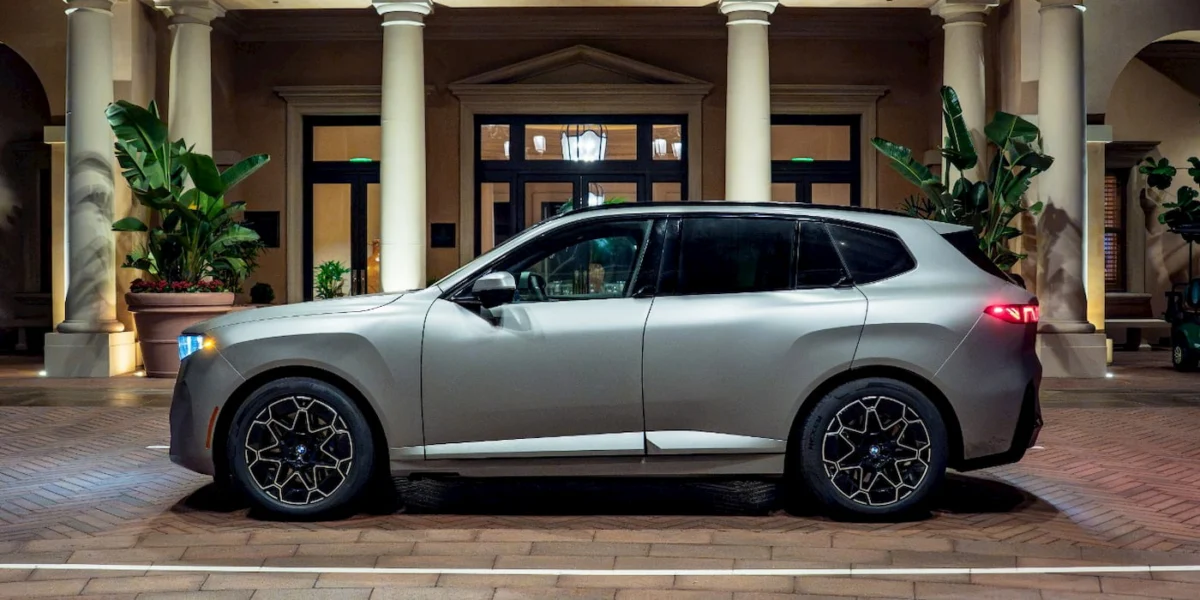
BMW has officially closed the chapter on its pioneering all-electric SUV, the iX. Following a brief four-year market run that commenced with its United States launch in 2022, the 2026 model year has essentially sold out nationwide. According to automotive research and tracking data provided by CarsDirect, only a negligible handful of brand-new iX units—approximately 10 vehicles—remain available across dealership inventories nationwide. Consequently, official online landing pages for the outgoing iX now seamlessly redirect prospective buyers to the conventional, internal combustion engine BMW X5 lineup, marking a decisive turning point in the German automaker’s aggressive electrification strategy.
The rapid clearance of remaining iX inventory underscores strong consumer appetite for premium electric mobility, but it also signals a monumental structural shift within BMW. The discontinuation of the original iX is not a retreat from the electric vehicle segment; rather, it is a calculated operational maneuver to clear assembly lines and showroom floors for BMW’s highly anticipated "Neue Klasse" vehicle architecture. This next-generation platform represents a comprehensive reimagining of BMW’s engineering, manufacturing, and software philosophy, promising radical improvements in efficiency, performance, and charging infrastructure that will redefine the brand’s footprint in the global EV market.
The Evolution from Pioneer to Next-Generation Architecture

When the BMW iX first arrived in American showrooms in 2022, it served as the technological flagship for the brand’s nascent EV ambitions. Built upon a dedicated, aluminum spaceframe architecture with a carbon-fiber-reinforced plastic (CFRP) safety cell, the iX was designed from the ground up to showcase sustainable luxury. However, the automotive landscape has evolved at a blistering pace since its debut. While the 2026 iX xDrive60 offered a respectable Environmental Protection Agency (EPA)-estimated driving range of up to 364 miles, consumer expectations for charging speeds, battery density, and software integration have grown exponentially.
Recognizing the need to leapfrog competitors rather than merely keep pace, BMW designed the Neue Klasse platform to serve as the technological foundation for its entire future portfolio. At the heart of this architecture lies BMW’s sixth-generation (Gen6) eDrive technology. This completely redesigned system transitions away from legacy battery and motor layouts, introducing newly formulated cylindrical battery cells that significantly improve energy density, thermal management, and overall packaging efficiency.
Furthermore, the implementation of a robust 800-volt electrical architecture represents a massive upgrade over the previous generation’s systems. This high-voltage framework drastically reduces charging times, mitigates energy loss during high-output operations, and allows for sustained power delivery without thermal throttling. Industry analysts have noted that the transition to an 800-volt system puts BMW on par with the industry’s leading charging standards, addressing one of the primary friction points for long-distance electric vehicle adoption.
Chronology of the Transition and Upcoming Launches

The phasing out of the iX is part of a meticulously timed rollout plan that BMW has executed throughout 2026. The groundwork for the Neue Klasse era began earlier this year when BMW officially confirmed that the 2026 model year would be the last for the original iX in the North American market. Shortly thereafter, the company opened pre-orders for the 2027 iX3 50 xDrive, a compact electric SUV boasting a starting price of $61,500 and an impressive EPA-estimated driving range of up to 434 miles.
While the iX3 targets the compact luxury segment, BMW needed a more direct, mid-to-large-size successor to capture the exact market share previously occupied by the iX and to rival the traditional internal combustion engine X5. That solution arrives in the form of the 2027 BMW iX5.
While the gas-powered counterpart—the 2027 X5 40 xDrive—has already rolled into dealerships with a starting price of $72,100, the fully electric iX5 is slated to make its official market entry in early 2027. Ahead of this commercial release, BMW orchestrated a high-profile public demonstration in Southern California to validate the vehicle’s engineering claims, placing an iX5 60 xDrive prototype into the hands of international automotive media to test its revolutionary charging capabilities.
Unprecedented Charging Speeds and Performance Metrics
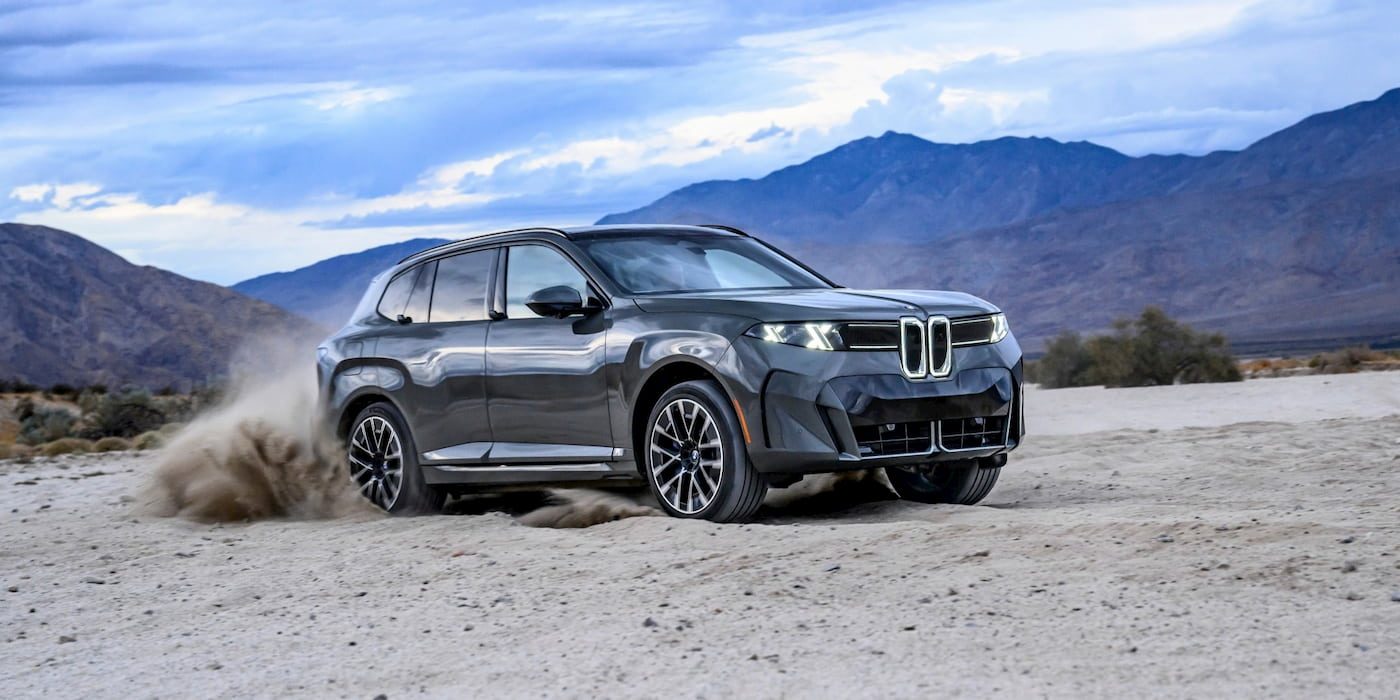
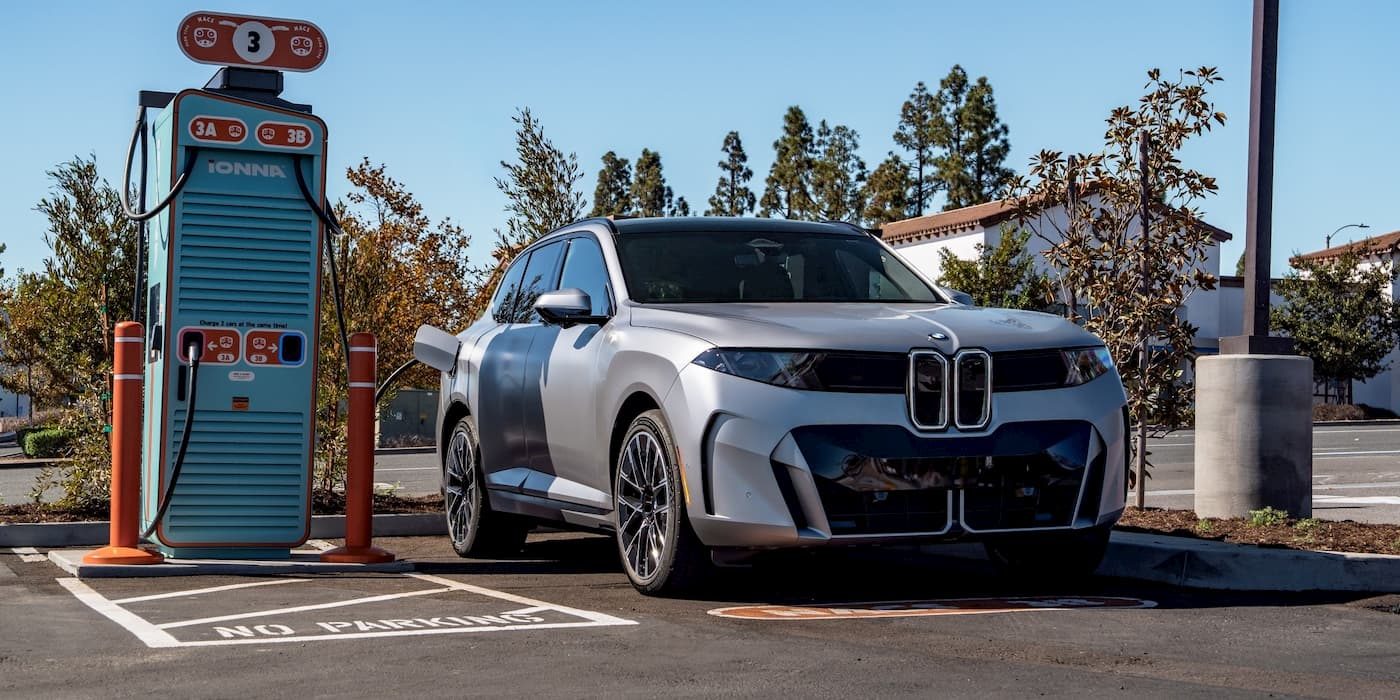
The public demonstration in Southern California provided concrete proof of the Gen6 eDrive system’s capabilities. During live fast-charging tests, the iX5 60 xDrive achieved a staggering peak charging rate of 464 kW, comfortably exceeding conservative manufacturer estimates.
According to official specifications provided by BMW, the vehicle’s advanced 800-volt architecture allows it to replenish up to 170 miles of driving range in a mere 10 minutes under optimal conditions. Furthermore, utilizing a DC fast charger, replenishing the massive 144 kWh battery pack from 10% to 80% capacity takes just 22 minutes. When fully charged, the iX5 60 xDrive is projected to deliver an EPA-estimated driving range of up to 435 miles, effectively erasing range anxiety for long-distance commuters and road-trippers alike.
Beneath its skin, the iX5 utilizes a dual-motor, all-wheel-drive configuration engineered to deliver exhilarating driving dynamics. The powertrain churns out a combined 578 horsepower (425 kW) and 593 lb-ft of torque. This immense output enables the heavy SUV to sprint from 0 to 60 mph in a blistering 4.4 seconds—performance figures that rival dedicated sports cars while maintaining a utility-focused maximum towing capacity of up to 6,000 pounds.
Interior Innovation and Manufacturing Footprint
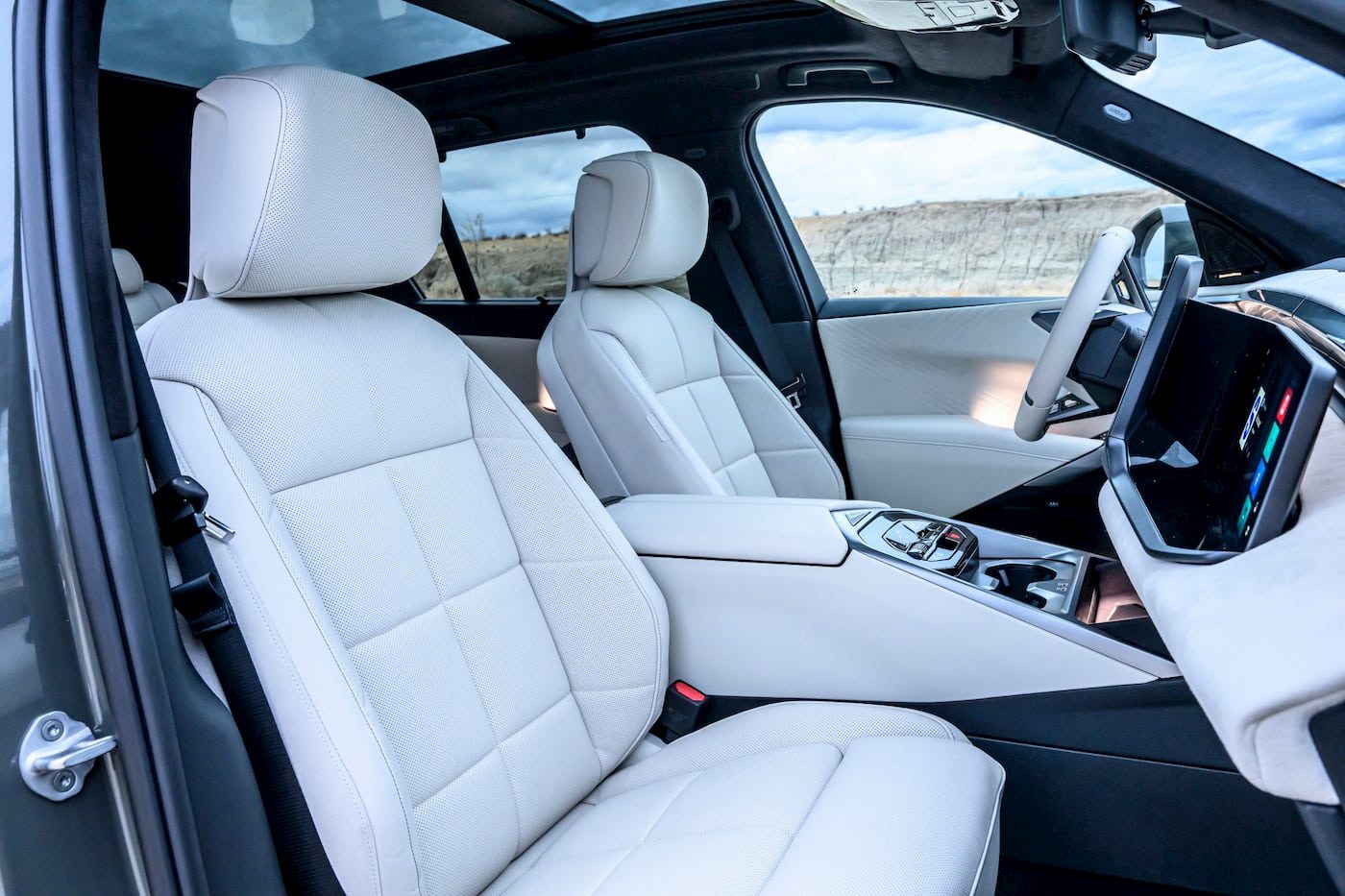
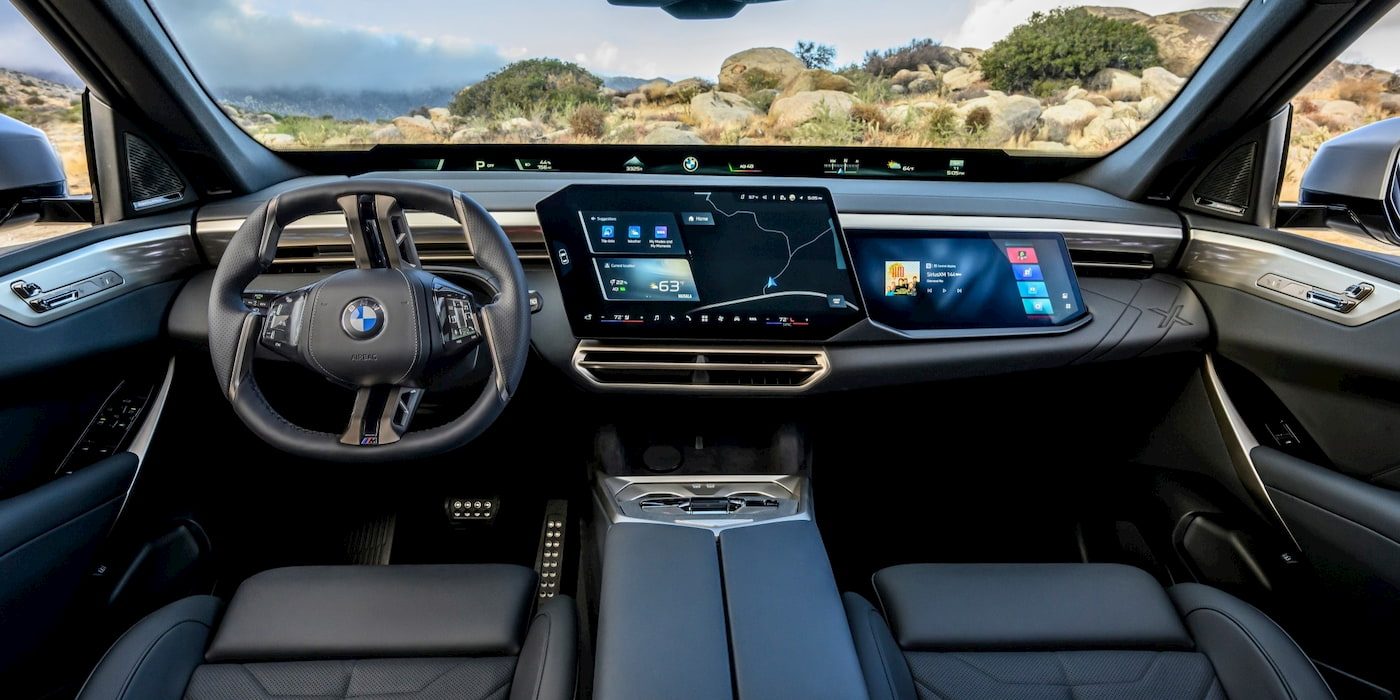
Inside the cabin, the iX5 breaks entirely from the design language of the outgoing iX, fully embracing the minimalist, driver-centric philosophy of the Neue Klasse. The focal point of the dashboard is a sprawling 17.9-inch central navigation touchscreen powered by the latest iteration of BMW’s iDrive operating system.
Revolutionizing the traditional driver display, the iX5 introduces BMW Panoramic Vision, a cutting-edge HUD-style projection system that spans the entire width of the lower windshield, displaying critical driving data directly in the driver’s natural line of sight. For front-seat passengers seeking entertainment or navigation control, an optional 14.6-inch passenger-side touchscreen can be integrated into the dashboard layout, creating a multi-screen digital cockpit.
Dimensionally, the iX5 measures 197.2 inches in length, 78.7 inches in width, and 68.9 inches in height. These proportions make it slightly longer and taller than the outgoing iX, adopting a more traditional, upright SUV silhouette that maximizes interior passenger volume and cargo capacity.
Beyond its technical specifications, the launch of the iX5 carries profound industrial significance for BMW’s North American manufacturing operations. The vehicle will hold the distinction of being BMW’s very first fully electric vehicle built directly in the United States. Series production is officially scheduled to commence at BMW’s sprawling Plant Spartanburg facility in South Carolina before the conclusion of the year, with the first customer deliveries scheduled for early 2027. Orders for the iX5 60 xDrive are expected to open within the month, with an entry-level starting price established at $79,800.
Broader Market Implications and Strategic Analysis
The transition from the iX to the iX5 via the Neue Klasse platform marks a critical inflection point for BMW’s global electrification strategy. Industry analysts point out that while early dedicated EVs like the iX allowed legacy automakers to experiment with custom platforms and sustainable materials, they often suffered from high production costs, polarizing styling, and software limitations that drew mixed reactions from traditional BMW loyalists.
By anchoring the new iX5 to the iconic, high-volume nomenclature of the X5—the brand’s best-selling luxury SUV line—BMW is executing a psychological and commercial pivot. Rather than segregating its electric vehicles into an experimental "i" sub-brand with unconventional designs, BMW is directly integrating its most advanced EV technology into its core, most beloved vehicle franchises. This approach aims to comfort traditional buyers while offering the advanced technological leap required to fend off aggressive competition from dedicated EV startups and legacy luxury rivals alike.
Moreover, the localization of production at Plant Spartanburg insulates BMW from potential supply chain disruptions, geopolitical trade shifts, and fluctuating import tariffs. By manufacturing the iX5 on American soil, BMW ensures compliance with domestic sourcing requirements, positioning the vehicle favorably within the evolving regulatory framework of the North American automotive market.
As the final 2026 iX models leave showroom floors, the stage is officially set for the dawn of the Neue Klasse. With class-leading charging speeds, exceptional range, high-output performance, and a domestically manufactured pedigree, the BMW iX5 is poised to assume the mantle of leadership in the luxury electric SUV sector when it officially arrives in early 2027.