








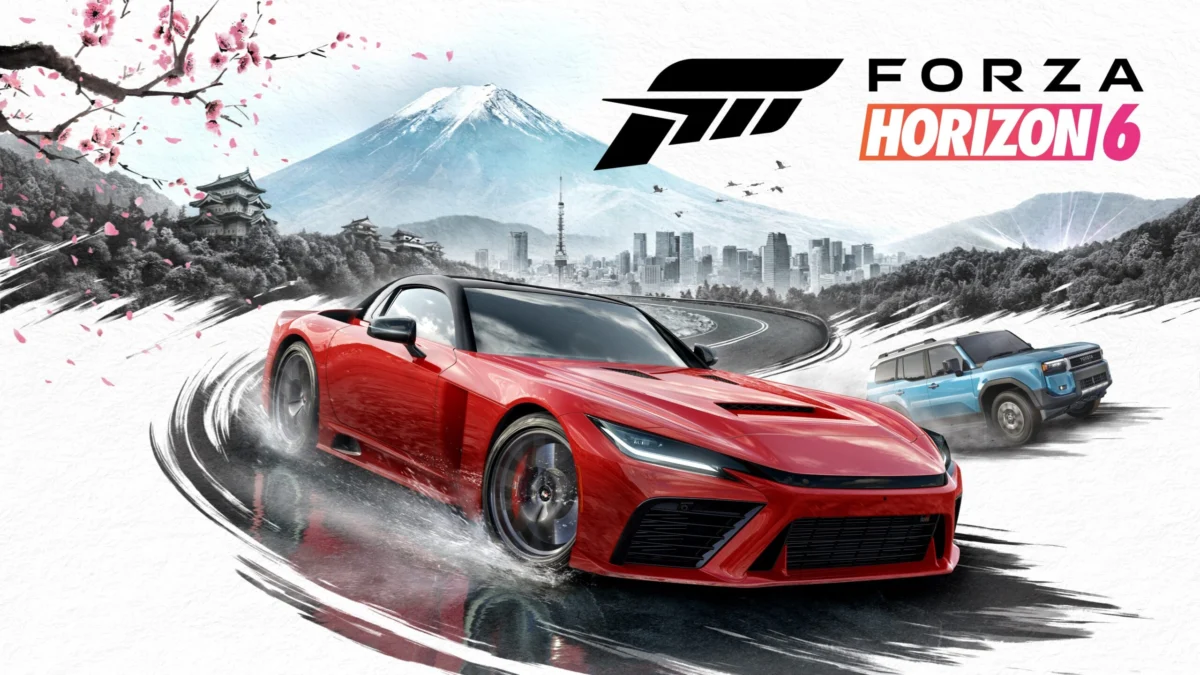
The latest installment in Playground Games’ acclaimed open-world racing franchise, Forza Horizon 6, has made a monumental entrance onto the PC gaming landscape. Even before its official global release date, the title has dismantled previous franchise records on Steam, highlighting an extraordinary level of consumer demand and proving that premium-priced early access models can yield massive financial and engagement returns for major publishers like Xbox Game Studios.
With official deployment scheduled for May 19, the title has already captured the attention of millions of digital storefront visitors. The driving force behind the current surge in player activity stems from the rollout of the Premium Edition, a $120 bundle that grants enthusiastic fans early access to the game alongside a suite of downloadable content and future expansion passes. While standard market logic suggests that a triple-digit price point would severely restrict early adoption to a niche demographic, the reality on the ground has defied expectations.
Historic Player Milestones on Steam
Publicly available tracking data from SteamDB confirms that Forza Horizon 6 has easily eclipsed the launch metrics of its predecessors. Within hours of the early access window opening, concurrent player counts began a steep upward trajectory, quickly bypassing the historical all-time peaks of both Forza Horizon 4 and Forza Horizon 5.
Prior to this week, Forza Horizon 5 held the franchise’s peak concurrent record on the platform at 81,096 players, a figure achieved during its own heavily anticipated launch window. Forza Horizon 4, meanwhile, peaked at 75,689 concurrent users. By comparison, Forza Horizon 6 surged past those milestones almost effortlessly, registering an initial peak of 128,157 concurrent players on Steam alone. Industry analysts note that this figure is likely to climb even higher as the weekend progresses and more players complete their downloads.
This exceptional engagement is further reflected in Steam’s global top sellers charts. Forza Horizon 6 has maintained a resilient presence in the rankings for 16 consecutive weeks leading up to its debut, driven by pre-orders. Following the commencement of early access, the title surged three additional spots to claim the number two position globally, trailing only behind dominant free-to-play juggernauts and major platform-specific hardware releases.
The Financial Impact of Premium Early Access
The success of the $120 Premium Edition illustrates a broader industry shift toward tiered pricing structures for AAA video game releases. Publishers have increasingly leaned on early access incentives to monetize their most dedicated fanbases, offsetting the rising development costs of high-fidelity open-world titles.
Forza Horizon 6 demonstrates that consumers are increasingly willing to pay a significant premium for early entry, particularly for established franchises with loyal communities. Beyond the monetary value, this strategy staggers server loads, allowing network infrastructure engineers to stress-test multiplayer matchmaking, cloud saves, and online convoy systems gradually before the full weight of the standard-edition player base logs on.

It is important to note that Steam metrics represent only a fraction of the total player ecosystem. The figures do not account for players accessing the game through the Xbox ecosystem on PC, the Windows Store, or direct digital pre-orders on Xbox Series X/S hardware. Furthermore, while standard versions of first-party Xbox titles typically debut on the Xbox Game Pass subscription service on day one, early access periods generally require users to purchase the specific Premium Add-Ons Bundle rather than relying solely on their active subscription, driving direct digital sales.
Franchise Evolution and Historical Context
To fully understand the significance of Forza Horizon 6’s launch, one must examine the trajectory of the franchise under Playground Games and Xbox Game Studios. Launched initially in 2012 as a spin-off to Turn 10 Studios’ track-focused Forza Motorsport series, the Horizon franchise quickly established its own distinct identity. By combining an open-world festival setting with accessible arcade-simulation physics and dynamic weather systems, the series captured a massive demographic of casual and hardcore automotive enthusiasts alike.
Chronologically, the franchise has steadily expanded its global footprint:
- Forza Horizon (2012): Set in the fictionalized open roads of Colorado, establishing the core festival concept.
- Forza Horizon 2 (2014): Transported players to Southern Europe, introducing dynamic weather and off-road driving.
- Forza Horizon 3 (2016): Moved to Australia, widely praised for its diverse biomes and cooperative campaign progression.
- Forza Horizon 4 (2018): Explored a changing-seasons version of Great Britain, setting new technical standards for the Xbox One generation.
- Forza Horizon 5 (2021): Showcased the vibrant landscapes of Mexico, achieving massive multi-platform success and eventually expanding to Sony’s PlayStation 5 ecosystem.
With each iteration, Playground Games has refined its technical engine, delivering cutting-edge graphical fidelity, photorealistic vehicle rendering, and seamless online integration. Forza Horizon 6 arrives as the culmination of over a decade of iterative design, bringing heightened technical optimization for modern PC hardware, including advanced ray-tracing implementations and ultra-wide monitor support.
Broader Industry Implications and Future Outlook
The exceptional early performance of Forza Horizon 6 carries significant implications for Xbox Game Studios’ publishing strategy. In recent years, Microsoft has increasingly adopted a multi-platform philosophy, bringing major first-party software to rival consoles and expanding its ecosystem footprint. Following the commercial success of Forza Horizon 5 on PlayStation 5, industry insiders anticipate that Horizon 6’s eventual multi-platform rollout will shatter previous console-specific sales benchmarks.
Moreover, the PC platform has historically been secondary to console hardware for the racing genre, which traditionally thrived on living-room setups with controllers. However, the sustained growth of high-end PC racing simulators, wheel peripherals, and ultra-wide display configurations has transformed Steam into a vital battleground for AAA driving titles. The record-breaking concurrent player counts on Steam demonstrate that Playground Games has successfully captured the PC demographic, ensuring long-term community retention and user-generated content creation through the game’s robust livery and route-creation tools.
As the official global launch date of May 19 approaches, the primary challenge for Playground Games and network administrators will be maintaining server stability as the remaining majority of the player base logs on. Critical reception for the title has been largely positive, praising its technical polish, expansive car roster, and refined handling model, even if some critics note that the overarching festival formula closely follows established series conventions.
Ultimately, Forza Horizon 6 has proven that consumer fatigue has yet to set in for the open-world racer. By delivering a technically polished experience with broad appeal, Playground Games has secured one of the most successful PC software launches of the year, setting a formidable benchmark for the remainder of the 2026 release calendar.