






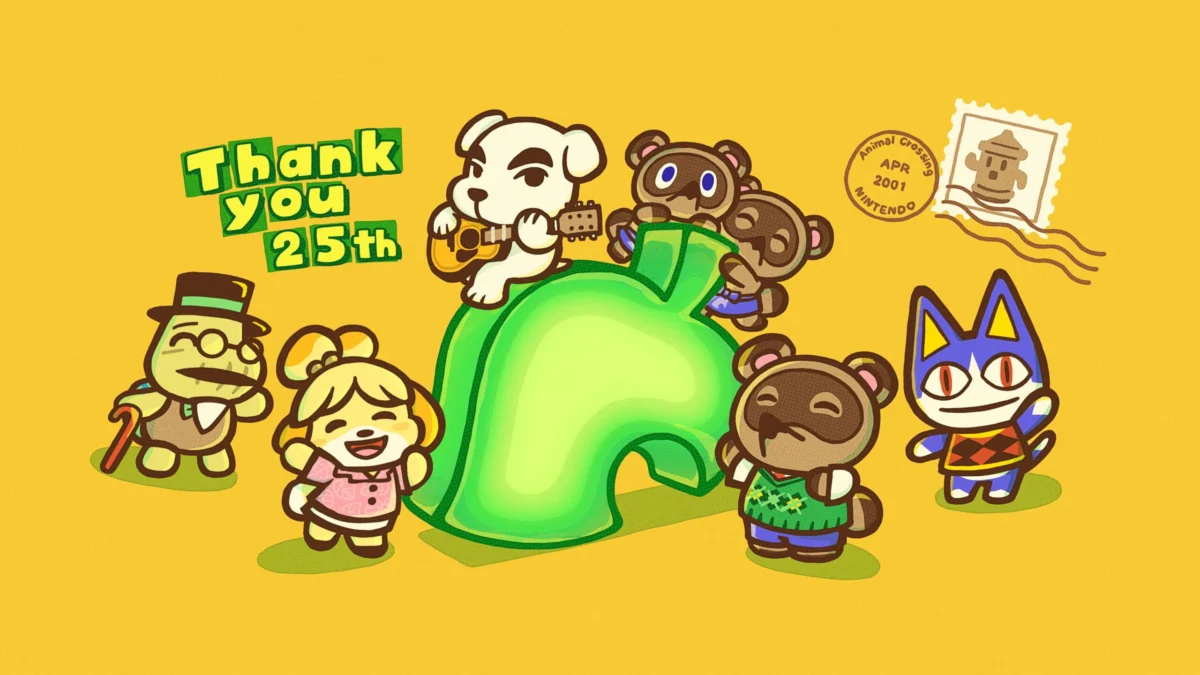
Nintendo has unexpectedly deployed a new software patch for Animal Crossing: New Horizons, marking a celebratory milestone for the beloved life-simulation franchise. Update version 3.0.2 is currently rolling out globally, bringing technical refinements and a nostalgic celebratory gift to players across both Nintendo Switch and Nintendo Switch 2 hardware iterations.
Though Animal Crossing: New Horizons officially concluded its major content update cycle years ago, leaving players with the final 2.0 update and the Happy Home Paradise paid downloadable content, Nintendo has periodically issued minor maintenance patches to address stability issues. This latest surprise release, however, goes beyond a standard bug-fix log by introducing a commemorative physical item to honor a quarter-century of island life, town management, and anthropomorphic animal interactions.
The Core Addition: The Commemorative Leaf Statue
Upon downloading and installing the version 3.0.2 patch, players are not required to complete complex in-game tasks, attend special events, or spend accumulated Bells. Instead, the lone physical addition is delivered directly to the player’s in-game mailbox.
Opening the mail reveals a heartfelt message addressed to the passionate community of fans who have supported the franchise through multiple hardware generations. Adding to the collectible appeal, the attached letter features an authentic Nintendo N64 stamp, nodding to the platform where the phenomenon first began.
Attached to this correspondence is a new in-game decoration known officially as the Leaf Statue. When placed inside a player’s home or anywhere across their island paradise, the item features a functional design element: it lights up. Alongside this glowing tribute, players can also display a faithful recreation of the original Japanese N64 product packaging, serving as a subtle museum-grade nod for longtime series historians. Beyond these celebratory additions, the remainder of the 3.0.2 patch notes focus on standard back-end stability improvements and minor bug rectifications, as detailed on Nintendo’s official customer support portals.
Historical Chronology: Twenty-Five Years of Animal Crossing
To understand the weight of this anniversary item, it is necessary to examine the historical timeline of the Animal Crossing intellectual property. The franchise trace its roots back to the late 1990s and early 2000s under Nintendo’s Creative Development Division 3, spearheaded by producer Katsuya Eguchi and director Hisashi Nogami.
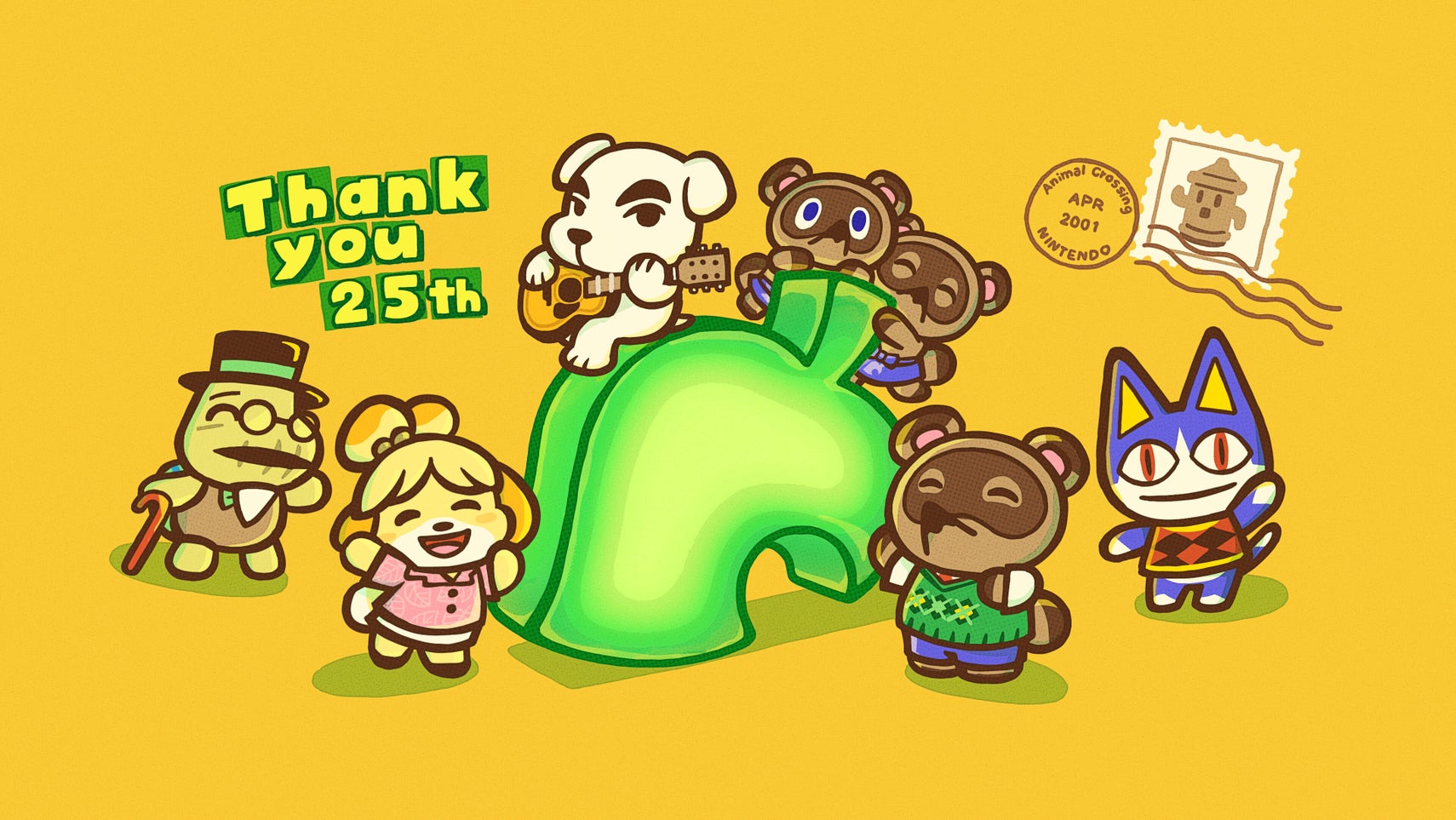
The origin of the series officially dates back to April 14, 2001, with the release of Dobutsu no Mori (translated literally as Animal Forest) for the Nintendo 64 in Japan. The title was an ambitious, clock-driven simulation that operated on the console’s internal real-time clock, a pioneering feature for console gaming at the time. Because the Nintendo 64 was nearing the end of its commercial lifespan and lacked built-in mass storage without the 64DD peripheral, the game utilized the Controller Pak to save player data and towns.
Recognizing the breakout potential of the concept, Nintendo quickly enhanced and localized the project for the succeeding generation of hardware. In December 2001, just months after the Japanese N64 debut, Nintendo released Dobutsu no Mori+ for the Nintendo GameCube in Japan. This enhanced version laid the groundwork for the eventual Western localization.
North American and international audiences were introduced to the series on September 16, 2001—though delayed in certain regions until 2002—when Animal Crossing launched on the Nintendo GameCube. Complete with a bundled internal clock card and memory card, the GameCube release introduced iconic features that would define the franchise for decades: paying off predatory loans to Tom Nook, catching fish and bugs, writing letters to animal neighbors, and designing interior spaces.
Over the next two decades, the franchise expanded systematically across Nintendo’s ecosystem:
- 2005: Animal Crossing: Wild World launched on the Nintendo DS, introducing revolutionary local and online wireless multiplayer.
- 2008: Animal Crossing: City Folk (known as Let’s Go to the City in Europe) brought the simulation to the Nintendo Wii, utilizing WiiConnect24 for item trading.
- 2012: Animal Crossing: New Leaf debuted on the Nintendo 3DS, empowering players to step into the role of mayor and fundamentally altering town customization.
- 2015: Spin-offs Animal Crossing: Happy Home Designer (Nintendo 3DS) and Animal Crossing: Amiibo Festival (Wii U) explored interior design and tabletop mechanics.
- 2017: Animal Crossing: Pocket Camp introduced the series to mobile devices, capturing millions of active users before transitioning to a standalone offline model.
- 2020: Animal Crossing: New Horizons arrived on the Nintendo Switch in March, coinciding with the onset of the global COVID-19 pandemic and shattering sales records to become a historic cultural phenomenon.
Economic and Cultural Impact of New Horizons
The release of Animal Crossing: New Horizons in March 2020 arrived at a uniquely unprecedented moment in modern media history. As global populations entered strict lockdowns, millions sought virtual escapes, social connection, and creative outlets. The island-hopping mechanics, open-ended crafting system, and cooperative multiplayer provided an unprecedented digital sanctuary.
Financially, the title became one of the fastest-selling games in Nintendo’s history. Within its first six weeks, New Horizons sold over 13 million copies, quickly eclipsing the lifetime sales of its predecessors. As of Nintendo’s recent financial briefings, the game has accumulated over 45 million copies sold worldwide, making it the second best-selling Nintendo Switch game of all time, sitting just behind Mario Kart 8 Deluxe.
The game’s cultural footprint extended far beyond standard gaming circles. New Horizons was utilized by universities for graduation ceremonies, corporations for virtual marketing campaigns, political figures for grassroots campaigning, and artists as a canvas for digital fashion shows. Its soundtrack, composed by Kazumi Totaka, Atsuko Asahi, and Yasuaki Iwata, became recognizable ambient audio for an entire generation of players.
Official Industry Response and Community Reaction

Nintendo has historically treated the Animal Crossing series as a crown jewel of its family-friendly intellectual property portfolio. While the company officially declared the active content development cycle for New Horizons finished following the November 2021 update, this surprise 25th-anniversary distribution underscores Nintendo’s enduring commitment to honoring its legacy hardware and long-term supporters.
Industry analysts note that surprise legacy patches of this nature serve a dual purpose. Tactically, they maintain player engagement and goodwill across digital ecosystems. Strategically, they reinforce brand heritage as Nintendo prepares for hardware transitions and future software announcements regarding its next-generation console ecosystem, frequently referred to in industry reports as the Switch 2.
Within the player community, the reaction has been overwhelmingly nostalgic. Social media platforms, dedicated subreddits, and fan forums quickly filled with screenshots of the newly delivered mail, players displaying their illuminated Leaf Statues, and discussions regarding favorite memories from the original Nintendo 64 and GameCube iterations. Veterans of the series praised the inclusion of the N64 packaging asset, noting that acknowledging the franchise’s humble roots adds authentic depth to the milestone celebration.
Broader Implications for Nintendo’s Legacy Strategy
The unexpected rollout of version 3.0.2 highlights a broader shift in how major game publishers manage long-tail communities. Rather than allowing older multiplayer and service-adjacent titles to fade quietly into obsolescence, companies increasingly utilize minute digital tokens to maintain an active dialogue with their base.
For Animal Crossing, a franchise predicated on time, memory, and personal attachment, a physical memento delivered digitally to an in-house mailbox acts as a poignant structural mirror to the gameplay loop itself. Players log in, check their mail, receive a token of appreciation from an unseen benefactor, and place it in their curated virtual world.
As the Animal Crossing series looks toward its next quarter-century, the 25th-anniversary patch serves as both a retrospective capstone and a gentle reminder of the emotional resonance interactive media can achieve. Whether New Horizons will receive any further maintenance or if this leaf statue remains the final punctuation mark on the island adventure, the update ensures that twenty-five years of virtual neighborly companionship are properly memorialized within the code of Nintendo’s modern masterwork.