








The landscape of urban mobility is on the verge of a significant shift as specialized automakers look for ways to bridge the gap between low-speed neighborhood electric vehicles and traditional highway-capable automobiles. Eli Electric Vehicles, a recognized innovator in the compact electric vehicle sector, has officially announced plans to introduce a brand-new iteration of its popular microcar. Set to be unveiled at the upcoming EICMA motorcycle and mobility exhibition in Milan, Italy, the new vehicle aims to address one of the primary limitations of current microcars: top-speed restrictions that keep them relegated to slow-moving city streets.
In an official Instagram teaser campaign, the company revealed the upcoming Eli ZERO MX, designated as an L7e vehicle, alongside a visually striking special Race Edition. While the teaser provided limited technical specifications, the categorization of the vehicle as an L7e quadricycle offers profound insights into the company’s strategic direction. Industry analysts and urban planners are closely watching the development, as a higher-speed microcar could fundamentally alter how daily commuters view ultra-compact transportation in congested metropolitan areas.
Understanding the Regulatory Framework: L6e vs. L7e Microcars
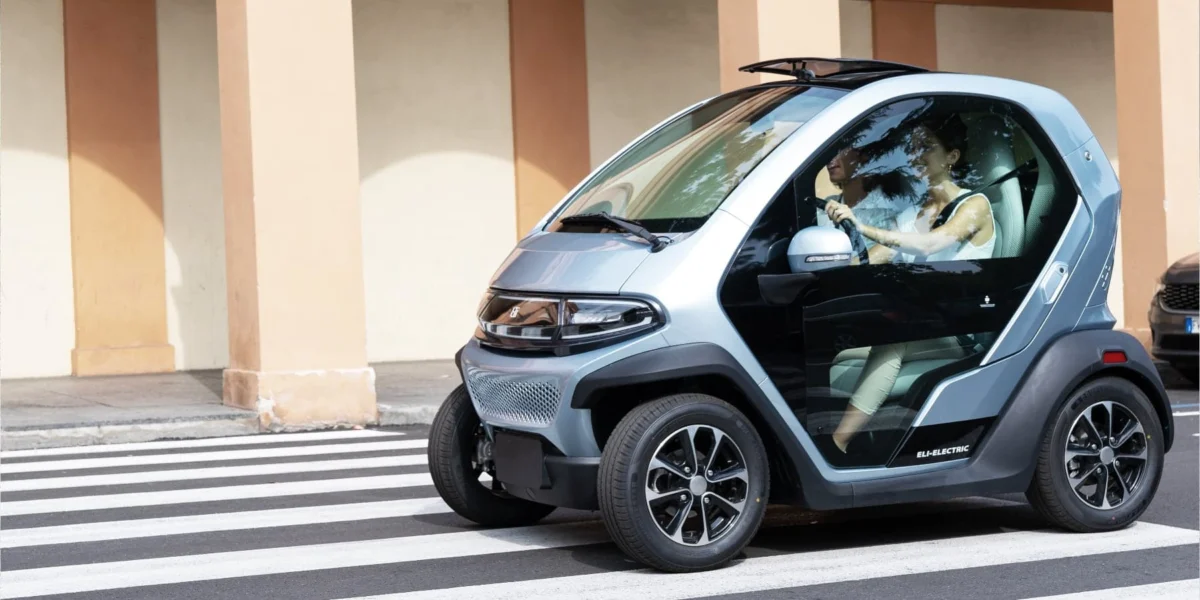
To fully appreciate the significance of the upcoming Eli ZERO MX, it is essential to examine the regulatory classifications that govern light electric vehicles in Europe and several international markets. The current iteration of the Eli ZERO—which has been available to European consumers for several years—falls under the L6e light quadricycle category.
Under European Union regulations, L6e vehicles are strictly limited to a top speed of 45 kilometers per hour (approximately 28 miles per hour) and a maximum unladen mass of 425 kilograms, excluding the weight of the batteries. These specifications make L6e vehicles exceptionally well-suited for dense urban environments, narrow European streets, and low-speed zones where parking availability is scarce. However, the 28 mph speed ceiling creates a distinct bottleneck for drivers who need to navigate suburban arteries, ring roads, or urban expressways where traffic flows at 50 mph or faster. Being restricted from these faster thoroughfares often limits the practicality of L6e microcars to secondary commuting routes.
In contrast, the L7e category—into which the new ZERO MX falls—represents heavy quadricycles. Vehicles in this classification are permitted to achieve higher velocities, typically ranging between 80 and 90 kilometers per hour (50 to 56 miles per hour). By stepping up to the L7e class, Eli Electric Vehicles is signaling its ambition to move beyond the slow lane, offering consumers a vehicle that retains an ultra-compact footprint while unlocking the capability to travel safely on faster suburban and regional roads.
Speculations, Italian Listings, and Performance Expectations
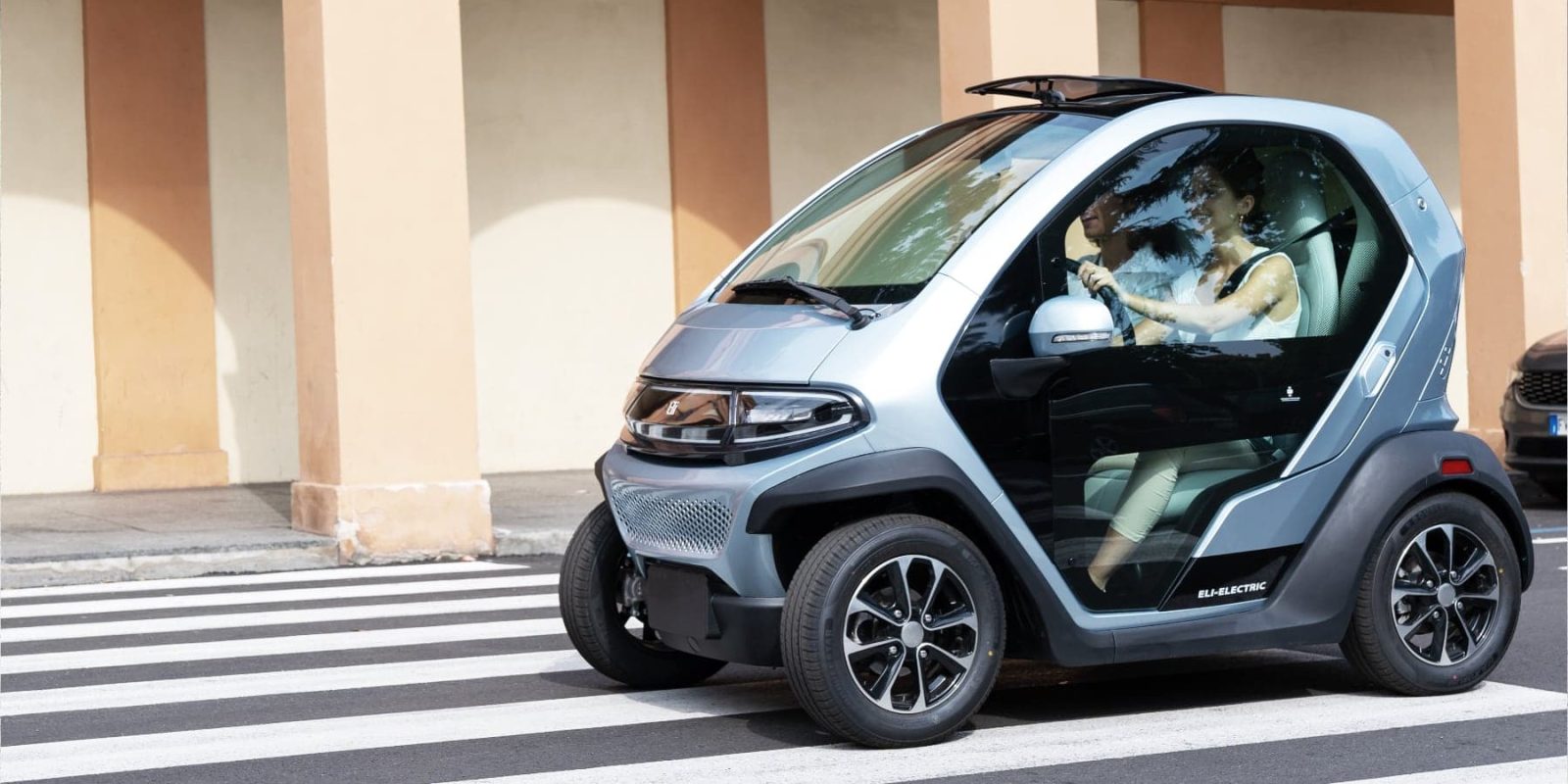
Although the official EICMA teaser stopped short of publishing a complete data sheet for the ZERO MX, supplementary information found on Eli’s regional digital platforms offers a tantalizing preview of what consumers might expect. Eli’s official Italian website currently references an L7e-spec ZERO capable of achieving a top speed of 85 kilometers per hour (53 miles per hour) and delivering an impressive estimated driving range of up to 200 kilometers (124 miles) on a single charge.
If these preliminary specifications translate directly to the production version of the ZERO MX, the vehicle would represent a massive leap forward in utility. A 53 mph top speed combined with a 124-mile driving range transforms the microcar from a purely localized runabout into a viable all-around commuter car for suburban dwellers commuting into city centers. Furthermore, retaining the remarkably small physical footprint of the original Eli ZERO means that drivers would still enjoy effortless parallel parking and minimal spatial requirements, addressing two of the greatest pain points of modern urban driving.
The Mystery of the Race Edition and Design Evolution
Adding intrigue to the upcoming Milan exhibition is Eli’s parallel teaser for a specialized Race Edition of the microcar. Promotional artwork released by the manufacturer depicts a dark, aggressively styled ZERO featuring contrasting red accents and an open-sided cabin design reminiscent of track-focused leisure vehicles.
Industry observers have noted that the inclusion of a Race Edition raises several questions regarding the product positioning of the brand. It remains unclear whether the "Race" moniker denotes a genuine performance enhancement—such as upgraded powertrain components, stiffer suspension tuning, or specialized braking systems—or if it is primarily an aesthetic styling package intended to appeal to younger, design-conscious buyers seeking leisure mobility solutions. Moreover, the precise relationship between the performance-oriented ZERO MX and the stylized Race Edition has not yet been fully clarified by company representatives, leaving room for a potential second-generation design language rollout across Eli’s entire portfolio.
The Chronology of Eli Electric Vehicles
The journey of Eli Electric Vehicles reflects the broader maturation of the micro-mobility sector. Founded with the mission to rethink the form factor of daily transportation, the company initially captured international attention with the development of the Eli ZERO, a vehicle designed from the ground up to maximize spatial efficiency without sacrificing modern automotive comforts like climate control, digital instrumentation, and responsive handling.
Over the subsequent years, the brand navigated regulatory hurdles, secured distribution channels across key European markets, and gathered real-world user feedback from early adopters and fleet operators. The transition from an L6e neighborhood electric vehicle to an L7e heavy quadricycle marks a natural evolution for the company. By scaling up the vehicle’s powertrain capabilities, Eli is responding directly to consumer demand for greater versatility, proving that microcars can mature alongside evolving infrastructure and driver needs.

Contextualizing the EICMA 2024 Showcase
The staging ground for this major reveal is the Esposizione Internazionale Ciclo Motociclo e Accessori (EICMA), held annually in Milan, Italy. Traditionally known as one of the world’s premier exhibitions for motorcycles, scooters, and two-wheeled transport, EICMA has increasingly become a critical nexus for light electric vehicles, micro-mobility startups, and alternative urban transit solutions.
Eli Electric Vehicles has confirmed that the global unveiling of the ZERO MX and its accompanying variants will take place during the exhibition run from November 3 to November 8, located specifically in Hall 22, Stand B40. Automotive journalists, industry analysts, and mobility experts from around the globe are expected to gather at the stand to examine the physical vehicle, verify its production specifications, and assess its readiness for commercial release.
Broader Industry Implications and Market Impact
The introduction of a faster, longer-range microcar arrives at a critical juncture for the automotive industry. As cities worldwide grapple with rising traffic congestion, tightening emissions regulations, and the escalating cost of ownership for full-sized passenger cars, alternative vehicle segments are experiencing unprecedented interest.
Traditional automobiles have grown increasingly large, heavy, and expensive, often carrying excess capacity for daily commutes that typically involve a single occupant traveling short distances. Microcars like the upcoming Eli ZERO MX offer a rational counter-proposal: matching the vehicle’s physical footprint and energy consumption directly to the demands of the trip.
By achieving speeds of up to 50 mph, an L7e-classified Eli microcar eliminates the primary psychological and practical barrier that has historically hindered mass adoption of sub-compact vehicles—the fear of becoming a traffic hazard on faster suburban connecting roads. If priced competitively against entry-level traditional hatchbacks and quadricycle rivals from competing European and Asian manufacturers, the ZERO MX could accelerate the integration of micro-mobility into mainstream suburban and urban transit ecosystems.
As the automotive world turns its attention to Milan for the formal proceedings at EICMA 2024, the debut of the Eli ZERO MX stands out as a bellwether for the future of light electric transport. With formal confirmations on pricing, exact performance metrics, and production timelines expected imminently, the coming days will clarify whether this ultra-compact contender can successfully bridge the gap between niche urban runabout and practical daily driver.