










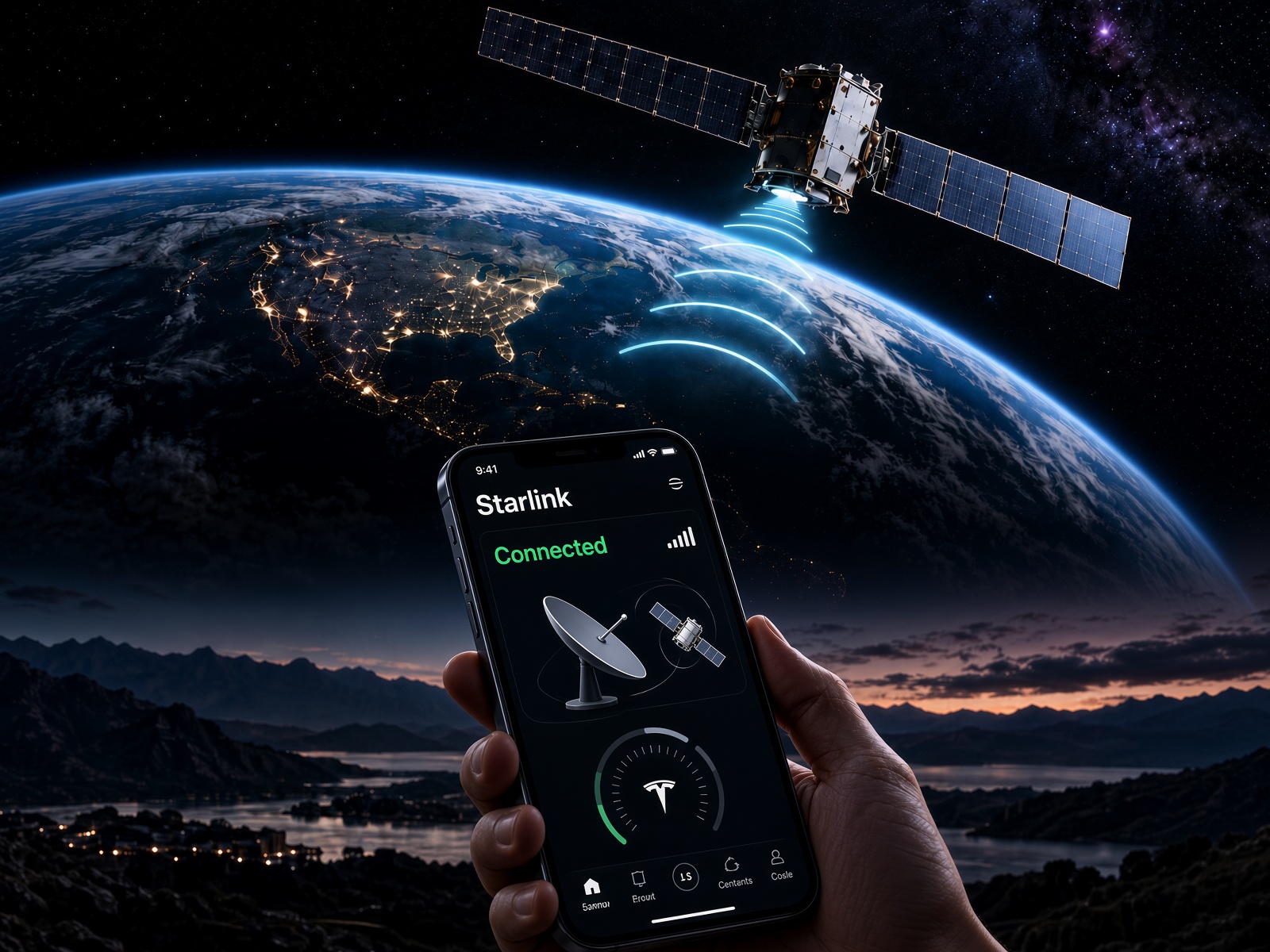
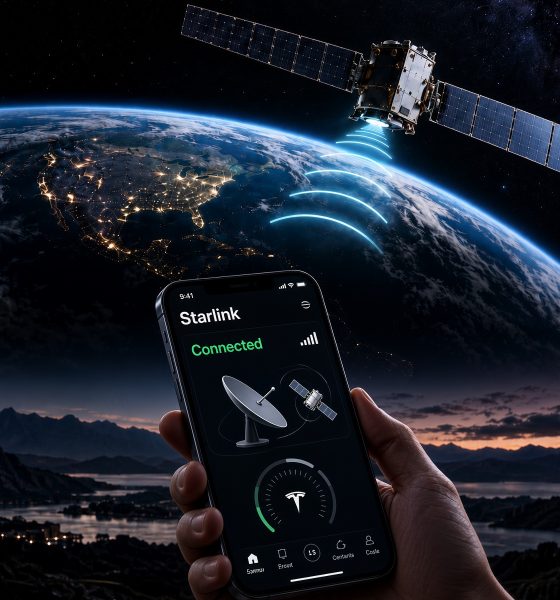
The Federal Communications Commission has voted to advance a transformative regulatory proposal that would unlock nearly 500 megahertz of additional spectrum for satellite-to-cellular communications, a move designed to accelerate the rollout of space-based mobile connectivity for ordinary smartphones. Adopted during the commission’s October open meeting in Washington, the Notice of Proposed Rulemaking (NPRM) seeks to expand the bands eligible for Supplemental Coverage from Space (SCS) from five to thirteen. This decisive step could fundamentally alter the telecommunications landscape, paving the way for SpaceX’s Starlink Mobile and competing satellite operators to deliver ubiquitous voice and data services directly to stock consumer handsets, even in the most remote corners of the globe.
The regulatory push comes at a critical juncture for the telecommunications industry, where traditional terrestrial carriers and ambitious aerospace companies are locked in a high-stakes struggle over spectrum allocation, market dominance, and the future of global connectivity. While the FCC’s recent vote does not immediately allocate any frequencies to private operators, it initiates a vital public comment period that will set the stage for final rulemaking. As the debate moves from commission chambers to industry boardrooms, the implications of this policy shift extend far beyond regulatory compliance, touching upon national infrastructure, multi-billion-dollar corporate acquisitions, and the technical feasibility of blending cellular and satellite networks.
Regulatory Chronology and the Path to the FCC Vote
The journey toward comprehensive satellite-to-cellular regulations has accelerated significantly over the past two years, marked by a series of pivotal administrative decisions, legal filings, and strategic corporate maneuvers. In 2024, the FCC initially established the framework for Supplemental Coverage from Space, allowing satellite operators to partner with terrestrial mobile network operators to bridge coverage gaps. However, that foundational framework was relatively restrictive, excluding certain high-capacity bands—such as the 2.5 GHz range—over concerns regarding interference with ground-based infrastructure.
Throughout 2025 and into 2026, the regulatory landscape shifted as satellite technology matured and aerospace firms sought greater operational independence. In April 2026, the commission dismissed a separate SpaceX petition seeking access to established Mobile Satellite Service spectrum held by incumbents, proving that the regulator’s path forward would require a balanced and deliberate approach. Momentum picked up significantly in October 2026: on October 6, the FCC cleared SpaceX’s ambitious blueprint for a next-generation constellation of 15,000 direct-to-cell satellites. Shortly thereafter, on October 21, the commission approved the acquisition of three unused AWS-3 licenses from Tristar.
Culminating this rapid sequence of events, the FCC adopted its latest NPRM on October 29, 2026, proposing to inject 482 MHz of additional spectrum into the SCS framework. Alongside this primary item, commissioners advanced a companion proposal to auction 25 MHz across the 1675–1695 MHz and 2020–2025 MHz bands, which could be designated for terrestrial use, direct-to-device services, or a hybrid of both. Under the draft guidelines, the public comment window remains open for 60 days following publication in the Federal Register, ensuring rigorous debate before permanent rules are codified.
Structural Overhauls and Corporate Maneuvers
Beyond the sheer volume of newly eligible spectrum, the proposed rule changes introduce a structural shift that could dismantle traditional operational barriers for new market entrants. Under legacy regulations, an aspiring satellite operator was mandated to secure spectrum leases from every individual wireless carrier holding co-channel licenses across an entire designated region, such as the contiguous United States. This requirement created immense logistical hurdles and placed substantial bargaining power in the hands of entrenched telecommunications giants.
The newly advanced FCC framework proposes to replace this cumbersome lease-everything mandate with a much more flexible certification process. Under the draft rules, a satellite provider would only need to prove that it holds valid coexistence agreements covering the specific geographic areas it intends to serve, or alternatively, that it owns the underlying terrestrial licenses outright.
Recognizing this strategic shift, SpaceX has aggressively pursued a policy of vertical integration in the spectrum market. Rather than relying entirely on cooperative lease agreements with third-party carriers, the aerospace company has expended billions of dollars to acquire its own nationwide spectrum portfolios. Notably, SpaceX finalized a multi-billion-dollar transaction to purchase EchoStar’s AWS-4 and H-block licenses. Furthermore, the company reached an agreement to acquire Grain Management’s nationwide 800 MHz portfolio, a move industry analysts view as the foundational step toward establishing Starlink Mobile as an independent nationwide mobile carrier. Company leadership, including SpaceX President Gwynne Shotwell, has publicly indicated that commercial services utilizing the company’s proprietary airwaves are targeted for an early 2028 debut.

Industry Pushback: The Battle Over Spectrum and Interference
The advancement of the FCC’s proposal has triggered fierce resistance from the United States’ dominant terrestrial wireless carriers—AT&T, Verizon, and T-Mobile. Operating through their industry lobbying organization, CTIA, the major carriers formally petitioned the commission to excise the 2.5 GHz and 3.45 GHz bands from the rule change. Together, these two disputed ranges account for 290 MHz, or more than 60 percent of the total 482 MHz under consideration.
The incumbent carriers argue that integrating satellite transmissions into these specific bands poses unacceptable technical risks to existing terrestrial networks. T-Mobile, which heavily relies on the 2.5 GHz spectrum as the backbone of its high-speed Ultra Capacity 5G network, submitted extensive technical filings warning that satellite interference could catastrophically impair ground infrastructure. According to T-Mobile’s internal engineering assessments, direct-to-cell transmissions in these frequencies could potentially wipe out up to 96 percent of a conventional cell site’s uplink coverage area, while simultaneously degrading uplink speeds by an estimated 88 to 99 percent.
Corporate executives have actively pressed their case with federal regulators. Leadership teams from AT&T, Verizon, and T-Mobile held high-level meetings with FCC staff, while T-Mobile CEO Srini Gopalan engaged directly with FCC Chairman Brendan Carr. This aggressive lobbying effort highlights a complex paradox: even as T-Mobile serves as SpaceX’s primary domestic launch partner for Starlink Mobile, it simultaneously spearheads the industrial coalition attempting to restrict satellite operations within critical mid-band frequencies.

Meanwhile, Verizon executives have publicly questioned the long-term economic and technical viability of space-based cellular networks. During a third-quarter earnings call, Verizon’s leadership asserted that satellite ventures cannot replicate the low latency, high data throughput, and reliability of dedicated terrestrial infrastructure, projecting that building an equivalent nationwide carrier network would require hundreds of billions of dollars and many years of development.
SpaceX Counter-Arguments and Broader Market Implications
In contrast to the incumbent carriers’ defensive posture, SpaceX has advocated for an even broader expansion of eligible frequencies. In formal filings submitted immediately preceding the commission’s vote, SpaceX urged the FCC to incorporate the 902 to 928 MHz band into the Supplemental Coverage from Space framework, arguing that early inclusion prevents regulatory delays down the line. Furthermore, the company has called upon regulators to modernize existing interference thresholds and align satellite deployment criteria with the operational standards governing ground-based cellular networks.
Market analysts note that the unfolding regulatory battle reflects a fundamental philosophical divide regarding the future of telecommunications. While legacy carriers view direct-to-device satellite communications as a supplementary emergency tool designed to fill rural coverage gaps, companies like SpaceX view it as the next evolutionary step in mobile connectivity—one capable of eventually replacing traditional cellular dead zones entirely.

The competitive arena is expanding beyond the SpaceX-versus-carriers dynamic. Concurrently, other major technology and aerospace conglomerates are positioning themselves for the direct-to-device era. Notably, the FCC recently approved Amazon’s $11.6 billion acquisition of Globalstar, granting Amazon’s burgeoning satellite initiatives direct access to dedicated mobile satellite spectrum. This consolidation underscores the immense financial and strategic value tied up in orbital communications.
As the FCC prepares to review public comments and formulate its final regulations following the October NPRM vote, the outcome will shape the competitive boundaries of the American telecommunications market for decades. Whether the regulatory framework ultimately accommodates the expansive spectrum requests of new aerospace entrants or protects the dense infrastructure of legacy terrestrial providers will determine how seamlessly the world transitions into an era where every smartphone is permanently connected to the stars.