







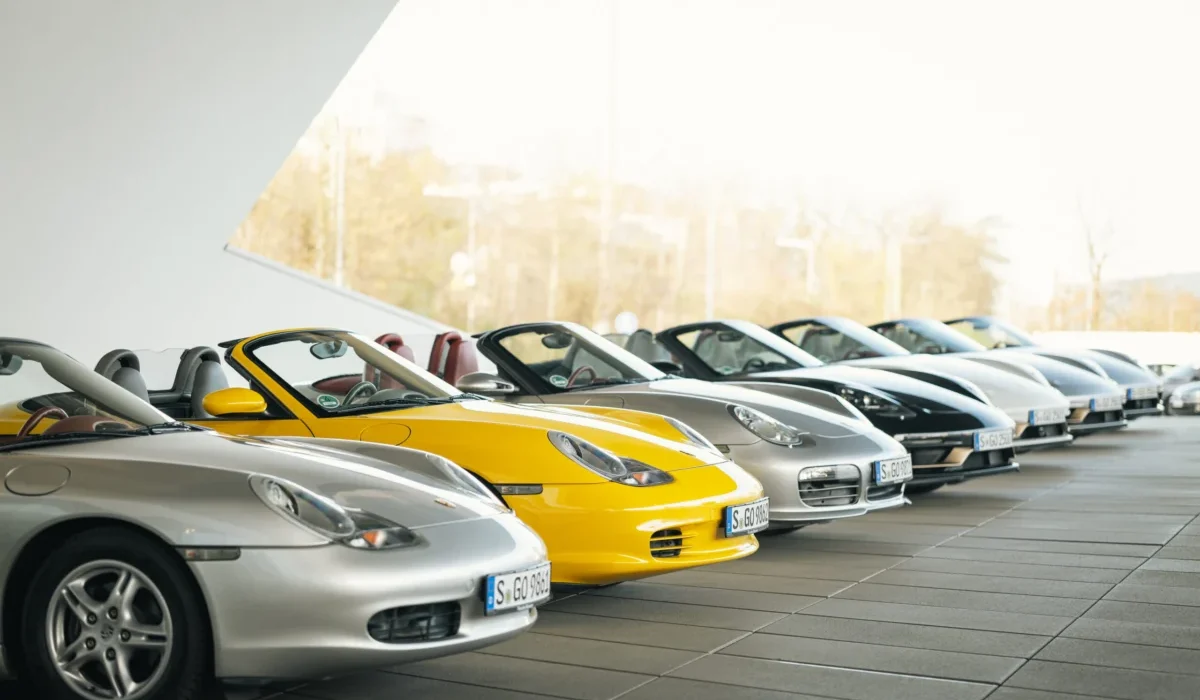
The Porsche brand has transcended its origins as a specialized engineering consultancy to become a global benchmark for automotive performance and luxury. While the company is perhaps most culturally recognizable for the 911 series—a staple of cinematic detectives and automotive enthusiasts alike—its modern portfolio encompasses an expansive range of vehicles, including mid-engine sports cars, high-performance SUVs, luxury saloons, and cutting-edge electric vehicles. Understanding the lineage of these vehicles requires a look back at the firm’s inception in Stuttgart, Germany, in 1931, when Ferdinand Porsche established the company to provide automotive development and design services.

A Chronology of Innovation
The history of Porsche is intrinsically linked to the development of the Volkswagen Beetle. After designing the iconic "People’s Car" for the German government in the 1930s, the firm utilized that mechanical DNA to produce the Porsche 64 in 1939, often cited as the spiritual predecessor to all subsequent Porsche sports cars. Following World War II, the company solidified its reputation with the 356 Roadster, which debuted in 1948. This was followed by the 550 Spyder in the 1950s, a vehicle that cemented the brand’s dominance on the racing circuit.

The 1960s marked a turning point with the launch of the 911, a rear-engine icon that remains the brand’s flagship. Throughout the 1970s, the company expanded its engineering horizons, introducing the 911 Turbo and the front-engine 928, a grand tourer that challenged the company’s traditional architectural preferences. The late 20th century saw the introduction of entry-level models like the 924, 944, and 968, which were designed to broaden the company’s market appeal. By the early 2000s, the introduction of the Cayenne SUV and the Boxster roadster signaled a strategic shift toward diversification, a move that proved vital to the company’s long-term financial viability.

The Flagship: The Porsche 911
The 911 represents the pinnacle of the Porsche identity. With over six decades of continuous production, the model has evolved through multiple internal generation codes, including the 930, 964, 993, 996, 997, 991, and the current 992. The 911’s versatility is defined by its extensive trim levels: the "Carrera" serves as the base, followed by performance-oriented "S" and "GTS" variants. For those seeking track-focused engineering, the GT3 and GT3 RS offer naturally aspirated, high-revving performance, while the "Turbo" variants provide forced-induction power.

The market for the 911 is as varied as its engineering. The 996 generation, produced from 1998 to 2005, is often cited by collectors as an entry point for enthusiasts due to its relative affordability on the secondary market. Conversely, the 911 GT1 Strassenversion—a rare, street-legal derivative of the brand’s Le Mans race car—represents the upper echelons of collector value, having fetched over $5.5 million at auction.

The Mid-Engine Contenders: Boxster and Cayman
The Boxster and Cayman represent Porsche’s commitment to mid-engine balance and handling precision. Introduced in the late 1990s, the Boxster was instrumental in rescuing the company from a period of financial instability. It shares significant components with the 911 of its era, yet offers a more accessible entry point into the brand. The Cayman, the hardtop coupe sibling to the Boxster, has garnered critical acclaim for its chassis dynamics. Many automotive journalists and purists argue that the Cayman’s mid-engine layout provides a more intuitive handling experience than the rear-engine 911, positioning it as a serious performance contender rather than a "budget" alternative. Both are currently grouped under the "718" designation, a nod to the company’s historic racing pedigree.

Grand Tourers and Historical Experiments
The Porsche 928 remains one of the most polarizing vehicles in the company’s history. Launched in 1977, it was an attempt to replace the 911 with a front-mounted, water-cooled V8 grand tourer. While it failed to replace the 911, the 928 developed a dedicated cult following. Its combination of luxury, high-speed stability, and an all-aluminum V8 engine made it a technological marvel for the late 1970s and 80s.

Similarly, the 924, 944, and 968 series played crucial roles in keeping the brand profitable during the late 20th century. The 944, in particular, is frequently highlighted for its balanced handling and represents a popular choice for those seeking a vintage Porsche experience without the higher cost of a 911.

Expansion into Luxury and Utility
In the 21st century, Porsche aggressively expanded into the SUV and luxury sedan markets. The Cayenne, launched in 2002, was initially met with skepticism by brand purists who feared it would dilute the manufacturer’s racing heritage. However, the Cayenne proved to be a commercial triumph, providing the capital necessary for the company to fund its continued research and development of high-performance sports cars. The Cayenne’s success in off-road endurance events, such as the Rally Transsyberia, further validated its performance credentials.

The Macan, a compact SUV, followed the Cayenne and has since become one of the brand’s best-selling vehicles globally. It bridges the gap between everyday utility and the agility associated with Porsche’s smaller sports cars. Furthermore, the Panamera, introduced in 2009, established Porsche as a competitor in the premium sports sedan segment, offering executive-level luxury alongside traditional Porsche power delivery.

Electrification: The Taycan and Beyond
The most recent chapter in Porsche’s history is defined by the transition to electric mobility. The Taycan, the brand’s first all-electric production car, has set new standards for electric vehicle performance. With its 800-volt architecture, it offers rapid charging capabilities and a level of handling consistency that distinguishes it from other electric performance sedans. The Taycan is positioned as a direct rival to other high-performance EVs, emphasizing the importance of build quality, interior ergonomics, and chassis tuning over mere straight-line speed. Porsche has also committed to an electric future for the Macan, signaling a broader intent to electrify its core product range.

Industry Implications and Market Analysis
The transformation of Porsche from a boutique sports car manufacturer to a diversified luxury conglomerate has significant implications for the automotive industry. By leveraging platform sharing across the Volkswagen Group—the parent company—Porsche has managed to scale its production while maintaining the profit margins that allow it to remain the most profitable segment of the group.

The data suggests that Porsche’s strategy of maintaining a "hero" model (the 911) while utilizing high-volume models (Cayenne and Macan) to drive revenue is a model that other luxury manufacturers have since attempted to emulate. Despite this diversification, the brand has successfully managed to retain its prestige. The "Porsche experience," characterized by superior steering feedback, braking performance, and interior material quality, remains the primary value proposition.

Looking forward, the brand faces the challenge of maintaining its "purist" appeal in an era of electrification and autonomous technology. However, if history is any indication, Porsche’s ability to adapt its engineering philosophy to shifting market demands—as seen in the evolution from the 356 to the Taycan—suggests that the manufacturer is well-positioned to maintain its status as a premier global automotive force. Whether through the timeless silhouette of a 911 or the instant torque of an electric motor, the brand’s core objective remains unchanged: the pursuit of precision, performance, and engineering excellence.