





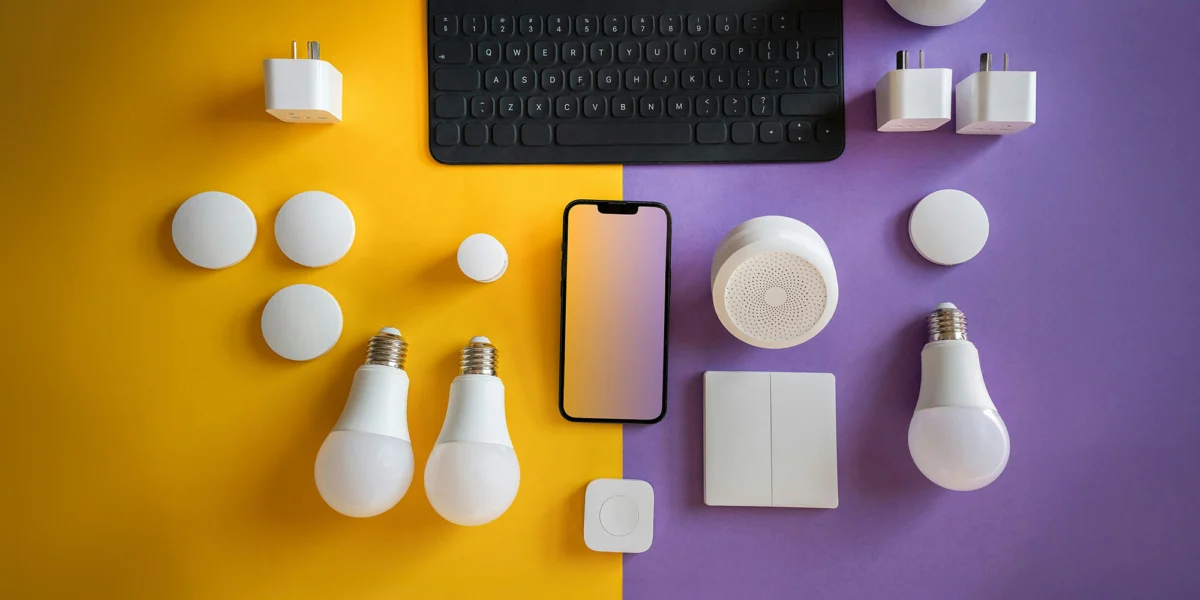



The modern smart home landscape has long presented a dichotomy for consumers: commercial ecosystems offer seamless out-of-the-box convenience at the cost of cloud dependency, privacy vulnerabilities, and vendor lock-in, while custom DIY hardware provides ultimate ownership and local control through platforms like Home Assistant and ESPHome, yet remains intimidating to beginners. Sourcing compatible microcontrollers, navigating complex wiring diagrams, soldering components onto breadboards, and debugging unfamiliar programming languages have historically created steep barriers to entry for non-engineers.
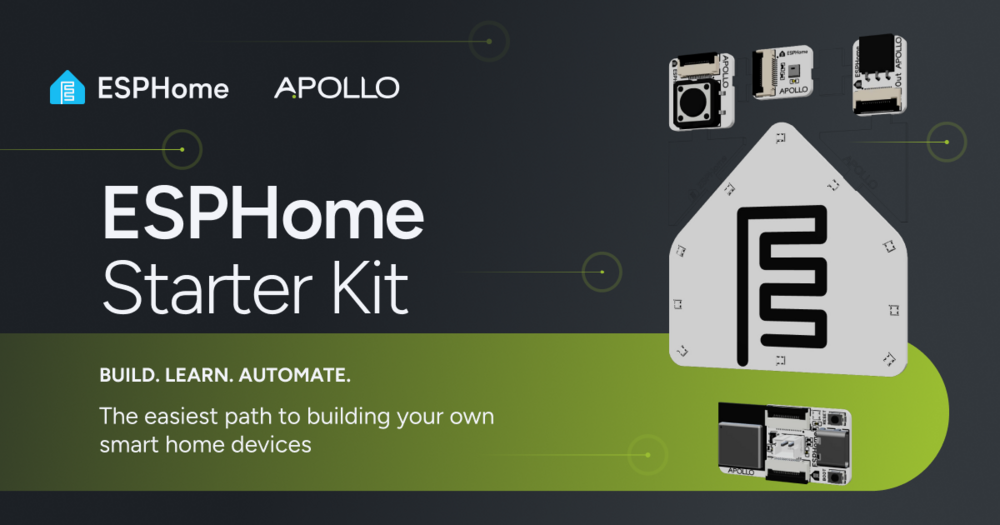
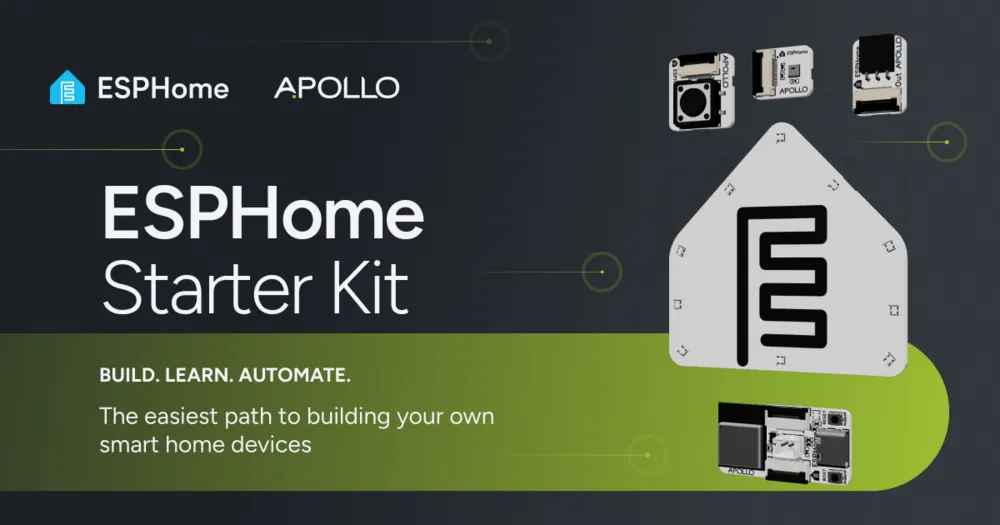
Addressing this persistent industry hurdle, the Open Home Foundation has officially released the ESPHome Starter Kit, developed in close collaboration with its second commercial partner, Apollo Automation. First previewed in April during the State of the Open Home 2026 broadcast, the commercially manufactured hardware package aims to democratize hardware creation. Designed to require zero prior experience with soldering irons, breadboards, or advanced coding, the kit bridges the gap between passive smart home consumption and active device creation, providing an approachable yet robust entry point into local automation.
Bridging the DIY Gap: Chronology and Development
The journey toward the ESPHome Starter Kit began with a growing recognition within the open-source automation community that hardware prototyping needed to evolve. While software ecosystems like Home Assistant and ESPHome matured into highly polished, user-friendly platforms capable of managing complex local automations, the physical layer of device creation remained tied to industrial electronics supply chains and developer-focused breakout boards.
Following the Open Home Foundation’s formal establishment to champion privacy, choice, and sustainability in the Internet of Things (IoT) sector, leadership sought commercial partnerships that aligned with these foundational principles. Apollo Automation, recognized for producing innovative open-source hardware sensors, emerged as the ideal partner to design and manufacture the inaugural official ESPHome product.
Throughout late 2025 and early 2026, engineering teams from both entities collaborated to refine a product that would eliminate friction points for beginners without sacrificing the functional utility demanded by experienced makers. The resulting hardware represents months of iterative design, moving from initial conceptual prototypes showcased during the April 2026 State of the Open Home address to full-scale manufacturing and commercial release.
Hardware Specifications and Component Breakdown
At the heart of the ESPHome Starter Kit lies the ESP32-C6 microcontroller, an advanced, highly efficient programmable chip functioning as the central processing unit for the user’s custom creations. The ESP32-C6 provides robust wireless connectivity options, enabling seamless local communication over modern open protocols. Unlike closed proprietary ecosystems that route telemetry data through external cloud servers, devices powered by ESP32 microcontrollers and managed via ESPHome operate entirely within the local network, ensuring complete user privacy and operational reliability independent of internet connectivity.
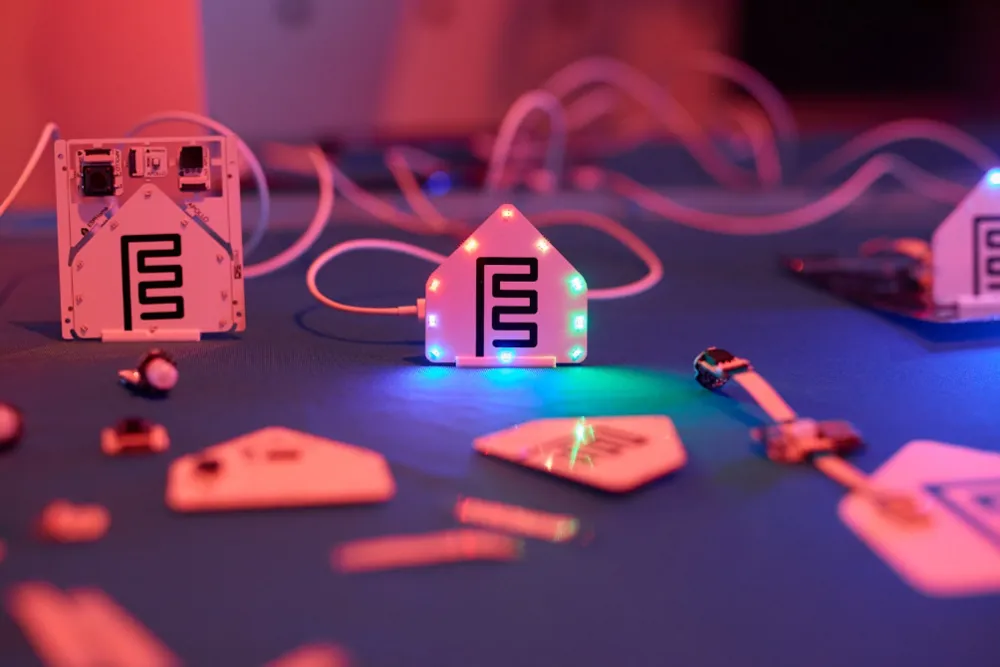
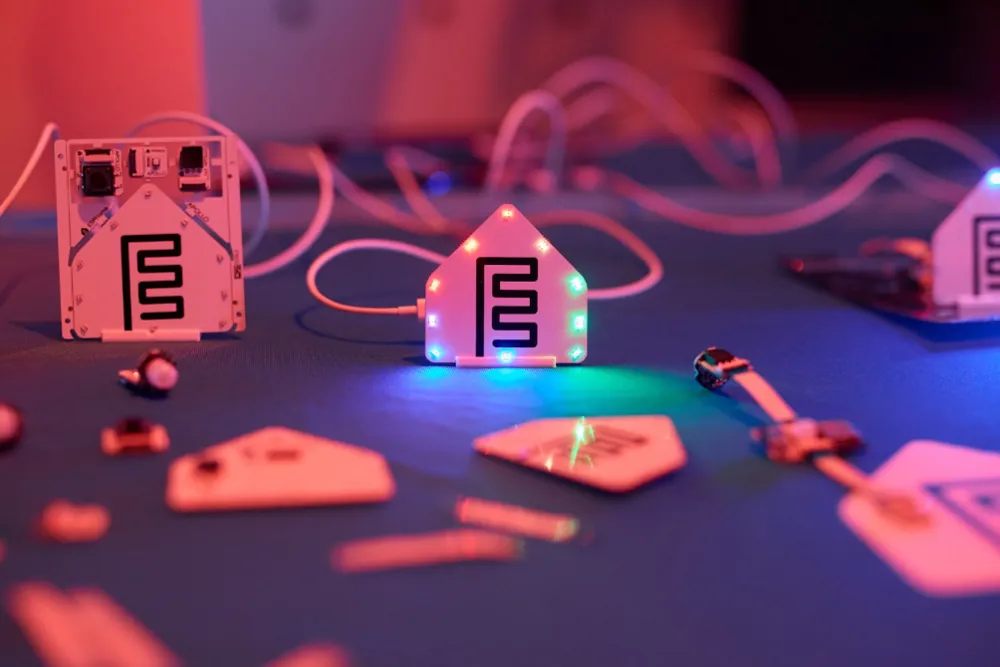
The physical architecture of the kit departs from traditional loose electronic components. Instead of individual sensors and wires scattered across a workbench, the hardware arrives on a snap-apart panel where each module is securely attached via small breakaway tabs. Users simply detach the required module and connect it to the main board using standardized flat ribbon cables.
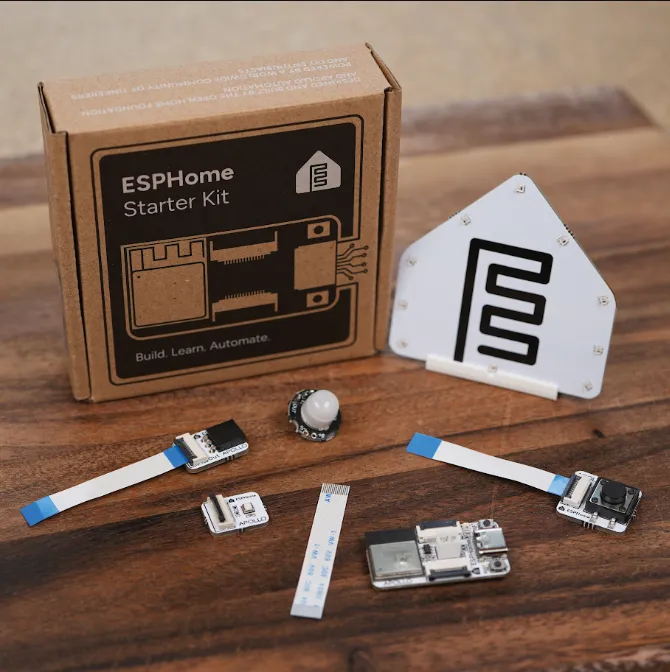
The initial hardware bundle includes four primary functional modules:
- A core main board powered by the ESP32-C6 microcontroller.
- A responsive motion sensor module designed for occupancy detection and automation triggers.
- A physical button module for manual control inputs and custom macro execution.
- A versatile notification module featuring a glowing, customizable LED array shaped into the official ESPHome logo.
- Durable ribbon cables, including a designated spare to account for wear or loss.
- A dedicated display stand engineered to house and showcase the notification module.
The system draws power via a standard USB-C connection, eliminating proprietary power adapters and adhering to universal hardware standards. Furthermore, the modular design ensures complete interchangeability; users can disconnect one module, snap on another, update the software profile, and instantly repurpose the physical hardware for an entirely different function.
Addressing Electronic Waste: Design Philosophy and Sustainability
A critical design mandate emphasized by both the Open Home Foundation and Apollo Automation was combating the prevalent culture of electronic waste associated with educational electronics. Standard learning kits frequently rely on ephemeral components that, once an introductory tutorial is completed, are relegated to storage drawers or discarded entirely.
To counteract this linear consumption model, every module included in the ESPHome Starter Kit is engineered to function as a permanent, deployment-ready smart home appliance. The modular enclosures and standardized communication protocols allow builders to transition seamlessly from temporary learning exercises to permanent household integrations.
Apollo Automation Co-Founder Trevor Schirmer emphasized this core tenet during the product’s rollout, highlighting the integration of sustainability into the hardware’s life cycle. According to Schirmer, the foundational goal was to ensure that builders retain genuinely useful devices long after the initial learning curve has flattened. Whether deploying the motion sensor to automate hallway lighting or configuring the LED notification module to signal active video conferencing calls within a household, the resultant hardware delivers immediate, practical utility.
Software Integration: The Learning Wiki and Revamped Device Builder
Hardware accessibility must be mirrored by software simplicity. To support users navigating their initial projects, the ESPHome Starter Kit is accompanied by two vital digital resources: an exhaustive educational documentation portal and a heavily revamped visual configuration interface.
The official Learning Wiki goes beyond standard assembly instructions, functioning as a comprehensive educational curriculum. It elucidates the underlying principles of electronic engineering, explaining how physical components interact with software logic. Rather than merely following a rigid instructional recipe, users acquire transferable foundational knowledge regarding circuit architecture, device flashing, and automation syntax.
Complementing the educational wiki is the newly updated ESPHome Device Builder. Designed to lower the threshold of entry for novices and experienced users alike, the device builder features an intuitive graphical interface that enables complete configuration and firmware compilation without requiring manual coding. While the underlying YAML configuration remains accessible for advanced developers wishing to fine-tune complex parameters, the visual builder abstracts routine setup tasks into straightforward interactive steps. Operating directly through a desktop application, the tool integrates smoothly with existing local Home Assistant instances, allowing newly assembled modules to be discovered and deployed within minutes.
Community Integration and Expansion Pathways
Building upon the robust open-source ethos of the broader automation movement, the ESPHome Starter Kit integrates users into an active ecosystem of developers and enthusiasts. Community engagement channels, including the official ESPHome Discord server, the Home Assistant community forums, and Apollo Automation’s dedicated support networks, provide collaborative spaces for troubleshooting, project inspiration, and peer-to-peer technical assistance.
As users exhaust the initial configurations provided by the four-core modules, the kit serves as a scalable foundation for more complex automation engineering. Potential integration pathways span a wide spectrum of domestic applications, including:
- Automated environmental monitoring systems utilizing external sensor expansions.
- Customized lighting controllers synchronized with real-time occupancy and ambient light levels.
- Interactive physical dashboards providing real-time visual alerts for household energy consumption, weather warnings, or security system states.
Economic Model and Broader Industry Implications
The commercial structure underpinning the ESPHome Starter Kit reinforces the nonprofit mission of its parent organizations. The majority of the profits generated from every kit sold are directly funneled back into the Open Home Foundation. These financial contributions support the ongoing development and maintenance of critical open-source infrastructure projects, including ESPHome, Home Assistant, and Music Assistant.
By tying commercial hardware sales directly to the sustainability of free software ecosystems, the initiative establishes a viable economic model for open-source hardware development. This approach contrasts sharply with traditional venture-backed IoT startups that rely on aggressive monetization of user data and closed proprietary ecosystems to achieve profitability.
As the smart home sector faces mounting scrutiny regarding data privacy, planned obsolescence, and cloud service terminations, the launch of the ESPHome Starter Kit marks a significant milestone. By successfully lowering the barrier to entry for local, private device creation, the Open Home Foundation and Apollo Automation have provided a scalable blueprint for the future of consumer electronics—one defined by user ownership, sustainability, and open standards.