



The tradition of holiday gift-giving has evolved significantly over the last decade, shifting away from disposable consumer electronics toward high-utility gear designed to facilitate shared experiences. As of November 2026, data from the Outdoor Industry Association indicates a 14 percent year-over-year increase in household spending on multi-generational outdoor equipment. This trend reflects a broader cultural pivot: families are increasingly prioritizing "experience-based assets" that encourage time spent in wilderness environments, a shift attributed to both the post-pandemic desire for nature immersion and the rising cost of traditional sedentary entertainment.

The following selection of twelve adventure-ready items highlights the intersection of modern engineering and family recreation, focusing on gear that removes the logistical barriers often associated with taking children into the outdoors.
The Evolution of Family Outdoor Recreation
Historically, the barrier to entry for family camping and hiking was significant, often defined by heavy, complex gear that required specialized knowledge to operate. However, manufacturers have recently shifted their design philosophy. According to market analysts, the "family-friendly" segment of the outdoor industry—which includes everything from cargo e-bikes to modular camping systems—has seen an investment surge of $2.2 billion since 2024. This evolution allows parents to extend the duration of trips and increase the comfort levels for younger children, effectively closing the gap between domestic comfort and wilderness exploration.

Precision and Play: Enhancing the Outdoor Experience
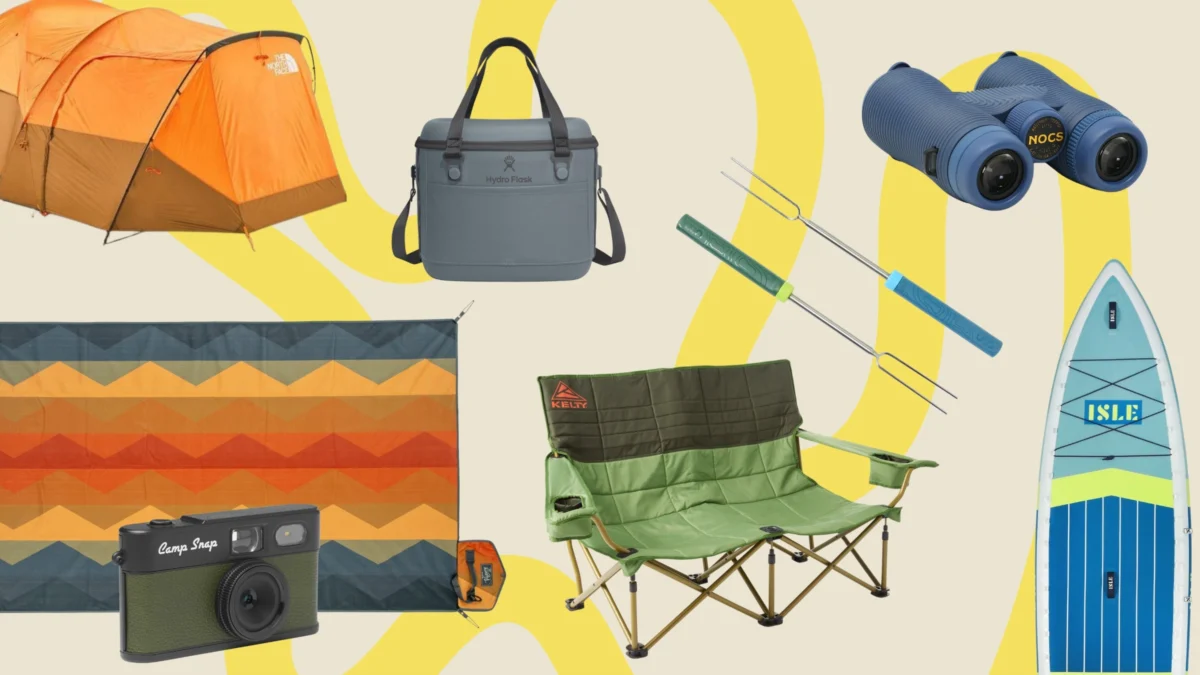
The modern outdoor kit is increasingly defined by its adaptability. For instance, the Nocs Field Issue 8x42mm binoculars represent a shift toward high-quality, durable optics that are accessible to all age demographics. By normalizing birding and wildlife observation as a central activity, families are reporting higher engagement levels during hiking excursions.
This sentiment is mirrored in the design of the ENO TrailFlyer, a portable, modular lawn-style game. By utilizing tension-based straps that attach to natural features like tree trunks, the game eliminates the need for bulky equipment, reflecting a design ethos that prioritizes portability—a critical factor for families with limited vehicle storage space.

Infrastructure for Mobility and Comfort
Logistics remain the primary challenge for families with children under the age of five. The integration of high-performance child carriers, such as the Deuter Kid Comfort, has transformed long-distance hiking into a viable activity for parents of infants. These packs are engineered with ergonomic suspension systems that distribute weight effectively, a necessity for sustaining multi-hour hikes.
Parallel to this is the recent development of the Jeep Wrangler Deluxe Stroller Wagon, a product that exemplifies the demand for hybrid utility. By combining the safety features of a stroller with the load capacity of an all-terrain wagon, this device allows for the transport of both young children and substantial gear across non-paved surfaces. Industry experts note that the inclusion of puncture-proof airless tires and UV-blocking canopies suggests a market shift toward "all-season, all-terrain" parenting solutions.

The Technological Shift: Digital Minimalism
While the market is flooded with high-tech gadgets, there is a counter-movement toward "screen-free" engagement. The Camp Snap 2.0 digital camera, which omits a digital screen, serves as a case study for this trend. By forcing users to focus on composition rather than immediate playback, it mimics the experience of analog film photography while retaining the convenience of a digital sensor. Market surveys conducted in early 2026 suggest that parents are actively seeking out such "minimalist" technology to mitigate the prevalence of screen time even during vacation periods.
Water Recreation and Logistics
In the realm of aquatic sports, the transition from rigid to inflatable technology has been transformative. The ISLE Switch 3 SUP-Kayak Hybrid serves as a primary example. By consolidating two distinct types of watercraft into a single, backpack-sized package, the product addresses the primary obstacle of water sports: transportation. For the average suburban family, the ability to store a functional boat in a closet rather than a trailer or roof rack significantly increases the frequency of use.

The Intersection of Camping and Convenience
The modern campsite is increasingly viewed as a temporary domestic space. This is evident in the popularity of the NEMO Victory Patio Blanket and The North Face Wawona 6 tent. The Wawona 6, in particular, has become a benchmark for "livable" camping, offering a standing-height interior and a vestibule area that functions as a mudroom. This design acknowledges that for families, the tent is not merely a place to sleep, but a base of operations that must accommodate gear management and weather protection.
Similarly, the Hydro Flask 15L Carryout Soft Cooler and the Kelty Low Loveseat prioritize long-term utility. The cooler, backed by a lifetime warranty, reflects a move toward sustainable, long-lasting products that reduce waste, while the dual-seat chair design facilitates the social aspect of camping, providing a centralized location for family interaction around a campfire.

Economic and Societal Implications
The move toward this specific category of equipment has broader economic implications. By investing in gear that allows for extended camping trips, families are reducing their reliance on commercial lodging, which has seen a 22 percent cost increase over the last three years. Furthermore, platforms like Hipcamp, which facilitate bookings on private land, represent a decentralization of outdoor tourism. By providing a digital bridge between private landowners and families, these platforms have alleviated pressure on over-crowded national and state park systems.
Transportation Trends: The Rise of Cargo E-Bikes
Perhaps the most significant development in family transport is the rise of the cargo e-bike, exemplified by the Aventon Abound LR. With a 750W motor and a payload capacity that supports multiple passengers, these bikes are increasingly replacing secondary family vehicles for short-range commutes and recreational outings. Data from the National Bicycle Dealers Association indicates that family-oriented e-bikes are currently the fastest-growing segment in the cycling industry. The ability to travel up to 60 miles on a single charge provides families with the range to access local trails or parks without the need for a fuel-powered vehicle, aligning with broader sustainability goals.

Conclusion and Outlook
The 2026 holiday season marks a point of maturity for the outdoor gear market. The focus has shifted from high-intensity, extreme-performance equipment to gear that emphasizes reliability, comfort, and, most importantly, accessibility for families. As these technologies continue to integrate into the mainstream, the barrier to entry for nature-based recreation continues to lower. The implication is a long-term shift in household habits, where the investment in high-quality gear acts as a recurring stimulus for outdoor activity, ensuring that the "nights under the stars" become a standard, rather than an occasional, feature of family life. By prioritizing items that are durable, portable, and conducive to shared interaction, families are not just buying products—they are building a foundation for a lifestyle centered on physical activity and environmental engagement.