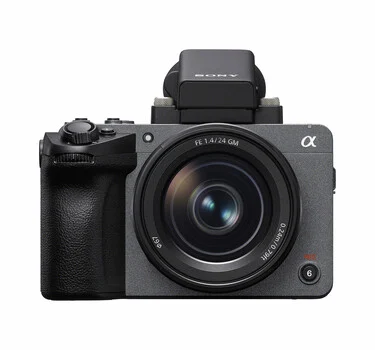
Sony has officially launched the ILME-FX5, a groundbreaking full-frame cinema camera poised to redefine creative possibilities for filmmakers and video professionals. Building upon the success and compact design principles of its predecessors, the FX5 introduces a suite of professional-grade features previously exclusive to Sony’s higher-end VENICE line, most notably internal RAW recording and Open Gate shooting capabilities. This strategic move by Sony aims to democratize advanced cinematic tools, offering creators unparalleled flexibility and image fidelity in a more accessible package.
The heart of the FX5 is a newly engineered, fully stacked Exmor RS CMOS image sensor, meticulously developed to deliver exceptional imaging performance. This sensor is complemented by the formidable BIONZ XR2 image processing engine and a dedicated AI processing unit, working in concert to unlock remarkable detail and dynamic range. Sony claims the sensor boasts an impressive 15+ stops of dynamic range when utilizing the S-Log3 gamma curve, a crucial metric for filmmakers striving for nuanced tonal gradations and the ability to recover details in both extreme highlights and deep shadows.
A significant advancement for the FX series is the introduction of three distinct base ISO settings: 800, 4,000, and 12,800. This multi-base ISO architecture is designed to optimize signal-to-noise ratio across a wider spectrum of lighting conditions. Users have the flexibility to manually select these base ISOs when operating in Cine EI and Flexible ISO modes. However, in the streamlined Cine EI Quick mode, the camera intelligently determines the optimal base ISO based on the selected Exposure Index, simplifying exposure management for on-the-go shooting.
Further enhancing the sensor’s capability is the new Dual Gain Shooting function, a first for the FX series. This innovative feature allows the camera to extract additional information from the sensor, resulting in smoother tonal gradations and expanded latitude. Crucially, it achieves this while simultaneously minimizing noise and preserving delicate shadow detail, a common challenge in low-light cinematography. While beneficial, the gain in Dual Gain Shooting is capped at an equivalent of 18 dB, and its availability is contingent on specific shooting configurations.
Pioneering Open Gate and Internal RAW Recording
The Sony FX5 marks a significant milestone by becoming the first camera in the FX line to offer Open Gate shooting. This capability allows for a full 3:2 pixel readout across the entire sensor, providing filmmakers with maximum image real estate. This is in addition to established scanning modes like 17:9, 16:9, and Super 35mm, offering a versatile palette for different aspect ratio requirements.
Perhaps the most impactful addition is the FX5’s ability to record internally in X-OCN, Sony’s proprietary 16-bit scene-linear RAW format, without the need for external recorders. This eliminates a significant point of complexity and potential failure in camera rigs, reducing cable clutter, power draw, and overall weight. The introduction of internal RAW recording addresses a long-standing demand from professionals seeking the highest level of image manipulation flexibility in post-production.
Alongside the existing X-OCN LT codec, Sony has introduced two new variants: X-OCN C1 and X-OCN C2. These new codecs are engineered to significantly reduce file sizes, thereby accelerating data transfer speeds and streamlining post-production workflows. This is a critical development, as RAW files, while offering unparalleled quality, are notoriously data-intensive. The optimized codecs aim to strike a balance between image fidelity and practical workflow efficiency.
At launch, the FX5 supports impressive frame rates, capable of capturing 5K resolution at up to 60 frames per second, 4K at up to 120 frames per second, and Full HD (FHD) at up to 240 frames per second. These high frame rate capabilities open up a wealth of creative options for slow-motion cinematography and dynamic action sequences.
Advanced Autofocus, White Balance, and Image Controls
Sony has equipped the FX5 with an AI-driven autofocus system that leverages human pose estimation. This advanced technology can recognize a subject’s eyes, head, and body, enabling the camera to maintain stable and accurate autofocus even in challenging low-light environments. The Real-time Tracking feature further enhances this by automatically following subjects as they move across the frame, ensuring critical focus is maintained without manual intervention.
The camera also features Auto Tracing White Balance, a sophisticated system that integrates visible light and infrared sensor data with deep-learning-based light source estimation. Sony asserts that this technology delivers more stable and natural white balance results, particularly in challenging conditions like shade, mixed indoor lighting, and other variable environments. This enhanced stability is specifically noted when recording in the X-OCN format, suggesting a synergistic relationship between the advanced white balance algorithms and the RAW data stream.
For creators who prioritize manual control, noise suppression can be toggled on or off to align with specific shooting intentions and post-production strategies. Furthermore, the FX5 includes a de-squeeze function that directly supports anamorphic lenses with magnification factors of 1.3x, 1.5x, 1.6x, 1.8x, and 2.0x, catering to filmmakers who favor the distinct aesthetic of anamorphic cinematography.
Robust Body, Advanced Stabilization, and Enhanced Monitoring
The FX5 incorporates a 5-axis optical in-body image stabilization system, a vital feature for handheld shooting and achieving smooth, cinematic footage. Sony claims that the latest stabilization unit offers approximately double the roll correction range compared to its predecessor, the FX3, based on internal testing. To further enhance handheld stability, the camera offers two modes: Active Mode and a new Dynamic Active Mode.
Dynamic Active Mode provides more aggressive stabilization by applying a greater crop to the image, while Active Mode offers a less restrictive crop and retains the use of Clear Image Zoom. Dynamic Active Mode is operational up to 60 fps with a maximum gain of 26 dB, whereas Active Mode can be utilized at frame rates up to 120 fps. It’s important to note that the availability of Dynamic Active Mode may vary depending on the selected codec and frame rate settings.
The camera features a larger 3.5-inch touch-panel LCD with approximately 2.76 million dots, offering a 16:9 aspect ratio and a more expansive viewing area than the FX3’s display. This screen is mounted on a versatile 4-axis multi-angle arm, allowing for tilt adjustments of approximately 98 degrees upward, 40 degrees downward, and an opening of roughly 180 degrees to the side. The panel is also high-brightness, ensuring visibility in various lighting conditions. To avoid obstructing the image, shooting information is strategically placed around the edges of the screen.
A significant user interface improvement comes with the implementation of the BIG6 home screen, a feature inherited from Sony’s prestigious CineAlta cameras. This centralizes critical settings such as frame rate, exposure, LUTs, and other essential parameters for quick access. Complementing this is a redesigned menu system that brings the FX5’s operability in line with CineAlta cameras and the FX6, facilitating a consistent user experience across Sony’s professional cinema camera lineup, which is particularly beneficial for multi-camera productions.
Power, Connectivity, and Operational Reliability
Long recording sessions are a staple of professional filmmaking, and Sony has addressed this with an integrated high-efficiency cooling fan and optimized heat dissipation design. This ensures the camera maintains stable performance even under demanding continuous use. The camera’s body is constructed from lightweight yet rigid materials, featuring multiple screw holes for direct accessory mounting, thereby reducing the need for a full camera cage in many scenarios.
Powering the FX5 is the recently introduced Sony NP-SA100 high-capacity battery, offering 2,670 mAh, which Sony states provides approximately 1.3 times the capacity of the widely used NP-FZ100 battery. This extended battery life is a crucial advantage for shooting on location and minimizing downtime.
Connectivity options are robust, with two USB Type-C ports supporting timecode input via an optional adapter cable and external power through USB Power Delivery. For remote operation and network connectivity, a wired LAN terminal is provided. The camera also integrates with the Monitor & Control application, enabling video monitoring and remote camera control via smartphones, tablets, and Mac computers, further enhancing its flexibility in various production environments.
Sony has also prioritized accessibility, incorporating a screen reader that reads menus aloud and an enlarged menu display option. While supported languages may vary by region, and not all menu items are covered by the screen reader, these features demonstrate a commitment to broader user inclusivity.
In a move towards greater sustainability, Sony has incorporated recycled plastic for approximately 30% or more of the camera body’s components. Furthermore, the manufacturing sites in Thailand and China operate on 100% renewable energy, though production site configurations may evolve over time. The accompanying product bags are made from plant-derived nonwoven fabric, signaling a commitment to environmentally conscious manufacturing practices.
Future-Proofing with Firmware Updates
Sony has announced a significant firmware update, Version 2.0, scheduled for release in 2027. This update is poised to unlock even greater potential for the FX5, introducing high frame rate shooting at up to 240 fps in X-OCN, 3:2 Open Gate recording in XAVC S-I, an optimized interface specifically for vertical shooting, and a frame grab function. While the initial launch provides a powerful set of features, this planned update indicates Sony’s long-term vision for the FX5’s capabilities.
Optional Accessories for Enhanced Workflow
To complement the FX5, Sony offers a range of optional accessories designed to enhance its functionality and user experience. The Sony DVF-EL1 is a detachable 0.58-type OLED viewfinder with approximately 7.07 million dots. It supports HDR display with a DCI-P3 equivalent color gamut and 10-bit gradation, offering a high-quality viewing experience. The viewfinder features a tilt mechanism and can be adjusted from 0 to approximately 90 degrees upward. However, it cannot be used concurrently with accessories attached via the Multi Interface Shoe, such as the handle unit.
The Sony XLR-H2 handle unit provides essential audio connectivity, featuring two XLR/TRS combo terminals and support for up to 4-channel audio input. Its dual AD converters digitize microphone signals across a wide dynamic range, enabling in-camera recording at up to 96 kHz, 32-bit float. This unit connects directly to the camera body through the Multi Interface Shoe for seamless digital audio transmission.
For professional multicamera and synchronized shooting workflows, the Sony VMC-BNCU1 is an optional USB-C to BNC timecode adapter cable. This adapter allows for timecode input from external devices, facilitating precise synchronization between multiple cameras and external audio recorders, crucial for broadcast and high-end filmmaking.
Supporting Software Ecosystem
Sony is also committed to providing robust software support for the FX5. Monitor & Control version 3.0, slated for release in July 2026 or later, will enable wired and wireless video monitoring and comprehensive camera control. Furthermore, Catalyst Prepare version 3.0, expected in August 2026 or later, will merge the functionalities of Catalyst Prepare and Catalyst Browse into a single, unified application. This integrated software suite will offer advanced video stabilization and color editing tools, streamlining the post-production process.
Price and Availability
The Sony ILME-FX5, bundled with the XLR Handle Unit, is scheduled to begin shipping in mid-August with a suggested retail price of $5,499.99 USD / $6,999.99 CAD. The ILME-FX5B body-only configuration will also be available in mid-August for $4,899.99 USD / $6,299.99 CAD.
Industry Perspectives and Creator Feedback
Yang Cheng, Vice President of Imaging Solutions at Sony Electronics Inc., articulated the company’s vision for the FX5: "We wanted to build on the FX3, taking it one step further with the inclusion of some VENICE 2 features, like internal RAW recording and Open Gate. Features like these have been highly requested and will allow creators more creative freedom with an easier workflow." This statement highlights Sony’s intent to bridge the gap between its consumer-oriented cinema cameras and its flagship professional models.
Cinematographer Claudio Miranda, ASC, known for his work on "Top Gun: Maverick" and "F1 The Movie," provided early feedback following a test shoot: "I felt that FX5 is a camera that combines high quality image expression and mobility in a compact body, enabling people to use it across a wide range of shooting environments." His endorsement underscores the camera’s suitability for diverse production scenarios.
Director Gareth Edwards, whose directorial credits include "The Creator," "Rogue One: A Star Wars Story," and "Jurassic World: Rebirth," utilized the FX5 on a project spanning Cambodia, Thailand, and Nepal. He commented, "Guerrilla filmmaking just went to the next level as the FX5 is the run-and-gun cinema camera to beat." His experience suggests the FX5 excels in fast-paced, challenging shooting environments.
Implications for Video Creators: A Paradigm Shift
The introduction of Open Gate and internal X-OCN recording on the FX5 represents more than just incremental spec bumps; they address fundamental production challenges and unlock new creative avenues.
Open Gate shooting is a game-changer for creators delivering content across multiple platforms. By capturing the full 3:2 sensor area, a single take can be seamlessly reframed in post-production for various aspect ratios, including 16:9 for broadcast, 17:9 for cinematic presentations, 9:16 for vertical social media content, and even square formats. This capability significantly consolidates production workflows, eliminating the need for separate camera setups or additional shooting days to accommodate diverse delivery requirements. Moreover, the extra sensor area provides valuable headroom for stabilization and post-production reframing without compromising image quality.
Internal RAW recording fundamentally alters the post-production workflow by removing the reliance on external recorders. This translates to fewer cables, reduced power consumption, lighter camera rigs, and a minimized risk of equipment failure, especially critical for handheld or gimbal-mounted operations. For documentary filmmakers and those engaged in run-and-gun styles of shooting, where agility and speed are paramount, this simplification is a meaningful practical advancement. The new X-OCN C1 and C2 codecs directly address the traditional drawback of large RAW file sizes by offering reduced data rates, leading to shorter transfer times, lower storage requirements, and faster project turnaround.
The camera’s three base ISOs and Dual Gain Shooting functionality expand its effective dynamic range and low-light performance without introducing excessive noise. This is particularly beneficial for shooting in mixed or uncontrolled lighting conditions where precise exposure can be challenging.
The consistent menu structure with CineAlta and FX6 cameras offers a less obvious but highly valuable benefit in multi-camera productions. Operators transitioning between different Sony camera bodies can do so with greater efficiency, minimizing lost time due to learning new menu layouts. Similarly, the integration of 32-bit float audio recording via the optional XLR-H2 accessory significantly reduces the risk of unusable audio, especially in situations where a dedicated sound recordist may not be present.
For photographers venturing into video production, the FX5 occupies a compelling price point, positioned above hybrid mirrorless cameras but below high-end dedicated cinema cameras. It effectively brings professional cinema imaging features, previously exclusive to cameras like the VENICE 2, into a form factor that can be operated by a single individual.
Conclusion: Bridging the Gap, Elevating Creativity
The Sony FX5 represents a significant step in bridging the capabilities of Sony’s compact cinema camera line with its professional VENICE series. The integration of Open Gate capture and internal X-OCN recording, features that historically distinguished the FX6 from the VENICE line, now reside within a body designed for lightweight, solo operation.
While the initial launch frame rates are robust, the promise of even greater performance with the 2027 firmware update, including 240 fps X-OCN and 3:2 XAVC S-I recording, suggests a future-proof investment for early adopters. The strategic decision to defer some of these high-end features to a later firmware release does mean that the full potential of the camera will not be realized immediately upon purchase.
Ultimately, the competitive positioning of the FX5 will be determined by market response and its perceived value proposition against other offerings. However, as a comprehensive package for creators who demand cinema-grade image capture without the requirement for a large crew or extensive infrastructure, the FX5 stands as a substantial advancement over its predecessors, offering a potent blend of professional features and user-friendly design.