







The indispensable utility of satellite communication networks was brought to the forefront once again when SpaceX CEO Elon Musk publicly praised Starlink for its role in coordinating a critical mountain rescue in eastern Kazakhstan. The incident, which took place in October 2026, involved five individuals whose vehicle suffered a mechanical failure in a remote and treacherous geographical pocket devoid of traditional cellular infrastructure. By bridging the vast communication gap between the stranded travelers and local emergency services, the satellite constellation proved instrumental in facilitating a swift and successful recovery operation.
This recent endorsement by Musk underscores the expanding global footprint of SpaceX’s broadband network, arriving amidst a flurry of milestone developments across the billionaire entrepreneur’s technological ecosystem. While Starlink continues to cement its reputation as a vital lifeline in emergency management and disaster response, sister company SpaceX is simultaneously gearing up for its most complex orbital launch test to date. Furthermore, corporate adjustments at Tesla are reflecting an aggressive corporate realignment aimed at prioritizing autonomous transport solutions over legacy manufacturing lines.
Anatomy of a Mountain Rescue in Kazakhstan
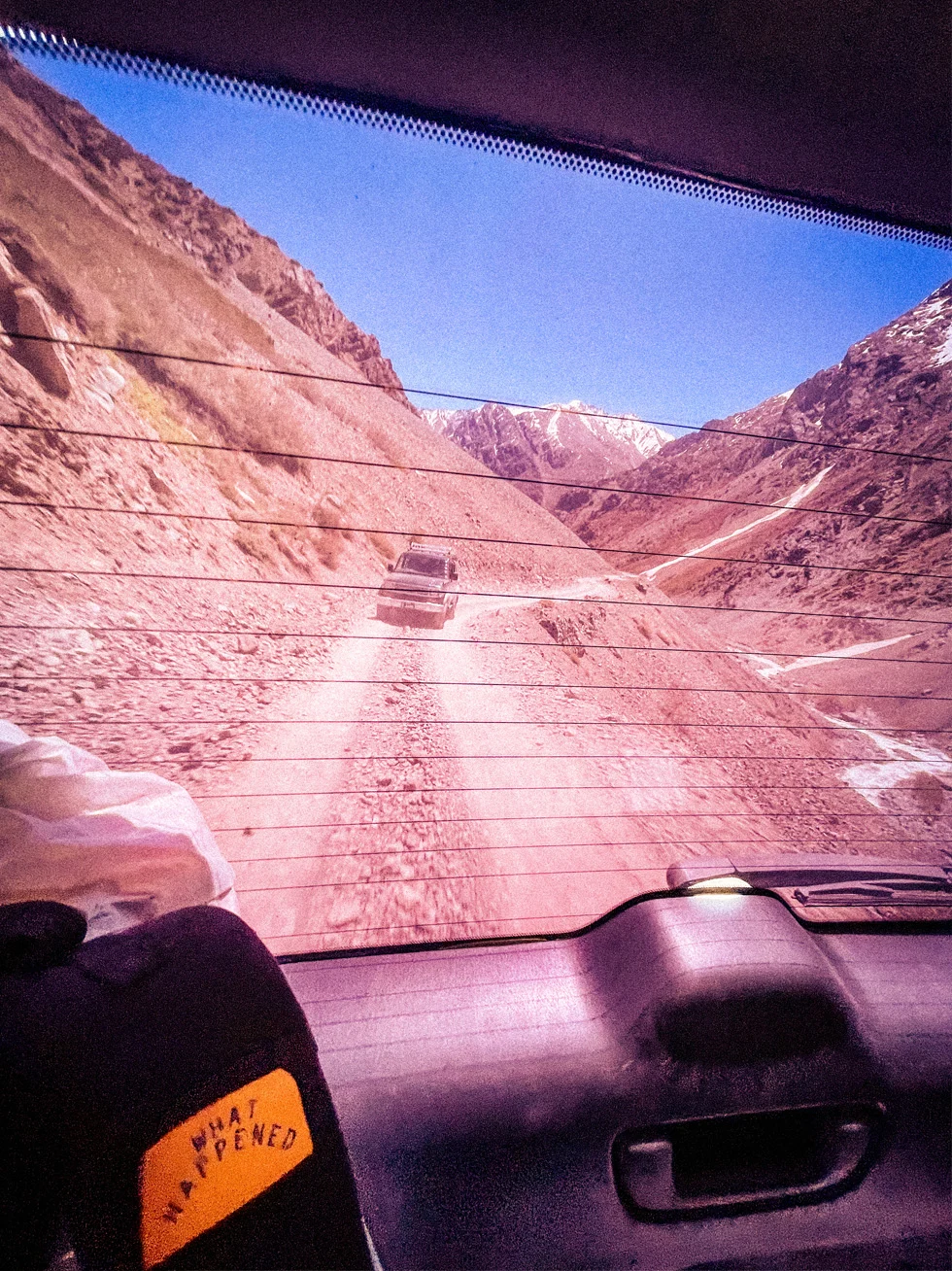
The harrowing ordeal began when an SUV carrying five individuals—identified by local broadcasters as hunters—broke down roughly 15 kilometers away from the village of Kystau Kurchum in the Kurchum district of the East Kazakhstan region. The area is notorious for its rugged terrain and severe weather patterns, and at the time of the breakdown, a regional storm warning was actively in effect. Crucially, the location suffered from a complete absence of usable terrestrial mobile networks, leaving the travelers isolated amid rapidly deteriorating atmospheric conditions.
Fortunately, the group was equipped with a Starlink terminal, which bypassed the terrestrial dead zone to transmit an emergency call for help. This vital connection allowed the travelers to maintain continuous communication with the Kazakhstan Ministry of Emergency Situations, transmitting precise coordinate data that enabled rescue teams to locate them accurately.
The subsequent rescue operation required specialized equipment capable of navigating the harsh winter environment. Local emergency responders deployed a Trekol—a specialized low-pressure tire vehicle engineered specifically to traverse deep snow and marshland. Rescuers journeyed approximately 100 kilometers to reach the stranded group before safely escorting the disabled SUV back to Kystau Kurchum. According to official reports from the East Kazakhstan emergency department, the operation concluded without any injuries, and none of the rescued individuals required medical attention.

The adverse weather conditions that trapped the hunters were part of a broader meteorological event sweeping the region. Kazakh broadcaster Channel 7 noted that local authorities had issued severe weather alerts, strongly advising residents to remain within populated areas. The same storm system temporarily stranded seven utility workers who were deployed in the nearby Kuygan rural district to repair damaged power lines, highlighting the severe hazards posed by the regional climate and the critical importance of reliable communication channels during emergencies.
Starlink’s Growing Humanitarian Footprint
The incident in Kazakhstan is merely the latest in a growing portfolio of emergency scenarios where Starlink has functioned as an indispensable asset for search and rescue operations. Over the past several years, the satellite internet constellation has repeatedly filled critical gaps during natural disasters and remote emergencies where ground-based telecommunications infrastructure has suffered catastrophic failure or never existed.
In the United States, municipal and state officials have increasingly relied on the network during extreme weather events. Following the devastation wrought by Hurricane Milton in Florida, state Chief Financial Officer Jimmy Patronis publicly designated Starlink as a "game changer" for search and rescue teams navigating flooded and structurally compromised regions. Similarly, in the wake of Hurricane Helene, SpaceX and T-Mobile rapidly deployed Starlink Direct to Cell capabilities in North Carolina, pushing emergency alerts and vital connectivity directly to standard mobile devices in areas stripped of traditional utility support.

Beyond emergency response, Starlink has established a profound commercial and institutional presence in Central Asia. Kazakhstan, in particular, has emerged as one of the network’s most notable regional adopters. In 2024, implementation efforts saw Starlink deployed to serve 1,731 out of the country’s 1,879 schools. The nation’s Ministry of Education formally praised the integration, noting that the satellite infrastructure had successfully established an entirely new benchmark for internet service quality and reliability across rural and underserved educational institutions.
Looking toward the future, SpaceX is aggressively working to eliminate communication dead zones for users who do not possess dedicated satellite dishes. The company is actively building out its Starlink Mobile architecture. As part of this terrestrial integration strategy, SpaceX recently selected Qualcomm to supply core infrastructure components for a planned terrestrial 5G network within the United States. This ground-based network infrastructure is intended to operate in tandem with the next-generation satellite constellation, promising seamless connectivity between standard cellular hardware and orbiting payloads.
SpaceX Targets Historic Dual-Catch on Starship Flight 15
While Starlink continues to demonstrate its humanitarian value on the ground, SpaceX’s aerospace division is preparing for a watershed moment in the history of rocket reusability. The company is actively targeting Friday, November 13, 2026, for the launch of Starship Flight 15 from Orbital Launch Pad 2 at Starbase, Texas, with a 75-minute window opening at 4:45 p.m. Central Time, pending regulatory clearance from the Federal Aviation Administration (FAA).

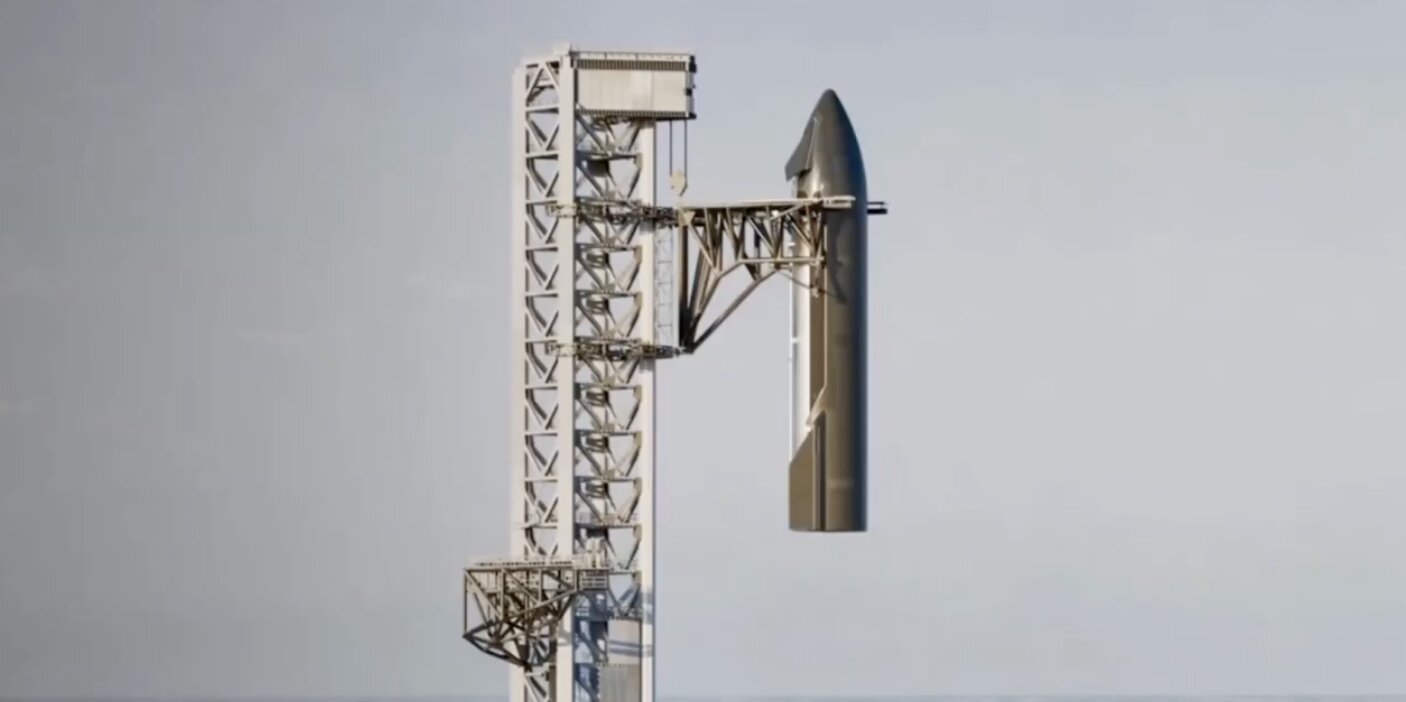
Flight 15 represents a massive logistical and engineering leap forward. According to announcements made by Elon Musk and SpaceX Vice President of Launch Kiko Dontchev, the mission will feature an unprecedented double-catch attempt. SpaceX plans to recover both the Super Heavy booster and the Starship upper stage using the mechanical arms of the launch tower—colloquially known as "Mechazilla’s chopsticks."
While SpaceX has previously demonstrated the tower-catch technique with the Super Heavy booster on flights 5, 7, and 8, the upper stage ship has never been successfully caught upon return. Bringing the Starship upper stage back from orbital velocity introduces exponentially higher energy loads, intense thermal friction during atmospheric reentry, and the complex execution of a belly-flop maneuver, followed by an aggressive flip and landing burn.
The flight profile for Flight 15 is meticulously planned. Using Booster 22 and Ship 42—both advanced Block 3 vehicles—the Super Heavy booster is expected to separate and return for a tower catch approximately 6 minutes and 35 seconds after liftoff. Meanwhile, the Starship upper stage will insert into an orbital trajectory of roughly 275 kilometers, where it will deploy a payload of 26 advanced Starlink V3 satellites. Following roughly 14 orbits spanning over 22 hours, the ship will initiate a deorbit burn, navigate atmospheric reentry, execute its flip maneuver, and target a tower catch at approximately T+22 hours and 32 minutes.

Musk has characterized the probability of success for this inaugural dual-catch attempt as "more likely than not," emphasizing that full recovery and rapid turnaround of orbital-class hardware are essential prerequisites for slashing launch costs. This capability is viewed as the fundamental cornerstone required to support the high launch cadence demanded by large-scale satellite deployments, future lunar missions, and eventual human settlement on Mars.
Tesla Realigns Strategic Priorities to Scale Cybercab Production
Simultaneously, within the automotive sector, Tesla is executing a profound structural pivot that underscores its long-term commitment to autonomous transport. Company leadership recently announced plans to phase out the Cybertruck production lines at Giga Texas, reallocating valuable factory floor space, specialized machinery, and engineering talent toward the mass manufacturing of the Tesla Cybercab.
This strategic reallocation has sparked considerable debate among automotive enthusiasts and retail investors, but Musk has defended the move as a mathematical and economic necessity. Maintaining complex production lines and supply chains for multiple divergent vehicle architectures constrains the deployment of finite engineering resources. By consolidating its manufacturing focus, Tesla aims to aggressively scale the Cybercab, which leadership views as the primary vehicle platform designed to fundamentally disrupt and transform global terrestrial transport.
In tandem with the production shift, Musk revealed forthcoming engineering refinements destined for the autonomous platform. Efficiency improvements are slated to allow for a reduced 40-kilowatt-hour battery pack in the Cybercab, down from the 48-kilowatt-hour architecture utilized in initial deployment iterations within Austin, Texas. Through advanced cell engineering and vehicle weight reduction, Tesla aims to maintain identical operational ranges and workloads with fewer cells. Additionally, to combat aesthetic monotony in commercial fleets, the automaker announced that the production models will be offered in a striking "liquid silver" finish.
Broader Implications and Technological Convergence
The confluence of events highlighting SpaceX’s satellite connectivity, its aggressive aerospace reusability roadmap, and Tesla’s autonomous vehicle pivot paints a clear picture of an industrial empire optimizing for scale and systemic integration.
The humanitarian success in Kazakhstan and the repeated emergency deployments of Starlink reinforce the commercial viability and societal utility of space-based broadband infrastructure. Simultaneously, the impending milestone of Starship Flight 15 threatens to permanently alter the economics of orbital access, turning science fiction into operational reality through full-system reusability. On the terrestrial front, Tesla’s uncompromising focus on the Cybercab signals an industry-wide transition away from traditional consumer-owned vehicle paradigms toward centralized, autonomous mobility networks.

As Musk continues to iterate his vision across multiple sectors—frequently marking milestones with concise pronouncements like "Starlink saves lives"—the broader technological apparatus is systematically removing the barriers of distance, cost, and logistics that have historically limited human mobility and communication. Whether through a satellite signal guiding rescuers through a snowbound mountain pass in Central Asia or autonomous fleets transforming urban transport in Texas, the interconnected ecosystem built by Musk’s enterprises continues to redefine the boundaries of modern engineering.