The annual release of Apple’s flagship wearable devices brings consumers face-to-face with a familiar dilemma: choosing between the standard-setting mainline Apple Watch Series and the rugged, expedition-focused Ultra line. With the introduction of the Apple Watch Series 12 and the Apple Watch Ultra 4, Apple has once again delivered a product ecosystem where software parity is remarkably high, yet hardware differentiation remains stark. Wearing both devices side-by-side across various testing environments reveals a complex landscape of shared innovations and distinct physical advantages, forcing potential buyers to carefully weigh pricing, physical dimensions, durability standards, and specific operational capabilities against their daily lifestyle demands.
Background Context and Product Evolution
The strategic positioning of Apple’s smartwatch lineup has evolved significantly since the inception of the original Apple Watch. While early iterations focused primarily on general fitness tracking and smartphone notifications, recent generations have bifurcated into distinct market segments. The mainstream Series line—now in its twelfth generation—caters to the everyday user, emphasizing health monitoring, sleek aesthetics, and seamless integration into the broader iOS ecosystem. Conversely, the Ultra line, introduced to capture the high-end outdoor sports and extreme-condition market, targets endurance athletes, divers, and backcountry explorers who require extended battery life and specialized physical durability.
The release of the Series 12 and the Ultra 4 continues this trajectory, leveraging a shared silicon foundation—the S11 System in Package (SIP) featuring a 4-core Neural Engine—to deliver identical artificial intelligence and machine learning capabilities. These include advanced audio intelligence features, real-time sound recognition, offline Siri processing, and expanded health metrics. However, the physical implementations of these devices diverge significantly, driven by divergent design philosophies. Where the Series 12 maintains a sleek, contoured profile suited for professional and casual environments, the Ultra 4 employs an uncompromised structural approach engineered to withstand extreme environmental stress, military-grade durability certifications, and deep-water exploration.
Comprehensive Pricing Structure and Configuration Options
Financial considerations frequently serve as the primary filter for consumer purchasing decisions within the smartwatch market. The pricing architecture established for the Series 12 and Ultra 4 reflects their respective target audiences, though material choices and connectivity options introduce significant overlap in the mid-to-high tiers of the pricing spectrum.
The base pricing model for the Apple Watch Ultra 4 is set at $799 USD, a figure that includes a titanium case and mandatory cellular connectivity. In contrast, the entry-level Apple Watch Series 12 starts at $399 USD for the 42mm aluminum model with GPS-only capabilities, while the larger 46mm aluminum variant is priced at $449 USD.
When configuring the Series 12 with cellular capabilities, the cost structure adjusts accordingly:
- Apple Watch Series 12 Aluminum (42mm, Cellular): $499 USD
- Apple Watch Series 12 Aluminum (46mm, Cellular): $549 USD
- Apple Watch Series 12 Titanium (42mm, Cellular): $699 USD
- Apple Watch Series 12 Titanium (46mm, Cellular): $749 USD
- Apple Watch Series 12 Ceramic (42mm, Cellular): $899 USD
- Apple Watch Series 12 Ceramic (46mm, Cellular): $949 USD
This pricing overlap illustrates that consumers interested in premium materials such as titanium or ceramic for the Series 12 can easily equal or exceed the base cost of the Ultra 4. Consequently, the purchasing decision shifts away from mere economics and toward a choice between luxurious case finishes coupled with a sleeker profile versus utilitarian ruggedness, extended battery performance, and specialized hardware features.

Hardware and Design Divergence
While the internal processing units and software features of both watches share an identical pedigree, the physical hardware highlights the most profound differences between the two models. These structural variances dictate everything from daily wearability to survival capabilities in emergency scenarios.
Case Dimensions and Materials
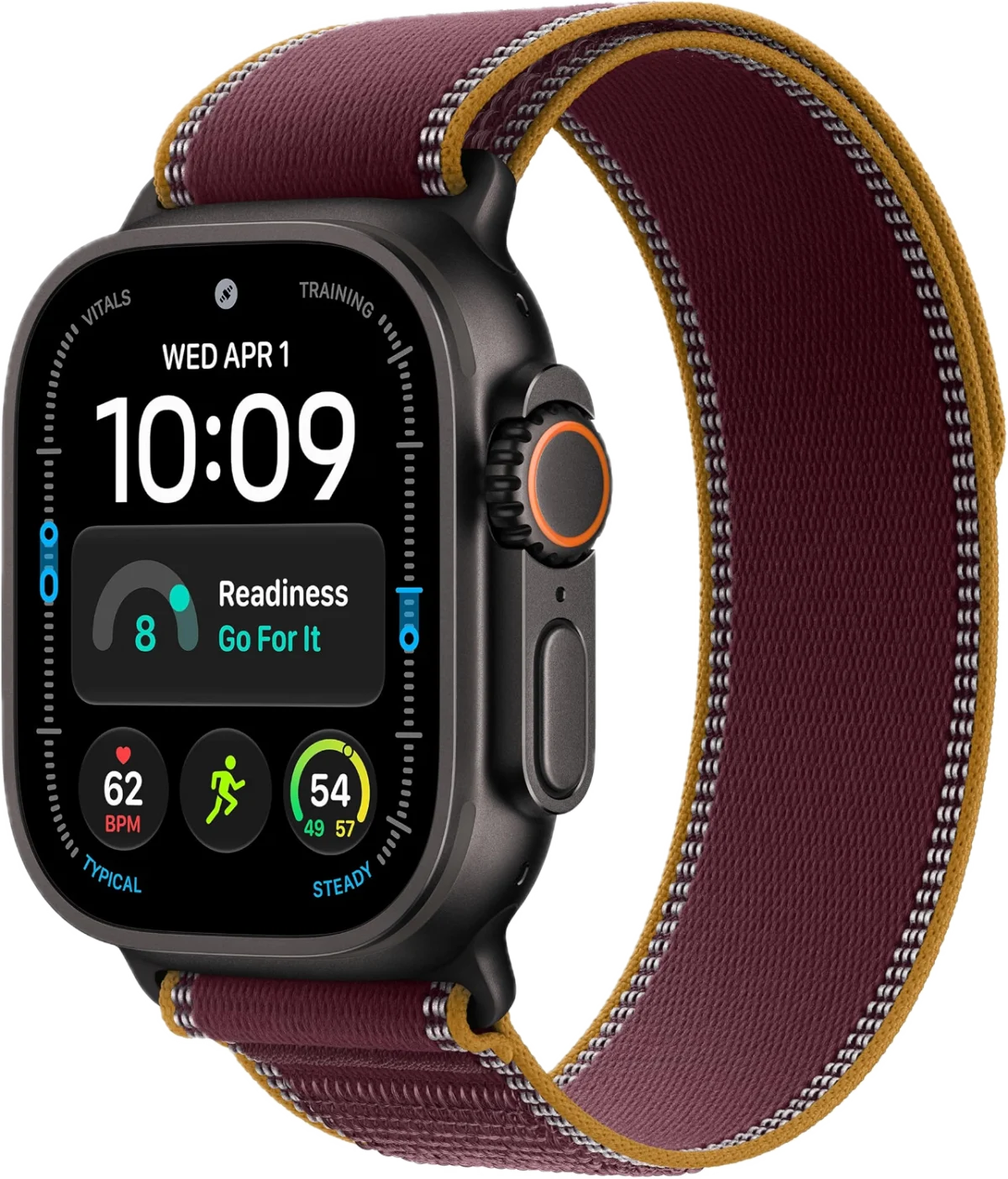
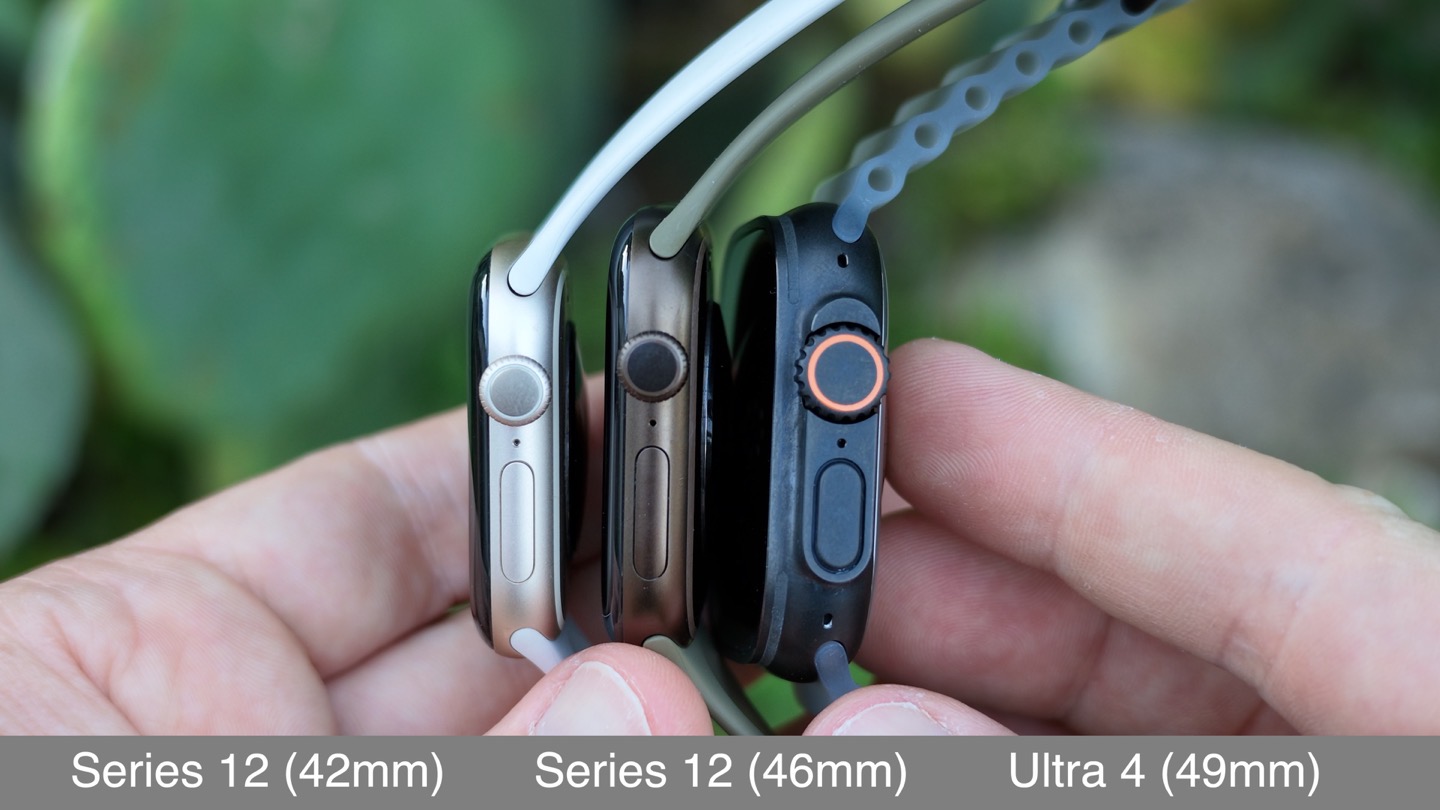
The Apple Watch Ultra 4 features a substantial 49mm aerospace-grade titanium case with a flat sapphire crystal display, guarded physical buttons, and a prominent button guard surrounding the Digital Crown. The Ultra 4 also offers a specialized Black Titanium finish treated with a protective Diamond-Like Carbon (DLC) coating. Conversely, the Series 12 is offered in more compact 42mm and 46mm case configurations, utilizing a base aluminum chassis protected by CeramicShield 2 glass—which Apple states is 60 percent tougher than previous Ion-X glass—alongside optional premium titanium and ceramic editions. The Series 12 profile is markedly thinner at 9.7mm compared to the Ultra 4’s robust 12mm thickness, translating to a significant variance in weight and wrist presence.
Display Technology and Specifications
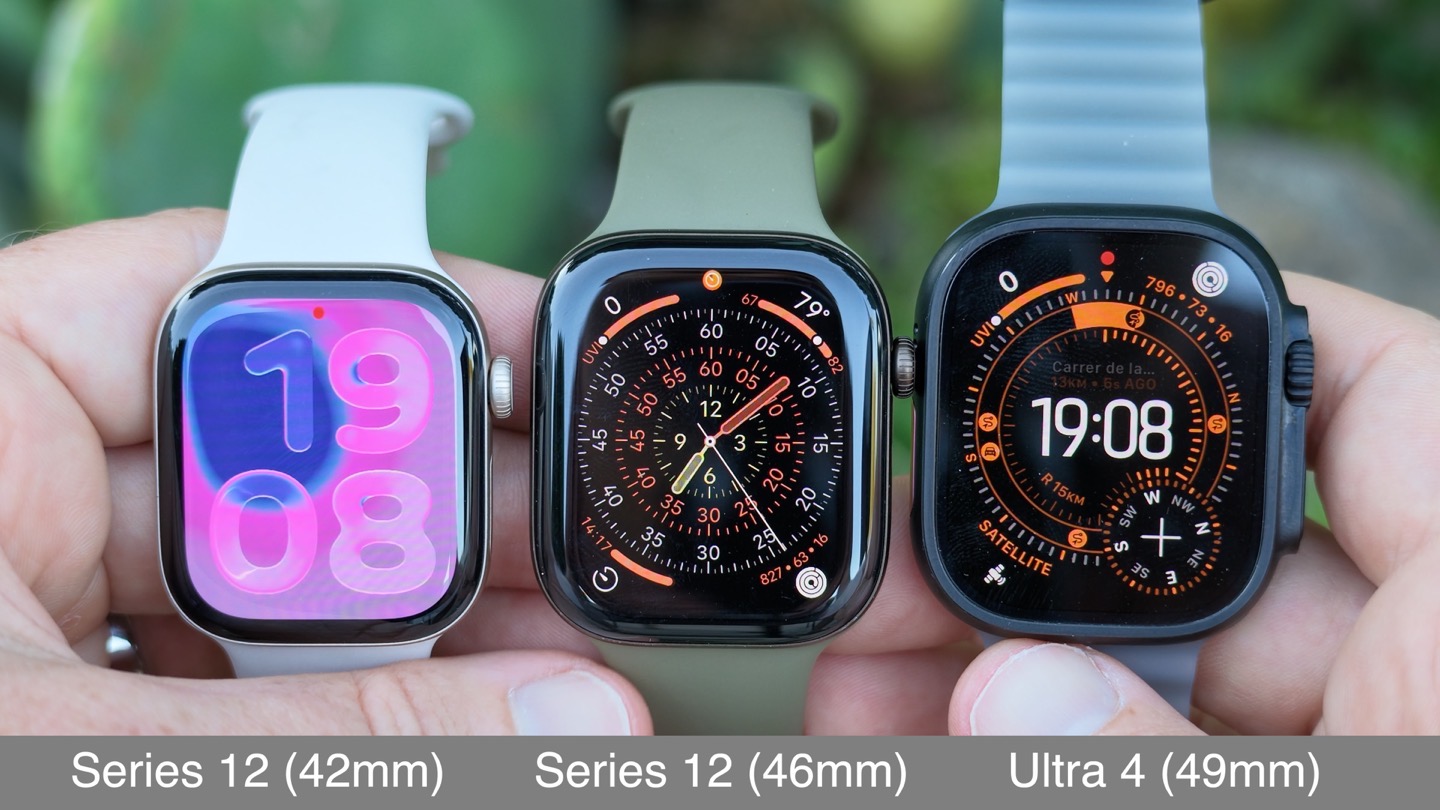
Both devices incorporate advanced LTPO3 OLED display technology, ensuring superior off-angle viewing performance and a minimum brightness capability of 1 nit for dark environments. However, maximum brightness thresholds differ: the Ultra 4 achieves up to 3,000 nits, while the Series 12 peaks at 2,000 nits. Both levels exceed the requirements for high-ambient sunlight visibility. Screen real estate also varies, with the Ultra 4 providing a 1,245 square millimeter display area (422 by 514 pixels), compared to 1,220 square millimeters on the 46mm Series 12 (416 by 496 pixels) and 970 square millimeters on the 42mm Series 12 (374 by 446 pixels).
Battery Performance and Power Management
Battery longevity remains one of the most critical operational distinctions between the two devices. In standard real-world usage, the Ultra 4 delivers approximately 2.5 days of operation, whereas the Series 12 yields between 1 and 1.5 days. For dedicated outdoor tracking, the Ultra 4 provides up to 18 hours of continuous GPS tracking, which can be extended to 25 hours in Extended GPS mode and up to 45 hours in Max Extended mode. The Series 12 offers a rated 10 hours of outdoor GPS tracking, with power-saving modes yielding lower aggregate endurance. Fast-charging metrics also favor the Series 12 slightly for rapid turnarounds, though both units support high-efficiency power replenishment capable of securing hours of operational use from brief charging intervals.
Environmental Resilience and Specialized Sensors
The Ultra 4 is engineered to meet MIL-STD 810H military standards for environmental ruggedness, operating across a broader thermal range of -4°F to 113°F (-20°C to 45°C) compared to the Series 12’s range of 32°F to 95°F (0°C to 35°C). The Ultra 4 also features an expanded barometric altimeter range spanning from -1,600 feet to 29,500 feet (-500m to 9,000m), dwarfing the 0 feet to 10,000 feet (0m to 3,000m) range of the Series 12.
For aquatic activities, the Ultra 4 boasts water resistance to 100 meters and is certified for scuba diving to a depth of 40 meters (131 feet) adhering to the EN13319 standard, complete with a dedicated depth gauge and water temperature monitoring. The Series 12 is water-resistant to 50 meters, supporting snorkeling and surface swimming but lacking scuba certification and featuring a depth gauge limited to 6 meters (20 feet). Furthermore, the Ultra 4 includes a dedicated physical Action Button for rapid workout initiation and waypoint marking, a dual-frequency (multiband) GPS system for superior positional accuracy in urban canyons or dense foliage, an 86dB emergency siren, a three-microphone array with advanced wind cancellation, and integrated two-way satellite messaging for emergency SOS, text communication, and FindMy location sharing in remote areas lacking cellular infrastructure.
Software Parity and Shared Ecosystem Capabilities
Despite the physical and hardware disparities, the software experience across the Apple Watch Ultra 4 and Series 12 is remarkably unified. Both devices operate on WatchOS 27, ensuring complete access to the latest health, fitness, and productivity suites.
Health and Wellness Monitoring
Both smartwatches share identical next-generation heart rate sensing arrays, Electrocardiogram (ECG) capabilities, blood oxygen monitoring, wrist temperature sensing, sleep apnea detection, and high-frequency Heart Rate Variability (HRV) recording. The newly introduced Readiness Scores, Sleep Scores, and Hypertension Detection features are fully supported on both platforms, ensuring that users of the mainstream Series 12 do not miss out on core health diagnostics available to Ultra owners.
Processing and Artificial Intelligence
Powered by the S11 SIP and a dedicated 4-core Neural Engine, both watches seamlessly execute advanced machine learning tasks. Users benefit equally from Audio Intelligence features such as Instant Shazam, Sound Recognition, offline Siri functionality, and upcoming software integrations like Siri Recap and Siri Rewind. Gesture controls, including Double Tap and Wrist Flick, operate with identical responsiveness on both chassis styles.
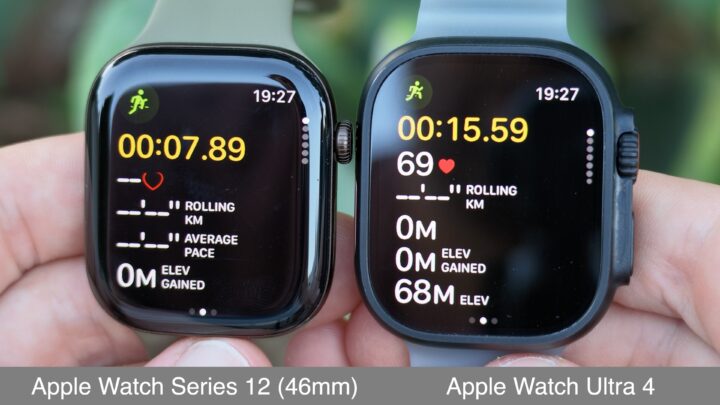
The primary software differences are largely confined to interface adjustments dictated by physical hardware. The Ultra 4 supports exclusive watch faces like Modular and Waypoints with a dedicated night mode utilizing red chromatic filtering for low-light visibility, and permits up to seven customizable data fields per sports mode screen compared to six on the Series 12. Additionally, the Ultra 4 utilizes its physical Action Button to enable Precision Start functionalities for athletic training sessions, bypassing the standard three-second countdown timer found on the Series 12.
Market Implications and Consumer Takeaways
The strategic divergence between the Apple Watch Series 12 and the Apple Watch Ultra 4 highlights Apple’s refined segmentation within the wearable technology sector. Rather than restricting advanced health algorithms or core processing power to its highest-priced hardware, Apple has democratized software intelligence, ensuring that lifestyle users and elite athletes alike enjoy the same computational and health-tracking benefits.
For the average consumer, the Series 12 represents a comprehensive, elegant, and highly capable daily smartwatch that meets the vast majority of fitness, notification, and health-monitoring requirements at a more accessible price point. Conversely, the Apple Watch Ultra 4 addresses a specialized consumer base requiring uncompromising durability, extended battery independence, satellite-based emergency communication, and professional-grade diving instruments. Ultimately, the choice between the two devices hinges not on what the watch can compute, but on where the user intends to wear it and how frequently they are willing to charge it.