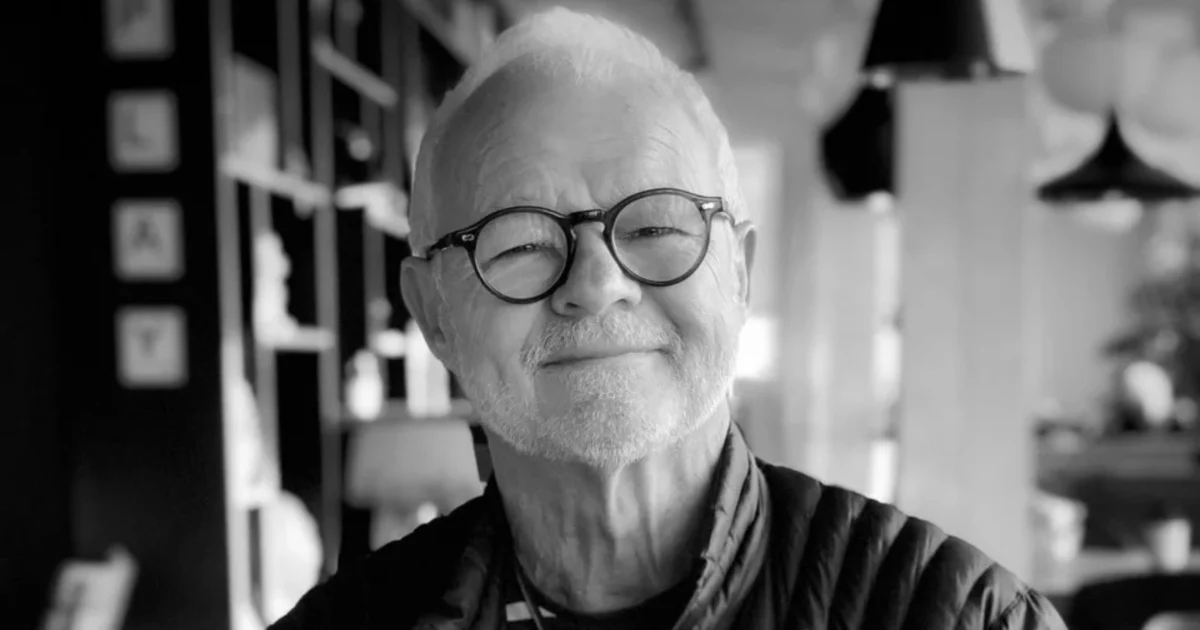
The international film and television community is mourning the loss of Rodney Charters, a cinematographer whose innovative approach to visual storytelling fundamentally altered the aesthetic of modern television. The New Zealand-born director of photography, who earned widespread acclaim for his work on the high-stakes thriller 24, passed away suddenly on September 13 in Amsterdam. The American Society of Cinematographers (ASC), of which Charters was a distinguished member, confirmed the news, marking the end of a career that spanned decades and left an indelible mark on how action and drama are captured for the small screen.
A Legacy Defined by the Ticking Clock
Born with a natural inclination toward the visual arts—a passion nurtured by his father, a portrait photographer and filmmaker—Charters often described his childhood as being "raised in the darkroom." This early immersion in the mechanics of light and shadow served as the bedrock for a career defined by technical risk-taking and an intuitive sense of framing.
Charters is most widely recognized for his monumental contributions to the Fox network’s 24. Starring Kiefer Sutherland as federal agent Jack Bauer, the show was a cultural phenomenon that utilized a "real-time" narrative structure, where each 24-episode season represented a single, frantic day in the life of the Counter Terrorist Unit (CTU). Charters joined the production in 2001 and remained a constant force through 2010. During this period, he shot 184 episodes, encompassing nearly the entire run of the show’s first eight seasons. Beyond his work as a cinematographer, he expanded his role to include directing, helming three episodes and contributing significantly to the 2008 telefilm 24: Redemption.
The Evolution of an "Aggressive" Visual Style
The visual language of 24 was not merely a backdrop for the action; it was a character in its own right. Charters, alongside executive producers and directors like Stephen Hopkins, crafted what the American Society of Cinematographers described as an "aggressive camera style." This approach prioritized the kinetic energy of the narrative through the heavy use of handheld camerawork, whip pans, and sudden, jarring snap zooms.
In a 2004 interview with American Cinematographer magazine, Charters provided a rare glimpse into the production philosophy that fueled the show’s success. "We’ve evolved to the point where we always shoot a scene in its entirety—it’s never broken into setups," he explained. "We shoot two directions on every scene. We shoot one direction first, after it’s been blocked and staged by the cast privately, without even me present, which is a little uncommon in television."
This method allowed for a fluidity that was previously rare in television production. By avoiding the traditional "shot-reverse-shot" monotony that characterized much of the network drama of the era, Charters and his team created an environment where the actors—and by extension, the audience—felt the immediate, suffocating pressure of the clock. As Charters noted, the goal was often to "look at the scene and imagine where the camera would never be, and that’s where I want it."
Professional Chronology and Diverse Portfolio
While 24 stands as the zenith of his career, Charters’ influence was felt across several high-profile television projects. His technical proficiency made him a sought-after collaborator for producers looking to elevate the visual standard of their series.
- 1997–2000: Charters served as a primary cinematographer for NBC’s The Pretender, shooting 57 episodes. The show’s mystery-thriller format allowed him to experiment with the tension-filled framing that would later become a hallmark of his work on 24.
- 2001–2010: The 24 era. During this decade, Charters received two Emmy nominations for Outstanding Cinematography for a Single-Camera Series (2005 and 2006).
- 2002: Contributed to the second season of the science-fiction hit Roswell, filming 19 episodes and helping transition the show’s aesthetic into a more grounded, cinematic territory.
- 2011–2013: Following the conclusion of 24, Charters moved into the gritty, urban landscape of Shameless. He served as the director of photography for the first three seasons, successfully translating his handheld, observational style into the realm of dark comedy and social realism.
Impact and Industry Recognition
The professional impact of Rodney Charters extends beyond the specific episodes he filmed. He was instrumental in bridge-building between the traditional, rigid standards of television production and the more fluid, expressive techniques typical of independent cinema. By advocating for longer, continuous takes and discouraging the fragmentation of scenes, he pushed television studios to invest in more ambitious lighting setups and camera maneuvers that were previously deemed too costly or time-consuming for the medium.
His peers in the industry have long noted his ability to blend into the background of a performance. By allowing directors and actors the space to inhabit a scene fully before the camera even rolled, he ensured that the cinematography felt like a response to the action rather than an imposition upon it. This collaborative ethos earned him the respect of both the actors he filmed and the technicians who operated under his guidance.
Broader Implications for Cinematography
The death of Charters comes at a time when the "handheld, high-energy" aesthetic he pioneered has become the default setting for much of modern action television. The "shaky-cam" trend, while sometimes criticized when executed poorly, finds its most disciplined and effective roots in the work Charters performed on 24.
His career serves as a case study for the evolution of the Director of Photography from a technical supervisor to a narrative architect. In the late 1990s and early 2000s, television was undergoing a transformation that many critics have dubbed the "Second Golden Age of Television." Charters was at the forefront of this shift, proving that the visual quality of television could rival, and occasionally exceed, that of mid-budget feature films.
Tributes and Future Reflections
While formal memorial plans have yet to be disclosed, the American Society of Cinematographers has highlighted his passing as a significant loss for the craft. His work remains a staple in film schools and cinematography workshops, where the "24-style" of shooting is frequently cited as a turning point in the history of broadcast visuals.
Rodney Charters is survived by a legacy that is permanently etched into the digital archives of television history. For millions of viewers, his work provided the visual heartbeat of a decade defined by geopolitical anxiety and the relentless, ticking pressure of a 24-hour clock. As the industry continues to evolve in the age of streaming and high-definition digital acquisition, the foundational lessons Charters taught—about the importance of staging, the power of the handheld lens, and the necessity of finding the camera angle where it "never should be"—will continue to influence the next generation of cinematographers. His passing closes a vital chapter in the history of the small screen, but his images, characterized by their urgency and raw intensity, remain as immediate today as they were when they first aired.