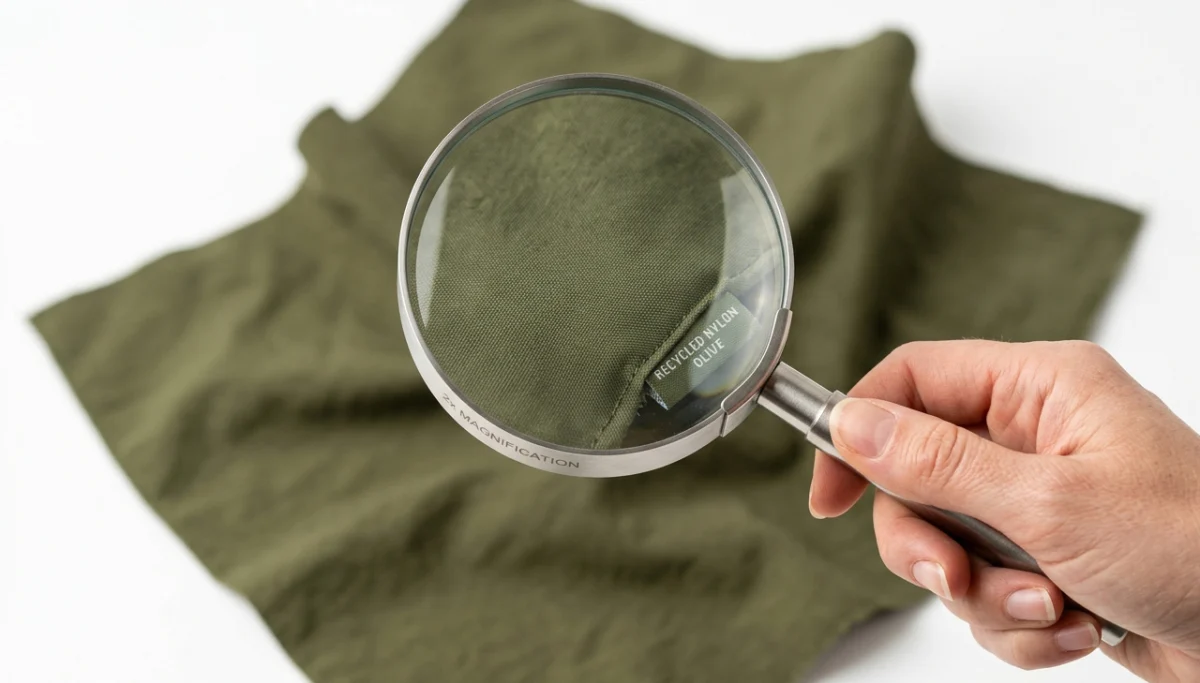
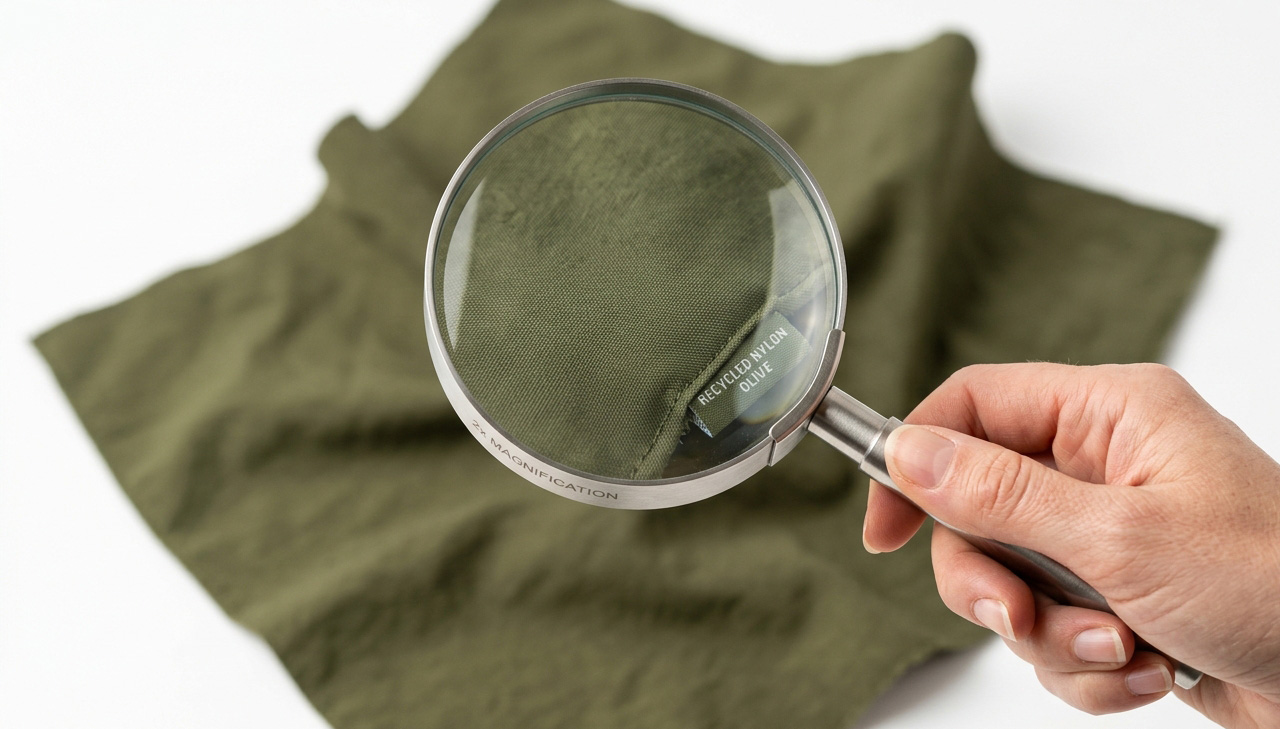
The world of technical gear and Everyday Carry (EDC) is obsessed with numbers. Mention a 1050D nylon or a 210D ripstop, and gear enthusiasts immediately form an opinion on a backpack’s durability, weight, and overall quality. However, according to recent educational initiatives by design analysts and material experts, the most widely cited specification in bag manufacturing—denier—is also the most profoundly misunderstood. A common misconception in the consumer market is that a higher denier automatically equates to a superior, tougher fabric. In reality, material science reveals a far more nuanced picture, where fiber type, weave density, and intended application dictate performance far beyond a simple weight metric.
Understanding Denier: The Core Definition
To comprehend modern textile engineering, one must first understand what denier actually measures. Originating from the French coin denier, which was used to measure silk yarn weight, the modern definition of denier (abbreviated as D) is a unit of measurement that expresses the linear mass density of fiber. Specifically, one denier is equal to the mass in grams of 9,000 meters of yarn or fiber.
Therefore, a 500D nylon thread means that 9,000 meters of that specific yarn weigh 500 grams. It is strictly a measure of thickness and weight, not an inherent rating of tensile strength, abrasion resistance, or tear resistance. While a thicker yarn (higher denier) often requires more force to snap than a thinner yarn of the exact same chemical composition, assuming that a heavier fabric is universally better ignores critical variables such as the quality of the polymer, the tightness of the weave, and the inclusion of high-performance reinforcement fibers like Spectra or Dyneema.
The Historical Evolution of Bag Fabrics
To trace how consumers became so fixated on denier, one must look back at the history of tactical and outdoor gear manufacturing. For decades, military specifications dominated the durable goods market. Fabrics like Cordura nylon—originally developed by DuPont in 1929 as a rayon, later transitioned to nylon during World War II, and commercialized in the 1960s—set the gold standard for ruggedness.
During the late 20th century, military surplus and heavy-duty industrial applications popularized ultra-thick fabrics such as 1000D Cordura. These materials were chosen because they could withstand the abrasive environments of combat, rough handling, and exposure to harsh elements. As the consumer EDC and technical backpack market emerged in the 2000s and 2010s, brands adopted these military-grade metrics as shorthand for quality. Marketing departments quickly realized that higher numbers resonated with buyers seeking indestructible gear.
However, the outdoor and urban carry markets have evolved significantly over the last decade. The rise of lightweight backpacking, ultralight travel, and sleek urban commuting has shifted consumer priorities. Weight savings, water resistance, and aesthetic drape have become just as important as raw abrasion resistance. Consequently, material engineers have been forced to rethink how fabrics are evaluated, moving away from the simplistic "higher is better" mantra toward holistic material selection.
Data and Comparative Material Performance
Industry testing data consistently demonstrates that lower denier fabrics, when paired with advanced polymer technologies and modern weaves, can drastically outperform traditional heavy-duty textiles.
Consider the comparison between traditional uncoated nylon and high-tenacity synthetic blends. A standard 500D nylon fabric offers a balanced compromise between weight and durability, making it a favorite for mid-sized technical backpacks. Yet, when compared to a modern 210D nylon woven with a high-tenacity grid (such as a UHMWPE-reinforced ripstop), the lighter 210D fabric often exhibits superior tear strength despite weighing less than half as much.
Furthermore, the introduction of laminates and composite materials—such as X-Pac, developed by Dimension-Polyant—has revolutionized the industry. These materials often utilize a lightweight face fabric (such as 210D or even 70D nylon) laminated to a waterproof film and a structural X-grid. The result is a fabric that offers exceptional structural rigidity, absolute waterproofness, and high tear resistance, all while maintaining a remarkably low baseline weight. In practical terms, a consumer purchasing a lightweight technical pack built with a 210D laminated fabric will experience better weather protection and less shoulder fatigue than someone carrying a traditional 1000D pack, without sacrificing functional longevity.
Industry Perspectives and Expert Consensus
Material scientists and bag designers frequently emphasize that context is everything when selecting a textile. Speaking on the principles of textile engineering, technical designers point out that every fabric choice represents an engineering compromise between weight, cost, texture, UV resistance, and structural integrity.
According to product development leads across major technical gear brands, consumer education remains the biggest hurdle in material innovation. Many buyers reject innovative, lightweight materials simply because the listed denier spec sounds too fragile. To combat this, modern design houses are shifting their communication strategies, educating consumers on how to read a fabric data sheet comprehensively. This includes looking at breaking strength, hydrostatic head ratings for waterproofing, and denier counts in tandem with weave patterns (such as plain weave, twill, or ripstop).
The Broader Impact and Market Implications
The ongoing demystification of denier has far-reaching implications for both manufacturers and consumers. For brands, moving past the "denier arms race" opens up opportunities to innovate with sustainable, recycled, and high-performance technical fibers that prioritize efficiency over sheer mass. As global supply chains face increasing scrutiny regarding environmental impact and material lifecycle, reducing unnecessary weight in manufacturing translates directly to lower shipping emissions and more efficient use of petrochemical resources.
For the consumer, understanding how to read a fabric empowers smarter purchasing decisions. Buyers can now match their gear choices to their actual use cases—opting for lightweight, highly weather-resistant lower-denier laminates for fast-paced urban commuting and travel, while reserving heavy-duty, high-denier weaves for rugged outdoor bushcraft or heavy industrial utility.
Ultimately, the shift in how the industry discusses and evaluates technical textiles marks a maturation of the carry community. As educational resources and deep-dive analyses continue to demystify manufacturing specifications, the era of judging a bag by its denier number alone is officially coming to an end.