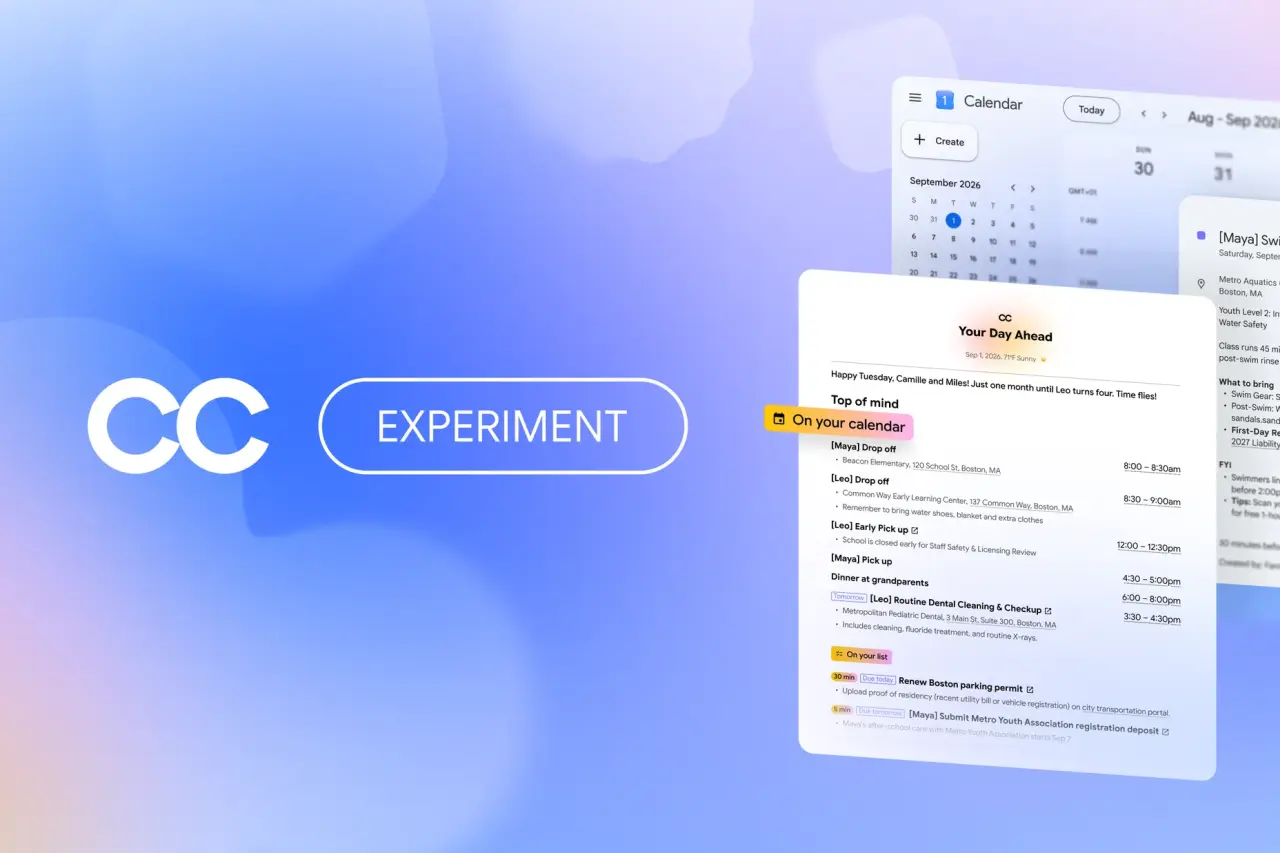
Google has officially introduced CC, a groundbreaking artificial intelligence assistant designed to seamlessly integrate advanced machine learning capabilities into daily digital workflows. Developed under the umbrella of Google Labs, CC represents a significant evolutionary leap from traditional productivity tools, bridging the gap between passive task management and active, autonomous assistance. By leveraging cutting-edge generative models, CC aims to transform how individuals interact with their personal devices, communication channels, and organizational software.
The unveiling of CC marks a pivotal moment in Google’s broader strategy to embed contextual artificial intelligence across its entire suite of applications. As the digital landscape shifts from simple command-and-response interfaces to proactive agentic systems, Google is positioning its proprietary models at the center of this transformation. The new assistant is engineered to anticipate user needs, synthesize vast amounts of incoming data, and execute complex, multi-step operations with minimal human intervention.
The Genesis of CC: Bridging Innovation and Practicality
The development of CC originated within Google Labs, the company’s experimental incubator known for testing radical software concepts before mainstream deployment. Over the past year, Google engineers and researchers focused on solving a persistent challenge in modern computing: fragmentation. Modern professionals juggle numerous applications—ranging from email clients and messaging platforms to cloud storage and calendar tools—often resulting in cognitive overload and fragmented workflows.
CC was conceived to act as a centralized intelligence layer that harmonizes these disparate ecosystems. Unlike standard chatbots that operate within isolated windows, CC is deeply embedded within the underlying architecture of supported platforms. This deep integration allows the assistant to observe context across different applications, building a comprehensive, real-time understanding of a user’s professional and personal schedule.
Industry insiders note that the release of CC aligns with a broader industry push toward "agentic workflows," where AI agents do not merely answer questions but actively perform tasks on behalf of users. By combining powerful underlying models—such as variants of the Gemini architecture—with robust API integrations, Google has created a tool that bridges the gap between conversational AI and functional execution.
Core Features and Capabilities: Meet Your Day Ahead
At the heart of CC’s feature set is a specialized module known as "Your Day Ahead." This function serves as an intelligent morning briefing, synthesizing information from a wide array of sources to prepare users for the day’s demands. Rather than forcing individuals to manually check multiple applications, Your Day Ahead compiles relevant updates, highlights urgent communications, cross-references schedules, and flags potential conflicts or overlapping commitments.
Furthermore, CC extends its utility deeply into daily planning by synchronizing directly with Google Calendar and Google Tasks. The assistant can dynamically adjust schedules when meetings run long, re-prioritize to-do lists based on changing deadlines, and proactively draft responses to high-priority messages found in Gmail or Google Chat.
Beyond scheduling and communication, CC demonstrates advanced document-handling capabilities. The assistant can ingest complex file formats, including multi-page PDF documents, extract critical data points, summarize extensive reports, and cross-reference information with external mapping services via Google Maps APIs. For instance, if a user receives an itinerary containing multiple locations, CC can analyze the text, calculate optimal transit times, and automatically insert relevant travel reminders into the user’s calendar.
Security and privacy have also been focal points during the development of CC. Google has implemented stringent data governance protocols to ensure that user information processed by the assistant remains protected under enterprise-grade encryption standards, addressing growing concerns regarding data privacy in AI-driven environments.
Chronology and Rollout Strategy
The journey toward CC began taking tangible shape in early 2025, as Google intensified its focus on agent-based artificial intelligence. Throughout the first half of the year, iterative testing phases were conducted within controlled environments under Google Labs. These preliminary trials allowed engineers to refine natural language processing capabilities and evaluate system reliability under heavy workloads.
By mid-2025, integration tests began expanding to select enterprise partners and early-access testers, focusing on core applications such as Gmail and Google Docs. Feedback gathered during these trials proved invaluable in shaping the user interface and streamlining the assistant’s autonomous decision-making loops.
The official public rollout announcement follows a series of incremental updates to Google’s foundational AI models, including the deployment of advanced iterations like the Gemini flash variants. By anchoring CC to these high-speed, high-efficiency models, Google ensured that the assistant could deliver real-time responses without noticeable latency, a critical factor for maintaining user engagement in fast-paced professional settings.
Availability and Ecosystem Integration
Google has structured the rollout of CC to prioritize accessibility for existing users of its productivity suite. The initial beta phase is slated to roll out to participants in Google Labs starting October 18, providing early adopters with direct access to Gmail-integrated summarization tools and advanced scheduling assistants.
Integration with the broader ecosystem will happen in phases. Initial support focuses heavily on core communication channels, including Gmail, Google Chat, and Google Drive. Subsequent updates are expected to expand compatibility to third-party applications through standardized developer APIs, enabling a wider developer community to build custom workflows powered by CC’s underlying intelligence.
Market analysts observe that this phased release strategy allows Google to stress-test server infrastructure while gathering nuanced user feedback. By releasing the tool initially through Google Labs, the company maintains flexibility to adjust features, optimize performance, and fine-tune resource allocation before a wider commercial release.
Broader Impact and Industry Implications
The introduction of CC carries significant implications for the enterprise software and productivity markets. As artificial intelligence transitions from an optional novelty to a core operational utility, companies are increasingly evaluating software solutions based on their ability to automate complex administrative burdens.
By embedding an intelligent agent directly into foundational tools like email, document storage, and calendar management, Google is redefining baseline expectations for workplace software. Competitors in the productivity space, including Microsoft and Apple, are pursuing similar strategies with their respective AI copilots, setting the stage for intensified competition in the autonomous assistant market.
For enterprise organizations, the adoption of tools like CC promises substantial efficiency gains, potentially reducing the time employees spend on routine coordination, data entry, and schedule management. However, experts emphasize that successful long-term adoption will depend heavily on transparency, reliability, and the mitigation of algorithmic errors. As CC continues to evolve from its experimental origins into a mainstream productivity staple, its performance will likely serve as a bellwether for the maturation of agentic artificial intelligence across the global technology sector.