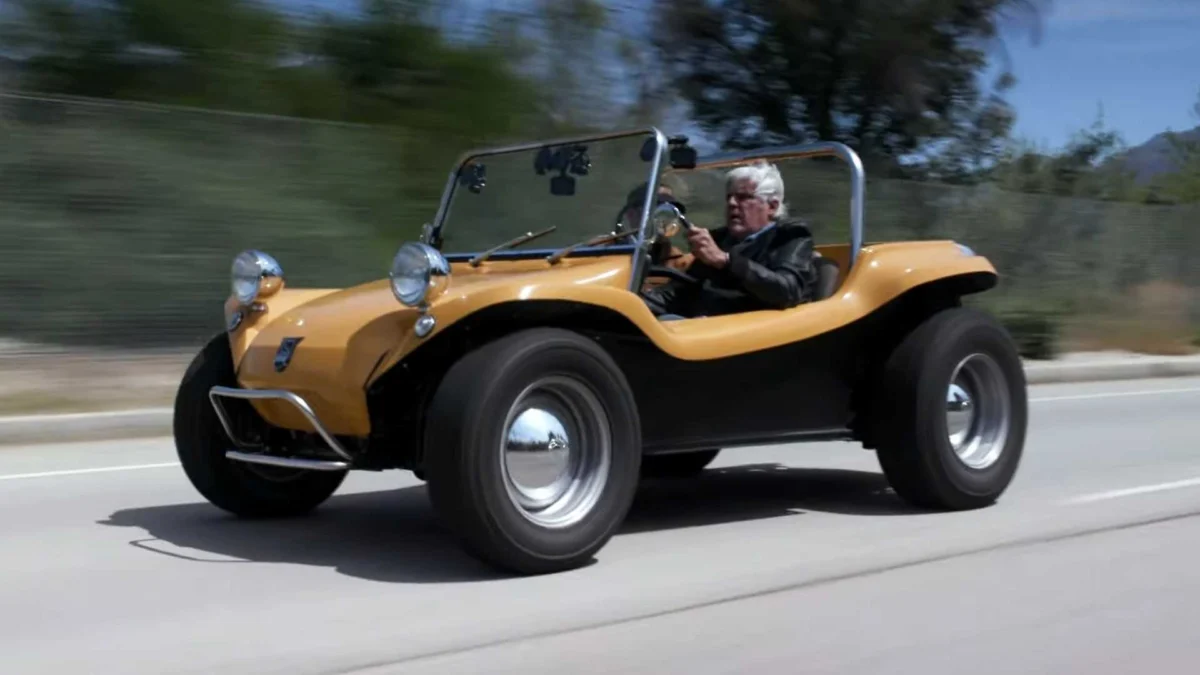
California has long maintained a complex relationship with the automotive world, balancing its status as a global hub for car culture and innovation against the stringent environmental regulations necessary to combat its well-documented air quality challenges. For decades, the state’s smog-check program has served as a cornerstone of its environmental policy, yet it has frequently drawn the ire of automotive enthusiasts who argue that low-mileage, well-maintained collector vehicles contribute negligibly to total emissions. The recent signing of Senate Bill 1392 by Governor Gavin Newsom, widely referred to as "Leno’s Law" in honor of its most prominent advocate, television host and vehicle collector Jay Leno, marks a significant legislative shift in how the state manages its rolling heritage.
The Legislative Framework of SB 1392
Senate Bill 1392 establishes a refined, phased-in approach to emissions testing exemptions for older vehicles. Beginning on January 1, 2028, the legislation grants an exemption from the biennial smog-check requirement for motor vehicles manufactured prior to the 1981 model year. However, this is not a blanket exemption. To qualify for the waiver, owners must satisfy specific regulatory criteria: the vehicle must be formally registered as a collector-car interest, or the owner must demonstrate that the vehicle is driven fewer than 1,000 miles per calendar year.
The bill employs a "rolling" methodology to expand this relief over time. Following the initial implementation in 2028, the exemption will extend by one model year annually. By 2033, the program will effectively cover all vehicles manufactured before the 1986 model year, provided they continue to meet the aforementioned usage or registration requirements. This structure is designed to provide relief to owners of vehicles that are increasingly rare, while simultaneously preventing a massive influx of daily-driven, high-emission vintage vehicles onto the road.
A Chronology of the Advocacy Effort
The journey to SB 1392 was not an overnight success; it was the result of a multi-year lobbying effort spearheaded by the Specialty Equipment Market Association (SEMA) and a coalition of automotive enthusiasts.
The movement gained significant momentum as the "rolling 30-year" exemption—a policy once common in many states—was effectively frozen in California at the 1976 model year. For nearly half a century, the cutoff for smog exemptions remained stagnant, meaning that every year, a new cohort of classic cars was forced to undergo increasingly difficult-to-pass emissions standards.
In recent years, the campaign gained visibility through high-profile testimonials, most notably from Jay Leno, whose extensive collection and public advocacy provided a face for the "hobbyist" argument. Legislators, including Senators Dave Cortese and Shannon Grove, acted as the primary sponsors, bridging the gap between the automotive community and environmental regulators. After navigating various committee hearings and public comment periods, the bill passed the legislature with bipartisan support, reflecting a growing consensus that the emissions profile of a meticulously maintained 1982 collector car is vastly different from that of a high-mileage daily driver from the same era.
Supporting Data and Environmental Context
To understand the scope of this policy, one must examine the role of collector cars in the broader emissions landscape. According to data provided by industry advocacy groups, the vast majority of collector vehicles—those driven under 1,000 miles per year—account for a statistically insignificant fraction of total on-road emissions in California.
Critics of previous smog policies often pointed to the "diminishing returns" of testing these vehicles. As vehicle technology has advanced, the percentage of older cars failing smog tests has steadily climbed, yet the actual mass of pollutants removed from the air by failing these specific, low-mileage vehicles is minimal. By focusing the exemption on vehicles that are rarely driven, the state maintains its commitment to air quality while alleviating the administrative and financial burden on the hobbyist community.
Furthermore, the "collector vehicle" registration requirement serves as a safeguard. By requiring owners to formalize their status, the California Department of Motor Vehicles ensures that the vehicles benefiting from the exemption are indeed part of a preservation effort rather than aging, high-polluting commuters that have simply been neglected.
Official Responses and Industry Reaction
The passage of the bill has been met with significant praise from the automotive industry and associated small businesses. Mike Spagnola, CEO of SEMA, hailed the signing as a "historic win" for the state’s automotive community. In a statement released following the signing, Spagnola emphasized the cultural importance of these vehicles, noting that they serve as a bridge between generations and represent a vital component of the state’s history.
"Leno’s Law shows that California can protect clean air while also showing the appropriate reverence for the vehicles that connect generations and tell an important part of our state’s story," Spagnola stated. He credited the victory to the "unrelenting passion" of the thousands of advocates, hobbyists, and small businesses that lobbied for the change.
From the perspective of the legislative sponsors, the bill represents a measured compromise. By phasing in the exemption over five years, the state retains the ability to monitor the environmental impact and ensure that the policy remains consistent with California’s broader climate goals.
Broader Impact and Future Implications
While SB 1392 is a milestone, it is essential to contextualize its limitations. The "average" car enthusiast—those who own a 1980s or 1990s vehicle that they use for daily transportation—will not see immediate relief. The requirement for collector-car registration or low-mileage documentation effectively limits the scope of the law to a specific subset of the enthusiast population.
For many, the law is viewed as a "first step" rather than a total victory. If the program proves successful—that is, if it does not lead to a measurable spike in regional air pollution—there may be future efforts to push the exemption threshold further into the 1990s. However, such efforts will likely face continued resistance from environmental groups concerned about the cumulative impact of older internal combustion engines.
Additionally, the bill underscores a shift in how the state manages its aging vehicle fleet. As California moves toward an electrified future, the preservation of internal combustion vehicles becomes an increasingly specialized endeavor. Policies like SB 1392 acknowledge that these vehicles are no longer the primary contributors to smog, but rather objects of historical, mechanical, and cultural significance.
Conclusion: A Balanced Outlook
The implementation of Senate Bill 1392 provides a clearer roadmap for the future of classic car ownership in California. By codifying the exemption and creating a predictable, rolling schedule for its expansion, the state has provided much-needed stability for collectors. While the law does not provide a blanket exemption for all older vehicles, it successfully balances the state’s stringent environmental mandate with the need to preserve an important facet of American culture.
For the enthusiast community, the years leading up to 2028 will serve as a testing ground. The success of this policy will likely depend on the compliance of vehicle owners with the documentation requirements and the continued commitment of regulators to maintain the law as intended. As the first model years begin to qualify under the new rules, the automotive community will be watching closely to see if this model can be expanded or if it will remain a specialized carve-out for the preservation-minded collector. Ultimately, Leno’s Law represents a pragmatic approach to governance, demonstrating that even in one of the world’s most environmentally regulated jurisdictions, there is room for the appreciation of automotive heritage.