
The landscape of modern action-roleplaying games is poised for a significant transformation this September as Finnish developer Remedy Entertainment prepares to release Control Resonant. Serving as the long-awaited sequel to the critically acclaimed 2019 title Control, the new entry promises to shift the narrative focus from the isolated confines of the Oldest House to the expansive, reality-bending streets of Manhattan. Following an exclusive developer briefing conducted by the PC Gaming Show team, new details have emerged regarding the game’s core mechanics, narrative structure, and the complex, mathematical approach to its audio-visual design.
A New Chapter for the Faden Lineage
Control Resonant shifts the player’s perspective to Dylan Faden, the brother of the original game’s protagonist and current Federal Bureau of Control (FBC) director, Jesse Faden. The narrative picks up following the events of the first game, where Dylan spent an extended period under containment due to his susceptibility to the Hiss—a malevolent, extradimensional resonance.
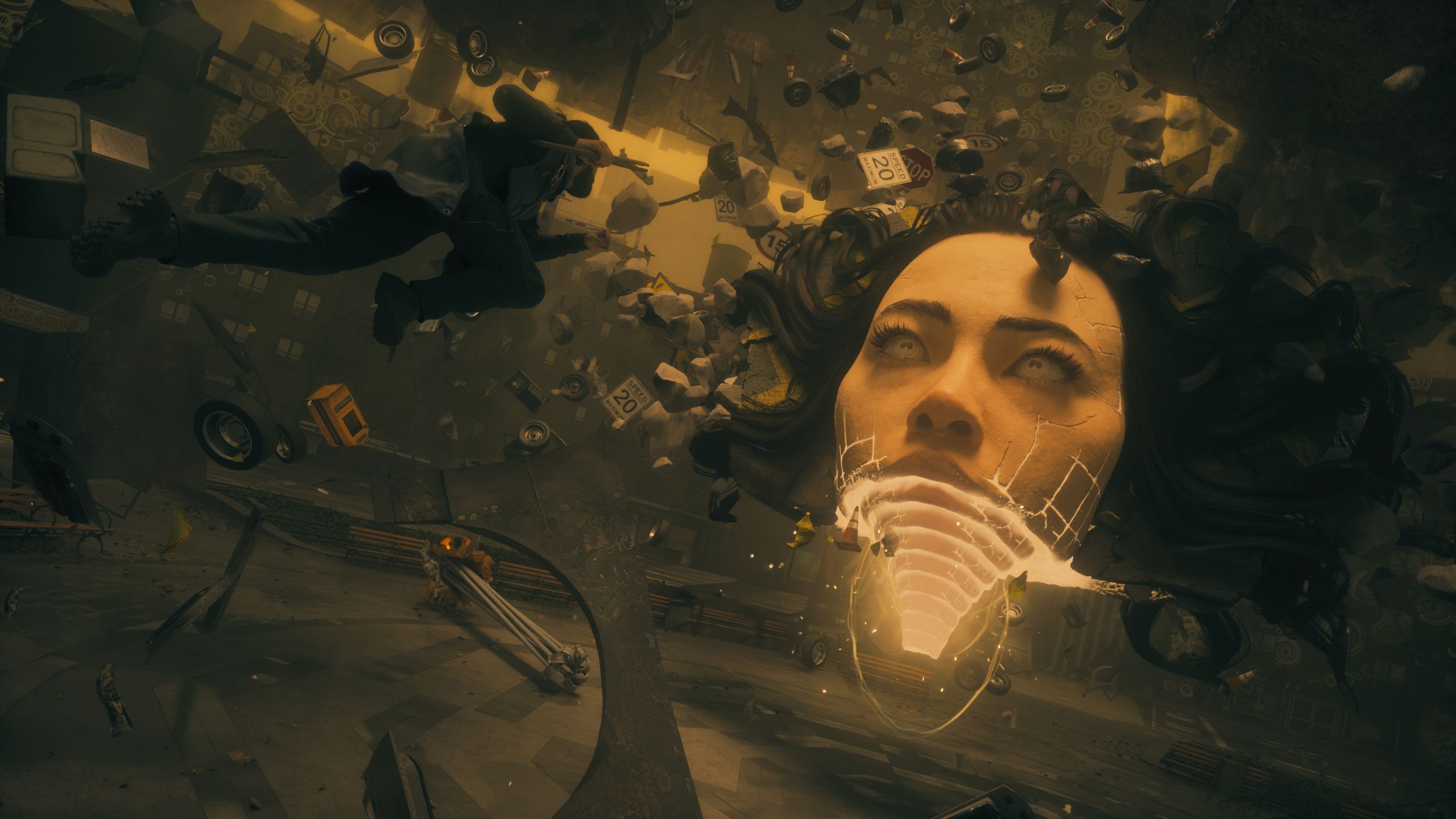
Following his emergence from a coma, Dylan is thrust into a New York City fundamentally altered by a phenomenon dubbed the "Patterning." While the Hiss remain a potent threat, the Patterning introduces a new layer of existential instability. Unlike the static containment of the Oldest House, the Patterning affects the environment on a granular level, distorting time, light, and physical space. This transition to an urban, open-world environment marks a departure from the "Metroidvania" style layout of the original title, opting instead for a more player-directed progression system that leverages the urban density of Manhattan to facilitate non-linear exploration.
Chronology of Development and Public Reception
The journey to Control Resonant began in the wake of the original game’s success, which sold over 4 million units globally and garnered numerous "Game of the Year" accolades. Remedy Entertainment, known for its narrative-dense projects like Alan Wake and Quantum Break, officially greenlit the project to expand the "Remedy Connected Universe."
- May 2024: The PC Gaming Show editorial team traveled to Espoo, Finland, to conduct extensive interviews with the development leads, including Creative Director Mikael Kasurinen and Art Director Elmeri Raitanen.
- June 2024: A teaser trailer and initial interview snippets were showcased during the PC Gaming Show, confirming the game’s title and the shift in setting.
- September 20, 2026: A scheduled deep dive is slated for the PC Gaming Show Tokyo Direct, providing final technical previews.
- September 24, 2026: The global release date for Control Resonant on PC via Steam and major platforms.
Design Philosophy: Beyond Gaming Tropes
In a departure from industry standards, the art and design teams at Remedy actively avoided drawing inspiration from other contemporary video games. The goal, according to Art Director Elmeri Raitanen, was to avoid the stagnation that often occurs when developers mimic the successes of their peers.
Instead, the team looked to surrealist art and experimental cinema. The work of M.C. Escher serves as the primary visual foundation for the "weirdness" of the Patterning, particularly in how the environment defies Euclidean geometry. Cinematic influences include the folk-horror aesthetic of A Field in England and the surreal, psychological depth of the anime film Paprika. This commitment to diverse source material is intended to foster an atmosphere of constant disorientation, where players must adapt to shifting architectural planes and gravity-defying environments.
Mechanics and Player Agency
One of the most significant technical advancements in Control Resonant is the integration of gravity-based traversal as a core gameplay pillar. Dylan Faden’s ability to manipulate gravity allows for vertical exploration of Manhattan, turning the city’s skyscrapers into playable surfaces.

Furthermore, the game introduces a flexible boss encounter system. Unlike its predecessor, where progression was often gated behind mandatory combat, Resonant allows players to choose which "Resonants"—individuals corrupted by the Patterning—they wish to engage. Lead Level Designer Anne-Marie Grönroos noted that this design choice creates high variability in player builds. By defeating specific bosses, players acquire their powers; because the order of these encounters is largely up to the player, no two playthroughs are expected to result in the same ability set by the mid-game point. Internal playtesting has already confirmed this, with some testers uncovering gravity-shifting traversal hours later than others, leading to vastly different approaches to combat scenarios.
The Mathematics of Sound: The Fibonacci Score
The game’s audio landscape is perhaps its most distinct feature. Composer Petri Alanko has implemented a system where the soundtrack is rooted in the Fibonacci sequence (1, 1, 2, 3, 5, 8, 13, 21…). This mathematical framework is utilized during boss fights, most notably the encounter with a former dancer who was caught in the initial surge of the Patterning. By mapping rhythmic beats to the sequence, Alanko creates a sense of unnatural, creeping dread that feels fundamentally different from standard percussion-based scores.
Beyond the musical composition, the audio design for Dylan Faden himself serves as an auditory narrative device. At the start of the game, his associated sound effects are composed of pure sine waves—the most basic, primitive form of sound. As Dylan evolves and gains autonomy from the Hiss, these sounds grow in complexity, layering textures and tonal nuances to reflect his development as both a person and a weapon.
Industry Implications and Future Strategy
The decision to expand the Control franchise into an open-world format reflects a broader shift within Remedy Entertainment toward long-term universe building. Creative Director Mikael Kasurinen has expressed a desire to move away from the "chosen one" narrative structure—a staple of blockbuster gaming—in favor of a multi-perspective universe. By taking inspiration from pen-and-paper roleplaying games, the studio aims to create a world defined by consistent rules rather than singular protagonists.
This strategy is vital for the sustainability of the Remedy Connected Universe. By establishing a world where the FBC acts as a lens through which players can view different, localized supernatural events, Remedy effectively future-proofs the franchise for potential spin-offs and sequels that do not need to rely on the Faden family arc.
Market Anticipation
As of the current pre-order phase on Steam, excitement remains high. Analysts suggest that the shift to an open-world structure, combined with the proven success of the Remedy engine, positions Control Resonant as one of the most anticipated titles of the latter half of 2026. The integration of high-concept design, such as the Fibonacci-based score and the intentional avoidance of standard gaming tropes, suggests that Remedy is aiming to capture both the hardcore action-RPG demographic and a more niche audience interested in atmospheric, narrative-heavy experiences.
With the release date approaching on September 24, the industry is watching closely to see if the ambitious scale of the New York setting can match the focused intensity of the original Oldest House experience. If the design philosophy holds, Control Resonant could set a new benchmark for how developers can utilize environmental storytelling and unconventional design to differentiate their projects in an increasingly saturated market.